Excavator guide
Excavator Sizes: How to Choose the Right Machine
Quick answer
Excavator sizes are grouped by operating weight: micro machines under 1 tonne, mini or compact excavators up to about 8.5 tonnes, then midi, standard and large machines above that. Pick the size by trench depth, lift needs, site access and the weight your trailer can carry, not by horsepower alone.
Shopping for this now? Get a fit-checked, delivered quote.
Key takeaways
- Operating weight is the standard way to size an excavator.
- Compact excavators go up to about 8.5 tonnes; micro machines are under 1 tonne.
- Zero tail swing models suit tight sites.
- Match the attachments you want to the machine's hydraulic flow and lift.
Search for excavator sizes and you will find charts that stop at different weights and use different names. That is because there is no single rulebook. Makers use their own classes, and the terms mini, midi and full size shift between regions. Weight is the most common yardstick. This guide explains the common classes and how to pick one for your site.
How are excavator sizes measured?
Most people size excavators by operating weight, usually quoted in tonnes (metric) or pounds. One reference warns that published weights are not always comparable, since makers use terms such as machine mass, machine weight and operating weight. That matters when you compare machines side by side: check what each spec sheet means by weight, and whether attachments and fuel are included.
Weight is a handy shortcut because it tracks the things you care about: digging depth, reach, lift capacity, how much it can dig through and what trailer or truck you need to move it.
What are the excavator size classes?
| Class | Typical weight | Usual use |
|---|---|---|
| Micro excavator | Generally under 1 tonne | Tight urban sites, indoor and garden work |
| Mini / compact excavator | Up to about 8.5 tonnes | Utility trenches, small foundations, landscaping |
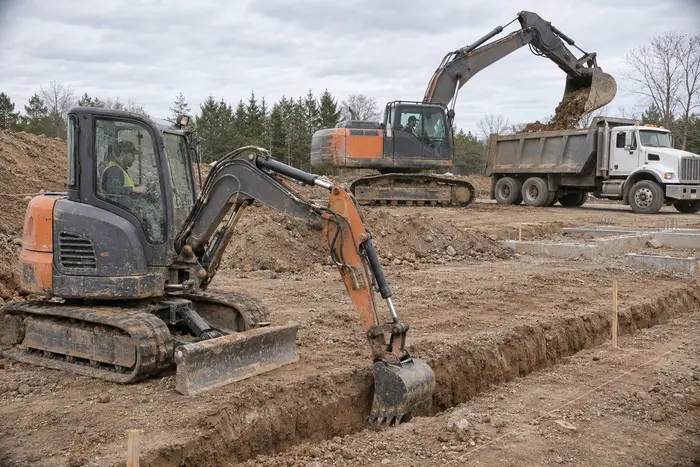
| Midi and standard excavator | Above compact range, makers vary | Site work, larger trenching, loading trucks |
| Large excavator | Heavy, makers vary | Road, quarry and heavy civil work |
| Mining excavator | Hundreds of tonnes | Open-pit mining |
The upper end is huge. One reference lists a mini excavator at about 930 kg and a mining machine at nearly 980 tonnes, which shows how wide the range is. Most buyers shopping for attachments are in the compact class, so that is where this guide spends its time.
Micro and mini excavators
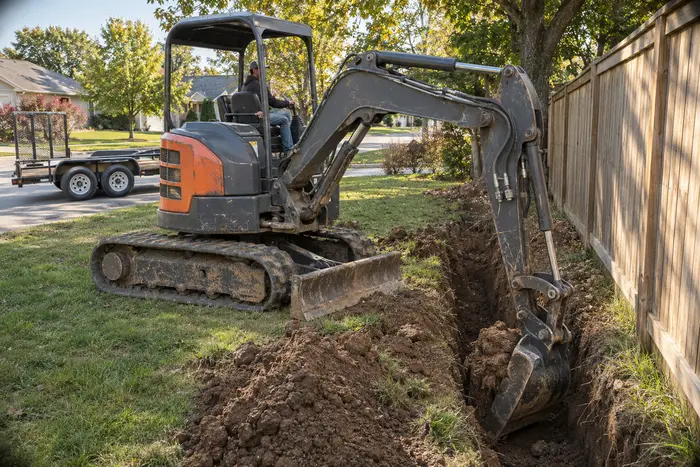
A compact excavator is described as a tracked or wheeled machine with an operating weight up to about 8.5 tonnes. The lightest class, micro excavators, are generally below 1 tonne and can be narrow enough for doorways and garden gates, depending on the model. Some have tracks that retract so they can pass through narrow gates. They suit small yards, interior demolition and garden work.
Mini excavators are the working class for many contractors. They dig utility trenches, set small foundations, remove stumps and do light grading. Read more in mini excavator sizes and weight and attachments for 3 to 4 ton mini excavators.
What is zero tail swing?
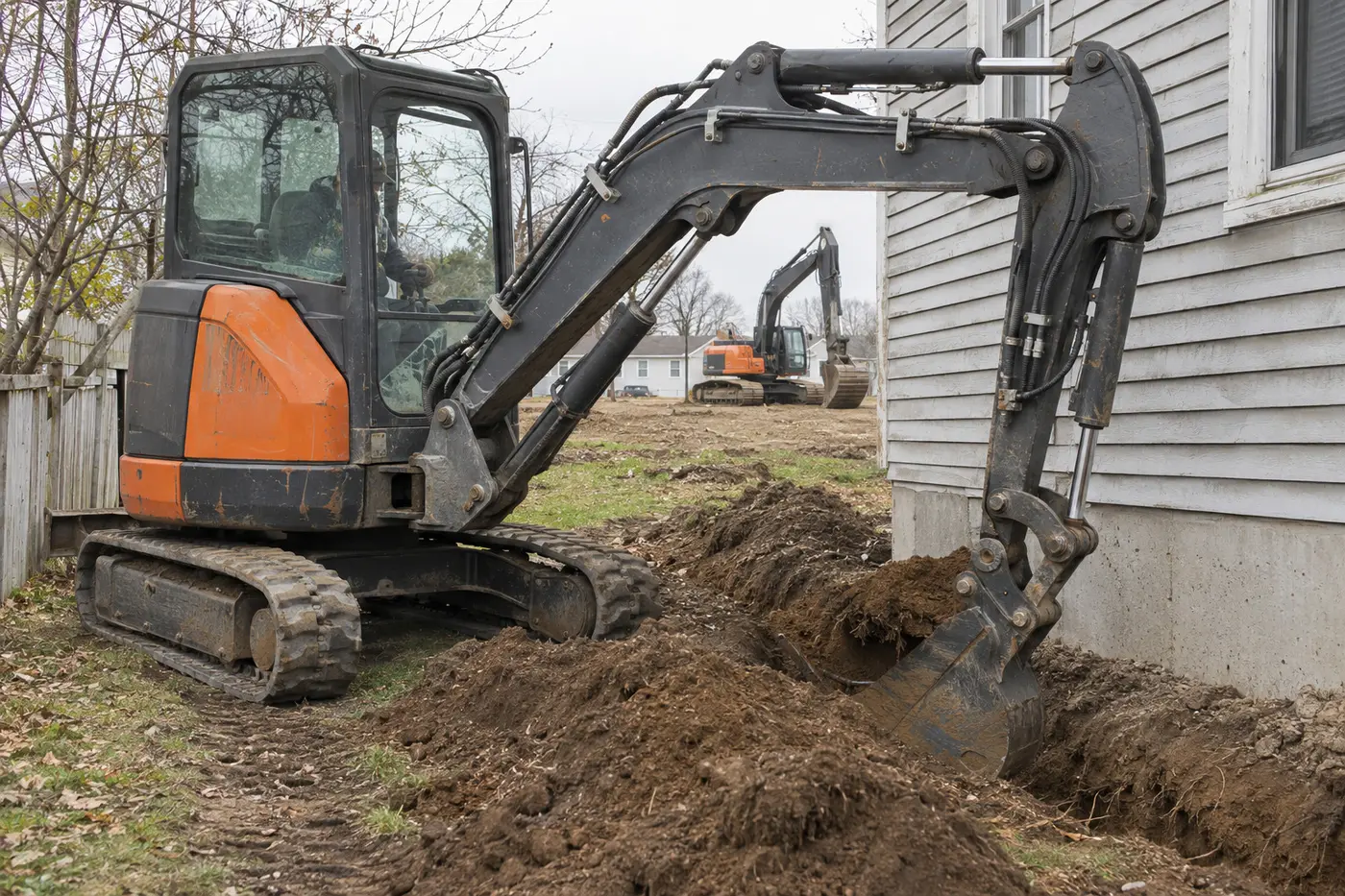
On a conventional excavator, the rear of the cab and counterweight swing out beyond the tracks when you rotate. A zero tail swing machine keeps the cab and counterweight within the width of the tracks through the whole rotation. That makes it easier to work next to walls, fences and buildings without hitting them. The trade is that the counterweight is tucked in, and in some models the lifting stability differs, so check the spec sheet. For tight jobs it is often the better choice.
How to choose the right size
- Dig depth and reach. Check the maker's stated maximum depth and reach. Choose a machine with margin over your deepest trench.
- Lift capacity. If you set pipe, lift rocks or use a thumb, look at the lift chart at the reach you will use, not only at the nearest point.
- Site access. Measure gates, doors and turns. A machine that cannot get to the work is useless.
- Ground conditions. Soft ground and lawns favor lighter machines or wide tracks.
- Transport. Your trailer and tow vehicle must be rated for the machine's weight plus attachments.
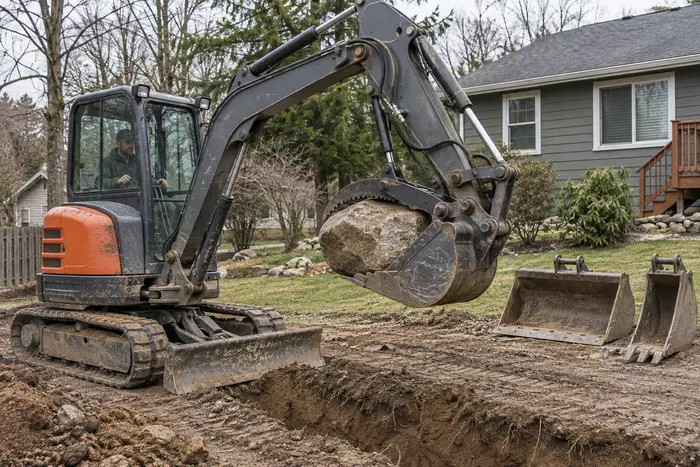
- Attachments. Check hydraulic flow and pressure for the tools you want, such as breakers, augers and mulchers. See buckets and thumbs.
- Quick coupler. A coupler lets you swap tools fast. Our quick coupler guide explains the types.
Does a bigger machine always win?
No. A larger excavator digs deeper and lifts more, but it costs more to move, needs more room and can damage lawns and drives. A smaller machine used with the right attachment often finishes small jobs faster, because you can park it where you need it. Pick the smallest machine that does your heaviest regular job comfortably, not the biggest you can afford.
Excavator size and attachment fit
Attachments are matched to machine size. A bucket, breaker or grapple built for a larger excavator can overload a smaller machine's hydraulics, weight and stability. A tool that is too small wastes the machine's capacity. That is why we confirm fit against the maker's specs for your exact machine. Our mini excavator attachment buyer's guide shows what to check.
Control patterns and other features
Two joystick patterns exist. One reference notes the SAE pattern is most popular in the US, while ISO is more common elsewhere. If you or your operators switch machines, a pattern selector or a consistent pattern avoids mistakes. Other features worth comparing include auxiliary hydraulic circuits for attachments, blade type, track width and cab or canopy options.
Wheeled or tracked?
Tracked excavators give better traction and lower ground pressure, which suits mud, slopes and soft soil. Wheeled excavators move faster on pavement and are common for road and utility work. Most compact excavators in the attachment market are tracked.
Safety and operation
- Call your local utility locating service before digging.
- Operate on stable ground, travel straight up and down slopes rather than across them, and stay inside the manual's slope limits.
- Never exceed the lift chart's capacity for your reach and attachment.
- Keep people clear of the swing radius.
- Read the operator manual before you use any new attachment.
For more detail on how these machines work, read our guides on types of excavators and the parts of an excavator.
If you are unsure which size fits, list your three most common jobs and the tightest site you work on. The right machine is the smallest one that handles all three. Send us what you plan to do and we can help you match tools to the machine, whatever its class.
Size and transport
Do not forget how the machine gets to the site. A machine's operating weight sets the trailer, the tow vehicle and sometimes the license you need to move it. Ramps, ground clearance and tie-down points also matter. Many buyers choose their machine based on what their truck and trailer can legally carry, and that is a sound approach.
Get the right fit the first time
Send us the make, model and year of your machine and what you plan to do with it. A person checks fit against the maker's specs, and your quote shows one delivered price, freight to your address included. The order ships direct from the supplier. Start here: get a fit-checked quote.
Questions buyers ask
what are the sizes of excavators
Excavators run from micro machines under 1 tonne through mini or compact models up to about 8.5 tonnes, then midi, standard and large machines, up to mining excavators weighing hundreds of tonnes. Classes overlap by maker, so compare operating weight and spec sheets.
how are excavator sizes measured
By operating weight, usually in tonnes or pounds. Makers use terms like machine mass and operating weight differently, so check what each spec sheet includes before you compare. Digging depth, reach and lift capacity also describe a machine's size.
what is a mini excavator size
A compact or mini excavator is a machine with an operating weight up to about 8.5 tonnes. Below that, micro excavators are generally under 1 tonne. Within the mini range, models vary in depth, reach and lift.
what is zero tail swing on an excavator
The cab and counterweight stay within the track width as the machine rotates. That lets you dig next to walls and fences without the rear swinging into them. It is popular on compact excavators for tight sites.