Excavator guide
Types of Excavators and How to Choose One
Quick answer
The main types of excavators are crawler (tracked), wheeled, compact or mini, zero tail swing, long reach, dragline and suction excavators. Crawlers dig hardest on rough ground, wheeled units move between sites, and mini machines fit tight spaces. Pick by the job, the ground, the site access and the weight you can haul.
Shopping for this now? Get a fit-checked, delivered quote.
Key takeaways
- Crawler excavators are the standard for digging and heavy site work.
- Wheeled excavators travel on roads and suit paved or hard ground.
- Mini excavators handle trenching, utilities and tight yards.
- Zero tail swing designs keep the counterweight inside the tracks.
- Specialty types, like long reach and dragline, are built for one kind of job.
People say "excavator" for everything from a machine that fits in a backyard to one that digs open-pit mines. There are many types of excavators, and each is built for a different job. This guide explains the main ones, what they do best, and how to choose. For a closer look at sizes, see our excavator sizes guide.
What is an excavator?
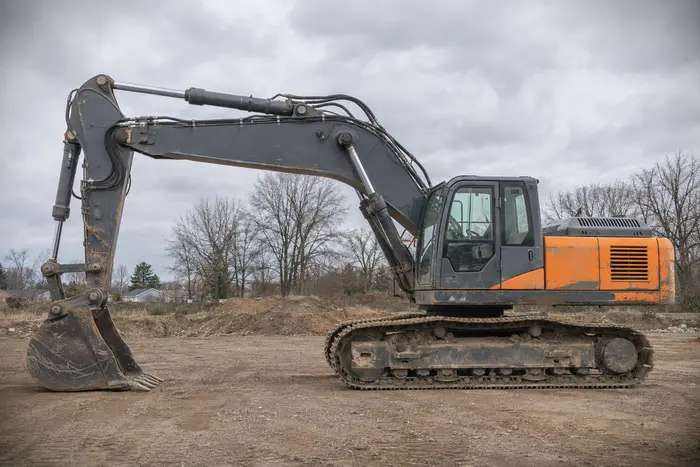
An excavator is heavy equipment with a boom, a stick (also called the dipper arm), a bucket and a cab on a rotating platform called the house. It digs by pulling the bucket toward the machine. Modern excavators use hydraulic cylinders and motors, which replaced the winches and cables of older steam shovels and draglines. They are also called diggers, trackhoes or 360-degree excavators because the house can rotate a full circle. Today an excavator is used for digging trenches and foundations, loading, demolition, forestry work, and many tasks that use attachments.
What are the main types of excavators?
| Type | What defines it | Typical use |
|---|---|---|
| Crawler (tracked) | Steel or rubber tracks | General digging, site work, rough ground |
| Wheeled | Rubber tires, often with outriggers | Road work, utilities, paved areas |
| Compact or mini | Small size, up to about 8.5 tonnes | Trenching, landscaping, tight access |
| Micro | Under one tonne | Indoor work, narrow gates |
| Zero tail swing | Counterweight stays inside track width | Confined sites and near walls |
| Long reach | Extended boom and stick | Dredging, ditch cleaning, demolition at height |
| Dragline | Cable-hung bucket | Large-scale mining and dredging |
| Suction or vacuum | Vacuum tube with water or air | Digging around buried utilities |
| Amphibious | Floating pontoons | Wetlands, marsh, shallow water |
| Walking | Hydraulic legs, not tracks | Steep, rough or forested terrain |
Crawler excavators
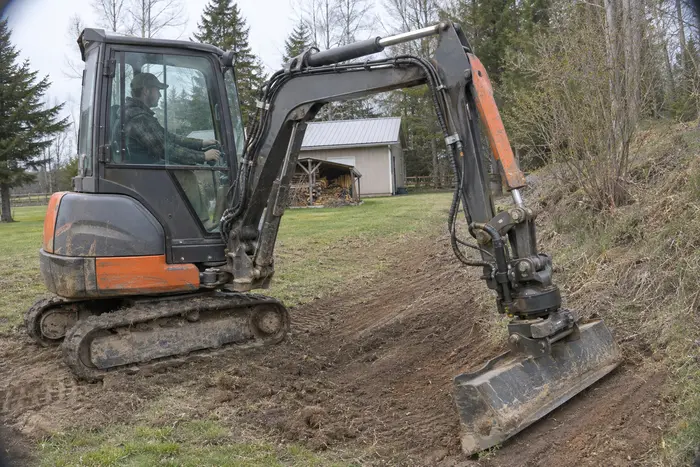
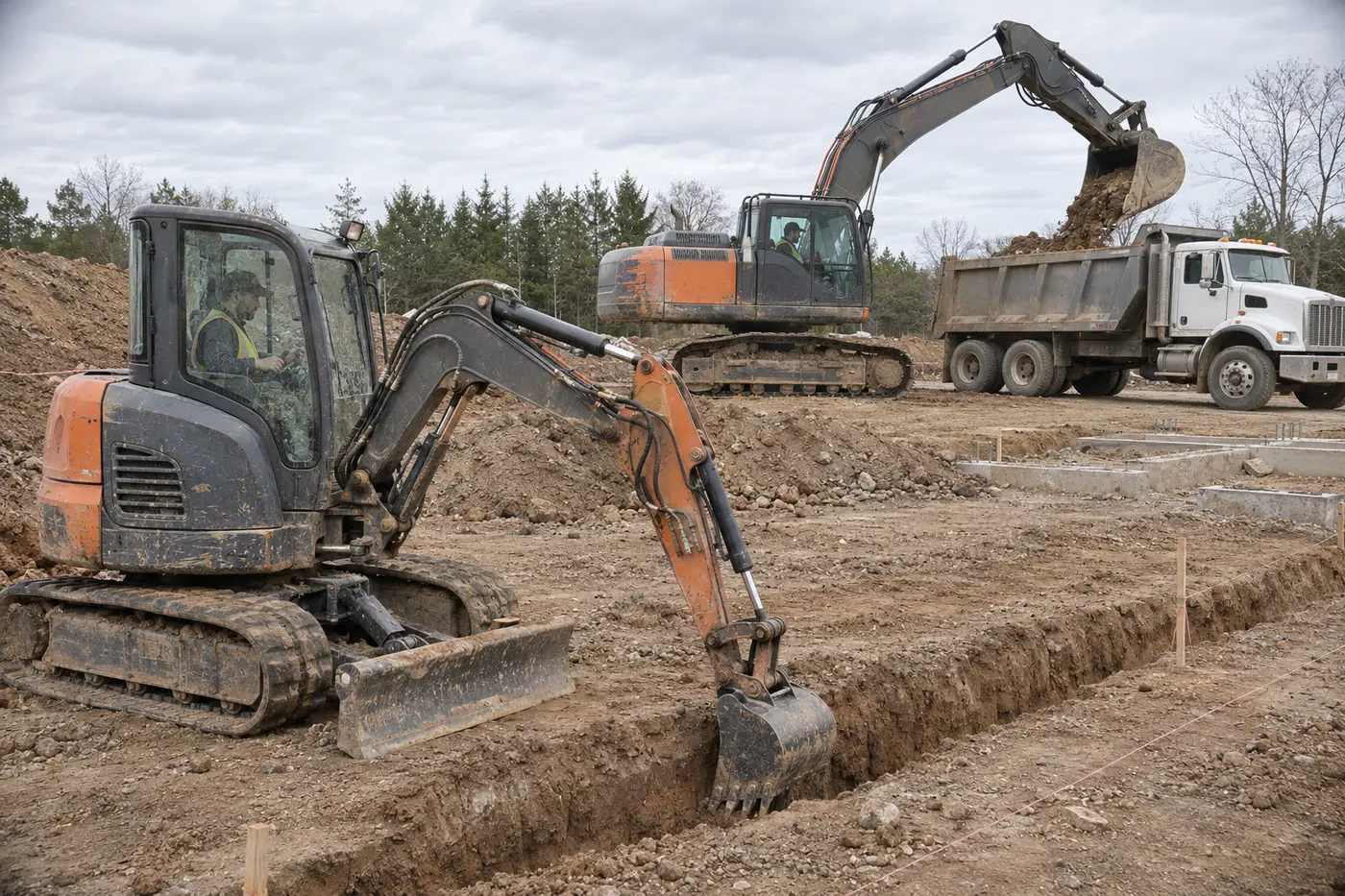
This is the classic type. The undercarriage has tracks, a track frame and final drives with hydraulic motors. Tracks spread the weight across the ground and grip well on mud, rock and slopes. Crawler excavators are the workhorses of earthmoving, from house foundations to highway cuts. Many crawlers, especially smaller and mid-size ones, can be fitted with a front blade for leveling and backfilling.
Wheeled excavators
A wheeled excavator uses tires instead of tracks, and it can drive on roads between jobs. That is useful for municipal work, sewer and water line repair, and road crews who move often. Tires have less grip than tracks on soft ground, so these machines stay on firm or paved surfaces. They usually have outriggers or a blade to stabilize them while they dig.
Compact or mini excavators
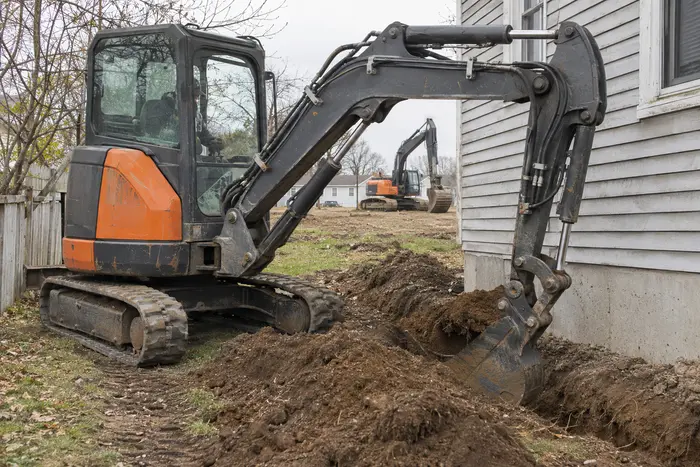
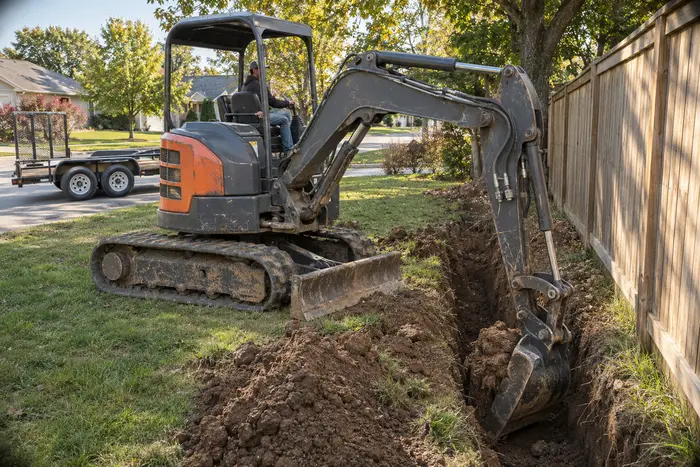
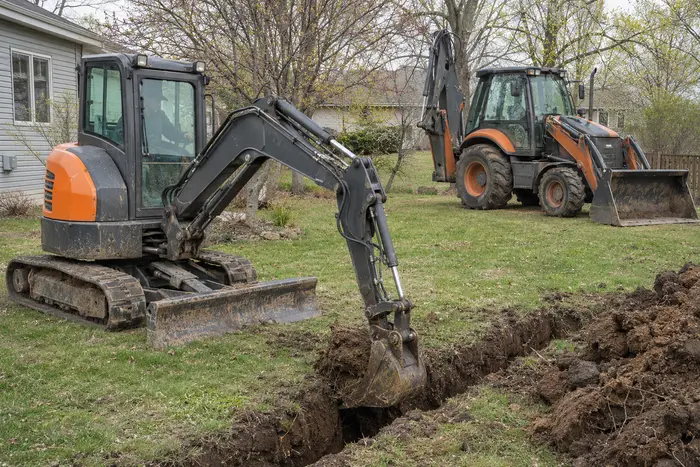
A compact excavator is a tracked or wheeled machine with an operating weight up to about 8.5 tonnes. Most have a backfill blade and a boom that swings left and right, which lets the operator dig beside walls and along foundations without moving the machine. Mini excavators are the most popular for trenching, landscaping, plumbing and electrical work. Weights vary by definition, since makers use different terms such as machine weight and operating weight. Browse the right tools for them in our excavator buckets and other attachments.
Micro excavators
Machines under one tonne are called micro excavators. They fit through a standard door or gate and work indoors, in basements and in narrow side yards. Some have tracks that retract for travel and extend for stability.
Zero tail swing excavators
Before the 1990s, most excavators had a counterweight that swung out behind the tracks. That is a hazard in tight spots. The zero tail swing design arrived in the early 1990s and keeps the counterweight inside the width of the tracks as the house rotates. These machines are widely used today in cities, near walls and on narrow lots.
Long reach excavators
A long reach excavator has an extended boom and stick. It digs ditches, cleans waterways, and handles demolition at height. The longer arm cuts lifting capacity, so the machine usually carries a larger counterweight.
Specialty types
Dragline excavators hang a bucket from cables and drag it through the material, which is common in large mining and dredging. Suction excavators use a vacuum to dig without damaging buried utilities. Amphibious excavators float on pontoons to work in wet ground. Walking excavators use hydraulic legs to cross steep or rough terrain.
How do you choose the right type of excavator?
- Look at the work. Utility trenching, site prep, demolition and landscaping each suit different machines.
- Check the ground. Soft ground calls for tracks. Pavement and hard surfaces suit wheels.
- Measure the access. Gate width, overhead lines and nearby walls limit your options. Zero tail swing or micro machines help in tight sites.
- Consider transport. The machine has to be hauled. Check your trailer and tow vehicle ratings against the operating weight.
- Plan attachments. Quick couplers, thumbs, augers and breakers turn one machine into many. Check the machine's hydraulics for auxiliary lines.
- Think about controls. Most excavators use ISO or SAE joystick patterns. ISO is the most common pattern worldwide, and SAE is also used, especially in North America. Some machines let you switch.
Which excavator type fits which job?
| Job | Good fit | Why |
|---|---|---|
| House foundation or basement dig | Crawler or compact | Strong digging force, good stability |
| Water or sewer line in a street | Wheeled or compact | Travels on pavement, quick setup |
| Backyard pool or patio | Mini or micro | Fits through gates, light on lawns |
| Ditch or pond cleanout | Long reach or crawler | Reach across water or wide cuts |
| Wet or marshy ground | Amphibious or crawler with wide tracks | Floats or spreads weight |
| Digging near buried lines | Suction excavator | Removes soil without striking pipe |
Always call your local utility locating service before any dig. That rule applies to every type of machine.
What attachments do excavators use?
Excavators now do far more than dig. Hydraulic attachments include breakers, grapples, augers, crushers, cutters and screening buckets. A quick coupler speeds changeovers. A tiltrotator is a hydraulic wrist that rotates the bucket through 360 degrees and tilts it, typically by about 40 to 45 degrees either way. It is widely used in the Nordic countries and growing elsewhere. For the full list of tools, see our mini excavator attachment buyer's guide.
Excavator or digger: is there a difference?
No. "Digger", "trackhoe" and "360" are other names for the same machine. A backhoe loader is different. It has a tractor body with a loader at the front and a digging arm at the back, and the arm swings on a fixed pivot instead of rotating a full circle.
Get the right fit the first time
An attachment has to match the machine class and the coupler or pin pattern. Send us your excavator's make, model and year. We will confirm fit against the manufacturer's specs, then give you a delivered price to approve before you pay. Start with a fit-checked quote.
Questions buyers ask
How many types of excavators are there?
There is no single count, but the main types are crawler, wheeled, compact or mini, micro, zero tail swing, long reach, dragline, suction, amphibious and walking excavators. Crawler and compact machines are the most common on construction sites. The others are built for specific tasks like dredging or utility digging.
What is the difference between a crawler and a wheeled excavator?
A crawler excavator has tracks, which spread weight and grip well on soft or uneven ground. A wheeled excavator has tires, so it drives on roads between sites but works best on firm or paved surfaces. Wheeled units often use outriggers or a blade for stability.
What is a zero tail swing excavator?
A zero tail swing excavator has a counterweight that stays inside the width of the tracks as the house rotates. That makes it safer and easier to use in tight spaces, near walls and on narrow lots. The design became widely available in the 1990s.
What are the types of mini excavators?
Compact excavators weigh up to about 8.5 tonnes, and micro excavators weigh under one tonne. Mini excavators come as conventional tail swing or zero tail swing, and with fixed or retractable tracks. Most have a backfill blade and a boom that swings left and right.
What is the difference between an excavator and a backhoe?
An excavator's house rotates a full circle on tracks or wheels. A backhoe loader is a tractor body with a front loader and a rear digging arm that swings only through an arc. Excavators generally dig faster and more precisely, while backhoes are handy for loading and light utility work.