Equipment basics guide
What Is a Wheel Loader? Uses, Parts and Types
Quick answer
What is a wheel loader? It is a wheeled machine with a wide front bucket on lift arms that scoops, carries and dumps loose material like soil, gravel and snow. Most steer by bending in the middle. It is also called a front-end loader, payloader or bucket loader.
Shopping for this now? Get a fit-checked, delivered quote.
Key takeaways
- Wheel loaders scoop, carry and load loose material.
- They are also called front-end loaders or payloaders.
- Most steer by articulating in the middle.
- Check coupler type before ordering attachments.
What is a wheel loader?
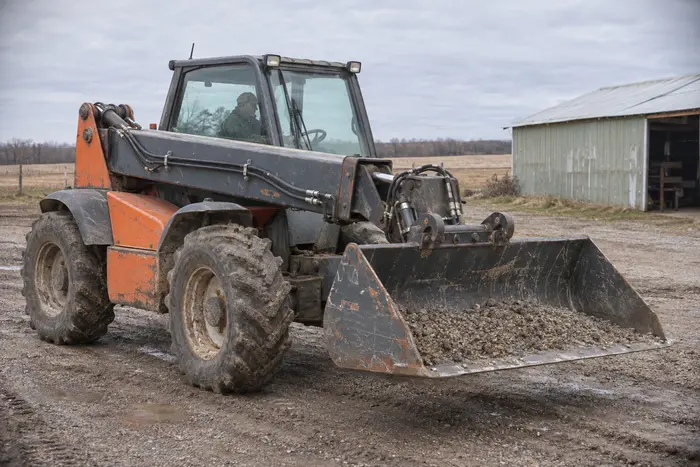
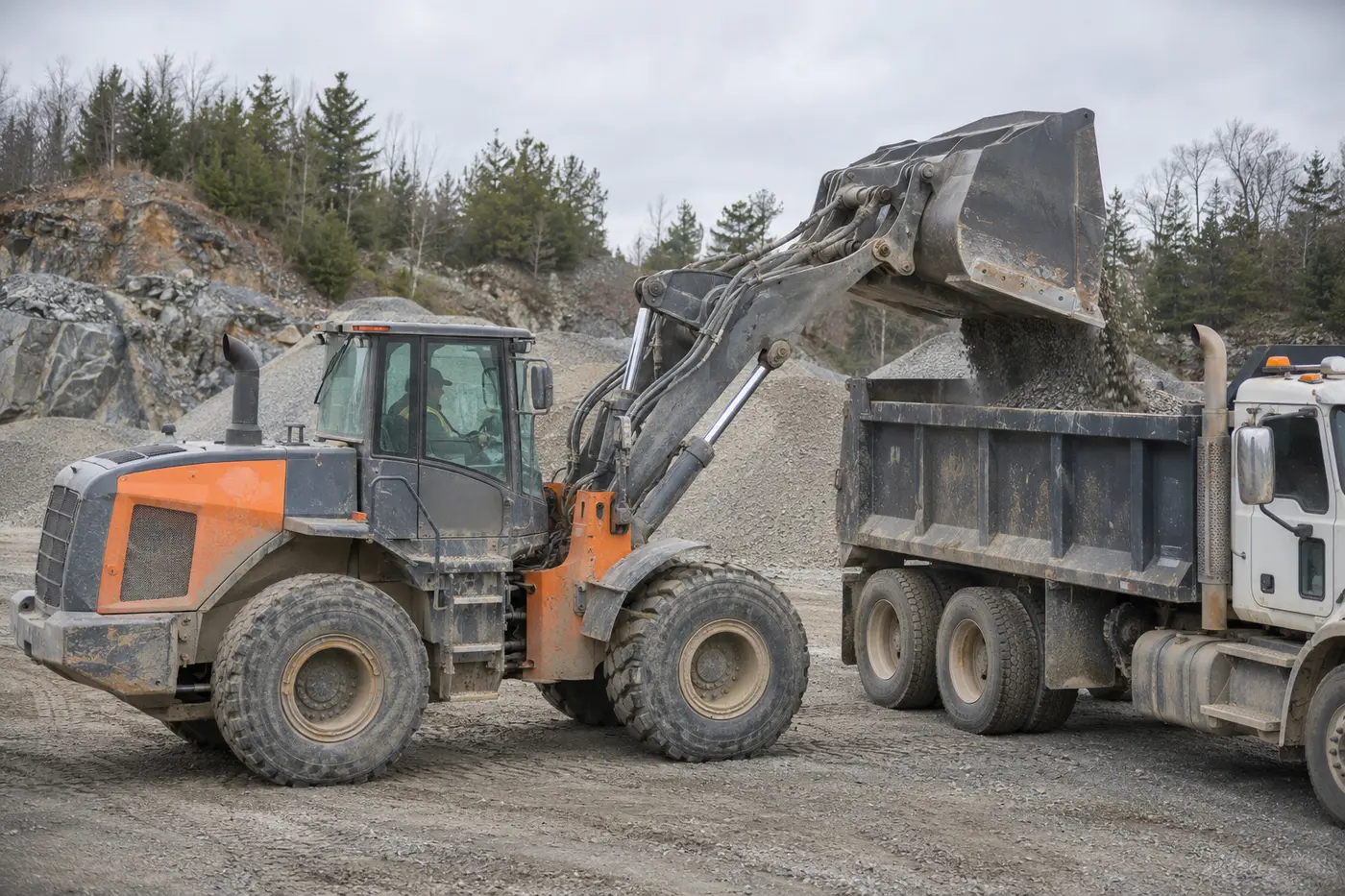
A wheel loader is a wheeled machine with a wide bucket on the front, mounted on two lift arms, built to scoop loose material and move it. It is a type of loader, which is a tractor-style machine with a front-mounted bucket on booms. Wheel loaders pick up soil, sand, gravel, aggregate, snow and debris, then carry and load it into dump trucks, hoppers, trenches or stockpiles. People also call them front-end loaders, front loaders, bucket loaders, payloaders or shovels.
The key to the design is articulation. Most wheel loaders steer by bending in the middle, with a hinge between the front and rear halves. That gives a tight turning radius for such a big machine, and the bucket stays lined up with the front half as it turns. An oscillating axle helps keep all four wheels on the ground over uneven terrain.
What is a wheel loader used for?
- Loading trucks. It picks up material from a stockpile and dumps it into a truck.
- Stockpile work. It feeds aggregate, topsoil, mulch, compost and similar materials in yards and plants.
- Site work. It moves spoil, backfills trenches and clears debris.
- Snow removal. Loaders clear lots and haul snow. In larger sizes they carry pushers and plows.
- Farm and forestry work. It handles bales, silage, logs and feed.
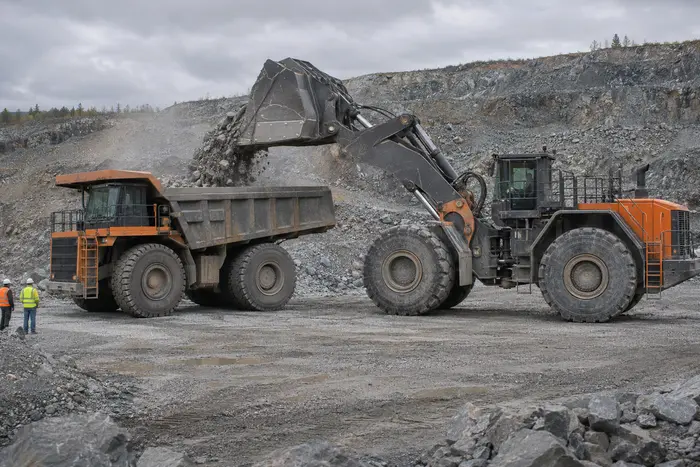
Often the bucket can be swapped. Many loaders take forks to lift pallets or shipping containers, a clamshell bucket for light dozing, or a grapple for bales and brush. Sizes range from compact wheel loaders that work in tight spaces up to very large machines in mines and quarries.
Parts of a wheel loader
| Part | What it does |
|---|---|
| Bucket | Scoops, carries and dumps material |
| Lift arms (booms) | Raise and lower the bucket |
| Articulation joint | Hinge that steers the machine |
| Cab | Operator station with controls and protection |
| Quick coupler | Lets the operator swap the bucket or attachment |
| Counterweight | Rear weight that balances the load in front |
Wheel loader vs skid steer
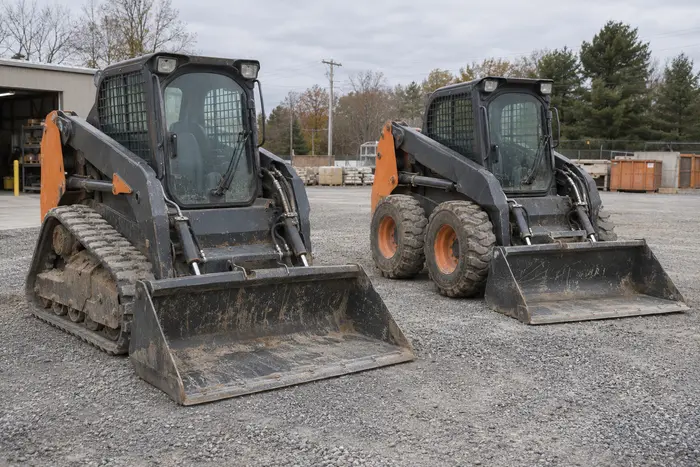
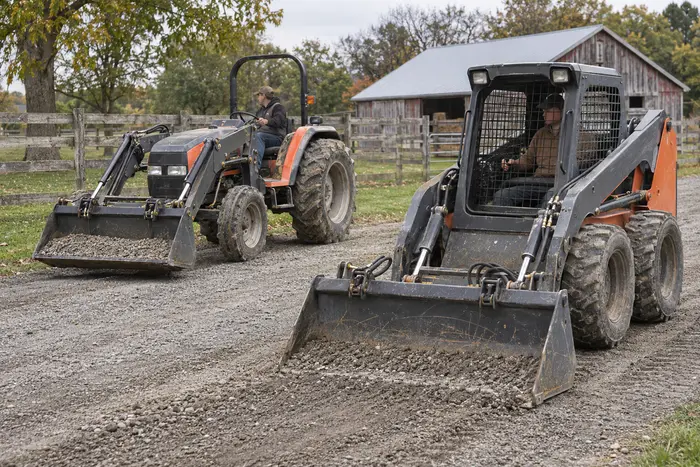
A wheel loader steers by articulating its frame. A skid steer steers by driving the wheels or tracks on each side at different speeds, which makes it spin on its own footprint. Skid steers are compact, very maneuverable and work in tight spots. Wheel loaders are larger, carry more per cycle and travel faster, and they spare the ground on turns. Skid steers excel at small-scale jobs and attachment variety. Wheel loaders suit production loading. Our types of skid steers and skid steer vs tractor guides help you compare.
Wheel loader vs backhoe loader vs track loader
- Backhoe loader: a tractor with a front bucket and a rear digging arm. It digs and loads but is not specialized for either. See backhoe vs excavator.
- Track loader (crawler loader): a loader on tracks. It offers better traction on soft ground but is usually slower and costs more to maintain.
- Wheel loader: best on firm ground and where travel speed and loading production matter.
Do wheel loader attachments fit other machines?
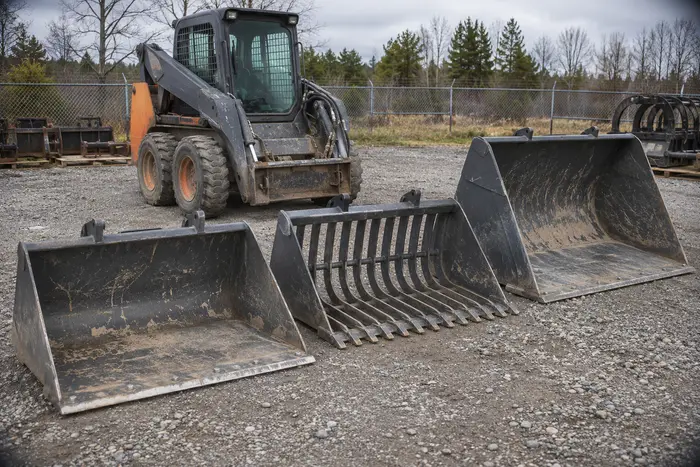
Often not. Wheel loaders have their own coupler systems, and some compact wheel loaders can use skid steer style tools through an adapter. Do not assume cross-fit. Bucket size, weight, pin spacing and hydraulic needs differ. Before you order a bucket, forks or a grapple, confirm the coupler type, rated capacity and hydraulics. If you work with a smaller machine, browse buckets, pallet forks and grapples for universal-plate carriers, and read loader bucket types to choose the right bucket shape.
How big do wheel loaders get?
The range is huge. Compact wheel loaders sit near the skid steer class. Mid-size loaders are common on construction sites and in aggregate yards. The largest units in mining and quarrying are many times heavier and carry large buckets that fill haul trucks in a few passes. Our guide to the largest wheel loaders looks at the top end. For most contractors and landowners, the choice is among compact, small and mid-size machines.
Operating safety
- Follow the operator manual, including rated operating capacity and slope limits.
- Carry the bucket low when you travel. A high load shifts the center of gravity and raises tipping risk.
- Check visibility. Use spotters when people or vehicles are nearby.
- Wear your seat belt and keep the cab doors closed.
- Lower the bucket and shut off the machine before you leave the seat.
What to tell us before you order an attachment
Send the machine type, make, model, year and the coupler type. Tell us the job: loading, forking pallets, handling bales, clearing brush or moving snow. A person will confirm fit against the maker's specs. If the machine falls outside our product range, we will say so rather than guess.
How a wheel loader works
A wheel loader is driven by a diesel engine that powers the wheels through a transmission and powers the hydraulic pump that moves the arms and bucket. The operator uses controls to raise and lower the arms, curl the bucket in and out, and steer. Articulated steering bends the frame in the middle, so the front and rear axles follow each other through turns. Because the rear half carries the engine and counterweight, the machine stays stable when the front carries a full bucket.
The typical work cycle is short: drive into the pile with the bucket low, curl the bucket to fill it, back out, travel to the truck or hopper, raise the arms and dump. Good operators keep the bucket low during travel and use a smooth, repeating pattern. That keeps the machine stable and the cycle time short.
Choosing a bucket and tooling
Bucket choice depends on material. A general-purpose bucket handles soil and gravel. A light-material bucket has a bigger volume for mulch, snow and wood chips. A rock bucket or one with a spill guard suits heavy, abrasive or rolling material. Teeth help the bucket dig into compacted or stony piles, while a smooth cutting edge is better for stockpile work and for sweeping floors. Match the bucket's weight and size to the loader's rated capacity and the density of your material. Dense, wet material fills a bucket by weight long before it fills by volume. Our loader bucket types guide goes through each type.
Where wheel loaders fit among compact machines
If you work in tight spaces and run many different tools, a skid steer or compact track loader usually fits better. If your day is mostly moving stockpiled material at speed on firm ground, a wheel loader earns its size. Many fleets run both. The right answer depends on the material, the distances and the ground.
Get the right fit the first time
Send us your machine make, model and year and tell us the job. A person checks the attachment against the maker's specs, then you get a fit-checked quote with delivered pricing before you pay. Warranty terms, if any, are written on your quote.
Questions buyers ask
What is a wheel loader used for?
A wheel loader scoops and moves loose material such as soil, sand, gravel, aggregate and snow. Common work includes loading dump trucks, feeding stockpiles, backfilling, site cleanup and snow clearing. With forks or a grapple it also lifts pallets and bales.
What is the difference between a wheel loader and a front end loader?
They usually mean the same thing. Wheel loader, front-end loader, front loader, bucket loader and payloader are all names for a wheeled machine with a front bucket on lift arms. Some people also use front-end loader for a tractor with a loader.
Is a wheel loader the same as a skid steer?
No. A wheel loader usually steers by bending in the middle and is larger. A skid steer steers by driving the sides at different speeds and is more compact. Skid steers suit tight work and attachments. Wheel loaders suit production loading.
Can a wheel loader dig like an excavator?
It can scoop and load, but it does not dig deep below grade like an excavator. An excavator's boom and stick reach down and out. Use a wheel loader for loading and moving material and an excavator for trenching and deep digging.
What attachments can a wheel loader use?
Many wheel loaders take buckets, forks, grapples and bale handlers, and some use clamshell buckets, snow pushers and brooms. The coupler type, rated capacity and hydraulics decide what fits, so confirm them with your machine's make and model.