Land clearing guide
Skid Steer Stump Grinder: How to Choose and Use One
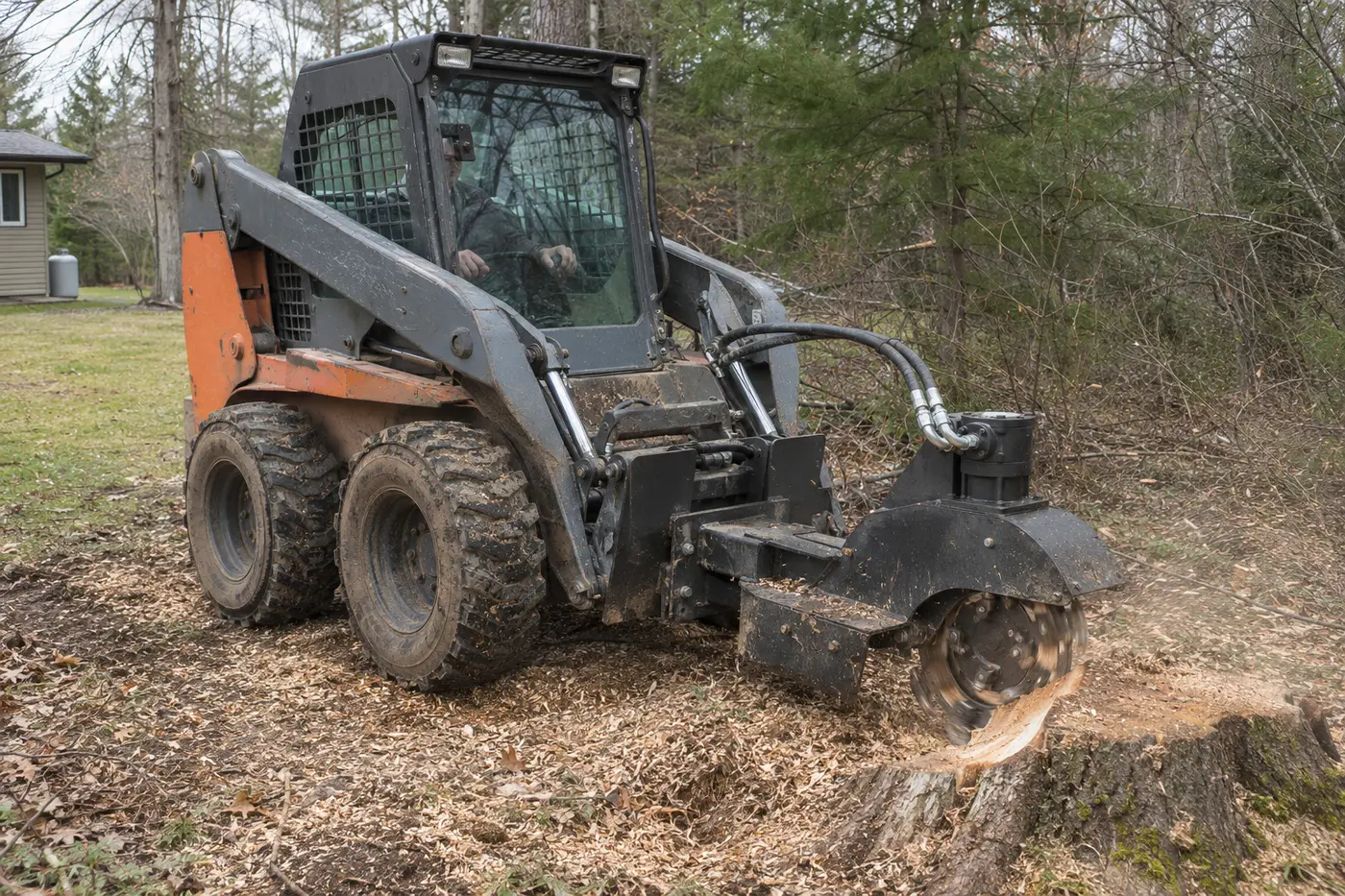
Quick answer
A skid steer stump grinder is a hydraulic attachment with a carbide-toothed cutter wheel that chips a stump away below grade. Match your loader's hydraulic flow, check the weight against rated capacity, and work in light passes with proper guards and protective gear. Larger models often need high flow.
Shopping for this now? Get a fit-checked, delivered quote.
Key takeaways
- Hydraulic flow and pressure are the first fit check.
- A swing arm saves wear on the loader and tires.
- Grind in light passes; plunging bogs the machine.
- Call your utility locate service before you grind.
- Grinder, bucket and mulcher each fit a different job.
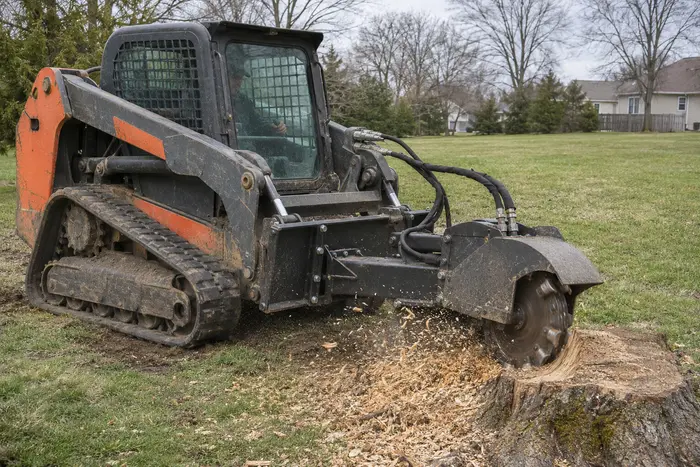
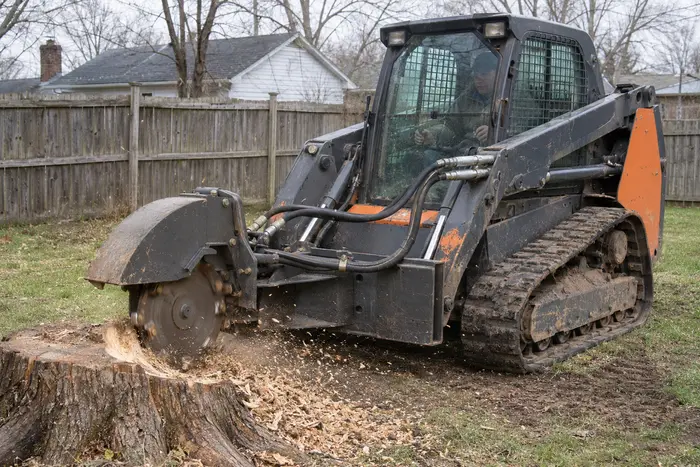
A skid steer stump grinder turns your loader into a stump removal machine. A hydraulic motor spins a toothed cutter wheel while the loader arms and tilt sweep it through the wood. It works well on stumps you can reach from open ground, and it keeps one machine on site instead of two.
How does a skid steer stump grinder work?
The attachment has a cutter wheel fitted with carbide teeth. The wheel spins off the loader's auxiliary hydraulics. You do not push it straight down into the stump. You lower the wheel a little at a time and swing it side to side, either by moving the loader or by using a built-in swing or pivot arm on the attachment. Each pass chips away a layer of wood. On a dedicated stump grinder, hydraulic cylinders move the wheel side to side and up and down. On a skid steer, the loader arms, tilt and any swing arm do that job.
Because the tool spins at speed, it throws chips and sometimes stones. That is why operators keep people and pets well back and use proper protection.
Do you need high flow for a skid steer stump grinder?
It depends on the model. Smaller stump grinders are built for standard flow and handle modest stumps. Larger and faster cutting models want high flow, which is a stronger hydraulic circuit that many loaders do not have. Running a high-flow tool on a standard-flow machine leaves it slow and prone to stalling. Check your loader's auxiliary rating, then compare it with the attachment's required flow and pressure.
If your machine is limited, read our guide on low-flow skid steer attachments and look at lighter-duty stump tools. Our broader explainer on skid steer hydraulic flow covers what the numbers mean.
How to choose the right stump grinder attachment
- Hydraulic match. Flow and pressure must fit your loader. This is the first filter.
- Cutter wheel size. A larger wheel reaches deeper and covers more width per pass but needs more power.
- Swing action. A swing arm keeps the loader still while the wheel sweeps across the stump. That saves wear on the machine and tires.
- Tooth style. Teeth are replaceable carbide. Check how they are held, how easy they are to change and whether spares are easy to buy.
- Weight and balance. The attachment must sit safely within rated operating capacity. Heavy tools push the load forward.
- Debris guard. A shield around the wheel cuts down on thrown chips.
- Mount and coupler. Confirm the plate and hose fittings fit your machine.
If you work on a mini loader, browse mini skid steer stump grinders. For standard loaders, see the full list of skid steer stump grinders.
Stump grinder vs stump bucket vs mulcher
| Tool | What it does | Best for | Watch out for |
|---|---|---|---|
| Stump grinder | Chips the stump down below grade | Clean removal on lawns, yards, edges | Needs hydraulic flow, throws debris |
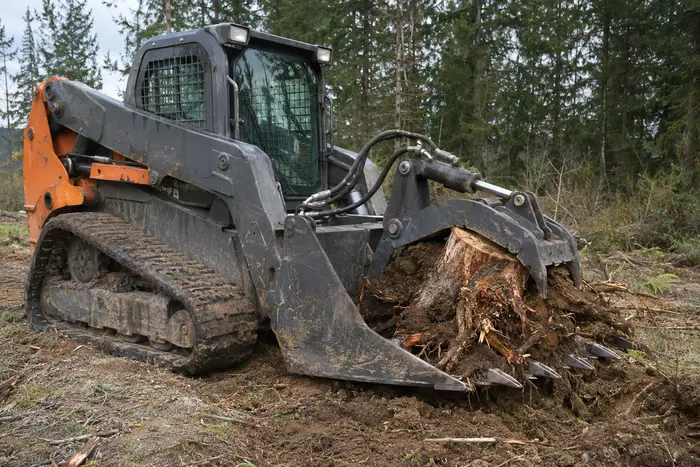
| Stump bucket | Digs and lifts the stump out with roots | Smaller stumps where a hole is fine | Leaves a large hole to backfill |
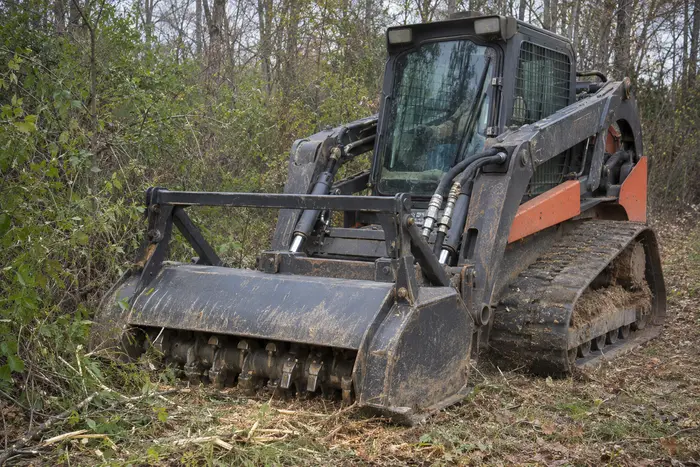
| Mulcher | Grinds standing trees and brush | Land clearing, not precise stump work | Needs strong high flow |
A stump bucket pulls the stump and root ball out in one lump. A grinder leaves the root system in the ground but removes the visible stump and surface roots. Which one is right depends on what you plan to put in that spot. Our stump bucket guide goes deeper, and our guide on how to remove a tree stump compares every common method.
How to grind a stump safely
Treat this as a rule list, not a replacement for your operator manual and the attachment manual. Both come first.
- Locate buried utilities. Have underground lines marked before you grind. In the US, call 811. In Canada, contact your provincial one-call service.
- Clear the area. Remove rocks, wire and fencing near the stump. Keep bystanders, children and pets well away from the work zone.
- Wear protection. Use eye and face protection, hearing protection, a hard hat, gloves and sturdy boots. Dust and chips are real hazards.
- Inspect the machine. Check hoses, couplers, teeth and the wheel guard. Replace worn or missing teeth first.
- Start the wheel in the clear. Bring it up to speed before it touches wood.
- Work in light passes. Start at the highest edge and sweep across. Lower the wheel a little each time. Do not force it.
- Stop and shut down before you clear jams or change teeth. Lower the attachment and follow lockout steps in the manual.
Common problems and fixes
- Slow cutting. Often dull or missing teeth, or too little hydraulic flow. Check teeth first.
- Machine stalls or bogs. You are plunging too deep. Take lighter bites.
- Chips everywhere. Check the guard. Move the loader and work from a better angle.
- Hot hydraulic oil. Hoses may be restricted or the flow mismatched. Stop and check.
- Vibration. Look for a damaged tooth, a loose mount or stones lodged in the wheel.
Teeth: what you should know
Teeth are the wear item. They dull fast in dirt and rock, and they break if they hit steel or stones. Plan to buy spares with the attachment and keep the proper wrench or socket on hand. Follow the maker's guidance on rotating and replacing teeth. Missing or badly mismatched teeth can unbalance the wheel, shake the loader and strain bearings.
What size loader do you need?
There is no single answer, because stump grinder attachments are built in several weights and power levels. A large wheel with an aggressive tooth pattern suits a bigger loader with more lift capacity and hydraulic output. A compact wheel with a light frame suits a smaller machine. Match the attachment to the loader, not the other way round. If the combined weight of the attachment hangs the loader nose-down, or the arms struggle to raise it, the tool is too big for the machine. For help sizing your loader, read our skid steer frame class guide.
Care and maintenance
Grease the pivot points on the swing arm on the schedule in the attachment manual. Keep hose ends capped when disconnected so dirt stays out of the hydraulic system. After each job, clear packed chips and dirt from around the wheel and housing, because a buildup traps heat and hides cracks. Check the mounting bolts for the teeth and the wheel after the first hours of use and regularly after that. Store the attachment on blocks or a rack, not flat on wet ground.
Buy or rent?
If you remove stumps once, renting a purpose-built stump grinder or hiring a pro often costs less than buying an attachment. If you clear lots, manage a rural property or run a landscaping crew, an attachment that rides on a loader you already own pays back through reuse. For a stump-removal price check, see our guide on stump grinding cost.
Get the right fit the first time
Send us the make, model and year of your machine and what you plan to do with it. A person checks fit against the maker's specs and sends a delivered price for you to approve before you pay, and the supplier ships direct. Ready when you are: get a fit-checked stump grinder quote.
Questions buyers ask
What is a skid steer stump grinder?
It is a hydraulic attachment with a toothed cutter wheel that mounts to a skid steer quick attach plate. The loader's auxiliary hydraulics spin the wheel while you sweep it across the stump. It removes the stump by chipping it down to or below ground level.
Can a skid steer grind stumps?
Yes, with a stump grinder attachment that matches your hydraulic flow and rated capacity. Check the attachment weight against your loader's nameplate and manual, confirm flow and pressure, and use proper guards and protective gear. Without enough flow the wheel will run slowly and bog down.
Do skid steer stump grinders need high flow?
Larger, faster-cutting models usually do. Smaller models are built for standard flow. Check your loader's auxiliary hydraulic rating and compare it to the attachment's required flow and pressure. A mismatch means slow cutting, heat and early wear.
How often do stump grinder teeth need replacing?
There is no fixed interval. Teeth wear faster in dirt, sand and rock, and they break on steel or stones. Inspect them before each job, replace dull or damaged ones, and follow the maker's guidance so the wheel stays balanced.
Is a stump grinder attachment better than a stump bucket?
They do different jobs. A grinder chips the stump away and leaves roots in the ground, which suits lawns and clean finishes. A stump bucket lifts the stump and roots out and leaves a hole to fill. Choose by what you plan to do with the spot.