Land clearing guide
How to Remove a Tree Stump: Methods Compared
Quick answer
To remove a tree stump, grind it, dig it out, pull it with a machine, or speed up its decay. Grinding is the fastest and leaves roots below the surface, while digging and pulling remove the stump and roots but take more labor and equipment. Choose by stump size, access and how soon you need the spot.
Shopping for this now? Get a fit-checked, delivered quote.
Key takeaways
- Grinding is fastest and typically takes the stump and big roots to about 8 to 12 inches deep
- Digging works only for smaller stumps, under about 12 inches across
- Natural decay can take over ten years; treated stumps may break up in one to three
- Pulling with a machine removes the whole stump but needs the right attachment and rigging
- Call before you dig, and never use burning or fuel to remove a stump
Stump removal looks easy until you try it. A stump is mostly roots, and the roots reach farther and deeper than you expect. The right method depends on size, access, how fast you need the spot clear, and what you plan to put there afterward. This guide compares the main methods and tells you what each one asks of you.
What are the main ways to remove a stump?
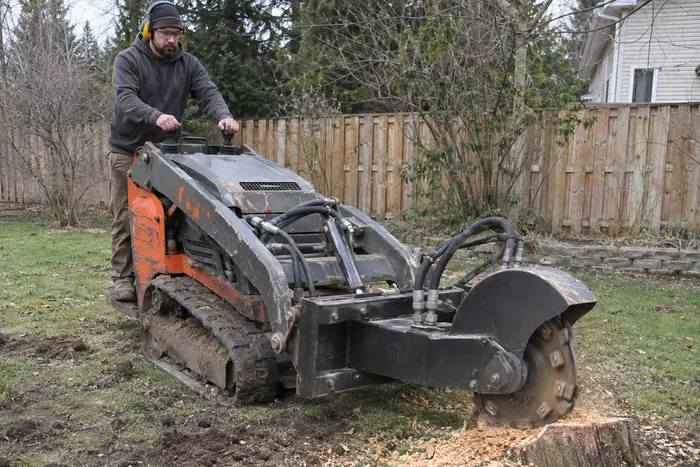
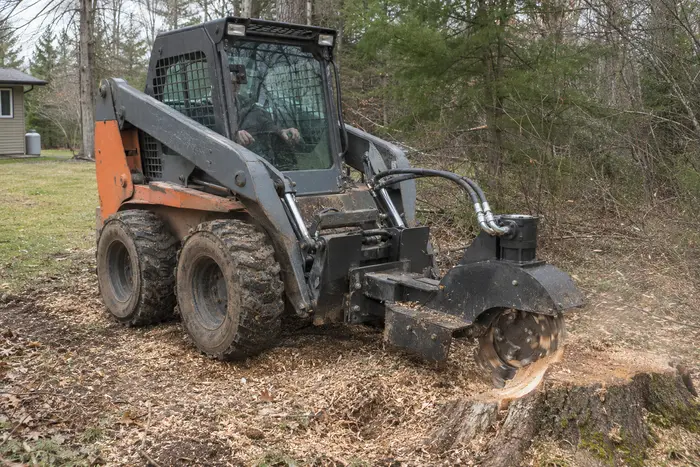
- Stump grinding. A grinder chews the stump and large roots into chips.
- Digging out. You dig around the stump, cut the roots and pry it out. Practical for small stumps.
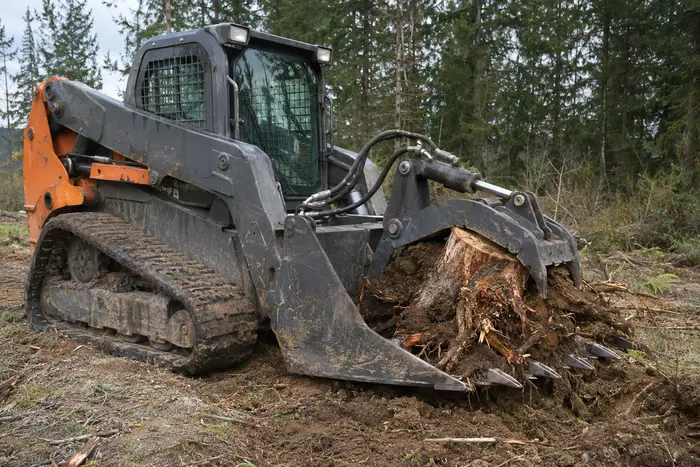
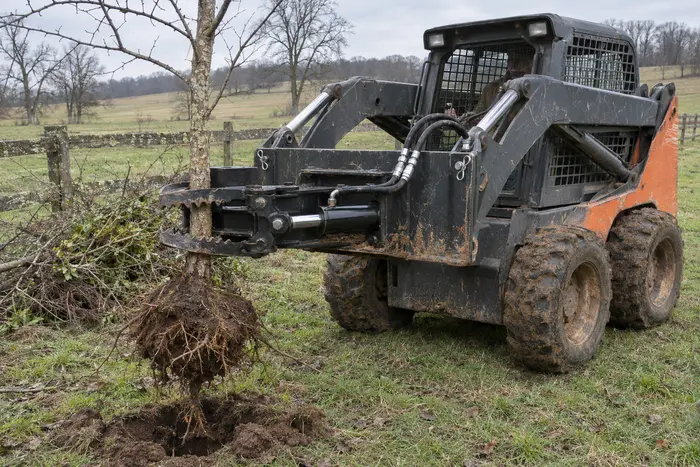
- Pulling with a machine. A skid steer, excavator or tractor with the right attachment pulls the stump out.
- Accelerated decay. Drill holes and add fertilizer, then wait.
- Leave it. Dead stumps can sit as a feature if they are stable and not in the way.
Comparison table
| Method | Speed | Effort | Result |
|---|---|---|---|
| Grinding | Hours | Low if hired; high if you operate a machine | Stump and large roots ground below grade; chips remain |
| Digging | Hours to a day for small stumps | High, by hand | Stump and some roots removed; hole to fill |
| Machine pulling | Minutes to hours per stump | Moderate; needs equipment and rigging | Stump and root mass removed; large hole to fill |
| Accelerated decay | Years | Low | Rotted wood that breaks up; roots remain |
How does stump grinding work?
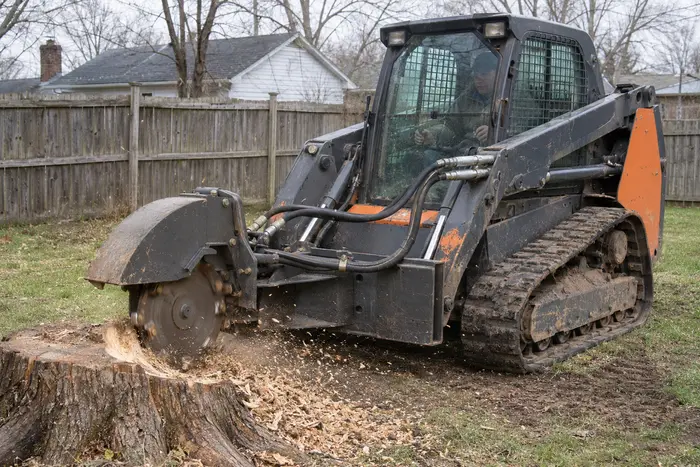
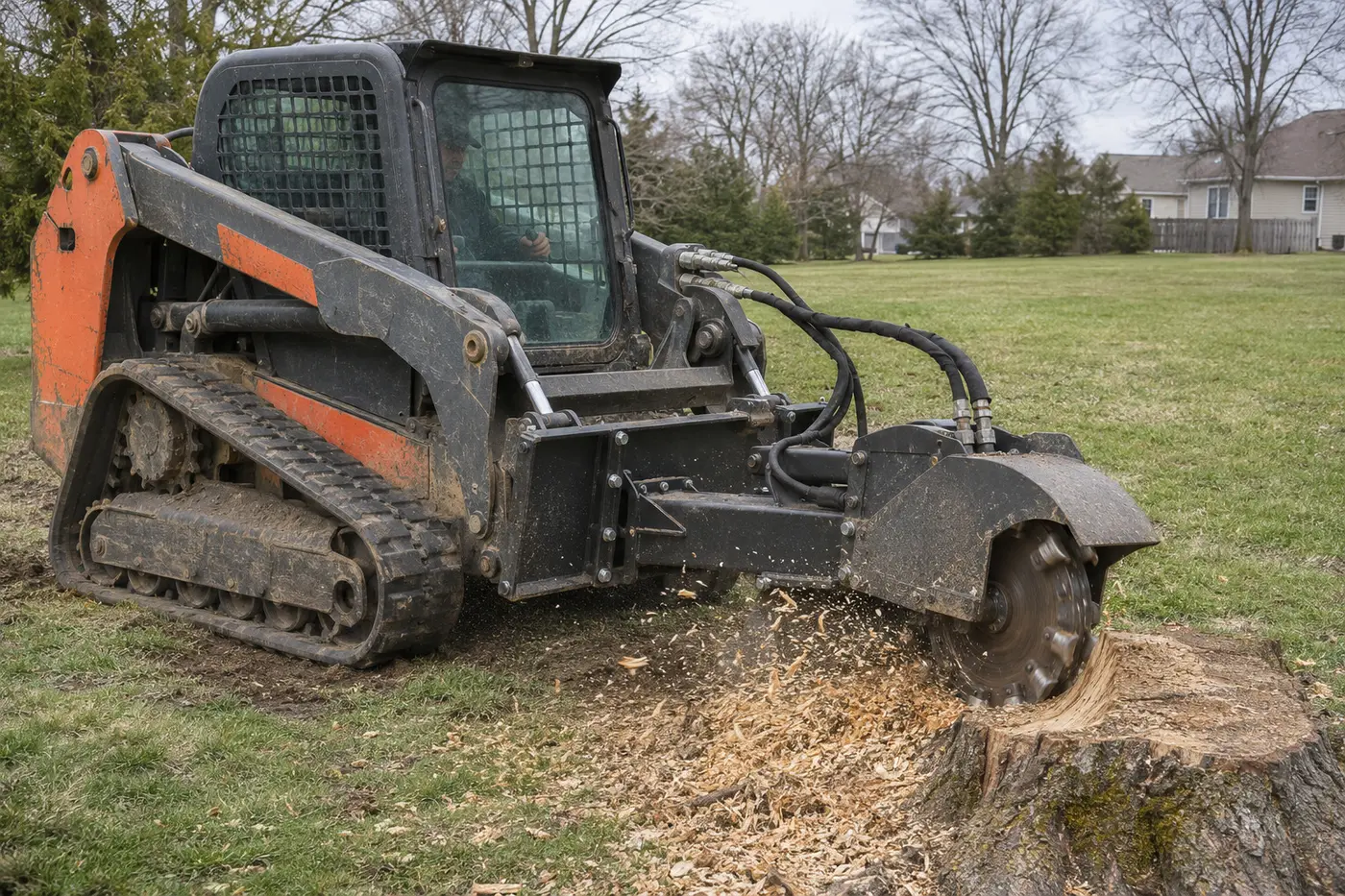
An arborist or contractor grinds the stump and the larger lateral roots, typically to about 8 to 12 inches below the surface. The work takes hours. The cost depends on the width of the stump at its widest point. Wood shavings stay in the hole, and they usually have to be removed before you add topsoil. If they stay, they can make it hard for turf or plants to grow. Filling the hole and hauling away the shavings are usually extra-cost services.
Grinding does not remove the full root system. That is fine for lawn and most plantings, but not if you plan to put in a foundation, a pool or deep utilities on the spot. If you own a skid steer, a skid steer stump grinder lets you do the work yourself, and our stump grinder guide explains the details.
Can you dig a stump out by hand?
For stumps under about 12 inches across, yes. The usual approach is to dig a trench 1 to 2 feet deep around the stump and saw through the lateral roots. Leave the stump tall, around 4 to 6 feet, so you have leverage, then pry it to one side. Fill the hole with topsoil.
Be careful with chains and ropes. A chain or rope used to pull a stump can slip or break and cause serious harm to people and property. Digging a larger stump by hand is not practical, so do not try it.
How do machines pull stumps?
When you need the whole stump and root mass gone, machines do it faster than hand tools. A skid steer can carry a stump bucket or a tree-pulling attachment, and a mini excavator can use its bucket and thumb to dig around the stump, cut roots, and lever it out. A grapple or post and tree puller can pull smaller trees and stumps with its jaws. Our stump bucket guide and tree puller guide cover those tools.
Plan the pull. Use rated attachments, keep the lift low, and keep people well back. Tipping and snapping chains are the main hazards. Do not use a chain looped around the stump and a machine you have not checked against the load chart. Follow the operator manual and the attachment instructions.
How about accelerated decay?
If you can wait, you can speed up rot. Cut the stump as low to the ground as you can, drill holes about 1 inch wide, spaced no more than 12 inches apart and at least 10 inches deep, and fill them with slow-release fertilizer. A figure of about 4 ounces per hole is suggested by one extension guide. Fertilizers high in nitrates speed decay most. Cover the stump with soil or sod to keep it moist.
Once treated, the stump can often be broken up with a spade in one to three years. Left alone, decay can take more than ten years. Commercial stump products are usually fertilizers and some contain herbicides, so use them as directed to avoid harming nearby plants.
What about herbicide?
Herbicide is for stopping regrowth, not for removing the wood. Apply an appropriate product to the living layer just under the bark of a fresh cut, after clearing sawdust and soil from it. Poured over an old stump or into drill holes, herbicide only leaches into the soil and can harm nearby plants. Cut off any resprouts and reapply until sprouting stops. Read the label and avoid products that persist in soil near plants you want to keep.
What methods should you avoid?
Burning is the main one. Accelerants such as diesel can leach into soil, stump fires can burn for days, and many cities and counties prohibit burning. Skip it.
Safety checklist before you start
- Call your local utility locate service and have buried lines marked before you dig or grind.
- Check for septic lines, irrigation, fences and sidewalks near the stump.
- Wear eye, ear and foot protection, and keep bystanders and pets away.
- Use rated rigging for pulling and stay out of the line of a chain or strap.
- Follow the operator manual for any machine and the instructions for the attachment.
- Know what you will do with the chips and the hole before you start.
Which method should you choose?
A single small stump in a lawn is a job for a digger or a rented grinder. A large stump near a building is a job for a pro. A row of stumps on a lot you are clearing is a job for a machine. If you already own a skid steer or mini excavator, check our tree grubbers and stump grinders before you hire it out. For larger clearing jobs, read what forestry mulching is.
What to do with the hole or chips
Ground stumps leave a mound of chips. Haul most of them away and fill the hole with topsoil so turf can grow. Chips can be used as mulch away from the trunk of nearby plants, but a deep pile of fresh chips takes nitrogen from the soil as it breaks down. For pulled stumps, fill and compact the hole in layers so it does not settle.
Get the right fit the first time
Send us your machine make, model and year and what you plan to do with it. A person checks fit against the maker's specs, and you approve a delivered price before you pay. The supplier ships direct. Get a fit-checked quote.
Questions buyers ask
How do you remove a tree stump?
Grind it with a stump grinder, dig it out if it is small, pull it with a machine, or speed up decay with fertilizer and wait. Grinding is fastest. Pulling removes the whole stump. Choose by stump size, access and timing.
How can I remove a tree stump by hand?
For stumps under about 12 inches across, dig a trench 1 to 2 feet deep around the stump, saw through the lateral roots, and pry it out using the stump as a lever. Larger stumps are not practical by hand.
How long does it take a stump to rot?
Unassisted decay can take more than ten years. Cutting the stump low, drilling holes and filling them with high-nitrogen fertilizer can let you break it up with a spade in one to three years, depending on species and climate.
Can I remove a tree stump without a grinder?
Yes. You can dig it out if it is small, pull it with a machine, or treat it with fertilizer and wait. Avoid burning. Each method has tradeoffs in time, effort and the roots left behind.
Is burning a stump safe?
No. Accelerants like diesel can leach into soil, stump fires can burn for days, and many cities and counties prohibit burning outright. Use grinding, digging, pulling or accelerated decay instead, and always check local rules first.