Land clearing guide
Skid Steer Forestry Mulcher: Buying Guide for Land Clearing
Quick answer
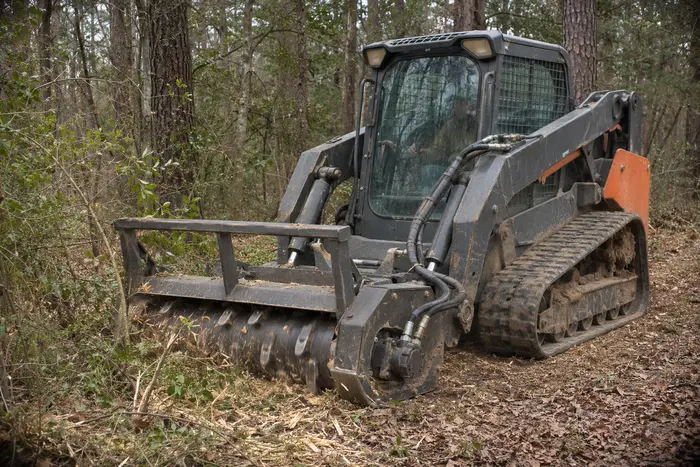
A skid steer forestry mulcher is a hydraulic head that shreds trees, brush and stumps into mulch in place. Choose by high-flow hydraulic output, carrier size, cutting width, maximum tree diameter, drum versus disc, tooth type and safety guarding. Always stay within your loader's rated operating capacity.
Shopping for this now? Get a fit-checked, delivered quote.
Key takeaways
- Check high-flow output first; most mulchers need it.
- Match the head's width and weight to the carrier's rated capacity.
- A mulcher is built for trees; a brush cutter is built for brush.
- Teeth wear fastest, so plan for replacements.
What is a skid steer forestry mulcher?
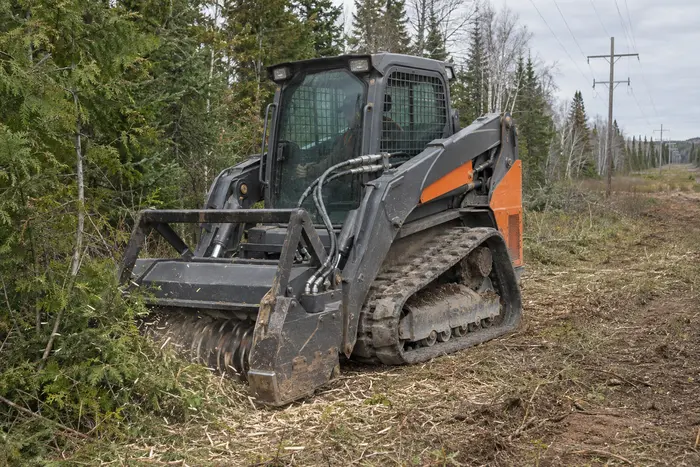
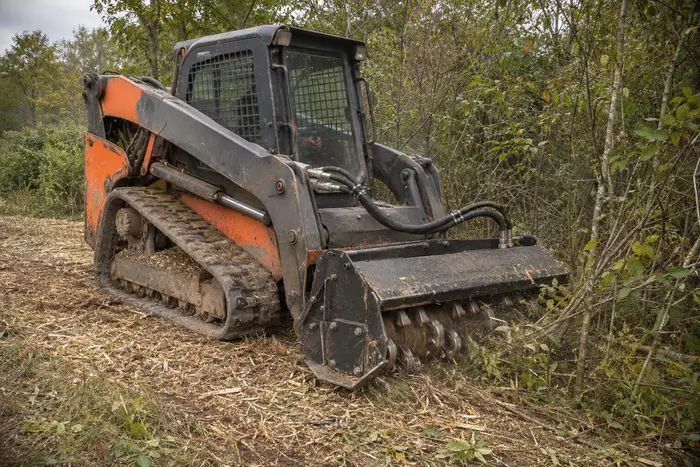
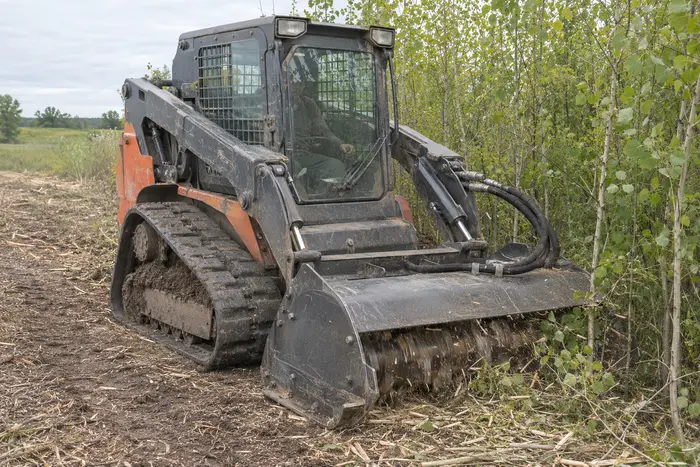
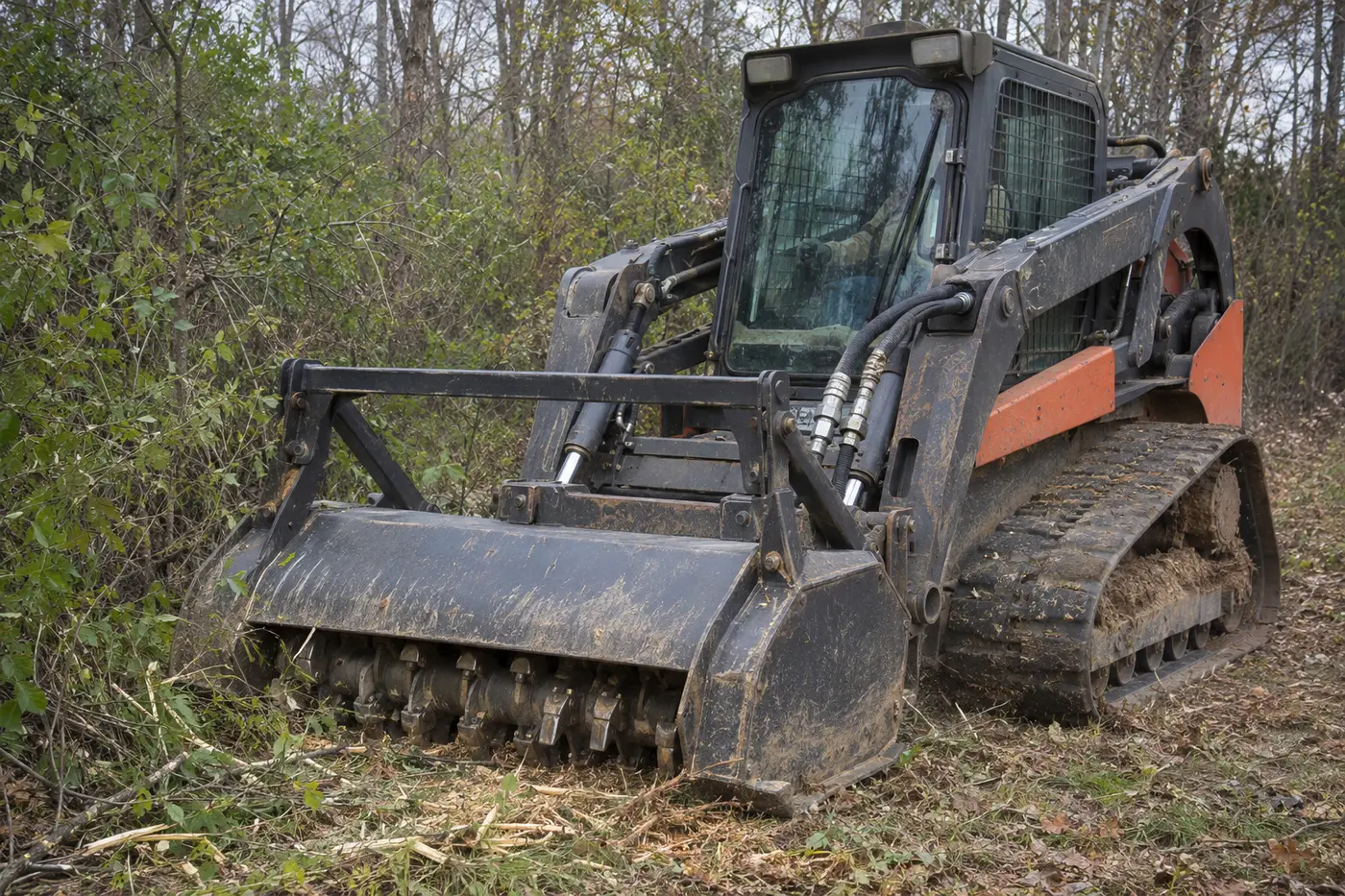
A skid steer forestry mulcher is a hydraulic cutting head that shreds trees, brush and stumps in place. A rotating drum or disc with steel teeth chews vegetation into wood chips and mulch that stay on the ground. There is no hauling, no burn pile and no chipper. One machine cuts, grinds and clears. That is why mulchers are a standard tool for land clearing, trails, fence lines and firebreak work.
The mulching head mounts on the skid steer's quick attach plate and takes its power from the loader's high-flow auxiliary hydraulics. That last point matters more than any other spec. If your machine cannot deliver the oil flow the head needs, the head will be slow, stall in thick cover and run hot.
How do you choose a skid steer forestry mulcher?
- Hydraulic flow and pressure. Most forestry mulchers want high-flow hydraulics. Check the head's requirement against your loader's high-flow output, and confirm the case drain and hose connections. Our hydraulic flow guide and the list of attachments that need high flow explain why.
- Carrier size and weight. A big head on a small loader makes the machine nose-heavy. It tips and loses visibility. Stay inside the loader's rated operating capacity and add counterweight if the manual calls for it.
- Cutting width. A wide head clears fast but needs more flow and carrier capacity. A narrower head turns better in trees and tight trails.
- Maximum material diameter. Makers list how large a tree the head can take. Be honest about the biggest tree on your land. A mulcher forced to bite far beyond its limits wears fast.
- Drum or disc. A drum head cuts and leaves a fine, even mulch. A disc head can be more aggressive on larger standing wood. Our disc vs drum mulcher guide goes into the trade-offs.
- Tooth type. Fixed teeth, swinging hammers and carbide-tipped cutters each handle different material. Dirt and rock strikes wear teeth faster. Ask what replacements cost and how long swaps take.
- Motor type. Piston motors are generally regarded as more durable under constant heavy loading than gear motors. Check what the maker fits.
- Guards and safety. Flaps, chain curtains and a protective structure on the carrier matter. A mulcher can throw wood and rock.
Skid steer mulcher vs brush cutter
The two are often confused. A brush cutter swings blades or knives in a large deck and is built for brush and small saplings. A forestry mulcher has a heavy drum with a lot of teeth and mass, and is built for trees, stumps and woody undergrowth.
| Feature | Brush cutter | Forestry mulcher |
|---|---|---|
| Best for | Brush, saplings, tall grass | Trees, stumps, dense woody growth |
| Hydraulic demand | Lower; some run on standard flow | High; usually high flow |
| Result | Cut and scattered material | Fine wood mulch left in place |
| Cost to run | Lower wear | Teeth and drum wear faster |
If your cover is mostly light brush, look at the brush cutters category. If you need to take down trees and grind stumps, look at forestry mulchers.
What can a skid steer mulcher handle?
That depends on the head and the carrier. A modest unit on a standard skid steer handles brush, small trees and fence lines. A large head on a big track loader with high flow chews through thicker timber. The maker's maximum diameter rating is the guide. Do not assume a mulcher will handle any size tree that fits under it.
Soil and weather change the job. Wet ground and steep slopes reduce traction and increase risk. Tracks help on soft ground, so many land clearing operators run compact track loaders. Our wheels vs tracks guide covers the choice.
Safety and site prep
- Walk the site before you cut. Mark wells, septic tanks, fences, utility lines and property boundaries.
- Call your local utility locating service before clearing. In the US, dial 811. In Canada, contact your provincial one-call service.
- Keep bystanders and animals far outside the throw zone.
- Keep the cab doors and guarding in place. Check that the machine has the protective structure the manual requires for forestry work.
- Do not climb over the head or reach near the drum while it turns. Lower the head, shut off the hydraulics and stop the machine before service.
- Follow the carrier and attachment manuals, including rated operating capacity and slope limits.
Maintenance and wear
Teeth wear quickly in dirt and rocks, so inspect them daily and rotate or replace on the maker's schedule. Check bolts for torque, drum bearings for heat and hoses for rubbing. Keep the machine clean and free of wrapped vines and wire. Wear parts are the real running cost of a mulcher, so ask about them before you order.
Rent first or buy?
If you are clearing a single lot, renting or hiring a mulching crew can make sense. If you clear regularly, owning gives you control of timing and hours. Before you decide, compare the cost of wear parts, fuel and transport. Land clearing is also about what you do with the stumps and roots. Read what forestry mulching is to see how mulching differs from other clearing methods, and the land clearing cost guide to compare options.
How to mulch efficiently
Good mulching is mostly technique. Work in the direction that keeps cut material falling onto ground you have already cleared. Take trees from the top down in controlled bites instead of ramming the head into the trunk. Let the drum reach full speed before it touches wood, and ease off if the engine or hydraulics labor. Many operators cut standing trees low first, then lay them over and work along the trunk.
Keep the head level with the ground on stumps, and sweep side to side so the teeth cut rather than pound. Leave the mulch layer reasonably thin where you plan to seed, and pile or spread it where you want weed suppression. Heavy mulch layers can smother new growth and take a long time to break down.
What to tell us before you order
- Your skid steer or compact track loader make, model and year.
- Whether the loader has high-flow hydraulics, and what flow and pressure it delivers.
- The biggest tree you need to cut and the type of cover.
- Whether the ground is flat, sloped, wet or rocky.
- How many acres you plan to clear per year.
With those details, a person can check the head against your carrier before you commit to anything.
Get the right fit the first time
Send us your machine make, model and year and tell us the job. A person checks the attachment against the maker's specs, then you get a fit-checked quote with delivered pricing before you pay. The supplier ships direct, and warranty terms, if any, are written on your quote.
Questions buyers ask
Does a skid steer forestry mulcher need high flow?
Most do. Forestry mulchers are hydraulic hogs, and high-flow output keeps the drum turning in thick cover. Check the head's flow and pressure requirement against your loader, and confirm the case drain and couplers before ordering.
Can a standard skid steer run a mulcher?
Some lighter mulching and brush heads run on standard flow, but a true forestry mulcher usually needs high flow. A standard-flow loader may stall the head or work slowly. Share your make, model and year so we can check.
What is the difference between a mulcher and a brush cutter?
A brush cutter handles brush, saplings and tall grass with a lighter deck. A forestry mulcher has a heavy drum with teeth built to grind trees and stumps into mulch. Mulchers need more hydraulic power and cost more in wear parts.
Drum or disc mulcher: which is better?
A drum mulcher leaves an even, fine mulch and suits most clearing. A disc mulcher is aggressive on larger standing wood. The best pick depends on your tree size, carrier flow and finish you want.
How big a tree can a skid steer mulcher cut?
It depends on the head and the carrier. Every maker lists a maximum diameter. Stay within it and your loader's rated operating capacity. Forcing a head beyond its rating wears teeth, drums and motors quickly.