Land clearing guide
Low Flow Skid Steer Brush Cutters: Your Questions Answered
Quick answer
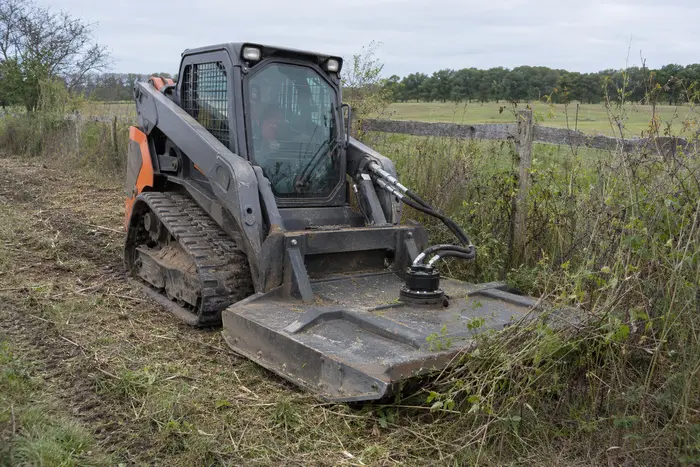
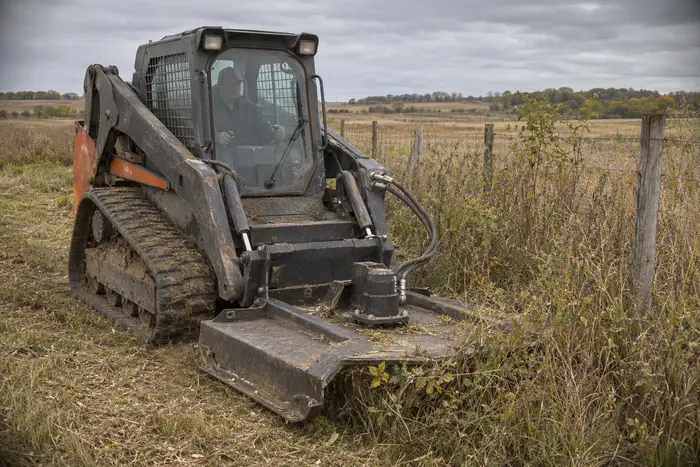
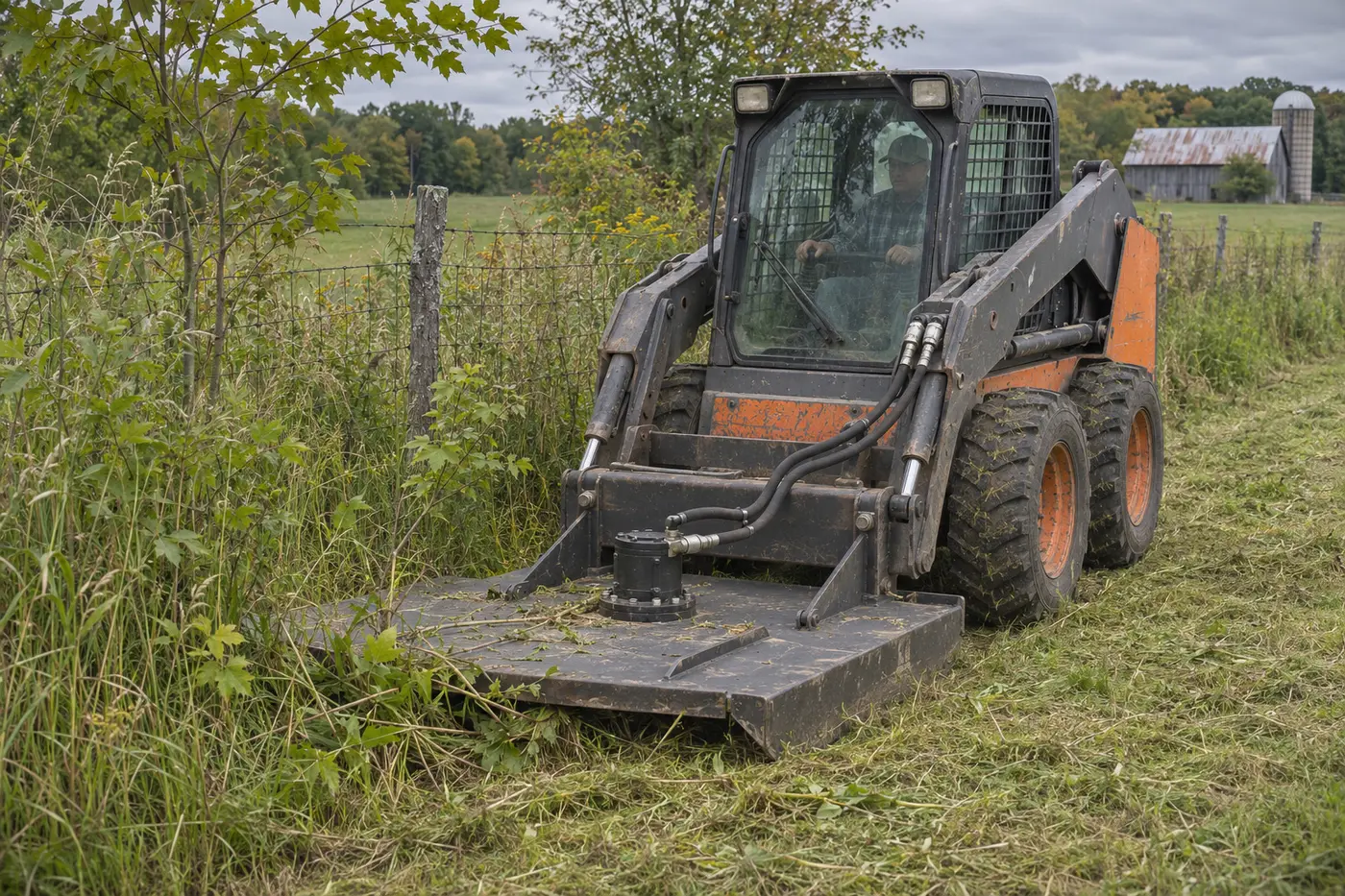
A low flow skid steer brush cutter is a cutter made to run on standard-flow auxiliary hydraulics instead of high flow. Many exist, but they cut lighter brush at slower speeds than high-flow units. Match the cutter's flow and pressure needs to your machine's output, not just to its size class.
Shopping for this now? Get a fit-checked, delivered quote.
Key takeaways
- Standard-flow machines can run brush cutters designed for lower hydraulic demand.
- Expect smaller cutting capacity and slower recovery in thick brush.
- Flow, pressure and case drain all need to match.
- Pick blade or flail style for the vegetation you actually cut.
Most questions about a low flow skid steer brush cutter come down to one worry: will my machine be able to spin it? The answer is often yes, with limits. This guide answers the questions we hear most and tells you what to ask a supplier.
What is a low flow brush cutter?
High flow means the machine can send a larger volume of hydraulic oil to the attachment than a standard-flow machine. A low flow brush cutter is built to work with the smaller flow of a standard auxiliary circuit. It uses a motor sized for that supply. It cuts, but with less spinning power and speed than a high-flow cutter. Our hydraulic flow explainer defines the terms. Our list of high-flow attachments shows which tools need more.
Can a standard-flow skid steer run a brush cutter?
Yes, if the cutter is rated for it. A brush cutter that is designed for high flow will starve on a standard-flow machine. It may turn slowly, stall in thick stems and run hot. A cutter designed for lower flow will perform better and last longer. The three numbers that matter are flow, pressure and the rated hydraulic horsepower of your machine. Your operator manual lists them. If you cannot find them, send us your make and model and a person can look them up.
What can a low flow brush cutter handle?
Think grass, weeds, saplings and light brush. A smaller flow gives you less torque at the blades, so thick stems and dense growth slow it down. If your work is mostly fence lines, ditches and overgrown pasture, a low flow cutter does the job. If you clear dense woody growth, a high-flow brush cutter or a mulcher is the better fit. Read our brush cutter buying guide for the full comparison.
| Job | Low flow cutter | High flow cutter or mulcher |
|---|---|---|
| Tall grass and weeds | Good | Good |
| Saplings and light brush | Fair, take slower passes | Good |
| Dense woody growth | Not recommended | Built for it |
| Fence lines and ditches | Good | Good |
Piston motor vs gear motor
You will see both on brush cutters. In general terms, piston motors are more efficient and handle high loads better. Gear motors are simpler and cost less to repair. Neither is a guarantee of performance. Look at the motor's displacement and pressure rating against your machine's output. Our guide on piston vs gear motor brush cutters goes deeper.
Blade and flail style
Brush cutters use swinging blades or flails on a rotating drum or disc. Pick for the vegetation. Blade styles chop thicker stems more cleanly. Flail styles throw less and leave a finer mulch. If you run a drum mulcher or a disc, read disc vs drum mulchers before you decide.
Checklist before you order
- Find your machine's auxiliary flow and pressure in the manual. Write them down.
- Check whether it has standard-flow only or a high-flow option.
- Confirm the cutter is rated for your flow, not just compatible with the mount.
- Check the case drain requirement and your couplers. Many motors need a case drain line.
- Confirm the mounting plate matches your quick-attach.
- Match cutter width to machine size so it does not overwhelm the loader.
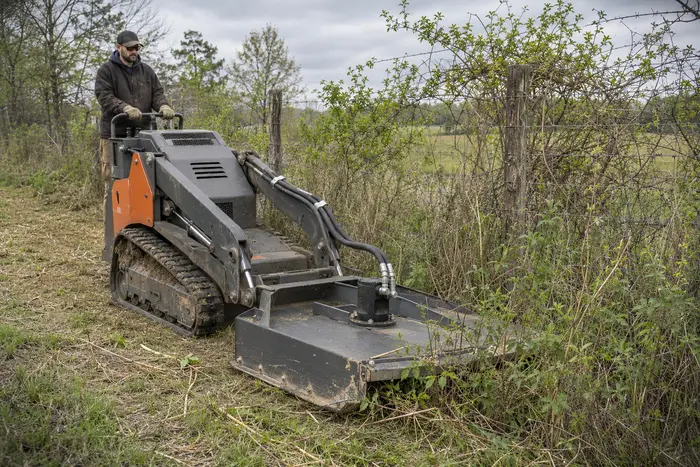
Our skid steer brush cutters category has a range of sizes. If you run a smaller machine, look at mini skid steer brush cutters, which are designed around lower flow outputs. Our mini skid steer brush cutter guide covers that case.
How to use a brush cutter well
- Walk the ground first. Mark rocks, stumps, wire and metal.
- Cut with the cutter just above ground level and move slowly. Let the blades recover between bites.
- Back out of thick stands instead of forcing through. Stalling is how motors get damaged.
- Keep bystanders well away. Cutters throw debris.
- Check blades and fasteners before every shift. Follow the operator manual.
What if my machine is too small?
If your loader has low output and the cutter you want is large, the cutter will disappoint you. The answer is a smaller cutter, not a bigger loader. Often a cutter built for a smaller class works best. Ask for a fit check that includes hydraulics, not just a mounting check.
What about the case drain?
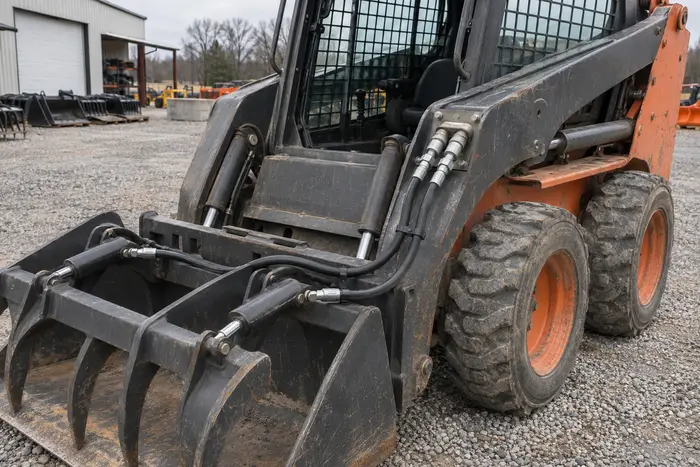
A case drain is a return line that lets a hydraulic motor vent internal leakage back to the tank. Many brush cutter motors need it. Without it, the motor seals can fail. If your machine does not have a case drain port, ask whether the cutter you want can run without one.
Quick answers to common questions
Will a high-flow cutter work on my standard-flow machine? It may turn, but slowly and with poor cutting, and it can run the loader hydraulics hot. The right fix is a cutter designed for your flow.
Can I add a high-flow package to my machine? Some machines offer a high-flow option from the maker. Ask a dealer for your model. Do not modify the hydraulic system yourself.
Is a flail better than a blade cutter? They are different tools. Flails leave a finer finish and throw less. Blade cutters bite through thicker stems. Choose by vegetation and finish.
Signs your cutter and machine are mismatched
- The cutter slows sharply in medium brush that it should handle.
- The hydraulic oil runs hot after short use.
- The motor leaks at the shaft seals.
- You find yourself working at idle speed so the cutter does not stall.
Any of these is a sign to stop and check the flow, pressure and case drain against the cutter's specs. Running a mismatched cutter wears out the motor and the loader's pump.
Maintenance on a low flow cutter
- Check blade or flail wear before each shift. Dull blades tear and bog the motor.
- Keep couplers clean. Dirt in the hydraulic circuit hurts motors fast.
- Inspect hoses for rubbing where they pass the loader arms.
- Grease any pivot points on the schedule in the manual.
- Clear grass and wire wrapped around the shaft after use.
A cutter run inside its rating tends to last. One run hard on thick brush by a machine that cannot feed it tends to fail early. Choose the right class and you avoid most of these problems.
If you are unsure which class your job falls into, describe the vegetation to us: stem thickness, density and how much of it there is. A person can then suggest a cutter that suits both the job and your machine's hydraulics.
Get the right fit the first time
Fit problems are the expensive mistakes, and they are easy to avoid. Send us your machine make, model and year and what you plan to do with it. A person checks the fit against the maker specs, and you see the delivered price before you pay. When you are ready, get a fit-checked quote.
Questions buyers ask
What is a low flow brush cutter?
It is a brush cutter designed to run on the smaller oil flow of a standard-flow skid steer auxiliary circuit. It cuts grass, weeds and light brush well, but it has less torque and speed than a high-flow cutter in dense woody growth.
Can I run a brush cutter on a standard flow skid steer?
Yes, if the cutter is rated for your machine's flow and pressure. A cutter built for high flow will starve on a standard-flow loader. Check the manual, then confirm the match, case drain and couplers before ordering.
What is the best low flow skid steer brush cutter?
The best one is rated for your machine's flow and pressure, sized for the vegetation you cut and has the right mounting plate. For thick woody growth, step up to a high-flow cutter or mulcher instead.
Do I need a case drain for a brush cutter?
Many brush cutter motors do. A case drain returns internal leakage to the tank and protects the motor seals. Check the cutter's requirements and your machine's ports, and ask for a fit check if either is unclear.
What are skid steer brush cutter flow requirements?
Flow requirements vary by cutter size and motor. Each cutter has a recommended flow and pressure range. Compare that range with your loader's auxiliary output in the operator manual, and stay inside the rating. Your operator manual has the exact figures for your machine.