Land clearing guide
How Much Does Stump Grinding Cost? And When to DIY
Quick answer
Professional stump grinding commonly runs from about $75 to $150 for a small stump up to $300 to $700 for a large one, or roughly $2 to $8 per inch of diameter depending on the source and region. Size, roots, access and cleanup move the price. Quotes vary, so get more than one.
Shopping for this now? Get a fit-checked, delivered quote.
Key takeaways
- Cost is driven mostly by stump diameter, then roots, access and cleanup.
- Published figures vary widely; treat them as rough ranges in US dollars.
- Renting a grinder can beat hiring if you have a few stumps.
- Owning a grinder or attachment pays off only with volume.
Stump grinding cost depends on what the stump looks like and where it sits. Published prices vary a lot by region and by who writes them, so treat any number as a range, not a quote. This guide shows the typical ranges from two tree-service price guides, what changes the price and when it makes sense to do the job yourself.
How much does stump grinding cost?
Two published pricing guides from tree-service businesses give the following US-dollar ranges. They do not match exactly, which is the point: prices are local and vary by contractor.
| Stump size (diameter) | Typical range per stump |
|---|---|
| Small (under about 12 in) | About $75 to $150 |
| Medium (about 12 to 24 in) | About $150 to $350 |
| Large (over about 24 in) | About $300 to $700 |
Many contractors price by the inch of stump diameter instead. Published per-inch ranges run from about $2 to $8 per inch depending on the source. Some contractors set a minimum charge for the visit. Another guide notes that hourly rates for multi-stump jobs can run roughly $150 to $300 per hour. Prices in Canada are generally quoted in Canadian dollars, so use these as rough comparison points and ask local contractors for current rates.
What affects stump grinding cost?
- Diameter. The biggest driver. Cutting volume rises fast with width.
- Height above ground. A tall stump adds time.
- Roots. Surface roots and wide root flare add work. Species matters, because some trees have denser wood and bigger roots.
- Access. Tight yards need smaller, slower machines.
- Buried obstacles. Rock, metal, fences or utility lines slow the job and add risk.
- Grinding depth. Deeper grinding takes longer.
- Cleanup. Hauling chips away or filling the hole usually costs extra. Leaving the chips for mulch can reduce the price.
- Number of stumps. Some contractors give a discount on extra stumps.
- Season. Some contractors have lower rates in winter.
How a stump grinder works
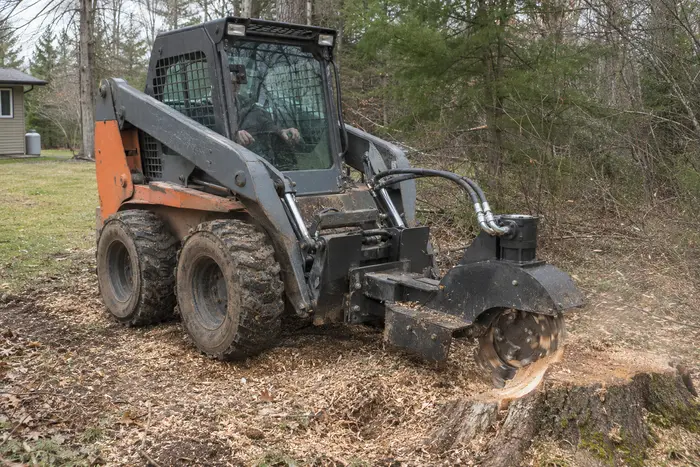
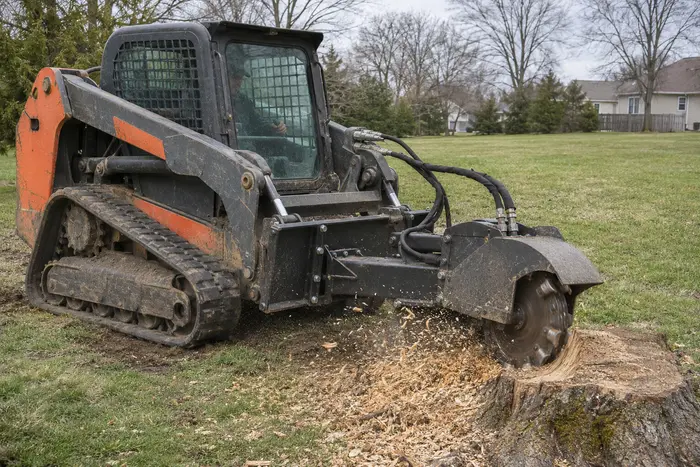
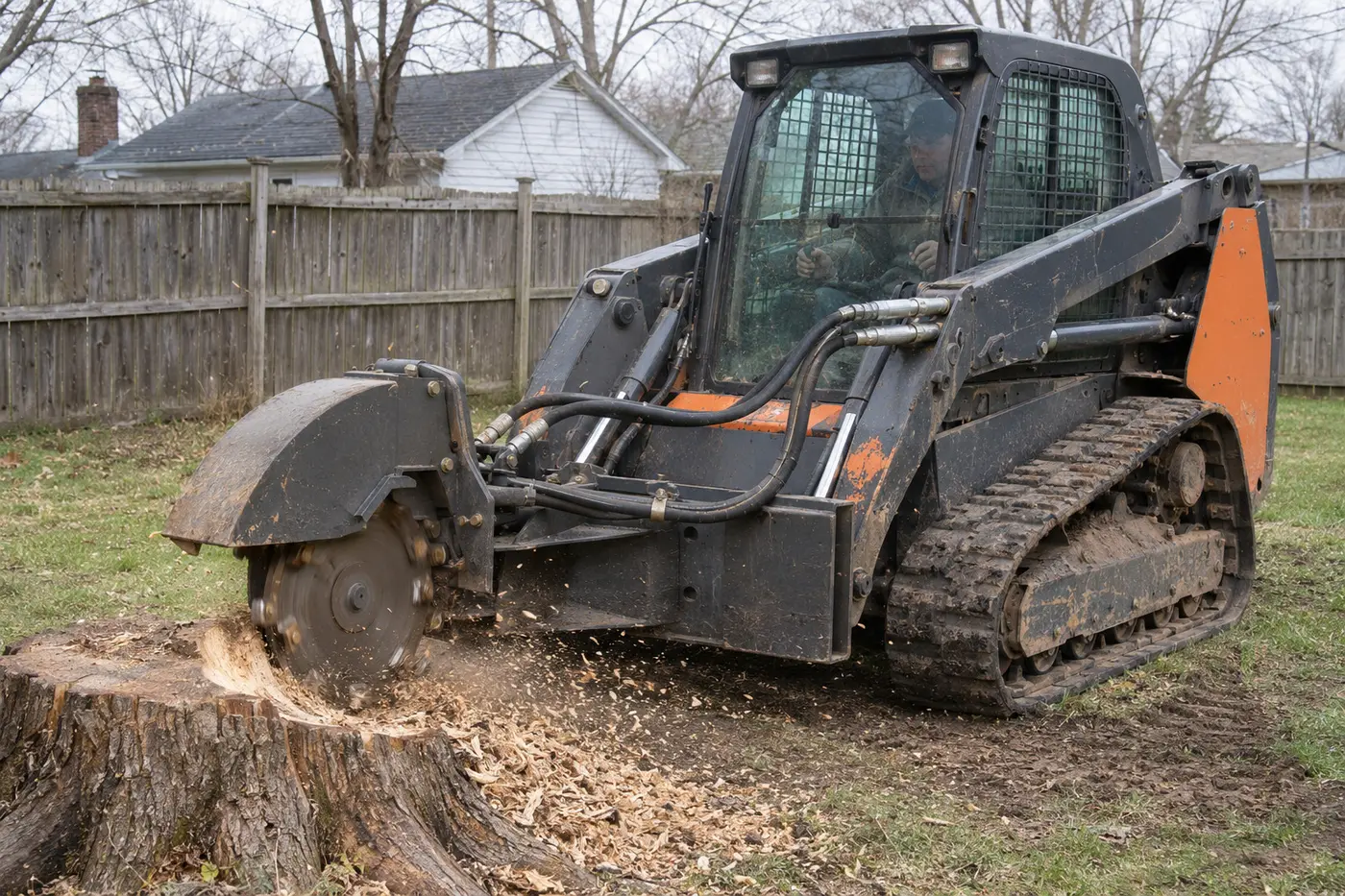
A stump grinder uses a rotating cutting disc with fixed carbide teeth to chip wood away. Hydraulic cylinders move the cutter wheel side to side and up and down so it can grind through the stump. How deep a grinder reaches depends on the machine and its cutter wheel, so ask what depth a contractor or rental unit can grind to. For more on how the tool works, read our skid steer stump grinder guide.
Should you DIY stump grinding?
You have three paths: hire a contractor, rent a grinder or own one. The best choice depends on how many stumps you have and how big they are.
| Option | Good for | Watch for |
|---|---|---|
| Hire a pro | A few stumps, large stumps, no equipment | Quotes vary; get several |
| Rent a grinder | One or a few small to medium stumps | Daily rental, fuel, blades, transport |
| Own a grinder or attachment | Many stumps, ongoing work, land clearing | Capital cost and upkeep |
One published guide puts homeowner-grade rental grinders at roughly $200 to $400 per day plus fuel, blade replacement and transport, and notes DIY grinding often takes longer than expected and may not reach the depth needed to prevent regrowth. The same guide, published by a company that sells grinders, says owning begins to pay for itself after about 8 to 12 stumps if you save a contractor's fee on each. Treat that as a rough figure from a seller, not a promise.
Stump grinding vs other removal methods
- Grinding. Fast and leaves chips. Does not remove the whole root system.
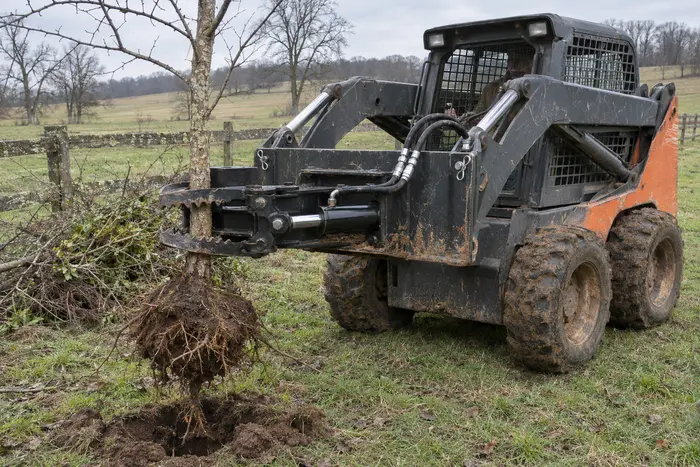
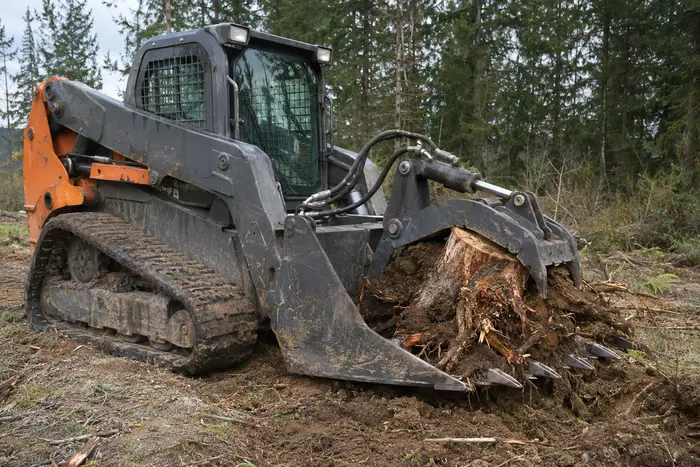
- Digging out. Removes the stump and roots. Hard work, needs an excavator or tree puller for big ones.
- Chemical or natural rotting. Slow. Takes months to years.
- Burning. Often restricted. Check local rules and never burn without permission.
For a property you plan to build on, pulling the stump and roots can make more sense than grinding. Our guides to removing a tree stump and tree pullers cover that route.
Equipment if you grind many stumps
Land clearers, landscapers and property managers who deal with stumps regularly often use a stump grinder attachment on a skid steer. It uses the machine's hydraulics and moves easily around a site. For smaller yards, a mini skid steer or a compact tracked machine fits. Browse skid steer stump grinders and mini skid steer stump grinders. Also see post and tree pullers.
Safety
- Call your local utility locate service before grinding. Buried lines near stumps are common.
- Wear eye, hearing and face protection. Grinders throw chips and stones.
- Keep people and pets far back from the cutting area.
- Check for wire, nails and rocks in the stump before you start.
- Follow the operator manual and the machine's rated capacity.
How to get a fair quote
- Measure each stump's diameter at ground level and note height.
- List roots visible above ground and any obstacles.
- Tell the contractor about access and cleanup you want.
- Ask if the price includes chip removal and filling the hole.
- Get at least two or three quotes in writing.
If you are thinking about buying a grinder attachment for regular work, send us your machine's make, model and year and how many stumps you expect a year. A person can tell you what fits and whether owning makes sense.
What happens after grinding?
Grinding leaves a pile of wood chips and a hollow where the stump was. Plan for the leftovers. You can use the chips as mulch, haul them away or mix a small amount into soil. Chips pulled from a fresh stump can tie up nitrogen in the soil if mixed in heavily, so keep them on top as mulch rather than digging them in. Fill the hole with topsoil, tamp it and seed or plant after it settles. If you plan to build or pave over the spot, tell your contractor so they can grind deeper and remove more material.
Will the stump grow back?
Some species send up suckers from roots left in the ground after grinding. The roots can stay alive for a while. If you do not want regrowth, ask the contractor to grind deeper, remove sprouts as they appear and discuss other control methods. A published guide notes that DIY grinding may not reach the depth needed to prevent regrowth.
Questions to ask a stump grinding contractor
- Is the quote per stump, per inch or by the hour?
- What depth will you grind to?
- Do you check for buried utilities and who pays for locates?
- Is cleanup and hauling included?
- Is there a minimum charge or travel fee?
- Are you insured for property damage?
Get the right fit the first time
Fit problems are the expensive mistakes, and they are easy to avoid. Send us your machine make, model and year and what you plan to do with it. A person checks the fit against the maker specs, and you see the delivered price before you pay. When you are ready, get a fit-checked quote.
Questions buyers ask
How much does stump grinding cost?
Published guides put professional grinding at roughly $75 to $150 for a small stump, $150 to $350 for a medium one and $300 to $700 for a large one, in US dollars. Per-inch pricing is often $2 to $8. Local quotes vary.
How much does stump grinding cost per inch?
Contractors often charge by the inch of stump diameter. Published ranges run from about $2 to $8 per inch depending on the source and region. Some also set a minimum charge, so a small stump may cost more per inch.
Is it cheaper to grind a stump yourself?
For one or two small stumps, renting a grinder can be cheaper than hiring a pro, though rental, fuel, blades and transport add up. One seller's guide suggests owning pays off only after roughly 8 to 12 stumps. Time and depth matter too.
What affects stump grinding cost the most?
Stump diameter is the main factor. Roots, species, access, buried obstacles, grinding depth and cleanup also change the price. Multiple stumps may bring a discount. Get several written quotes. Ask for a fit check if you are not certain about your setup.
How deep should a stump be ground?
It depends on what you plan for the spot. Grinding depth depends on the machine and on what the spot is for, so agree on a depth in the quote. Tell the contractor if you plan to plant, pave or build there.