Land clearing guide
Skid Steer Stump Bucket: What It Does and When to Use One
Quick answer
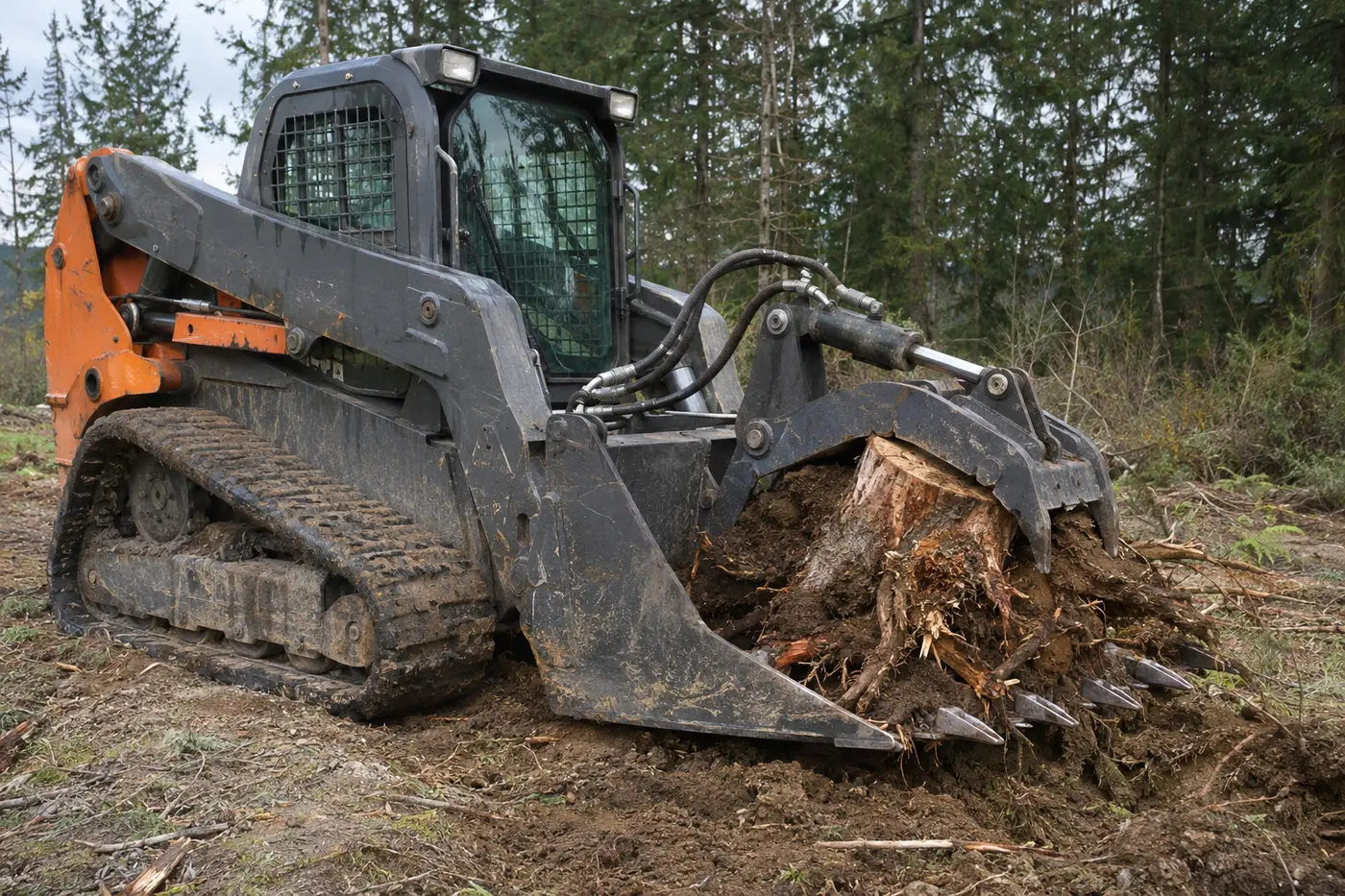
A skid steer stump bucket is a heavy toothed bucket, usually paired with a hydraulic grapple, that digs around a stump, pries it loose and carries it away. It works best on small to mid-size stumps and brush piles. Large stumps with deep taproots may need a grinder or a bigger machine.
Shopping for this now? Get a fit-checked, delivered quote.
Key takeaways
- A stump bucket is a digging and pulling tool, not a grinder: the stump leaves the ground whole.
- Pair it with a grapple so you can grip and lift what you loosen.
- Match the bucket's weight and width to your machine's rated operating capacity.
- Stump size, root depth and soil decide whether a bucket, a puller or a grinder is the better tool.
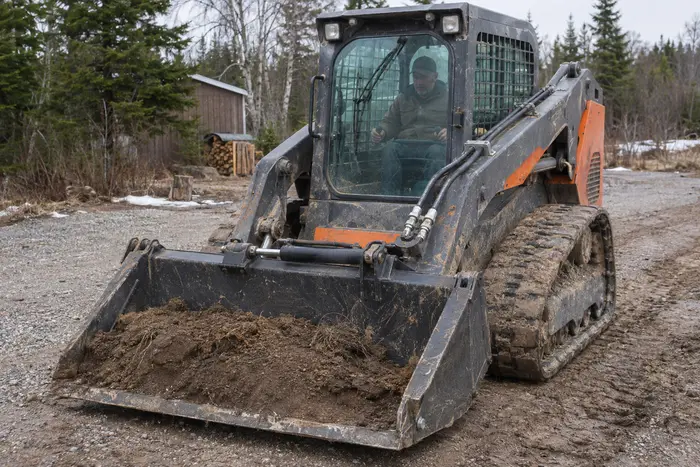
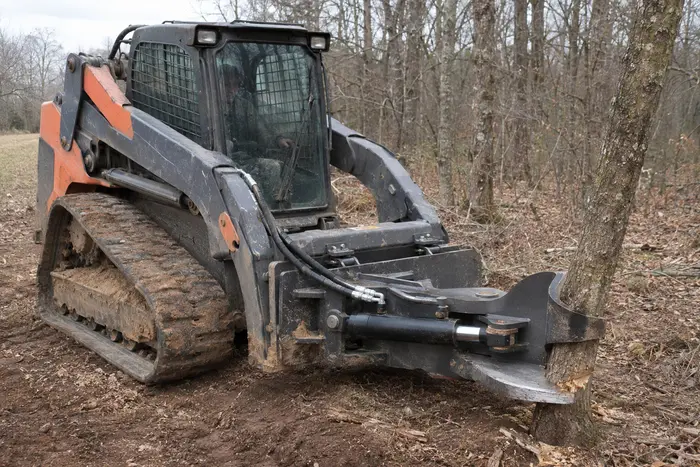
A skid steer stump bucket is a reinforced bucket with long teeth and, on most designs, a hydraulic grapple arm on top. You dig under and around a stump, break the roots, lift the stump out of the hole and carry it to a pile. It is a land-clearing tool built for push, pry and carry work. This guide covers how it works, where it fits, and what to check before you buy.
What does a stump bucket do?
The bucket has three jobs. The teeth bite into the soil and sever roots. The curved back lets you roll the stump up out of the hole. The grapple clamps the stump or a pile of brush to the bucket so you can lift it without it rolling off. That combination is what separates a stump bucket from a regular dirt bucket.
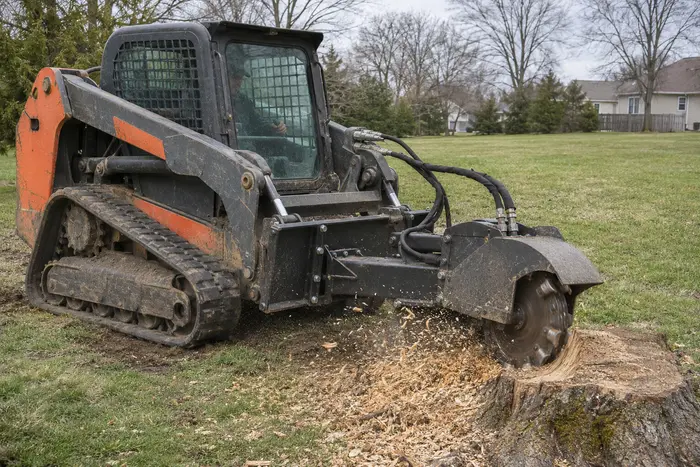
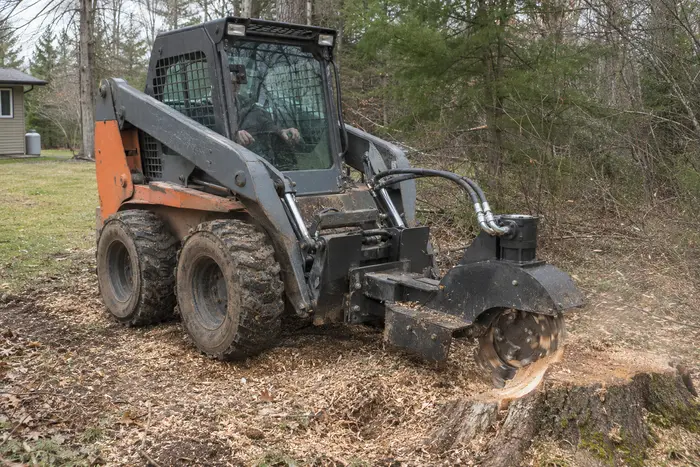
It is a removal tool. The stump comes out in one piece, along with a lot of soil. If you want the stump ground to chips below grade with no hole to fill, a stump grinder is the better route. Our guide to how to remove a tree stump compares the methods.
How do you use a skid steer stump bucket?
The process is the same on most jobs. Follow the operator manual for your machine, and keep the load low while you travel.
- Call before you dig. Have underground lines marked. In the United States that means calling 811, and in Canada your provincial one-call service.
- Clear the area. Remove loose rocks, brush and anything that can hide a hazard around the stump.
- Cut the trunk to a safe height. Leave enough to grip, but not so much that it can fall back toward the cab when the roots let go.
- Dig a trench around the stump. Work the teeth in along one side, then the other, to expose and cut the lateral roots.
- Undercut and roll. Get the teeth under the root ball and roll it up and toward the machine in small bites.
- Grip and lift. Close the grapple, tilt the bucket back, lift only as high as you need to travel, and carry it to a pile.
- Backfill. Rake or push soil back into the hole and compact it so it does not settle into a trap.
When does a stump bucket make sense?
A stump bucket fits jobs with many small or medium stumps and a lot of loose brush, such as a clearing job for a pasture, a building pad or a fence line. It also works as a brush grapple: pile and load limbs, slash and root balls. If you already run a skid steer, it is a simple way to turn the machine into a clearing tool.
It is a weaker fit for these cases:
- Very large stumps. The weight of a big root ball can exceed what a smaller machine's rated operating capacity allows.
- Stumps with deep taproots. A bucket cannot cut roots it cannot reach.
- Rocky or frozen ground. Teeth can bend or the machine can lose traction.
- Finished lawns. The method leaves a hole and a lot of disturbed ground.
Stump bucket vs stump puller vs stump grinder
| Tool | How it removes the stump | Best when |
|---|---|---|
| Stump bucket with grapple | Digs, pries and lifts the whole stump | Clearing many small to mid-size stumps and brush |
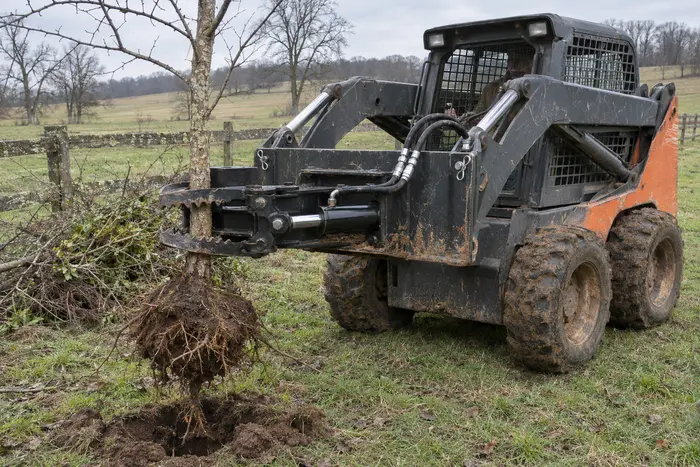
| Tree and post puller | Clamps and pulls straight up with leverage | Posts, saplings and trees with a manageable trunk |
| Stump grinder | Chips the stump away below grade | Yards and finished ground where you want no hole |
For a one-trunk pull, see our skid steer tree and post puller guide. For grinding, read the stump grinder guide.
How to size a stump bucket for your machine
Three checks keep you out of trouble.
- Weight vs capacity. The bucket and grapple weigh a lot. Add their weight to the stump you plan to lift and make sure the total stays under your machine's rated operating capacity.
- Width. A bucket at least as wide as the tires or tracks lets you work without driving into your own trench. A wider bucket is heavier and harder to steer between trees.
- Hydraulics. The grapple runs off the auxiliary circuit. Check the circuit is standard flow or high flow before you buy, and ask about the hose couplers.
Also confirm the mounting. Most machines use the universal skid steer quick attach plate, but always check the plate type and the weight rating. If you want a general reference, our post and tree pullers and bucket categories show what else is available for clearing work.
Safety basics
Stump work is hard on machines and people. Keep these rules in your head.
- Wear a seat belt, keep the restraint bar down, and keep the doors closed.
- Do not carry a stump high. Travel with the load low and tilted back.
- Never let anyone stand within reach of the bucket or the stump while it is moving.
- Do not exceed the rated operating capacity in the operator manual.
- Watch slopes. A heavy load on the front raises the tipping risk.
What to ask before you buy
Not every stump bucket is built the same. These questions separate a tool that lasts from one that bends on the first big stump.
- How thick is the steel, and where is it reinforced? The teeth, the back plate and the grapple pivot take the abuse. Look for gussets and replaceable tooth tips.
- How does the grapple close? A single cylinder is simple. Two cylinders give a more even grip on a lumpy stump. Ask how the manufacturer protects the hoses and cylinders from root damage.
- What does it weigh empty? A heavy bucket is strong, but it also eats into your rated operating capacity.
- What is the tooth spacing? Wide spacing digs better in compact soil. Tight spacing holds smaller debris and brush.
- Is the mounting plate included? You need the plate type that matches your machine's quick attach.
Keep it working: care and maintenance
A stump bucket is simple, but it lives in dirt and impact. A few habits extend its life. Grease the grapple pivots as the manual says. Check the teeth and weld seams for cracks after hard jobs. Wipe off the hose couplers before connecting them so dirt stays out of the hydraulics. Store the bucket flat on the ground so the grapple is not left loaded.
If something looks bent or cracked, stop using it until it is repaired. A damaged grapple can drop a stump without warning.
Get the right fit the first time
Tell us your machine's make, model and year and what you are clearing. We confirm the fit against the maker's specs, send you a delivered price to approve before you pay, and the supplier ships direct. Start here: request a fit-checked quote.
Questions buyers ask
What is a skid steer stump bucket used for?
It digs around stumps, pries them loose and carries them off, usually with a grapple that clamps the load. It also moves brush piles and root balls. It suits clearing jobs with small to mid-size stumps where leaving a hole is acceptable.
Can a stump bucket remove large stumps?
Sometimes, but size is the limit. A large stump with a deep taproot can outweigh the machine's rated operating capacity or resist the teeth. In those cases a stump grinder or a larger machine is the safer choice. Check your operator manual first.
Is a stump bucket the same as a grapple bucket?
They are related. A stump bucket has long teeth for digging and prying, plus a grapple for gripping. A standard grapple bucket often has a smoother edge for loading brush. Some products blend the two, so check the teeth and the grapple design.
Do I need high flow hydraulics for a stump bucket?
Usually not. The grapple is a simple hydraulic cylinder, and standard auxiliary flow normally runs it. Confirm with the manufacturer, since specs vary by design. Ask about the coupler type so the hoses connect to your machine.
Should I use a stump bucket or a stump grinder?
Use a bucket to remove many stumps whole and you are fine with holes to backfill. Use a grinder when you want a clean yard with no hole, or when roots are too deep to pull. The right pick depends on stump size and finish.