Concrete guide
Concrete Buckets and Hoppers for Skid Steers
Quick answer
A skid steer concrete bucket carries wet concrete from the truck or mixer to the pour and releases it through a controlled gate or chute. Choose discharge style, capacity and chute to suit your pour, and stay within your machine's rated operating capacity. Many use the loader's auxiliary hydraulics to work the gate.
Shopping for this now? Get a fit-checked, delivered quote.
Key takeaways
- Concrete is heavy; capacity must stay within your machine's rated capacity.
- Side discharge suits trenches and footings; front discharge suits slabs.
- A chute adds reach and control.
- Wash out the bucket right after use or the concrete sets.
A concrete bucket, also called a concrete hopper or concrete tub, lets a skid steer carry wet concrete to the place it is needed. It turns a loader into a placing tool that saves wheelbarrows and labor. Choosing the right one depends on your pour and your machine.
What is a concrete bucket for a skid steer?
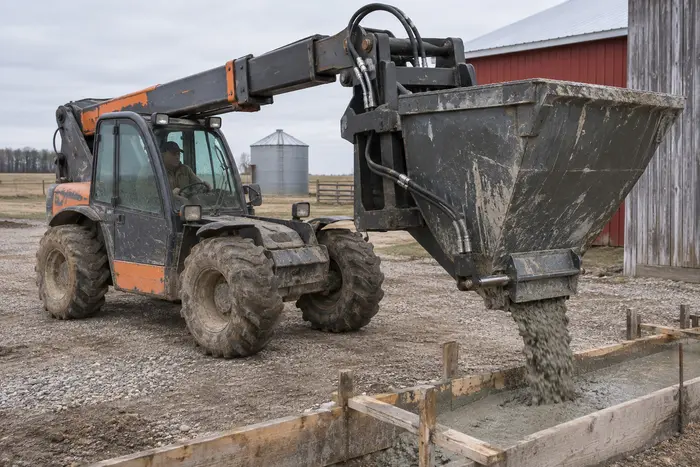
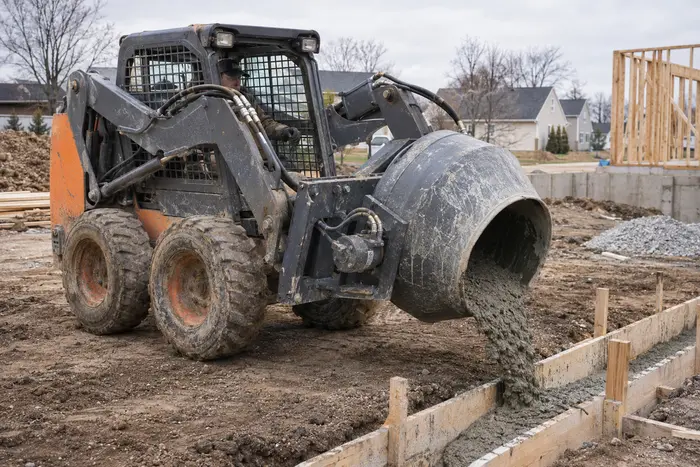
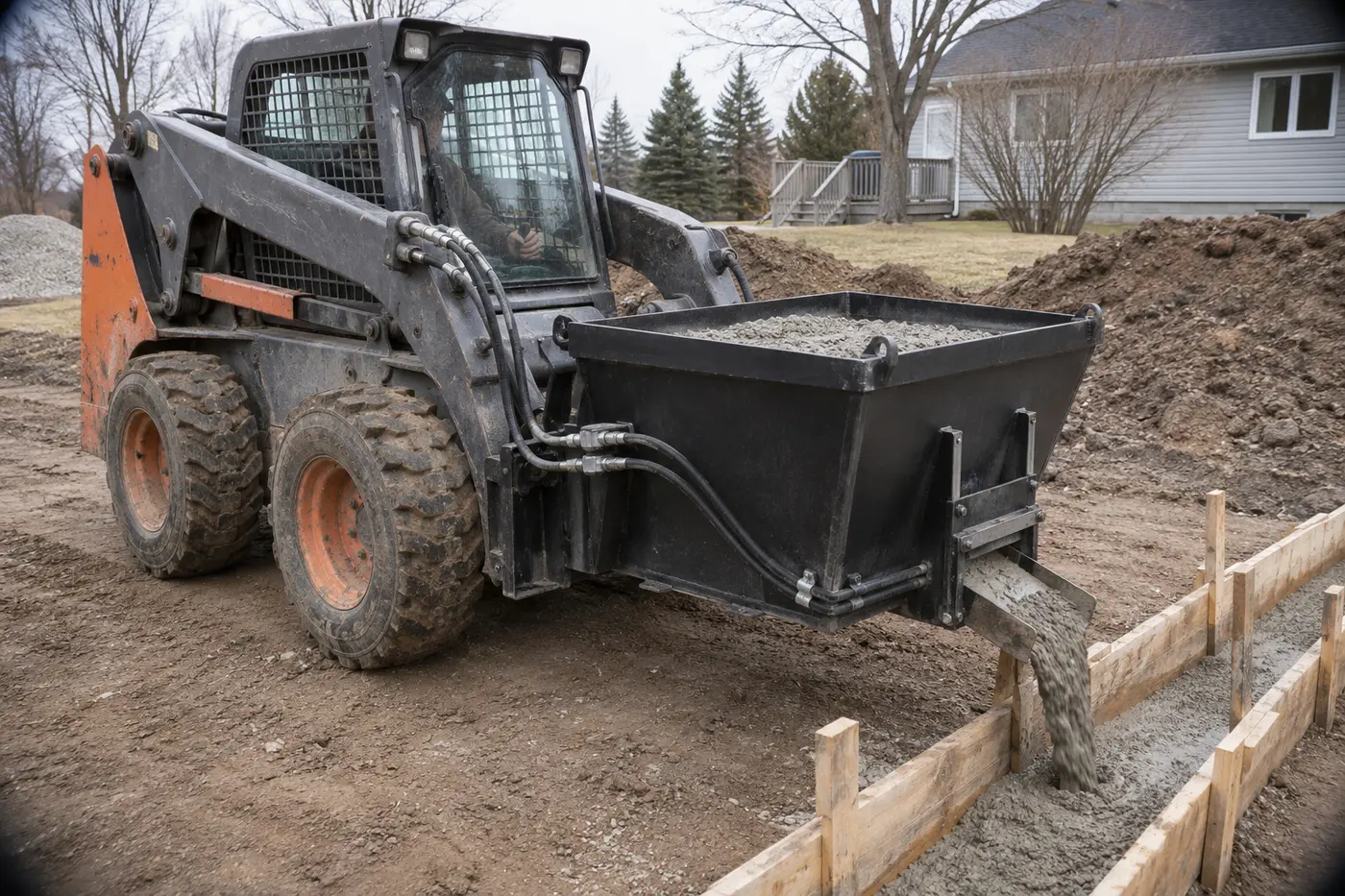
It is a steel hopper with a controlled gate that mounts to your quick-attach plate. You fill it from a truck chute, a mixer or a bin. You drive to the pour, tip or open the gate and the concrete flows out in a measured stream. Many models open with a hydraulic cylinder so you can feather the flow. Others use a manual or mechanical release. Our category page shows concrete buckets and hoppers. Smaller options exist for mini machines too. See our mini skid steer guide.
Where do concrete buckets help?
- Footings and foundations where a truck cannot reach.
- Slabs, patios and sidewalks.
- Walls and forms where you can place low.
- Tight yards where wheelbarrows would take many trips.
- Small repairs and pads.
Side discharge vs front discharge
| Type | How it releases | Best for | Notes |
|---|---|---|---|
| Side discharge | Gate or chute on one side | Footings, trenches, walls | Position the machine along the form |
| Front discharge | Gate at the front | Slabs, pads, open pours | Easy to line up with forms |
| Tilting hopper | Tips like a bucket | Loose or wet mix | Less control over the flow |
A chute adds reach and helps direct the flow into narrow spots. Some buckets have an adjustable gate that opens a little or a lot so you control the rate. Pick the style that matches most of your pours.
How to size a concrete bucket
- Rated operating capacity. Wet concrete is very heavy per volume. Check the bucket's capacity and make sure a full load stays inside your machine's rated operating capacity. Follow the operator manual.
- Machine size. Large buckets on small machines tip forward and reduce stability. Mini skid steers need smaller hoppers.
- Reach. Your lift height and the bucket's discharge height must clear forms and walls.
- Truck chute access. The bucket should fit under the chute and be easy to load.
- Pour rate. A bigger bucket means fewer trips, but only if the machine can carry it safely.
Do not guess the load weight. Ask a person to confirm numbers for your machine and the bucket you are considering.
Hydraulic and mounting needs
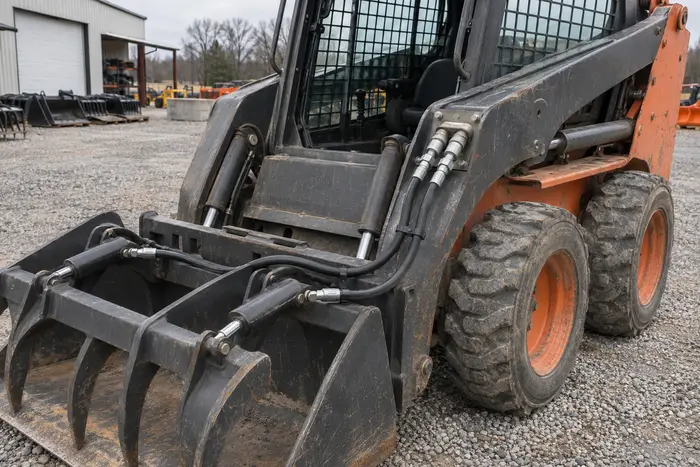
Hydraulic gate or door operation uses the auxiliary hydraulics. Most use standard flow because the work is low power, but check the spec. You also need matching couplers. Read hydraulic flow explained and flat-face couplers. Confirm the plate type with our fit-check guide.
Concrete bucket vs concrete mixer attachment
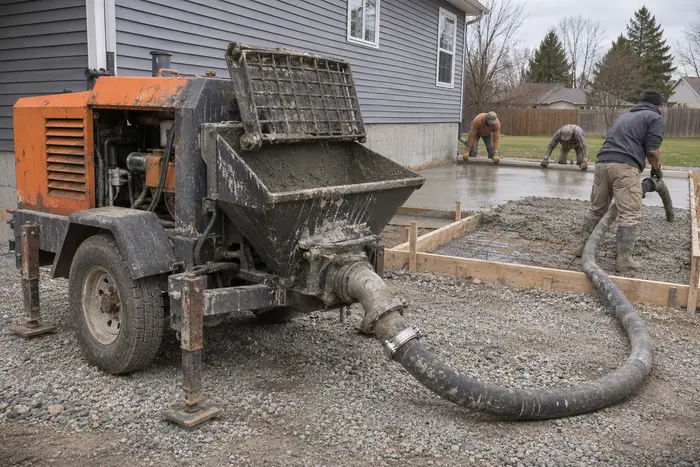
A bucket carries and places concrete you already have. A mixer attachment makes concrete on site from cement, sand, stone and water, so you can mix in small batches. See concrete mixers and how to use a skid steer concrete mixer. If you pour from truck deliveries, a bucket is enough. If you mix small batches in remote places, a mixer fits. Also compare concrete pumps and what a concrete pump costs for larger or high pours.
How to use a concrete bucket safely
- Keep the load low while traveling and drive slowly. Wet concrete shifts and can slosh.
- Work on firm, level ground. A heavy load on a slope can tip the machine.
- Stay inside rated operating capacity. Follow the operator manual.
- Keep people clear of the bucket path and the discharge zone.
- Never stand under a raised bucket.
- Wear gloves and eye protection. Fresh concrete is caustic to skin.
Cleaning and care
Concrete sets, and it sets on your steel. Wash out the hopper right after the pour. Clean the gate, hinges and seals. Grease pivots and check the hoses and cylinder. Dried concrete on the gate can keep it from sealing. Some crews coat the inside with release agent to make cleanup easier. Replace worn gate seals so slurry does not leak while you travel.
Checklist before you order
- Write down your machine's make, model and rated operating capacity.
- Decide on side or front discharge.
- Decide whether you need a chute and a hydraulic gate.
- Check hydraulic flow, couplers and mounting plate.
- Check the bucket weight empty and its capacity filled.
- Ask what warranty, if any, comes with the bucket, and get it in writing.
Pairing the right bucket with the right machine matters more with concrete than with most attachments, because the load is heavy and unforgiving. When in doubt, choose smaller and do an extra trip.
Related tools for concrete work
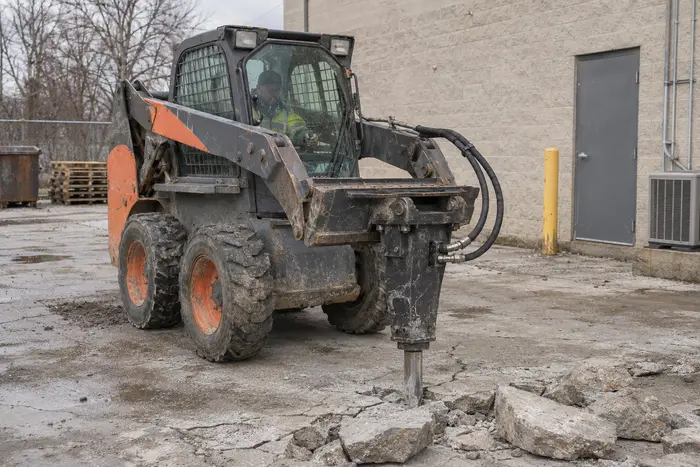
Concrete jobs often need more than a bucket. A breaker removes old slabs. A concrete saw cuts joints. A vibratory roller compacts base material. A power rake levels a gravel base. See breakers, concrete saws and vibratory rollers. The guide skid steer breaker guide explains demolition tools in more detail.
A typical pour with a concrete bucket
- Prepare and inspect the forms, rebar and base before the truck arrives.
- Plan the route from the truck to the pour. Clear it of obstacles and make sure it is firm.
- Position the truck so the chute reaches the bucket. Fill the bucket to a safe level, not to the brim.
- Raise the bucket just enough to clear the ground and travel slowly to the form.
- Open the gate a little at a time and let the concrete flow in a steady stream. Move along the form as you place.
- Close the gate, return and repeat until the pour is complete.
- Wash out the bucket and the machine before the concrete cures.
Weather and timing
Concrete starts to set from the moment it is mixed, so the clock runs while you travel. Hot weather speeds it up and cold weather slows it down. Plan the crew and equipment so the concrete goes in quickly and the finishers are ready. A bucket does the carrying fast, but it cannot finish the surface. Have a crew with screeds and floats waiting.
Choosing a size by project
| Project | Bucket approach |
|---|---|
| Small pad or step | Small hopper on a compact machine |
| Garage slab or patio | Front discharge hopper with a chute |
| Footings and walls | Side discharge with a controllable gate |
| Remote site with no truck access | Bucket plus a mixer attachment |
Mistakes to avoid
- Overfilling. A heavy, sloshing load shifts weight and can tip the machine.
- Skipping the weight check. Concrete weight surprises people. Use the manual's numbers.
- Driving fast on rough ground. Slow down and avoid slopes.
- Leaving it dirty. A bucket with hardened concrete inside is hard to clean and loses capacity.
Get the right fit the first time
Fit problems are the expensive mistakes, and they are easy to avoid. Send us your machine make, model and year and what you plan to do with it. A person checks the fit against the maker specs, and you see the delivered price before you pay. When you are ready, get a fit-checked quote.
Questions buyers ask
What is a concrete bucket for a skid steer?
It is a steel hopper with a controlled gate that mounts to the quick-attach plate. It carries wet concrete from the truck or mixer to the pour and releases it through a gate or chute, usually with hydraulic control.
Side discharge or front discharge concrete bucket?
Side discharge suits footings, trenches and walls where you drive alongside the form. Front discharge suits slabs and open pours. Pick the style that matches most of your work and check your lift height for reach.
Can a mini skid steer use a concrete bucket?
Yes, if the bucket is sized for it. Wet concrete is heavy, and a large hopper on a small machine can tip it forward. Choose a smaller hopper and stay inside the machine's rated operating capacity.
Do concrete buckets need auxiliary hydraulics?
Many do, to operate a hydraulic gate. Flow needs are usually low. Some simple models tip like a regular bucket. Check the spec, the couplers and your machine's hydraulic output before ordering. Ask for a fit check if you are not certain about your setup.
How do I clean a skid steer concrete bucket?
Wash it out right after the pour, before the concrete sets. Clean the gate, hinges and seals, then grease pivots. Dried concrete on the gate prevents sealing and can damage the mechanism.