Concrete guide
How Much Does a Concrete Pump Cost? Hire and Buy
Quick answer
Concrete pump cost is mostly hourly hire. One rate guide puts line pump hire with an operator at about $190 to $230 per hour, often with a four-hour minimum, and boom pumps from about $195 per hour up to $445 or more for long reach. Mobilization, hose length and volume add extra charges. Get local quotes.
Shopping for this now? Get a fit-checked, delivered quote.
Key takeaways
- Most people hire a pump by the hour with a minimum charge instead of buying.
- Line pumps cost less per hour than boom pumps, and boom pumps rise with reach.
- Extras such as mobilization, extra hose, slurry priming, washout and per-yard surcharges can add up.
- Distance, height, site access, volume and standby time drive the final cost.
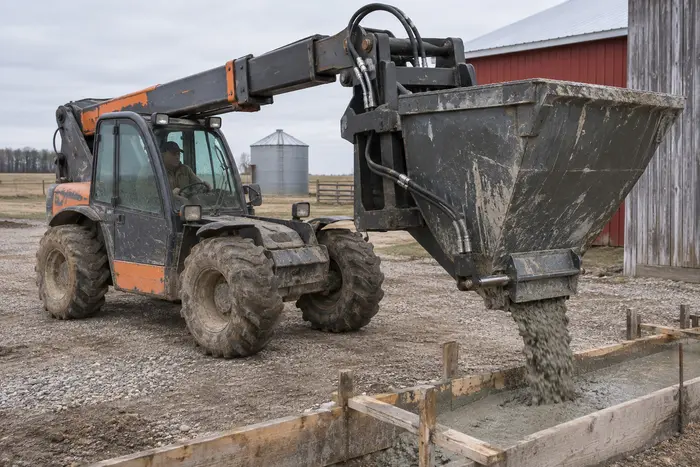
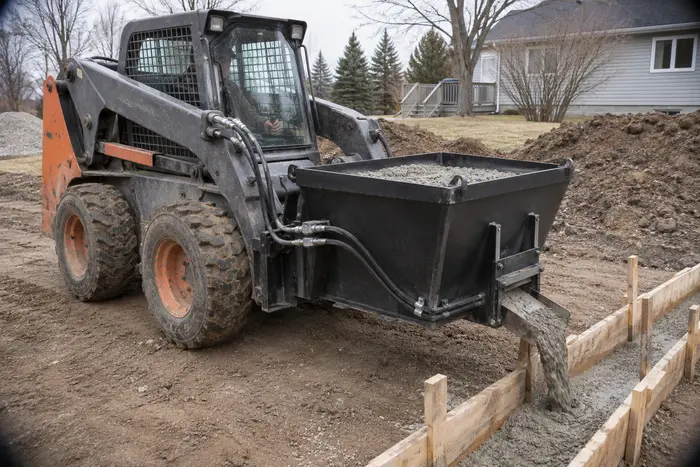
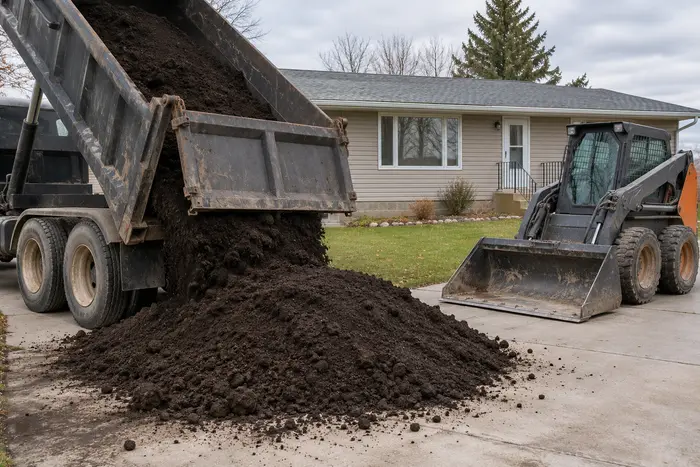
- For small pours, a skid steer concrete bucket may cost less than hiring a pump.
Pumping concrete saves labor and gets mix to places a truck cannot reach. It also adds a line item to the budget. This guide breaks down how concrete pump hire is priced, what drives the total and when other methods make more sense. Prices here come from a published rate guide and vary by region, so treat them as a starting point and get local quotes.
What does it cost to hire a concrete pump?
Hire is the usual route. Pumps are expensive machines, and most pours need one for a few hours. One rate guide gives these figures for hire with an operator:
| Item | Rate listed in the guide |
|---|---|
| Line pump, wet hire with operator | About $190 to $230 per hour, often with a four-hour minimum |
| Boom pump, shorter reach (21 to 30 m) | About $195 per hour |
| Boom pump, long reach (over 50 m) | About $445 or more per hour |
| Mobilization (round-trip transport) | About $150 to $195 per hour |
| Extra operator or hose handler | About $68 to $90 per hour |
| Slurry or prime charge | Flat $12 to $50 |
| Washout and cleaning | Minimum of about $50 to $55 |
| Cubic yard surcharge | About $10 to $12 per cubic yard past a minimum volume |
| Extra hose length | About $7 to $12 per meter beyond what the base rate includes |
These are one source's numbers and not firm quotes. The guide does not state a country, region or currency, uses metric hose and boom lengths, and gives no daily rates. Hourly rates, minimums and fees differ by market, so use them to sense-check the quotes you get.
What does a "concrete pump cost per hour" include?
The hourly figure usually covers the pump, the operator and a set length of hose. It does not cover the concrete itself. Dry hire, meaning equipment only, is sometimes offered but is less common for small jobs. Ask each supplier what the rate includes before you compare prices.
What drives the final cost?
- Volume. A bigger pour can trigger a per-yard surcharge.
- Distance and height. Longer reach adds hose charges or requires a bigger boom.
- Site access. Tight or congested sites may need extra setup time and labor.
- Mix type. Specialized mixes, such as high-strength or abrasive ones, may carry a small per-yard surcharge.
- Standby time. Billing often runs at the full rate from the moment the pump arrives, so a late truck costs you.
- Minimum hours. A short pour still pays the minimum.
What is the difference between a line pump and a boom pump?
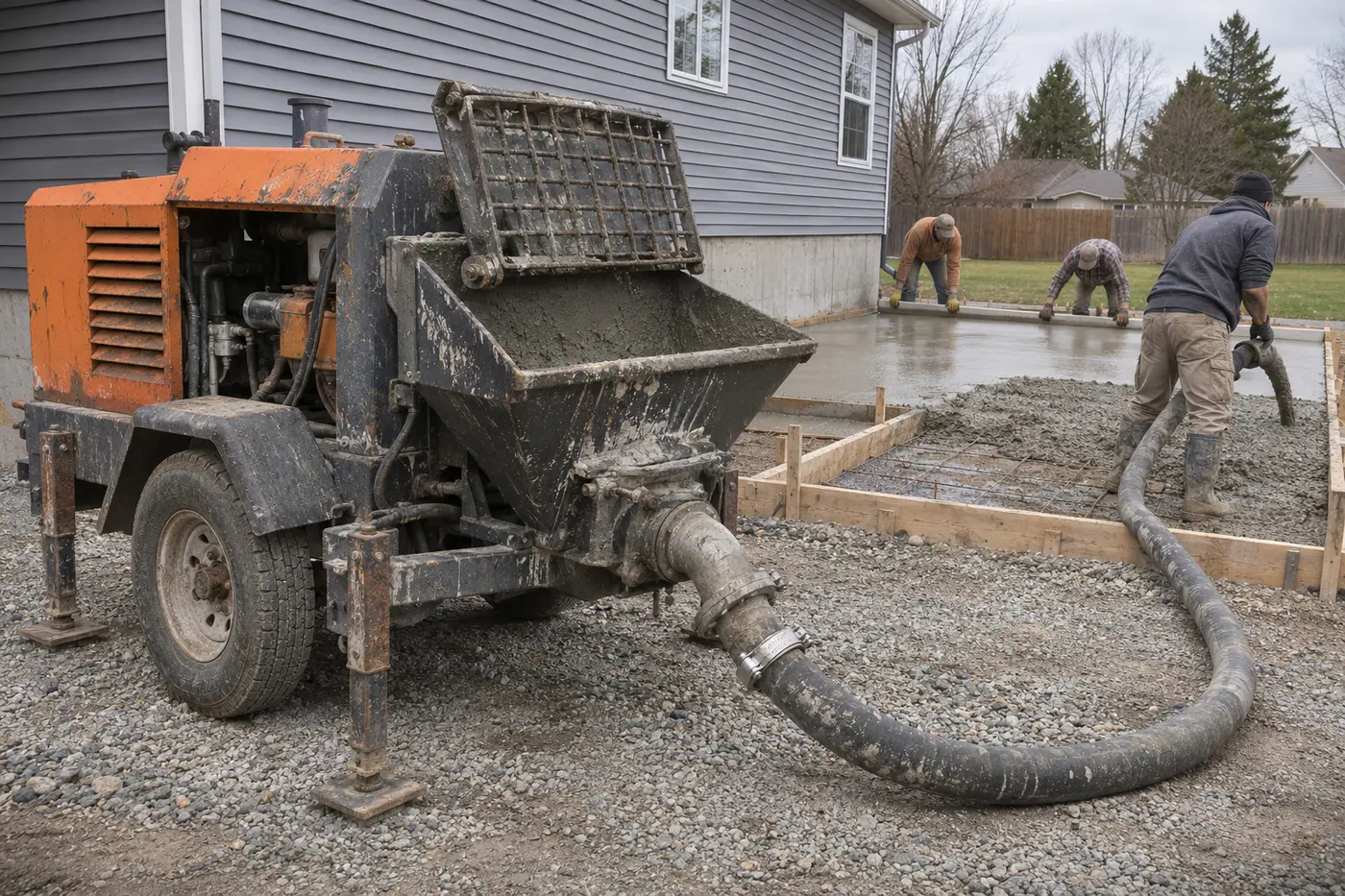
A line pump uses steel or flexible hoses attached by hand to the outlet. Hose sections are commonly 3.0, 3.8, 7.6 or 15.2 m (10, 12.5, 25 or 50 ft). Many line pumps are set up for smaller aggregate, commonly up to about 3/4 in, so check with the pump supplier. They suit slabs, footings, pools and driveways.
A boom pump uses a remote-controlled articulated arm to place concrete accurately. It is mounted on a truck or semi-trailer, moves very high volumes and needs less manual labor than a line pump. It suits large pours, multi-story work and sites where hose handling would slow the crew. Boom pumps cost more per hour and need room for outriggers.
For reference, a piston-type pump can reach fluid pressures up to 400 bar and flow rates up to 200 m³/h. Those are the upper end of large machines, not what most small jobs use.
What does it cost to buy a concrete pump?
Buying a pump is a different decision. We do not cite purchase prices here because ranges are wide and depend on pump type, size and whether it is new or used. A trailer line pump costs far less than a truck-mounted boom pump. If you pour every week, owning may pay off, but you take on maintenance, transport, an operator and a long list of wear parts. For most small contractors, hire is the better path. Compare quotes and be honest about how many hours a year you would use it.
Are there cheaper ways to place concrete?
For small pours and short reach, other tools can beat a pump.
- Concrete bucket on a skid steer. A loader carries mix from the truck to the form. See concrete buckets and hoppers and our concrete bucket guide.
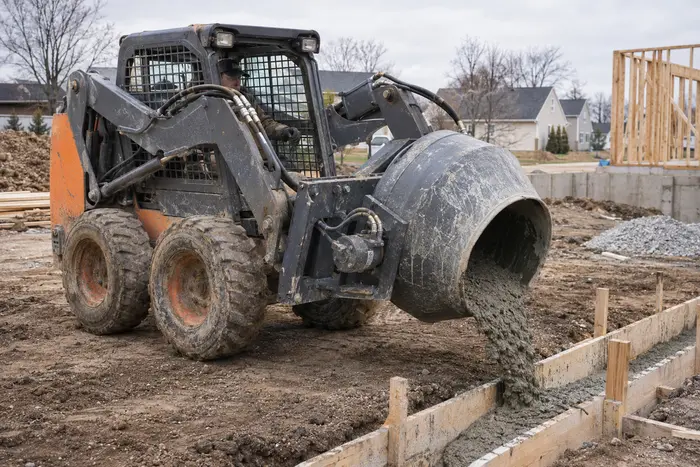
- Skid steer concrete mixer. Mix on site and place without a truck. See concrete mixers and how to use one.
- Chute and wheelbarrows. Cheap for slabs close to the truck.
- Skid steer concrete pump attachments. A smaller option on some machines. Browse skid steer concrete pumps.
Weigh the cost of labor and time as well as the machine. A pump can save hours of hand work and reduce finishing problems, because the pour stays continuous.
How do you get an accurate quote?
- Give the supplier the exact address, access details and truck route.
- State the pour volume and the mix type.
- Tell them the distance from the pump to the farthest point and the height if any.
- Ask for the hourly rate, minimum hours, mobilization, hose, slurry and washout charges in writing.
- Ask how standby time is billed.
- Confirm the pump type fits your site and the weather and ground are suitable.
Compare at least two quotes with the same assumptions so the numbers line up.
How do you keep concrete pumping costs down?
- Have forms, rebar and crew ready before the pump arrives.
- Schedule concrete trucks close together so the pump does not wait.
- Choose the smallest pump that does the job.
- Clear access and set up ground protection ahead of time.
- Confirm the mix is pumpable before the day of the pour.
How does pump cost compare with the cost of placing concrete by hand?
The pump line looks big on the quote, but the comparison is not just machine versus no machine. Count crew hours. A pour placed by wheelbarrow can tie up several people for the whole job, and a slow pour risks cold joints and finishing problems when the first batch sets before the last arrives. A pump keeps a steady flow of mix, so your finishers work at a steady pace. On a small slab next to the truck, hand placement or a chute can still win. On anything far from the truck, at height or large, the pump can pay for itself in labor and quality.
Also think about risk. A blocked line or a late truck costs standby time. A good crew and a clear plan reduce that risk more than any rate negotiation.
What should you ask about the pump and mix?
- Is the mix pumpable, and does the supplier know a pump will be used?
- What is the largest aggregate size, and does the pump handle it? Many line pumps are set up for aggregate up to about 3/4 in.
- What hose length does the base rate include?
- Who provides the ground protection and the washout area?
Answers to these questions prevent most surprise charges.
Get the right fit the first time
A skid steer concrete bucket or mixer can be a cheaper way to place small pours. Send us the make, model and year of your machine. A person checks fit against the maker's specs, you approve a delivered price before you pay, and the manufacturer ships direct. Get a fit-checked quote or call 1-888-245-1555.
Questions buyers ask
How much does it cost to hire a concrete pump per hour?
One rate guide lists line pump hire with an operator at about $190 to $230 per hour, often with a four-hour minimum, and boom pumps from about $195 per hour for shorter reach to $445 or more for long reach. Rates vary by market, so get local quotes.
What extra charges come with a concrete pump?
Common extras are mobilization for transport, extra operator or hose handler time, a slurry or prime charge, washout and cleaning, per-yard surcharges past a minimum volume, and extra hose length. Ask each supplier for all charges in writing.
What is the difference between a line pump and a boom pump?
A line pump uses hand-placed hoses and suits slabs, footings and driveways. A boom pump uses a remote-controlled arm for accurate placement at higher volumes and greater reach, and costs more per hour. Boom pumps need room for outriggers.
Is it cheaper to buy or hire a concrete pump?
For most small contractors, hire is usually cheaper because pumps are costly to buy and maintain and are only used a few hours per pour. Buying can pay off for frequent high-volume work. Compare hire quotes with ownership, maintenance, transport and operator costs.
Can a skid steer replace a concrete pump?
For small pours with short reach, a concrete bucket or on-site mixer on a skid steer can place concrete without a pump. For high volume, long distance or height, a pump is faster and keeps the pour continuous.