Concrete guide
How to Use a Skid Steer Concrete Mixer
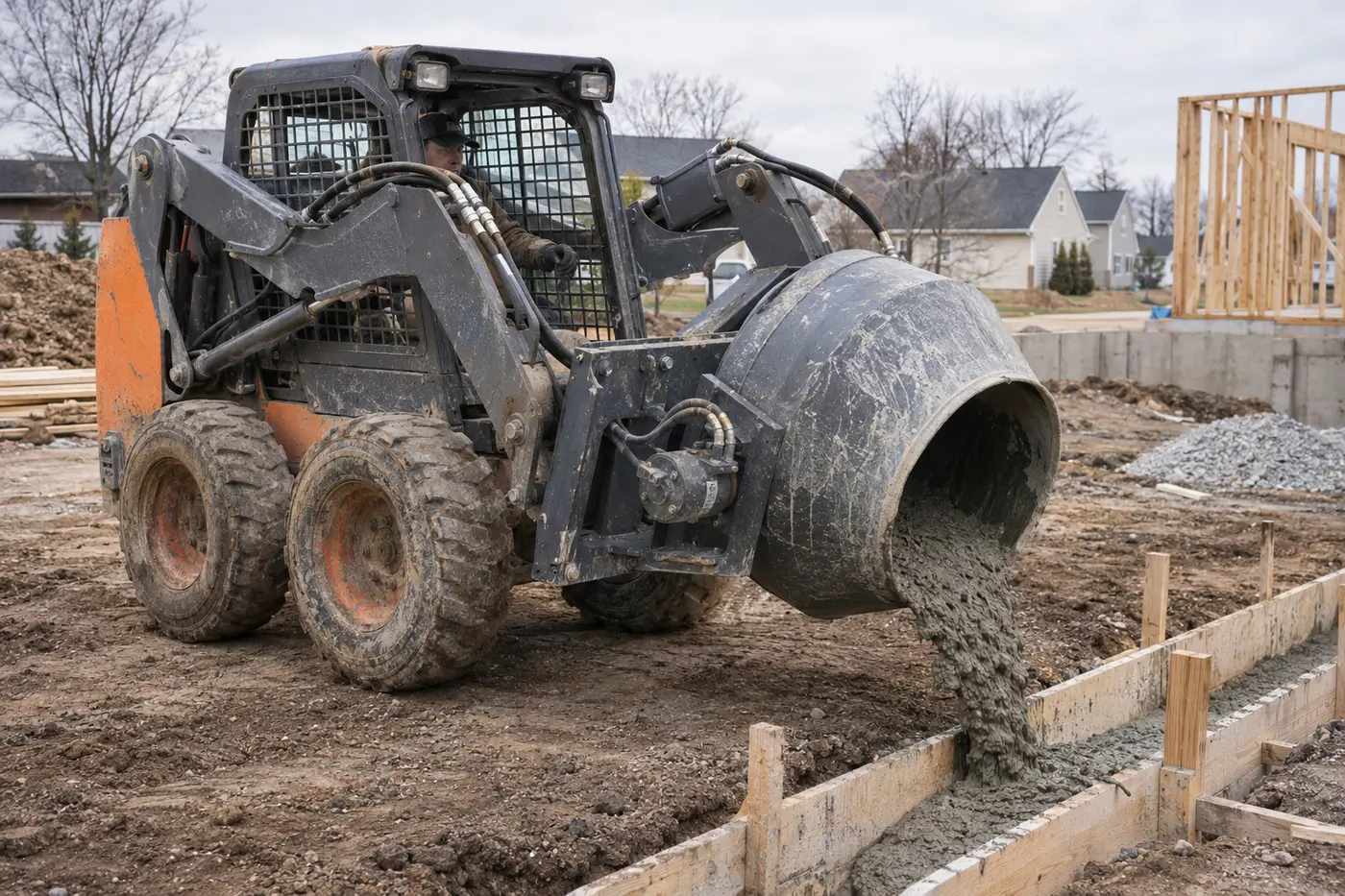
Quick answer
A skid steer concrete mixer is a hydraulic-driven drum attachment that mixes cement, aggregate and water on site. Load the materials, add water as the drum turns, mix until even, then discharge through the chute. Check hydraulic flow and rated capacity, wear protective gear and clean the drum right after use.
Shopping for this now? Get a fit-checked, delivered quote.
Key takeaways
- The drum runs off the loader's auxiliary hydraulics.
- Wet concrete is heavy; respect rated operating capacity.
- Add water in stages and mix to an even look.
- Wear gloves, eye and dust protection around cement.
- Clean the drum right away before concrete hardens.
A skid steer concrete mixer is a rotating drum attachment that mixes cement, aggregate and water on site and pours it where you need it. You load the dry materials, add water, run the drum off your loader's hydraulics and dump the mix through a chute or a tilted opening. It is a good fit for footings, slabs, posts and repairs where a truck would be too much.
What is a skid steer concrete mixer?
A concrete mixer combines cement, aggregate such as sand or gravel, and water into concrete. A typical mixer uses a revolving drum. Portable mixers make concrete at the worksite so you have time to place it before it hardens. A skid steer concrete mixer attachment does the same thing, but it rides on your loader and takes its power from the auxiliary hydraulics instead of a separate engine.
The drum has internal blades or paddles. When it turns, the blades lift and fold the material until it is mixed. A hydraulic motor drives the drum. A chute or door lets you control where the mix comes out.
When does a skid steer concrete mixer make sense?
- Small and medium pours. Footings, pads, sidewalks, post holes and repairs.
- Remote sites. Places where a truck cannot reach or where delivery minimums make small orders awkward.
- Staged pours. You can mix as you go instead of paying for an entire truck at once.
- Repair work. Patch a slab, set a pole, fill a trench.
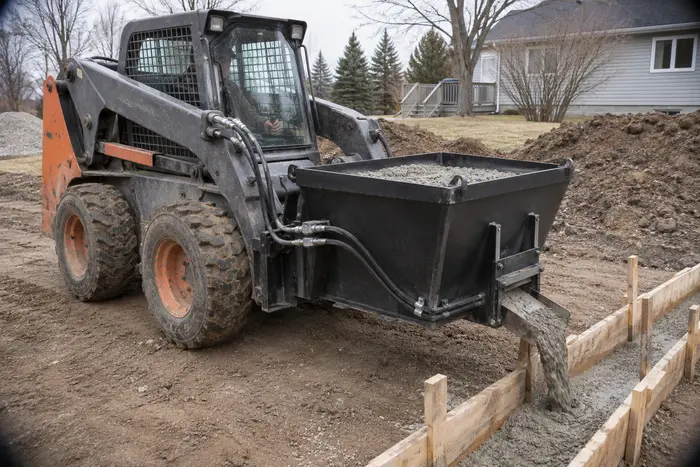
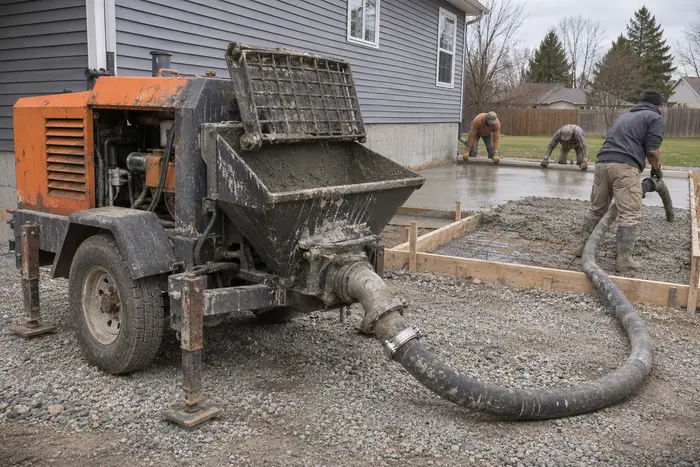
For large slabs where you need a lot of concrete fast and consistent, a delivered truck is usually better. For pouring into forms in hard-to-reach spots, consider a concrete bucket or hopper to move mix from a truck, covered in our skid steer concrete bucket guide.
What do you need to run one?
| Requirement | What to check |
|---|---|
| Hydraulic flow and pressure | Match the drum motor's needs to your loader's auxiliary rating. |
| Rated operating capacity | Wet concrete is very heavy. The attachment plus a full load must stay inside the limit in your manual. |
| Drum size | Bigger drums mix more per batch but weigh more. Smaller drums suit mini loaders. |
| Water supply | Plan how you will add water, whether from a hose, a tank or a bucket. |
| Material supply | Have cement, sand, gravel and any admixtures ready before you start. |
| Cleanup access | Rinse water and wash-out must be controlled and legal where you work. |
See our skid steer concrete mixers and mini skid steer concrete mixers categories to compare sizes. If you are not sure about flow, read our guide on skid steer hydraulic flow.
How to use a skid steer concrete mixer, step by step
- Set up the site. Level the ground and prepare your forms or hole. Have all tools ready: shovels, rakes, floats, wheelbarrow.
- Inspect the attachment. Check hoses, couplers, the drum motor, the chute and the latch. Make sure the drum is clean and empty.
- Mount the mixer. Fit it to the quick attach plate, engage both pins and connect hoses. Follow the machine and attachment manuals.
- Load the dry materials. Put the materials into the drum according to the maker's recipe. Common practice is to add some water first, then aggregate and cement, then the rest of the water. Follow the supplier's mix instructions.
- Add water and start mixing. Run the drum while you add water gradually. Watch consistency. Wet mix is weaker. Dry mix is hard to place.
- Mix for the time the maker recommends. Check the mix by eye. It should look even with no dry pockets.
- Move to the pour. Lower the load and drive slowly. Wet concrete shifts as the machine moves, so keep the drum low and turn gently.
- Discharge. Open the door or tilt the drum so the mix comes out at the pace you want. Keep people clear of the chute.
- Finish the pour. Screed, float and cure per your concrete spec.
- Clean the drum right away. Hardened concrete is much harder to remove than wet. Rinse and scrape per the manual, and dispose of rinse water as local rules require.
Safety around fresh concrete
Fresh concrete and cement powder are caustic and can burn skin and eyes. Wear waterproof gloves, long sleeves, safety glasses, boots and a dust mask or respirator that suits the job. Wash skin that contacts concrete promptly. Cement dust can irritate the lungs, so mix in ways that cut dust and keep upwind of the cloud. Keep bystanders away from the drum and chute. Follow your site's rules and the operator manuals for both machine and attachment.
Never reach into a turning drum. Shut down the engine, relieve pressure and lock out before any cleaning or maintenance. Do not ride on the machine or the attachment.
Common problems and fixes
- Drum turns slowly. Check flow, hoses and relief settings. A slow drum can mean too little flow or a worn motor.
- Uneven mix. Add water in stages, run the drum longer and check that the blades are not worn down.
- Concrete sticks in the drum. Clean after each batch. Build-up reduces mixing and capacity.
- Leaks at the door or chute. Replace seals and keep the sealing surface clean.
- Machine feels tippy. The load is too heavy or the drum is raised too high. Lower it and reduce batch size.
Tips for a better pour
- Plan the pour before you mix. Forms, base, rebar and tools should be ready so the concrete does not sit.
- Use clean aggregate and clean water. Dirty material weakens the mix.
- Keep batches consistent. Measure the same way every time, so each batch matches the last.
- Watch the weather. Heat speeds setting and cold slows it, and rain can ruin a fresh surface.
- Check the mix design or recipe for the strength you need. For structural work, follow the plan and local code.
How big a batch can you mix?
Drum capacity varies by model, so check the specification sheet. The real limit is how much your loader can safely carry. Wet concrete weighs a great deal per volume, and it moves inside the drum. Never fill beyond the maker's stated capacity, and never go past your loader's rated operating capacity. If you need a larger pour, mix more batches or bring in a truck.
Buy, rent or use ready-mix?
If you pour a few times a year, renting a mixer or ordering ready-mix delivery may be cheaper. If you pour often, work remote sites or run a crew, an attachment that uses a loader you already own saves repeat trips and delivery minimums. Also consider your mix control. With on-site mixing you control the recipe and the amount, but you must keep quality consistent. Ready-mix is batched at a plant to the mix you order.
Get the right fit the first time
Send us the make, model and year of your machine and what you plan to do with it. A person checks fit against the maker's specs and sends a delivered price for you to approve before you pay, and the supplier ships direct. Ready when you are: get a fit-checked concrete mixer quote.
Questions buyers ask
What is a skid steer concrete mixer?
It is a rotating drum attachment that mounts to a skid steer quick attach plate. The loader's hydraulics turn the drum to mix cement, aggregate and water. You then discharge the mix through a chute or door where you need it. It suits small to medium pours on site.
How does a skid steer concrete mixer work?
A hydraulic motor spins a drum with internal blades that fold the dry materials and water together. You load the ingredients, add water as the drum turns, mix until the batch looks even, then tilt the drum or open the door to discharge. Clean the drum right after use.
How much concrete can a skid steer mixer hold?
Capacity varies by model, so check the maker's specification. Wet concrete is heavy, so the real limit is your loader's rated operating capacity. Never fill past the stated drum capacity or the load limit in your operator manual, and reduce batch size on soft or sloped ground.
Do skid steer concrete mixers need high flow?
Many are built for standard-flow machines, but it depends on the drum motor and size. Larger mixers may want more flow. Compare the attachment's required flow and pressure with your loader's auxiliary rating in the manual before you buy, and confirm the coupler type.
Is a skid steer concrete mixer better than ready-mix?
It depends on the job. A mixer attachment suits small or remote pours and staged work. A delivered truck is better for large slabs that need volume and consistency. Compare the work you do, how often you pour and how much control you want over the mix.