Buying advice guide
Skid Steer and Attachment Financing: How It Works
Quick answer
Skid steer financing is usually either an equipment loan, where you own the machine and it secures the debt, or a lease, where the lender owns it and you pay to use it. US small-business guidance cites banks lending 80 to 100 percent of the purchase over three to seven years, but your lender's terms may differ. Compare total cost, not just the monthly payment.
Shopping for this now? Get a fit-checked, delivered quote.
Key takeaways
- Loans end in ownership with the equipment as collateral; leases keep the lender as owner.
- US guidance cites banks lending 80 to 100 percent of equipment cost over three to seven years; your terms may differ.
- Many leases need little or no down payment, but can cost more over time.
- Credit, time in business and revenue shape the rate and terms.
- Attachments can often be financed with the machine; compare total cost, term and end-of-term options.
A skid steer is a big purchase, and attachments add to it. Most buyers do not pay cash. They finance. This guide explains how skid steer and attachment financing works, how loans and leases differ, what lenders look at and what to compare before you sign. We do not arrange or quote financing here. This is a general guide to help you ask better questions of your own lender or broker.
What are the main ways to finance a skid steer?
Most options fall into two groups: an equipment loan or a lease.
| Point | Equipment loan | Lease |
|---|---|---|
| Who owns it | You, once the loan is repaid | The lender during the term; a capital lease usually ends in ownership |
| Collateral | The equipment usually secures the loan | Often none beyond the equipment itself |
| Down payment | May or may not be required | Often little or none; some ask for first and last payments or a deposit |
| Monthly payment | Often higher | May be lower |
| Total cost | Depends on rate and term | Can cost more over time, depending on end-of-lease terms |
| Best for | Equipment you plan to keep for years | Shorter use, or when you want lower upfront cost |
How do equipment loans work?
With a loan, a lender pays for the equipment and you repay it over a set term. The U.S. Chamber of Commerce says banks generally lend 80 to 100 percent of an equipment purchase, with average terms of three to seven years. Treat that as a US guide, not a promise; lenders in Canada and elsewhere set their own limits. The purchased equipment typically serves as collateral. If you stop paying, the lender can take it back. When you finish repaying, the machine is yours.
Rates and terms vary with your personal and business credit scores, time in business, annual revenue and the size of the loan. Some lenders ask for a down payment and others do not. Ask each lender what applies to you.
How do leases work?
With a lease, the lender owns the equipment and you pay to use it. Many leases need little or no down payment, and monthly payments may be lower than loan payments. Some lessors still ask for first and last payments, a deposit or a personal guarantee. There are two common types:
- Capital lease. You usually become the owner at the end of the term, often by paying a buyout.
- Operating lease. You return the equipment at the end and lease or buy new equipment. This suits tools that need frequent updates.
Leasing can cost more over time, depending on the end-of-lease purchase terms. Read the buyout clause before you sign.
What do lenders look at?
- Credit. Personal and business credit scores affect approval and rate.
- Time in business. Newer businesses face stricter terms.
- Revenue and cash flow. Lenders want to see that you can make the payments.
- Equipment. New and used machines may be treated differently, and age and hours can affect the loan.
- Down payment. Putting money down can improve terms.
- Collateral and guarantees. With weaker credit, a lender may require a blanket lien on business assets or a personal guarantee.
If your credit is limited, ask about the extra requirements before you apply. Several small applications in a short time can also affect your credit, so ask what a lender will check before they pull anything.
Can you finance attachments?
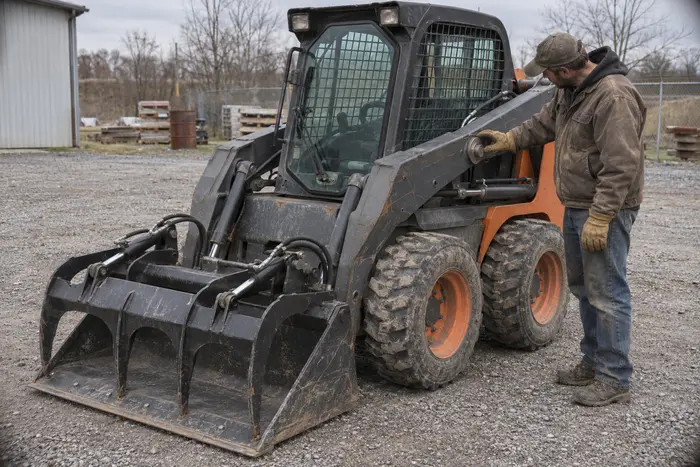
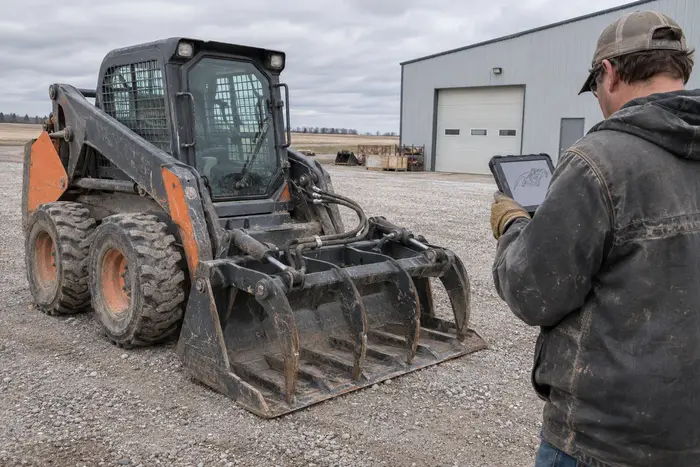
Often, yes. Many lenders will include attachments in the same financing as the machine, or finance them on their own. Attachments hold value differently from machines. A bucket or a set of forks lasts a long time. A cold planer or mulcher with wearing teeth ages faster. Ask whether the term of the loan matches the useful life of what you are financing. Payments that outlast the tool are a known risk.
Before you finance an attachment, make sure it fits your machine. A mismatch costs you twice: you pay for the wrong tool and for the financing. Read whether attachments are universal and how to measure attachment fit.
What should you compare before you sign?
- Total cost. Add up all payments, fees and any end-of-term buyout, not just the monthly figure.
- Rate type. Fixed or variable.
- Term. Shorter terms cost less in interest but raise payments.
- Prepayment. Can you pay early without a penalty?
- Security. Is it just the equipment, or other assets and a personal guarantee?
- Insurance. Lenders usually require coverage on the machine.
- Tax treatment. Owning equipment may qualify for depreciation benefits in some places. In the US, for example, Section 179 can apply. In Canada, capital cost allowance (CCA) rules set how equipment is written off. Check with your accountant for your own situation.
Is it better to finance new or used?
New machines tend to qualify for easier terms and usually come with a manufacturer's warranty. Used machines cost less to buy but may carry higher rates, shorter terms and repair risk. Our used skid steer inspection checklist helps you judge a machine before you finance it. Compare what a used machine costs to repair and what it may cost you in downtime.
What about buying versus renting?
If you use a machine a few days a year, renting may beat owning. If you use it every week, financing may pay off. Our skid steer rental cost guide and skid steer cost guide help you set the numbers side by side. Consider the whole picture: payments, insurance, maintenance, storage, transport and downtime.
What risks should you watch for?
- Payments that outlast the machine's useful life.
- A blanket lien that ties up other business assets.
- A personal guarantee that puts your own assets at risk.
- Balloon payments or buyouts that raise the total cost.
- Taking on debt before you have steady work for the machine.
Any debt carries the risk of default if payments become unaffordable. Talk to a licensed lender, broker and accountant before you commit. We are not financial advisers, and this guide is general information.
What lender options exist?
- Banks. Conventional loans, though approval can be slow and requirements strict.
- Online lenders. Often faster funding with looser criteria, but rates can be higher, so compare carefully.
- Government-backed programs. In the US, SBA loans can support larger equipment purchases for borrowers with good credit. In Canada, the federal Canada Small Business Financing Program can cover equipment loans through participating lenders, so ask your bank.
- Equipment finance companies. Specialized lenders that understand the resale value of compact equipment.
Get at least two quotes in writing. Ask each lender to show the same set of numbers, such as amount financed, term, rate, fees and buyout, so you can compare them side by side.
What paperwork should you have ready?
Expect to provide business registration details, tax returns or financial statements, bank statements, and a quote or invoice for the machine and attachments. A clear quote that lists the exact machine, attachments and delivered price makes the lender's job easier and avoids delays.
Get the right fit the first time
Whatever you finance, make sure the attachment fits your machine. Send us the make, model and year of your machine. A person checks fit against the maker's specs, and you approve a delivered price before you pay. We do not arrange financing. Get a fit-checked quote or call 1-888-245-1555.
Questions buyers ask
How does skid steer financing work?
You borrow to buy the machine and repay over a term, with the equipment as collateral, or you lease it and pay to use it. US guidance cites banks lending 80 to 100 percent of the cost over three to seven years. Your lender sets the actual terms, and rates depend on credit and business history.
Should I lease or finance a skid steer?
A loan leads to ownership and suits equipment you plan to keep. A lease can lower upfront cost and monthly payments but may cost more over time depending on the end-of-lease terms. Compare total cost, buyout terms and how long you will use the machine.
Do I need a down payment for skid steer financing?
It depends on the lender and your credit. Loans may or may not require one. Many leases need little or no down payment, though some ask for first and last payments or a deposit. A down payment can improve loan terms, so ask each lender what applies to you.
Can I finance skid steer attachments?
Often yes. Many lenders include attachments with the machine or finance them separately. Match the term to the attachment's useful life, since wearing tools age faster than a bucket, and confirm the attachment fits your machine before you finance it.
Can I get skid steer financing with bad credit?
Some lenders work with weaker credit, but they may require a blanket lien on business assets, a personal guarantee or a larger down payment, and rates may be higher. Ask about every requirement and compare total cost before you accept an offer.