Skid steer guide
What Is a Case Drain on a Skid Steer? A Plain Explanation
Quick answer
A case drain on a skid steer is a third hydraulic hose that carries leakage from an attachment's hydraulic motor straight back to tank at low pressure. It protects the motor's shaft seal. Mulchers, brush cutters and other motor-driven tools often need it, so check your attachment and the machine's port first.
Shopping for this now? Get a fit-checked, delivered quote.
Key takeaways
- A hydraulic motor leaks a little fluid inside its case by design
- The case drain sends that leakage back to tank at low pressure
- If the drain is blocked or missing, case pressure can rise and damage the shaft seal
- Not every attachment needs one, but motor-driven tools often do
- Check the attachment manual and your machine's auxiliary ports before you buy
If you have looked at a mulcher or brush cutter, you have probably seen the words "case drain" in the specs. It is one of the least explained parts of a skid steer attachment setup, and it is one of the cheapest ways to protect an expensive motor. Here is what it is, why it exists, and how to tell whether your machine and attachment match.
What is a case drain on a hydraulic motor?
A hydraulic motor spins because pressurized oil pushes on pistons, gears or vanes. No motor is perfectly sealed inside. Tiny clearances let a small amount of oil leak from the high-pressure side into the motor's case. That leakage is normal. It also lubricates the internal parts.
The case is a sealed shell. If that leaked oil has no way out, it builds up, and pressure inside the case climbs. A case drain port connects the case to tank through external plumbing, so the leakage drains away at low pressure. That keeps the case pressure low and lets the motor's shaft seal live a normal life.
What happens if the case drain is blocked or missing?
When the drain path is restricted, the leakage can only exit another way, by finding its way back to the low-pressure side of the motor. Case pressure then rises. One hydraulics reference estimates it at about half of the higher port pressure when the leak paths are similar, and says it can reach roughly 30% to 70% of supply pressure depending on backpressure and internal clearances.
The shaft seal is the weak point. A seal designed for low pressure does not like being squeezed by case pressure that high. The usual signs are oil weeping from the motor's shaft end, a seal that fails early, or a motor that runs hot. A kinked hose, a pinched coupler, or a filter in the drain line can cause the same problem on a machine that normally has a case drain.
Some motors have a check valve inside that vents the case without a separate hose. Even then, the maker may advise a dedicated drain line or a high-pressure shaft seal when in doubt. Follow the motor and attachment manual.
Which skid steer attachments use a case drain?
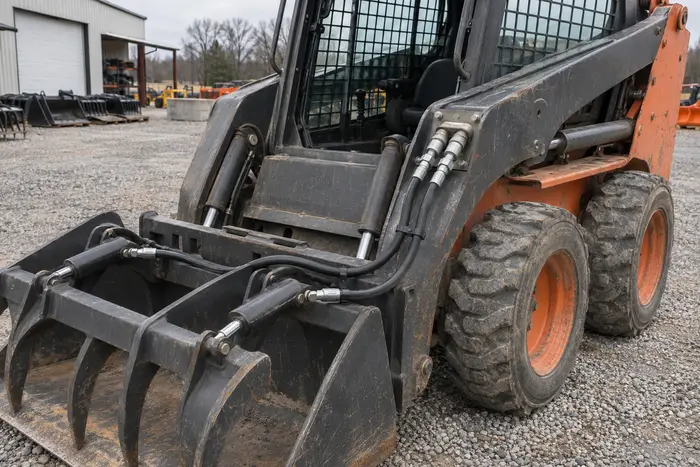
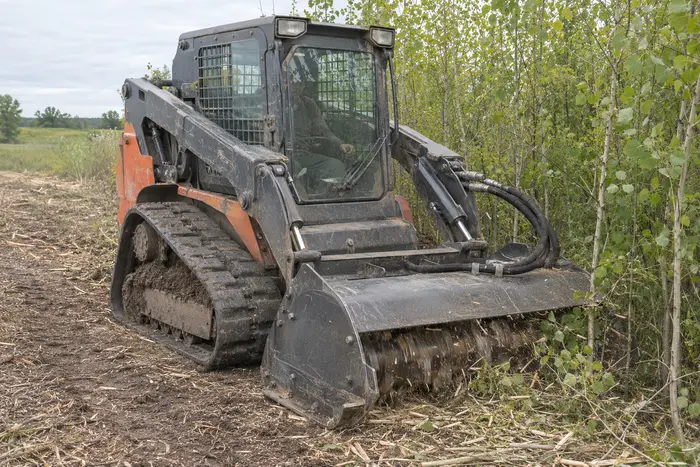
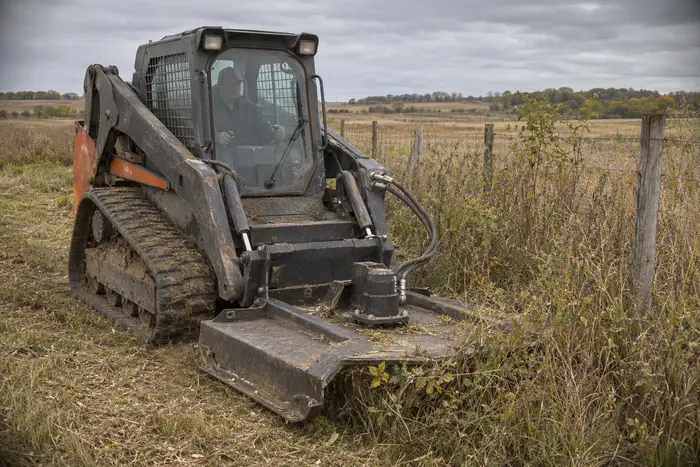
Attachments driven by a hydraulic motor are the usual candidates. That includes many mulchers, brush cutters, stump grinders, trenchers, augers with a motor, and snow blowers. Tools driven by cylinders, such as a bucket, grapple or pallet forks, do not use a motor case, so they do not need one.
| Attachment type | Driven by | Case drain? |
|---|---|---|
| Bucket, forks, grapple | Cylinders | No |
| Auger drive | Hydraulic motor | Check the manual |
| Brush cutter, mulcher | Hydraulic motor | Often yes |
| Stump grinder, trencher | Hydraulic motor | Often yes |
| Snow blower | Hydraulic motor | Check the manual |
Whether a given tool needs one depends on the motor design. A gear motor may vent its case internally. A piston motor generally needs an unrestricted drain. That is why the attachment spec sheet is more reliable than a rule of thumb.
How do you know if your skid steer has a case drain port?
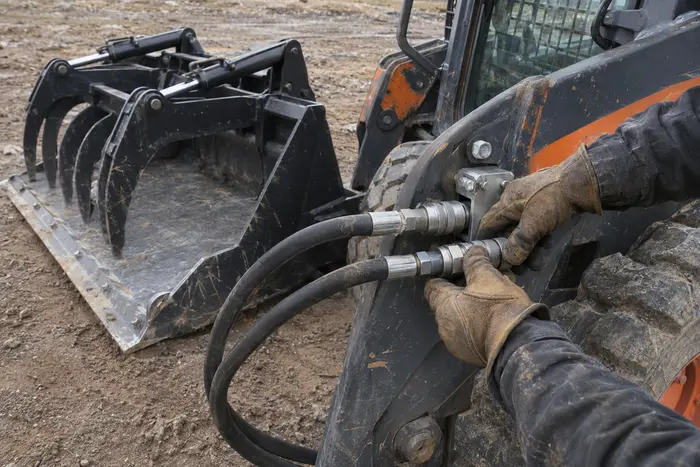
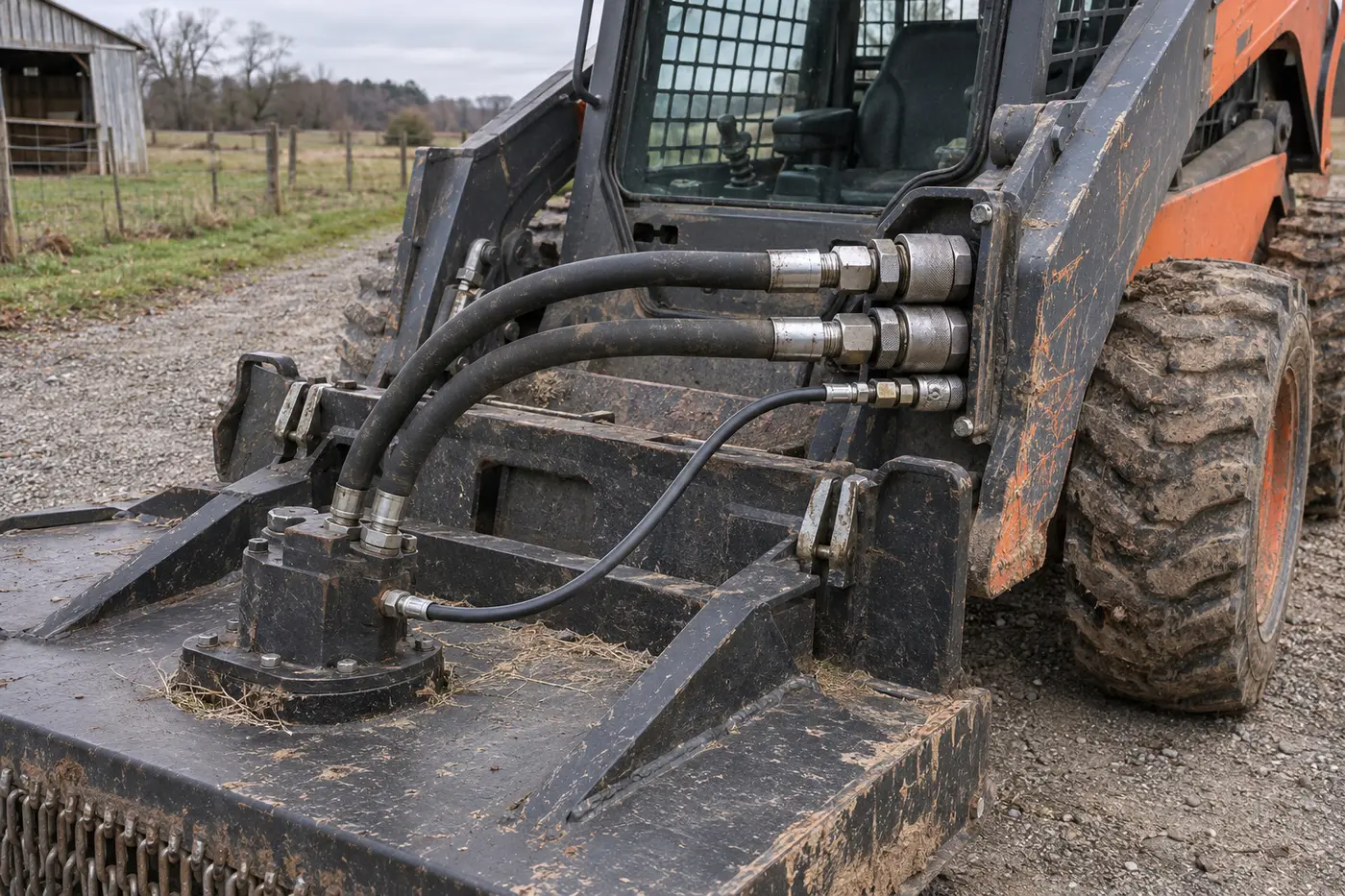
Look at the front auxiliary ports. A machine set up for motor-driven tools often has three hydraulic connections at the front: two for pressure and return, one for the drain. Some machines have a lower-pressure drain coupler that goes straight to the tank. Machines without one often use a kit that adds a drain hose to the tank.
The coupler types and sizes vary by machine (see our flat-face couplers and hoses guide), which is why fit confirmation matters. If you are buying a motor-driven tool, send us your machine make, model and year and we confirm the attachment's flow, pressure and drain needs against the maker's specs. You can browse skid steer mulchers and brush cutters to see what the listings call for.
Case drain checklist before you hook up
- Read the attachment manual. Find the motor type and whether a drain line is required.
- Check the machine for a drain coupler. If it has none, ask the machine maker or a dealer about an approved kit.
- Use the right hose size and route it so it cannot kink, rub, or get pinched at the hitch.
- Keep the drain line unrestricted. Do not add a fine filter in the line unless the maker says to.
- Connect the drain coupler first and disconnect it last, so the motor case always has a path to tank while the other lines are connected.
- Check the shaft seal area for weeping after the first run, then regularly.
Is a case drain the same as high flow?
No (our hydraulic flow guide explains flow), and the two get mixed up because many motor-driven tools need both. High flow describes how much oil the machine's auxiliary circuit can deliver. A case drain is a separate low-pressure line for motor leakage. A machine can have high flow and no drain port, or standard flow and a drain port. Check each requirement against the attachment's spec sheet, one at a time, rather than assuming one implies the other.
Case drain vs return line: what is the difference?
The return line carries working oil back after it has pushed the motor. That flow is large and can have some backpressure. The case drain carries a small amount of leakage and is supposed to sit near tank pressure. If the drain is plumbed into the return, the backpressure from the return can reach the case. That is the situation that makes a seal fail.
Signs your motor is not draining properly
- Oil at the shaft. A wet or dripping shaft end after a short run is the classic sign of a seal under pressure.
- Heat. A motor case that runs much hotter than usual can mean flow is being restricted or oil is being forced where it should not go.
- Early seal replacement. If seals keep failing on the same tool, check the drain path before you replace the seal again.
- Hoses that were swapped. Quick couplers can be connected to the wrong ports. A drain hose in a pressure port is an expensive mistake, so label the hoses.
Most of these show up quickly. A short test run with the tool lifted off the ground, followed by a look at the motor, is cheap insurance on a new setup.
Do you need to add a case drain kit?
If the attachment requires a drain and the machine does not have one, yes. Do not run it without one. Ask the machine maker or a dealer about the right kit for your machine. Mismatched fittings are common, and a wrong flat-face coupler can leak or block flow.
Get the right fit the first time
Send us your machine make, model and year and what you plan to do with it. A person checks fit against the maker's specs, and you approve a delivered price before you pay. Get a fit-checked quote.
Questions buyers ask
What is a case drain on a skid steer?
It is a low-pressure hose that carries leakage from an attachment's hydraulic motor back to the tank. The leakage is normal. Draining it keeps the motor's shaft seal from seeing high case pressure, which can damage it.
What does a case drain do?
It gives the small amount of oil that leaks inside a hydraulic motor a path back to tank at low pressure. Without it, case pressure rises, and the shaft seal can leak or fail early.
Do all skid steer attachments need a case drain?
No. Cylinder-driven tools such as buckets, forks and grapples do not. Motor-driven tools such as mulchers, brush cutters and stump grinders often do. The attachment manual states whether the motor needs a drain line.
Can I run a mulcher without a case drain line?
If the motor requires one, do not. Case pressure can build and damage the shaft seal. Check the attachment manual, and if your machine has no drain coupler, ask a dealer about an approved kit.
Can the case drain go into the return line?
Only if the motor maker allows it. Return lines can carry backpressure, and that pressure can reach the motor case and the shaft seal. A dedicated, unrestricted line to tank is the safer arrangement.