Excavator guide
Mini Excavator Auger Attachment: Sizing and Buying Guide
Quick answer
A mini excavator auger attachment drills round holes for posts, footings, trees and piers. Size it by your machine's weight class, hydraulic flow and the bit diameter and depth you need, then match the drive torque to your soil. Check the quick coupler, pin sizes and hydraulic connections before buying.
Shopping for this now? Get a fit-checked, delivered quote.
Key takeaways
- Match drive torque and bit diameter to the machine's weight and flow.
- Soil type decides the bit: standard for soil, rock bits for hard ground.
- Extensions add depth but reduce stability and increase side load.
- Check quick coupler, pin size and hydraulic hose connections.
- Never drill without locating underground utilities first.
An auger is one of the most useful attachments for a mini excavator. It drills clean, round holes faster than a shovel or a rented hand auger, and it works where a truck-mounted drill cannot go. Buying one sensibly comes down to matching it to your machine and your ground.
What is a mini excavator auger used for?
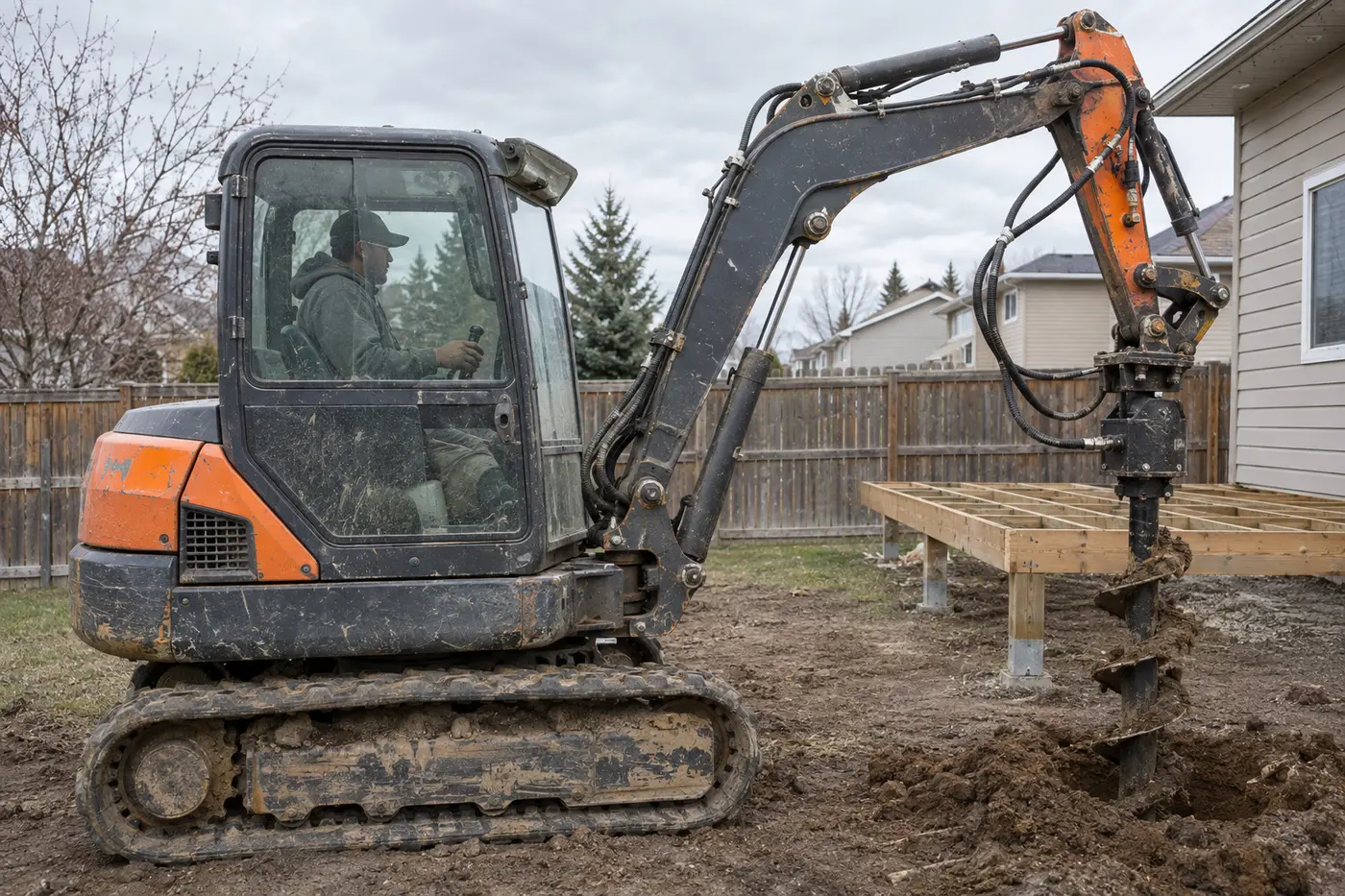
Typical jobs include fence and deck posts, footings and piers, pole and sign holes, tree and shrub planting, soil sampling and utility pilot holes. Reference sources list the auger as a standard workgroup attachment for excavators, alongside the bucket and breaker. Because the arm of an excavator can reach and tilt, you can drill at an angle and over uneven ground where a skid steer auger would struggle.
How do you size a mini excavator auger?
Three numbers matter: the machine's size, its hydraulic output and the hole you need.
| Check | What to confirm |
|---|---|
| Machine weight class | Auger drive and bit weight should suit the excavator's size and stability |
| Hydraulic flow and pressure | The drive needs the right flow and pressure to turn at working speed |
| Drive torque | Higher torque for large bits and hard soil; lower torque for small bits |
| Bit diameter | Match the hole to the post, pier or planting need |
| Hole depth | Bit length plus any extensions |
| Mounting | Quick coupler type, pin diameter and pin spacing |
Compact excavators are described in reference material as having operating weights up to roughly 8.5 tonnes, with micro machines under 1 tonne. Auger drives are sold in sizes that suit those classes, so a large drive on a small machine is a mismatch. For machine classes, see our guides on mini excavator sizes and weight and attachments for 3 to 4 ton mini excavators.
What is an auger drive, and how do drives differ?
The drive is the hydraulic motor and gearbox that turns the bit. Drives come in different torque ranges, and a higher-torque drive is built for larger bits and harder soil. The motor type, gear ratio and housing design affect speed and torque. A drive with too little torque stalls in clay or rock. A drive with too much for a small machine can overpower the excavator's stability. Ask the manufacturer to match a drive to your machine's flow and pressure, and check whether it needs a case-drain line.
Which auger bit do you need?
- Standard earth bit: for soil, clay and loam.
- Rock or heavy-duty bit: carbide teeth for hard or stony ground, frozen soil and gravel.
- Bit diameter: sized to the hole. Larger holes need more torque.
- Bit length: the working depth before you need an extension.
For details on teeth, pilots and bit styles, see our rock auger bits guide, and how to sharpen an auger bit for upkeep.
Should you buy an auger extension?
An extension adds depth. It also raises the center of the load, increases bending on the drive and makes it harder to keep the hole straight. Use extensions only when you need the depth, and keep the machine on firm, level ground. If you routinely need deep holes, ask the maker about a longer bit or a drive designed for that duty.
How do you attach an auger to a mini excavator?
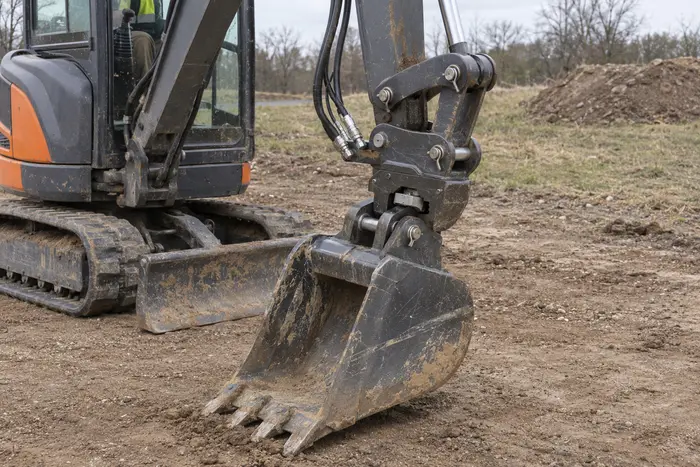
Excavators use a quick coupler or direct pin mounting. A general reference notes many excavators feature quick coupler systems that speed up tool changes. Confirm your coupler type and pin size, and check that the auger has the right bracket. Hydraulic hoses connect to the excavator's auxiliary circuit. See our quick coupler guide and browse excavator augers and quick couplers.
How to drill a hole: step by step
- Call for utility locates and mark the hole position.
- Level the machine and set the boom so the auger hangs plumb.
- Start the auger turning slowly, with the tip on the mark.
- Lower slowly, letting the bit pull itself into the soil.
- Lift periodically to clear spoil.
- Stop at depth and lift out while still turning, to clean the bit.
Auger vs mini skid steer auger
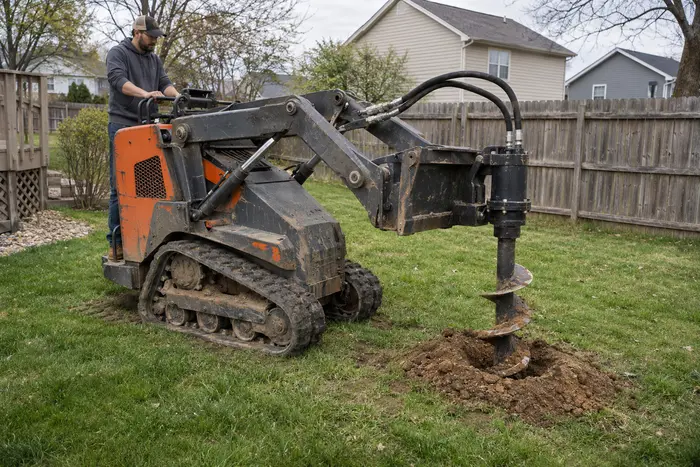
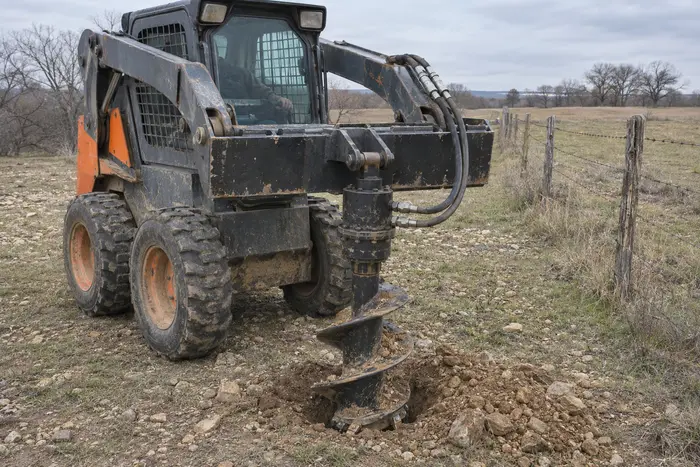
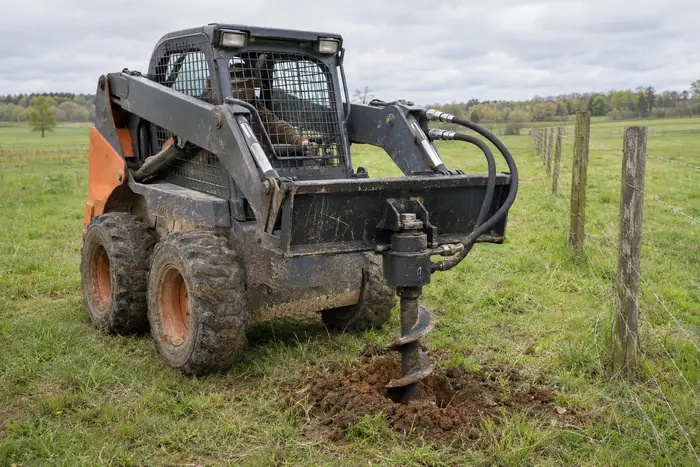
A mini skid steer can also carry an auger, and for many jobs either machine works. The excavator reaches farther, drills at angles and can work on slopes. A skid steer moves faster between holes on flat ground. See the mini skid steer auger guide and mini skid steer vs mini excavator to decide.
Rent or buy
Renting makes sense for one-off projects. If you plan to drill regularly, owning can make more sense, so compare a season of rental days with the cost of the drive and bits. Ask local rental yards what sizes they stock if you want to try one first.
Safety
An auger can wrap clothing and throw debris. Keep bystanders well clear, stay out of the swing radius and never touch the bit while it turns. Know what is below you before you drill. Follow the excavator's operator manual and its rated lift capacity.
Common problems and fixes
The auger stalls in the hole
Too much down pressure or too little torque is usually the cause. Back off, let the bit work and clear spoil more often. If it keeps stalling, check hydraulic flow and the drive's torque rating against the soil. A rock bit may be needed.
The hole is not straight
The boom and stick position changes the bit angle. Keep the machine level, and reposition the arm during drilling so the bit stays plumb. Start slowly so the tip does not walk off the mark.
The machine feels unstable
Drilling with a long reach or extension adds leverage against the machine. Move closer, lower the boom and keep the tracks aligned with the hole when you can. If it still feels light, use a smaller auger or a bigger excavator.
The drive runs hot or slow
Check hydraulic oil level, hoses for kinks and coupler condition. A drive that needs more flow than your auxiliary circuit supplies will run slow. Confirm the match with the manufacturer.
Where else does an excavator auger help?
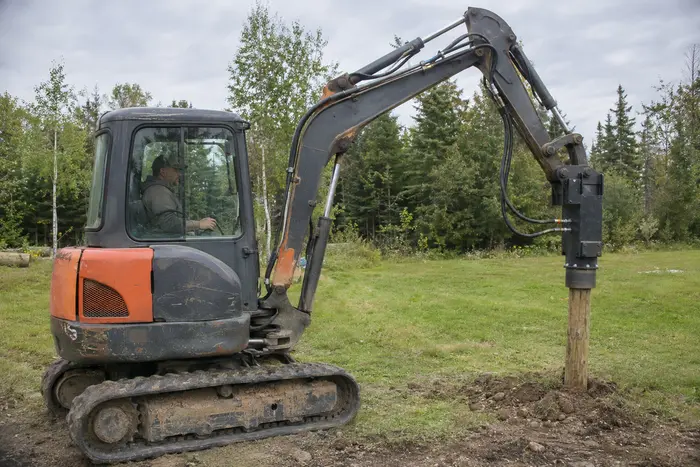
Besides post holes, you can use an auger for planting trees, drilling pilot holes for utilities and, with a suitable drive and adapter, installing helical piles where the pile design allows it. Pair it with a bucket for cleaning out holes and a post driver for steel and wood posts. If you work mostly on fences, the skid steer fence installer guide compares the machines.
Pre-buy checklist for a mini excavator auger
- Write down your excavator's make, model, year and weight class.
- Find auxiliary flow and pressure from the manual.
- Choose the hole diameters and depths you need most.
- Check coupler type, pin size and pin spacing.
- Ask whether a case-drain line is required.
- Ask for bit options for your soil, and spare teeth availability.
Get the right fit the first time
Send us your machine's make, model and year, and a person will check fit against the maker's specs. You approve a delivered price before you pay, and the supplier ships direct. Request a fit-checked quote.
Questions buyers ask
What size auger fits a mini excavator?
Match the drive and bit to your machine's weight class, hydraulic flow and pressure, then to the hole size you need. Compact excavators run up to about 8.5 tonnes, and drives are sold for each class. Ask the manufacturer to confirm fit.
What is an auger drive on a mini excavator?
The drive is the hydraulic motor and gearbox that turns the auger bit. Drives differ in torque and speed. Higher torque suits bigger bits and harder soil. Choose one that matches your excavator's hydraulic flow and pressure.
Do I need an auger extension?
Only if you need deeper holes than the bit reaches. Extensions raise the center of the load, add side loading on the drive and make straight holes harder. Keep the machine on firm, level ground and use the shortest setup that does the job.
Can a mini excavator auger drill in rock?
With the right bit and drive, it can drill in hard or stony ground. Use a rock or heavy-duty bit with carbide teeth, and a drive with enough torque. Very hard rock may call for different equipment, so check with the manufacturer.
How do I attach an auger to a mini excavator?
Most excavators use a quick coupler or direct pin mounting. Confirm your coupler type, pin size and spacing, then connect the auger's hoses to the auxiliary circuit. Ask the maker or a dealer to confirm fit before you buy.