Excavator guide
Mini Excavator Sizes and Weights Explained
Quick answer
Mini excavator sizes and weights run from micro machines under 1 tonne up to compact machines of roughly 8.5 tonnes of operating weight. Weight sets what you can trailer, how much power the hydraulics have and which attachments fit. Always compare operating weight, not shipping weight, and check the maker's spec sheet.
Shopping for this now? Get a fit-checked, delivered quote.
Key takeaways
- Mini excavators cover everything from micro units under 1 tonne to compact machines near 8.5 tonnes.
- Weight is a proxy for digging force, hydraulic flow, stability and attachment size.
- Published weights are not always comparable: machine mass, operating weight and shipping weight differ.
- Zero-tail-swing models trade a little stability for access in tight spaces.
- Match the attachment to the machine's hydraulics and coupler, not just its weight class.
Ask ten operators what counts as a "mini" and you get ten answers. The usual working definition is a tracked or wheeled excavator with an operating weight up to about 8.5 tonnes. At the light end sits a micro class, generally machines under 1 tonne. This guide shows how the size classes break down, what the weight number actually tells you, and how to pick a size for the work you do.
What are the mini excavator size classes?
There is no single legal ladder. Makers group machines by weight and call the groups different things. Most dealers sort them roughly like this:
| Class | What it is | Where it works |
|---|---|---|
| Micro | Under 1 tonne operating weight. Some have retractable tracks to pass through a narrow gate. | Backyards, interior demo, tight side yards |
| Small | Light compact machines; some can be towed by a properly rated pickup and trailer | Landscaping, small trenches, fence and deck footings |
| Mid | All-round size for contractors and landscapers | Utility trenches, septic, drainage, light site work |
| Large compact | Up to the roughly 8.5 tonne ceiling | Bigger trenches, pipe work, hauling and loading |
The micro class has the clearest common definition: machines below 1 tonne operating weight. The 8.5 tonne ceiling is the common upper limit for "compact." Everything in between is a judgment call, so lean on the maker's spec sheet rather than the label.
What does mini excavator weight actually mean?
Three terms get mixed up. Machine mass, operating weight and shipping weight are not the same figure, and published numbers can shift with configuration.
- Operating weight: the machine with fluids, an operator and a standard bucket. This is the number to use when comparing machines.
- Shipping weight: usually lower, because it leaves out fluids, the operator or attachments.
- Configured weight: add a thumb, a heavy bucket, a cab or rubber tracks and the number climbs.
When you plan trailering, use the heaviest realistic configuration. Add the attachment you will carry, then compare against the trailer's rated capacity and your tow vehicle's rating. Never guess on this one.
How does size change what the machine can do?
Weight is a stand-in for several things that matter more than the number itself.
- Digging force and reach. Heavier machines usually have longer booms and more breakout force. That means deeper trenches and tougher soil.
- Stability. More mass keeps the machine planted when you swing a loaded bucket. Light machines tip sooner when you reach or lift to the side.
- Hydraulic flow. Flow is the volume of oil per minute the pump can send to an attachment. Bigger machines usually offer more, which decides whether a hydraulic hammer or a mulcher runs well.
- Access. Width and tail swing decide whether you fit through a gate or work beside a wall.
- Transport. The trailer, the tow vehicle and the road rules for your area all scale with weight.
What is a zero-tail-swing mini excavator?
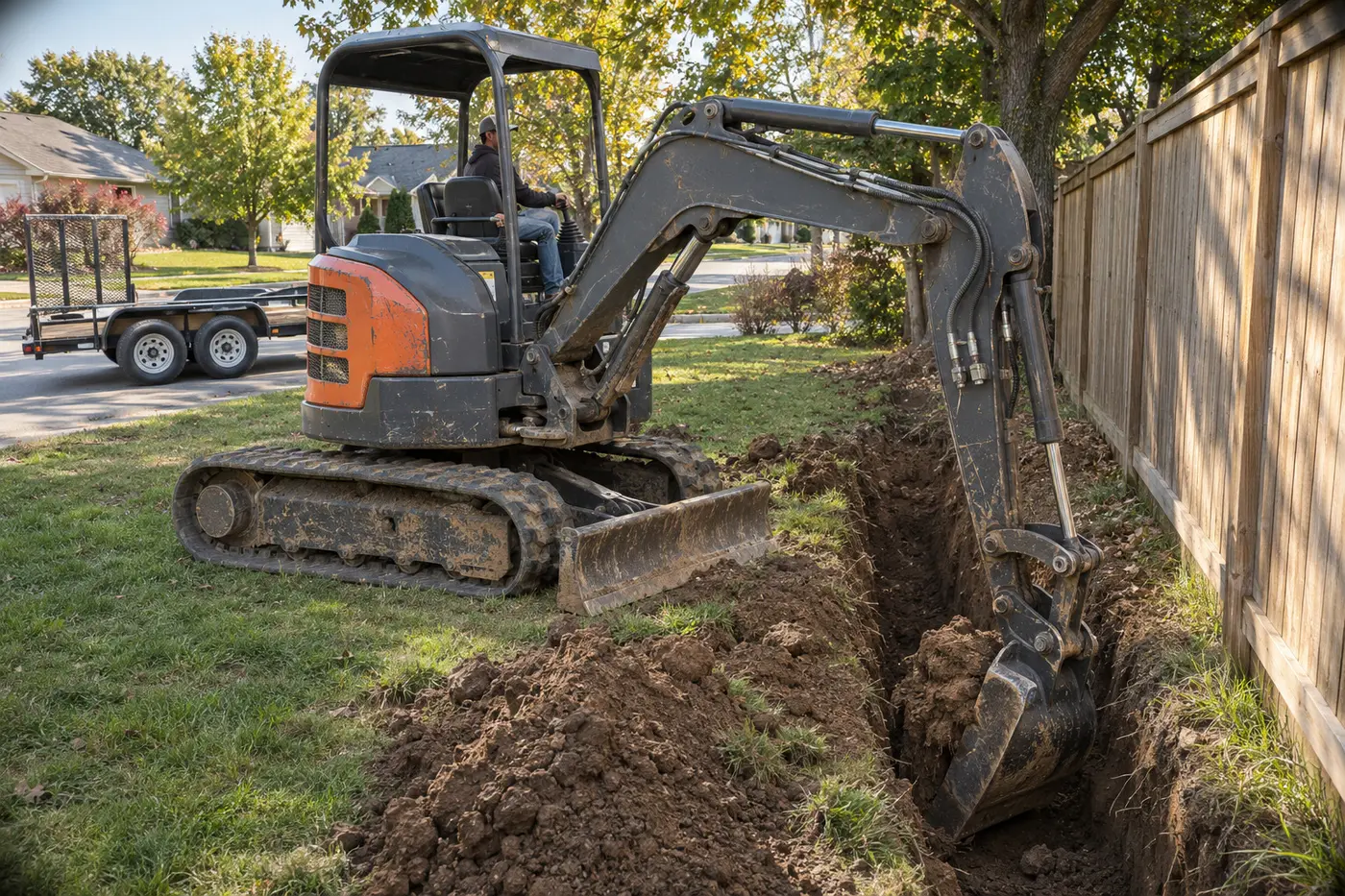
On a conventional machine the rear counterweight sticks out past the tracks when the house rotates. On a zero-tail-swing model the house stays within the track width through a full turn. You can work against a wall or a fence line without clipping it.
The trade-off is mass. With less counterweight behind the pivot, some zero-tail machines feel lighter on the back end when you lift. If most of your work is open ground, a conventional tail often gives a steadier feel. If you spend your days in tight yards, zero tail is usually the better pick.
How do you pick the right size for your work?
Start with the hardest regular job, not the average one. If you dig a trench once a month that the machine can barely reach, you will resent the small machine every day after. Then check three limits.
- Access width. Measure your tightest gate or doorway and compare with the machine's overall track width.
- Trailer and tow limits. Machine plus attachment plus trailer must sit inside your rated limits.
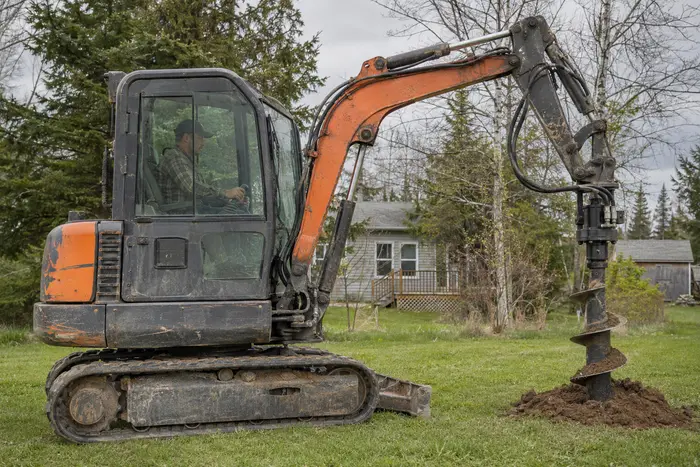
- Attachment demand. A hammer, auger or mulcher needs enough flow and pressure. A small machine can run a small version, not a full-size one.
If you are still choosing between machine types, our mini skid steer vs mini excavator comparison covers the trade-offs. For the machine itself, see excavator sizes for the full range above the compact class.
What attachments fit which size?
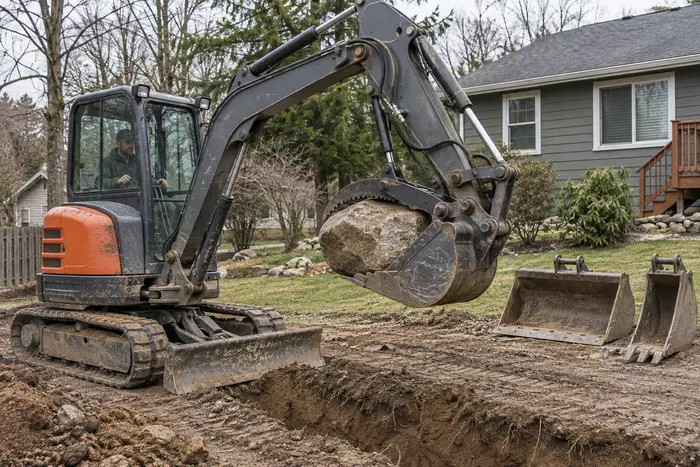
Size drives attachment choice more than anything else. A bucket that is too wide for the machine stalls in hard digging. A heavy thumb or bucket at full reach eats into lift capacity and stability. Browse the excavator buckets and thumbs sorted by machine class, and check the coupler type before you order. A quick coupler lets one machine run many tools, but only if the pin spacing and width match.
The mini excavator attachments buyer's guide walks through each tool by machine size.
What mistakes do buyers make with size?
- Buying on shipping weight, then finding the trailer is overloaded once fluids and a bucket go on.
- Ignoring tail swing until the first fence line.
- Choosing the biggest bucket the machine can lift instead of one it can lift at full reach.
- Forgetting that the operator manual's rated lifting capacity governs, not what the machine "seems" to handle.
Always follow the operator manual and the machine's rated capacity. Lift charts and load limits are there for a reason.
How do you read a mini excavator spec sheet?
Spec sheets look dense, but a handful of lines do most of the work. Read these first and ignore the marketing copy.
- Operating weight. Check what is included: fluids, cab, track type, bucket.
- Overall width over tracks. This is your gate and doorway number.
- Maximum dig depth and reach at ground level. Match these to your deepest regular trench, with some margin.
- Auxiliary hydraulic flow and pressure. These set which powered attachments run properly.
- Lift capacity at a given reach. This is the number that matters when you swing a load, and it drops quickly as you reach out.
- Transport dimensions. Height and length with the boom folded decide bridge, overpass and trailer fit.
Compare two or three machines line by line with the same attachment in mind. A machine that looks cheaper on weight can lose on flow, and one with more flow can be too wide for your job sites.
Does the weight class change rental or ownership decisions?
It can. Heavier machines need a bigger trailer, a stronger tow vehicle and more care in loading and tie-down. Lighter machines are easier to move between jobs but may need more passes to finish the same trench. If you move the machine every day, transport effort adds up fast. If it sits on one site for weeks, a heavier machine that digs faster may be worth it. Think about the whole job, not only the day the machine arrives.
Get the right fit the first time
Attachment fit depends on your exact machine, not just its size class. Send us the make, model and year, and a person checks it against the maker's specs. You see the delivered price on your quote before you pay. The supplier ships direct, and warranty terms, if any, are written on your quote. Get a fit-checked quote or call 1-888-245-1555.
Questions buyers ask
What are the sizes of mini excavators?
Mini excavators range from micro machines under 1 tonne up to compact machines with an operating weight near 8.5 tonnes. In between, makers use small, mid and large compact labels that are not standardized, so compare operating weight and digging specs on each spec sheet.
How much does a mini excavator weigh?
It depends on the class. Micro units sit under 1 tonne, and compact excavators go up to roughly 8.5 tonnes. Published numbers vary by term (machine mass, operating weight, shipping weight) and by configuration, so use operating weight from the maker's specs.
What is the difference between operating weight and shipping weight?
Operating weight includes fluids, a standard bucket and an operator. Shipping weight is often lower because it leaves some of that out. Use operating weight for comparing machines and add attachments when you plan trailer and tow limits.
What does zero tail swing mean on a mini excavator?
Zero tail swing means the rear of the house stays within the width of the tracks as it rotates. That lets you work close to walls and fences without hitting them. The trade-off is less counterweight behind the pivot on some models.
Can I trailer a mini excavator behind a pickup?
Some small machines can be, but only if machine, attachment and trailer weight stay within the tow vehicle's and trailer's rated limits. Check your vehicle's tow rating and the trailer's plate before loading, and follow local road rules.