Fencing guide
Skid Steer Fence Installation Attachments Guide
Quick answer
A skid steer fence post driver pushes or hammers posts into the ground using the loader's hydraulics, saving the time of digging holes. Augers drill holes for set-in-concrete posts. Choose a driver for steel or wood posts in suitable soil, an auger for concrete footings, and match either to your loader's capacity and hydraulics.
Shopping for this now? Get a fit-checked, delivered quote.
Key takeaways
- A post driver hammers posts in; an auger drills holes for setting posts.
- Drivers suit long fence lines in soils they can penetrate.
- Rocky, frozen or very hard soil may need pre-drilling with an auger.
- Posts must be plumb; use a guide or laser, not eyeballing.
- Check loader flow, weight capacity and mounting plate before buying.
A fence line is a repeat-the-same-job project, which is exactly what skid steer attachments are good at. Instead of digging every hole by hand, you can drill them with an auger or push posts straight in with a hydraulic driver. Here is how each tool works, when to use it and what to check first.
What tools install fence posts with a skid steer?
Three families do the job:
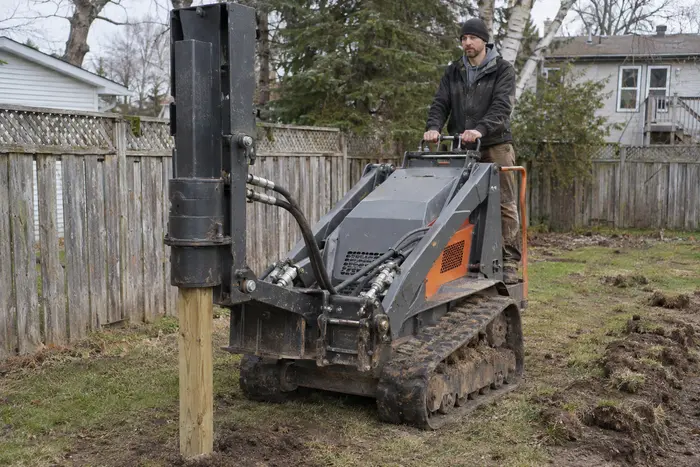
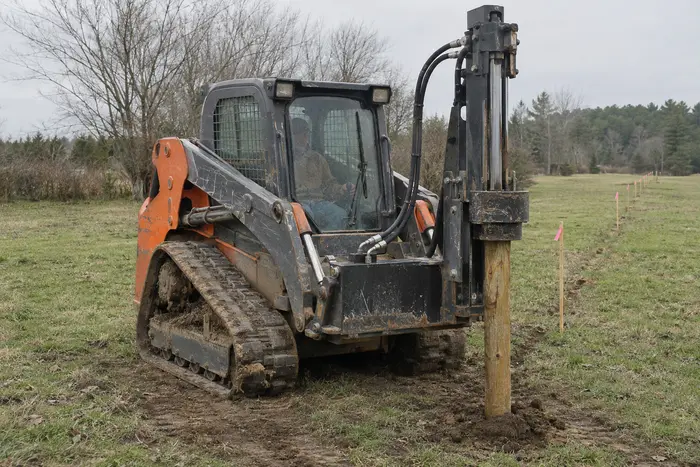
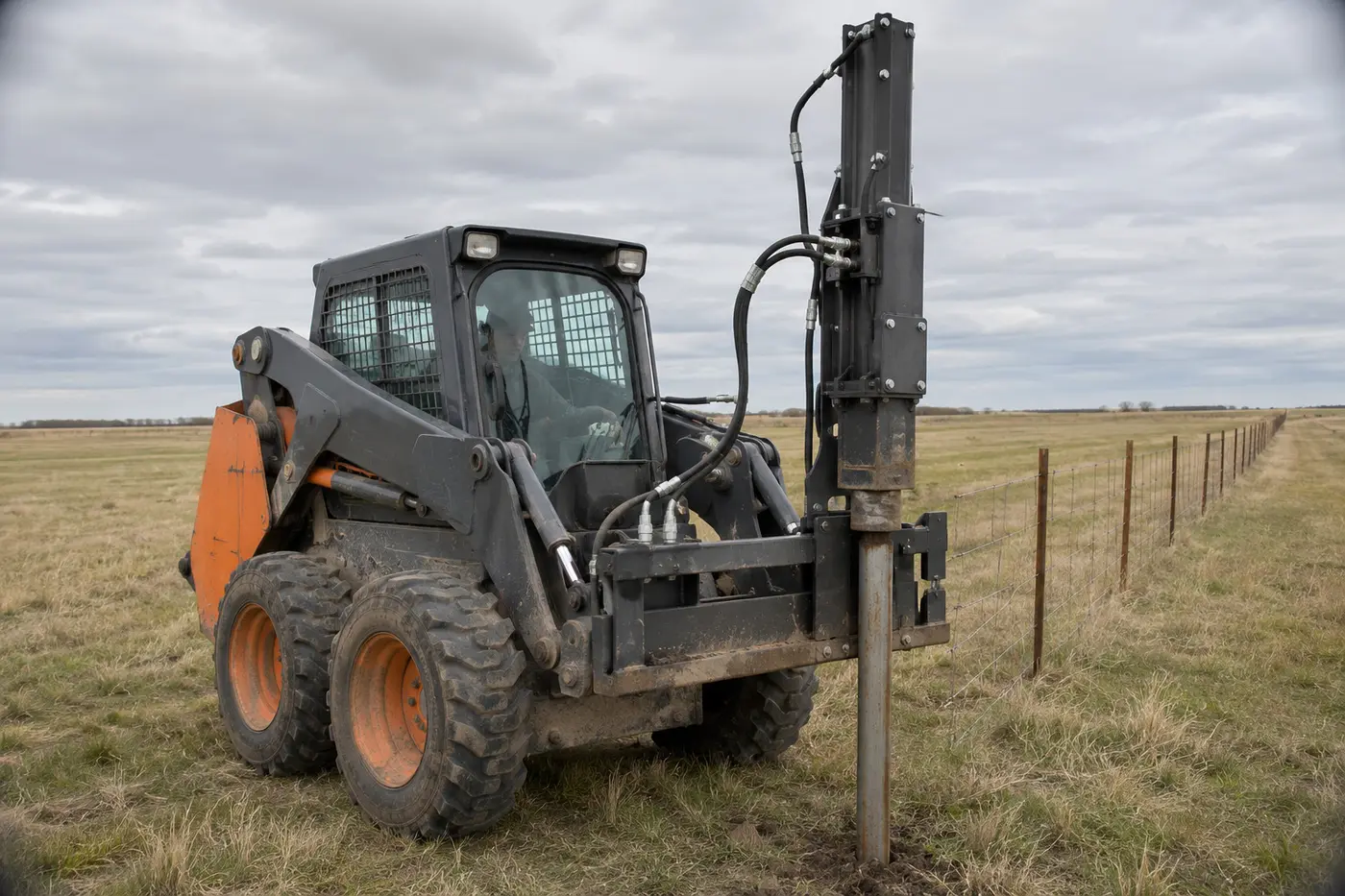
- Post drivers. A hydraulic hammer mounted on a frame that pounds the post into the ground. Also called post pounders. Some are made for steel T-posts, others for wood posts and larger steel posts.
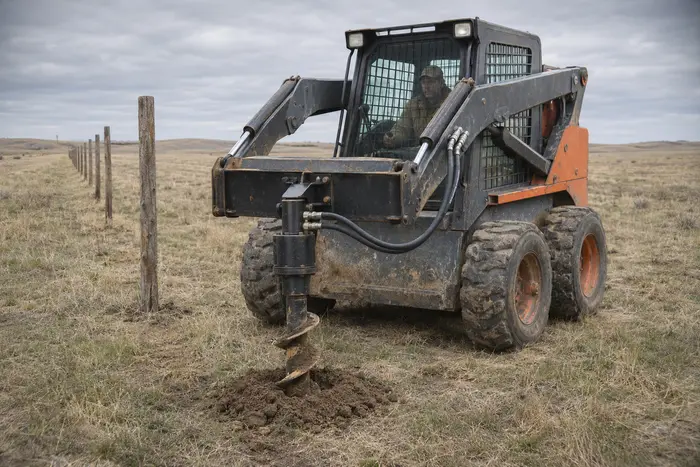
- Augers. A hydraulic drive turns a bit that drills a hole. You set the post in the hole and backfill or pour concrete.
- Combination fence installers. Frame-style tools that hold the post and drive it, sometimes with a hole-drilling option.
Browse post drivers, augers and fence installers to compare what is offered. The mini side has post drivers and fence installers too.
How does a skid steer fence post driver work?
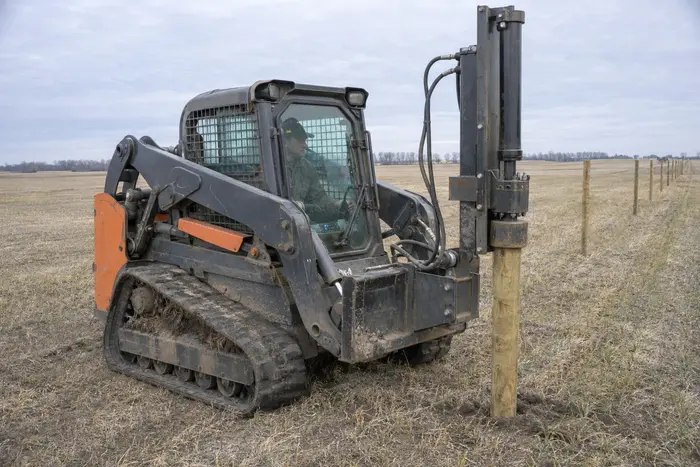
The driver holds the post upright in a guide. A hydraulic hammer strikes the top of the post repeatedly, driving it into the soil. You position the machine, set the post on its mark, check it is plumb and let the hammer drive it. The machine does the work of pounding and the guide keeps the post straight. Our article on how a hydraulic post pounder works explains the mechanics, and best hydraulic post driver covers what to look for.
What is a T-post driver on a skid steer?
A T-post driver is a version made for steel T-posts, the light posts common in farm and field fencing. Because those posts are light and driven in line, the job suits a hydraulic driver well. Some drivers handle wood posts and heavier steel posts as well, so check the post types the maker lists.
Post driver vs auger: which should you use?
| Post driver | Auger | |
|---|---|---|
| Method | Hammers the post into the ground | Drills a hole; you set the post |
| Speed on long lines | Fast, no digging or backfill | Slower, with setting and backfilling |
| Concrete footings | Not used | Yes, drills the hole for the concrete |
| Hard or rocky soil | May refuse; pre-drill if needed | Can use rock bits for tough ground |
| Best for | Farm, pasture and field fences | Gate posts, corners, privacy fences |
Many installers use both: an auger for corners, gates and braces, and a driver for line posts. For more on the auger side, see the skid steer auger guide.
How deep do posts need to go?
A common rule of thumb is to bury about a third of the post's length, deeper where frost, soil or loading requires it. A hydraulic driver pushes to depth, while an auger drills it. Whichever you use, check local rules. Our article on how deep a fence post should be covers it in detail, and fence post spacing helps you lay out the line.
Soil conditions that affect the choice
- Soft to medium soil: drivers usually work well.
- Rocky ground: drivers can deflect or stop. Pre-drill with an auger and rock bit.
- Frozen ground: hard to penetrate; drivers often struggle, and many installers wait for a thaw.
- Sand or loose fill: posts may not hold well. Use concrete or deeper embedment.
- Wet or clay soil: drilling can smear and drain poorly. Gravel at the base helps drainage.
Matching the tool to your loader
- Check the loader's rated operating capacity and the attachment's weight.
- Check hydraulic flow and pressure requirements for the driver or auger drive.
- Confirm the mounting plate and coupler type.
- Check the tool's maximum post size and length.
- Look at the mast or guide height versus your intended post length.
- Confirm any case-drain needs for an auger drive.
If you are unsure about plate and couplers, read are skid steer attachments universal before you order.
How to keep posts straight
A crooked fence is hard to hide. Use a post guide or a level on two faces of the post, and set string lines to align the run. Mark each post location before you begin. Keep the machine on level ground when you drive, since a tilted mast tilts the post. Check each post before releasing it.
Renting or buying
If you will install one fence this year, rent. If you install fence for others, or maintain a large property with several runs, buying can pay back. Rental availability varies by area, so ask local rental yards what they carry.
Safety
Hydraulic hammers are loud and can throw debris. Wear hearing and eye protection, keep bystanders well away from the driver and never put hands near the post while it is driven. Locate underground utilities before you drive or drill. Follow the operator manual and the machine's rated capacity.
Planning a fence job from start to finish
Lay out the line
Walk the fence line first. Mark corners, gates and any change in direction, then run string between them. Decide post spacing based on the fence type and local rules, then mark each post. Corners and gates get the most attention, because they carry the load of the whole run.
Set the corners and gates first
Many installers set corner, end and gate posts with an auger and concrete, then use a driver for the line posts between them. That gives a solid frame and lets the driver work quickly along a straight line. Brace the corners and let concrete cure before applying wire or panel tension.
Drive or drill the line posts
Work from one end to the other, checking each post for plumb and height as you go. Keep a consistent height by marking the post or measuring from a string line. A post that is driven too far cannot be raised easily, so stop short and check.
Finish the fence
Hang rails, panels or wire after posts are set and braces are in. Tension wire from the corners, not the line posts. Walk the fence and recheck anything that moved.
Fence installer attachment features worth asking about
- Post size range the tool can hold and drive.
- Side shift or tilt to place posts accurately.
- Guide height and travel for long posts.
- Hammer or drive energy, and the hydraulic flow it needs.
- Wear parts and how they are replaced.
- Warranty terms from the manufacturer.
Pair your driver or auger with a bucket for hauling posts and material, and a set of pallet forks to move bundles of posts and rolls of wire around the site.
Get the right fit the first time
Send us your machine's make, model and year, and a person will check fit against the maker's specs. You approve a delivered price before you pay. Request a fit-checked quote.
Questions buyers ask
How does a skid steer fence post driver work?
The driver holds the post upright in a guide, and a hydraulic hammer strikes the top repeatedly, pushing the post into the ground. The skid steer positions the driver and supplies hydraulic power. It saves the digging and backfilling that an auger setup needs.
Can a skid steer drive T-posts?
Yes. T-post drivers are made for steel T-posts used in farm and field fences. Light posts suit hydraulic drivers well. Some drivers also handle wood or heavier steel posts, so check the post types the maker lists before buying.
Is a post driver or an auger better for fences?
Drivers are faster on long lines of posts in soils they can penetrate. Augers are better for corners, gates and posts set in concrete, and for hard or rocky ground with the right bit. Many installers use both.
What soil can a hydraulic post driver handle?
Soft to medium soil works well. Rocky, frozen or very hard ground may stop or deflect the post, so pre-drill with an auger. Loose sand may not hold a driven post well, so consider concrete or deeper embedment.
What do I need to check before buying a fence installer?
Check your loader's rated capacity, hydraulic flow and pressure, mounting plate, couplers and any case-drain need. Then check the tool's maximum post size and length. Confirm fit with the maker or a dealer before you pay.