Fencing guide
Rock Auger Bits: When You Need Heavy-Duty Augers
Quick answer
Rock auger bits are heavy-duty drilling bits with hardened teeth, a stronger flight and a pilot, built for rocky, frozen or hard-packed ground. Use them when a standard dirt auger skips, stalls or wears out fast. Match the bit's drive size and torque rating to your auger drive.
Shopping for this now? Get a fit-checked, delivered quote.
Key takeaways
- A dirt auger cuts soil. A rock auger crushes and chips hard material.
- Rock bits have replaceable carbide or hardened teeth and a heavier flight.
- Match the bit to your drive unit's output shaft and torque rating.
- Go slow, keep the bit square, and lift often to clear spoil.
- If you hit solid bedrock, an auger may not be the right tool at all.
Most auger jobs go fine with a plain soil bit. Then you hit cobble, caliche, frozen ground or shale, and the bit just skates. That is when rock auger bits earn their keep. This guide explains what makes them different, when you really need one, and how to choose a bit that suits your drive.
What are rock auger bits?
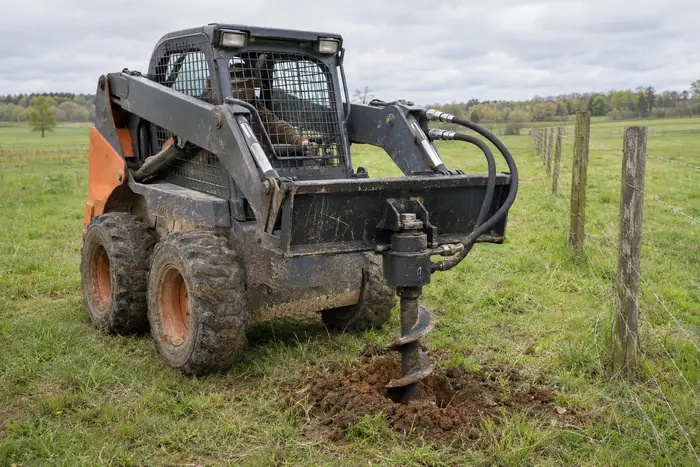
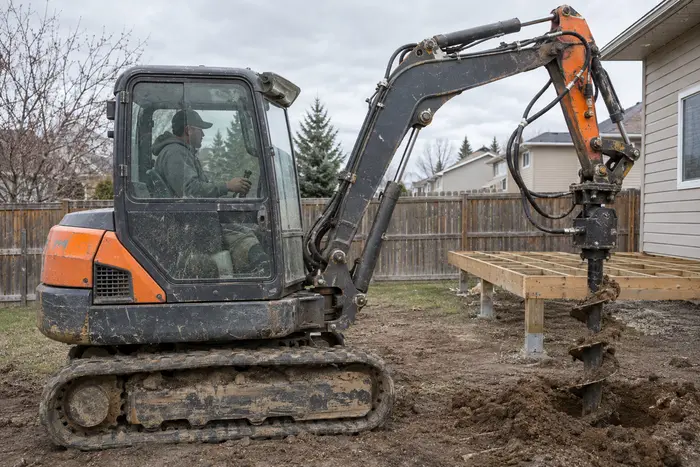
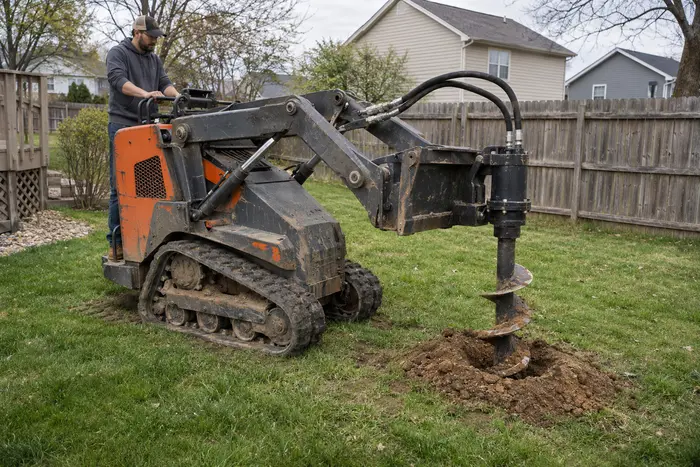
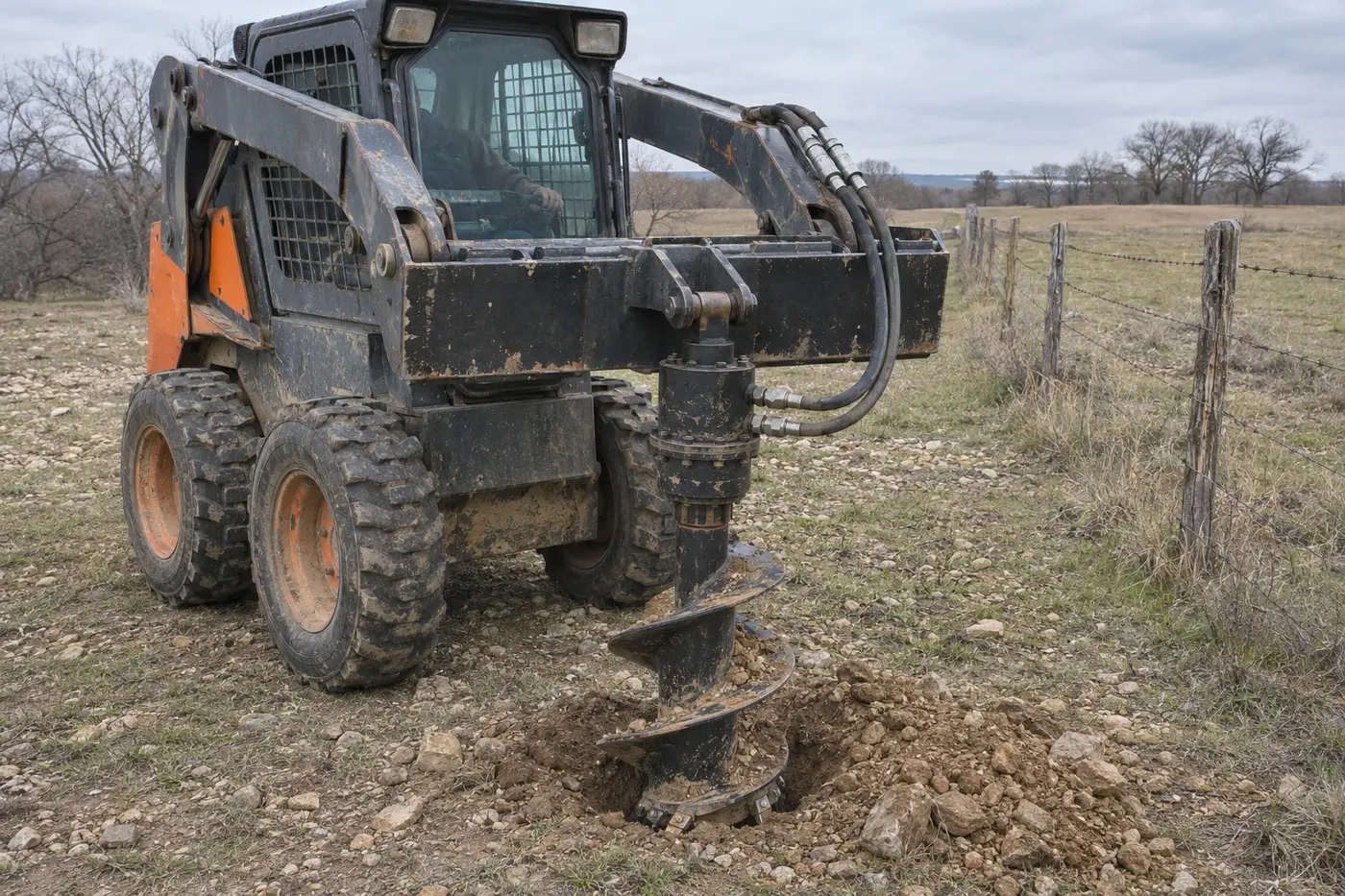
A rock auger bit is the business end of an auger attachment, built for hard ground. The drive unit is the hydraulic motor and gearbox that turns the bit. The bit is the part that touches the ground. On a skid steer, the drive mounts on the quick attach plate. On an excavator or a mini skid steer, it usually hangs from the arm or mounts to a smaller plate. The same drive can often accept both a soil bit and a rock bit, so you do not need a second drive unit.
Rock bits differ from soil bits in four ways:
- Teeth. Soil bits use simple cutting blades. Rock bits use heavy teeth with hardened or carbide tips that chip and crush.
- Pilot. Many rock bits have a heavier pilot point at the center that holds the bit in line as it starts.
- Flighting. The spiral that lifts spoil is thicker and stronger so it does not bend.
- Replaceable parts. Teeth and pilots are bolt-on or pin-on, so you swap worn ones instead of the whole bit.
When do you need a rock auger instead of a dirt auger?
Try a standard bit first. If it behaves like this, switch.
| What you see | Likely cause | What to do |
|---|---|---|
| Bit bounces or skates on the surface | Hard, dry or frozen ground | Use a rock bit with a pilot |
| Bit stalls, then jumps | Cobbles or buried stone | Rock bit with heavy teeth |
| Teeth wear down within a few holes | Abrasive soil, gravel, shale | Carbide-tipped teeth |
| Hole will not start at all | Solid rock or asphalt base | Rock bit, or a different tool |
| Flights bend or crack | Overloading a light bit | Heavier flight, slower feed |
Fence builders, deck crews, sign installers and utility crews run into this often. If you are setting posts, our guide to a skid steer auger covers drive sizes and bit diameters.
What types of rock bits are there?
Rock auger with a pilot and teeth
This is the standard rock bit. A heavy pilot bites in first. The teeth around the flight chip away the hole walls. It handles cobble, frozen ground and soft rock like shale.
Carbide-tooth bits
The teeth are tipped with tungsten carbide, a very hard material that holds an edge in abrasive ground. They cost more to replace but usually last longer in rocky soil.
Cone or round-shank tooth bits
Some bits use round-shank teeth that spin as they wear, so they wear evenly. These are common on heavy-duty and trenching-type bits.
Core or barrel bits
A core bit cuts a ring and leaves a plug of rock in the middle, which you then remove. It is useful for solid rock where a regular bit would not make progress. It needs more torque and slower work.
How do you match a rock bit to your drive?
This is where most orders go wrong. Check these four things.
- Output shaft size and shape. Most drives use a hex or square output shaft, and some use a round shaft with pins. The bit's socket must match it. A bit that fits loosely will round off and fail.
- Bit diameter. Hole size depends on the job. Bigger bits need much more torque, so check what your drive can turn.
- Torque rating. A rock bit demands more torque than a soil bit of the same size. Ask for the drive's rated torque range in the maker's data.
- Hydraulic flow and pressure. The drive needs the right oil flow to turn at its design speed. A low-flow machine will drive a rock bit slowly. That is fine for torque, but plan for longer cycles.
Browse skid steer augers, mini skid steer augers and excavator augers for drive units and bits, then send us your make and model so we can confirm they fit.
How do you drill in rock without breaking things?
Rock work is harder on the drive and on the host machine. Take it slow.
- Start with the bit square to the ground. A tilted start walks the bit sideways.
- Apply light downward pressure at first. Let the pilot set before you push.
- Use steady, moderate crowd pressure. Do not stand the whole machine on the bit.
- Back the bit out often to clear spoil. A packed flight overheats and binds.
- If the bit stops turning, stop applying crowd and reverse out. Do not keep forcing it.
- Stay clear of the rotating bit and wear eye, ear and foot protection. Follow the operator manual for both machine and attachment.
When is an auger the wrong tool?
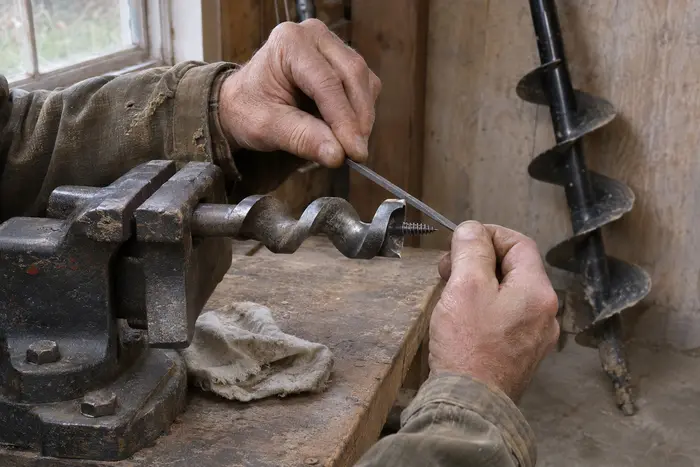
Solid bedrock, large boulders and reinforced concrete are not auger work. A hydraulic hammer or breaker, or a dedicated rock drill, does better. If you only need a few holes in rock, check the cost of hiring a drilling crew against buying heavy bits that you will not use again. For skid steer operators who set posts and sign footings on rocky sites, a good rock bit is usually worth it. See also our guide to sharpening an auger bit to extend bit life.
What about frozen ground and winter work?
Frost is a common reason crews buy their first rock bit. Frozen soil behaves like weak rock. A plain soil bit skates on the surface and dulls fast. A rock bit with a pilot and hard teeth will bite, although you should expect slower progress and more wear. Go easy on crowd pressure, because cold hydraulic oil is thick and the drive may need a few minutes of warm-up before it turns at full speed. Where frost goes deep, some crews break or thaw the frozen layer first with a hammer or ground heater, then auger the soil below.
Check your hole spacing and depth against local building or fence rules, and call utility locating services before you dig anywhere that has not been cleared.
How do you make rock bits last?
- Rotate or replace teeth before they wear down to the holder. A worn holder costs more than a tooth.
- Keep a spare set of teeth and bolts in the truck.
- Check the flighting for cracks and bends after every few jobs.
- Clean packed soil out of the bit before you store it. Moisture rusts the teeth holders.
- Grease the drive on schedule per the manual.
Get the right fit the first time
Bits, drives and quick attach plates all have to match. Send us your machine's make, model and year, the hole size you need, and the ground you are drilling. We will confirm fit against the manufacturer's specs and send a written quote with the delivered price before you pay. The supplier ships direct, and warranty terms, if any, are written on your quote. Start with a fit-checked quote.
Questions buyers ask
What is the difference between a rock auger and a dirt auger?
A dirt auger has simple cutting blades for soil. A rock auger has heavy hardened or carbide-tipped teeth, a pilot point and a stronger flight so it can chip and crush hard ground. Rock augers cost more but save wear and time in cobble, shale or frozen soil.
Can I use a rock auger bit on my skid steer?
Yes, if the bit matches your auger drive's output shaft and the drive has enough torque for the bit diameter. Many drives accept both soil and rock bits. Check your skid steer's hydraulic flow and pressure against the drive's requirements.
How do you use a soil auger without damaging it?
Start with the bit square to the ground, use light crowd pressure, and lift the bit out often to clear spoil. Do not force it when it stalls. Reverse out, clear the hole, and try again. Follow the operator manual for the machine and the attachment.
What are rock auger bits made of?
Most rock bits use heavy steel flights with replaceable teeth. The teeth are hardened steel or tipped with tungsten carbide, which holds an edge in abrasive ground. Some bits use round-shank teeth that rotate as they wear so they wear more evenly.
When should I use a hammer instead of a rock auger?
Use a hydraulic hammer or a rock drill for solid bedrock, large boulders and reinforced concrete. An auger works best on soft rock, shale, cobble, frozen ground and compacted gravel. If a rock bit makes no progress, switch tools instead of forcing the bit.