Excavator guide
Best Attachments for 3 to 4 Ton Mini Excavators
Quick answer
The most useful mini excavator attachments for a 3 to 4 tonne machine are a set of buckets, a thumb, a quick coupler and an auger. Add a hydraulic breaker, plate compactor or grapple when work requires them. Fit depends on the machine's coupler, pin size, hydraulic flow and weight.
Shopping for this now? Get a fit-checked, delivered quote.
Key takeaways
- Start with the right bucket set and a quick coupler.
- A thumb turns the bucket into a grab for logs, rock and debris.
- Powered attachments need the machine's auxiliary hydraulics sized to match.
- Weight matters: an attachment that is too heavy reduces lift and stability.
- Always confirm the coupler and pin pattern before you order.
A mini excavator in the 3 to 4 tonne class is a common work machine. It fits through a gate, loads on a tag trailer and digs trenches, footings and drainage. Its attachments decide how many jobs it can do. This guide covers what to buy first and what to confirm before you order.
What counts as a 3 to 4 ton mini excavator?
Compact excavators are described in references as machines of up to about 8.5 tonnes operating weight, with micro machines under 1 tonne. A 3 to 4 tonne machine sits at the lower middle of that range. Makers measure and label weight differently, so don't trust the class name alone. Check the machine's published operating weight and the attachment's own weight limit.
Throughout this guide, "ton" and "tonne" refer to the machine class, not to the capacity of any attachment. Capacity depends on the machine's load chart and the attachment's rating, which you should read in the manuals.
Which attachments should you buy first?
Most owners start with buckets and a coupler, then add specialty tools as jobs demand. A sensible first set looks like this:
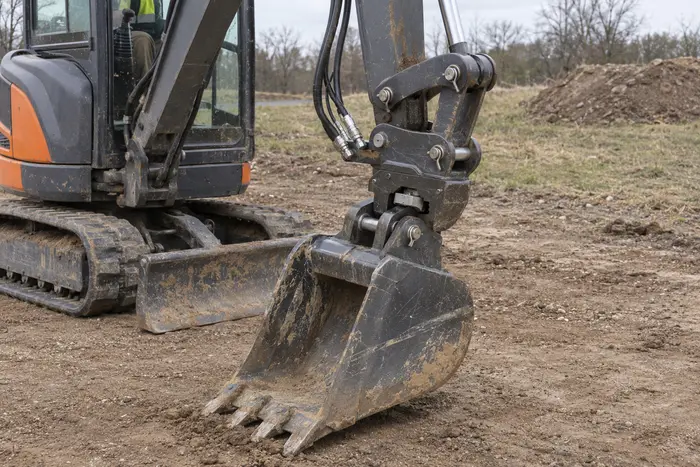
- Quick coupler. Speeds up tool changes, and a hydraulic coupler lets you swap from the cab. See excavator quick couplers.
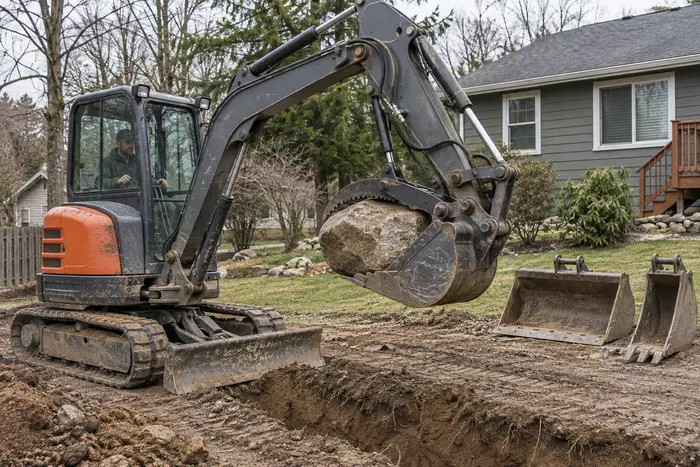
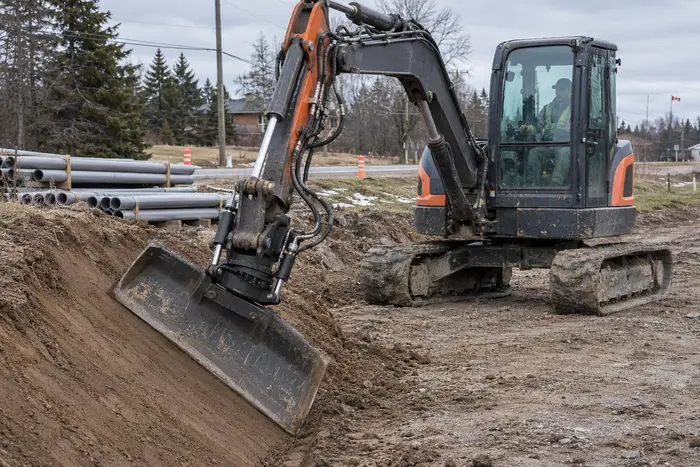
- Digging bucket. The main tool for trenching and loading.
- Wide cleanup or grading bucket. Smooth, toothless, for finishing and drainage.
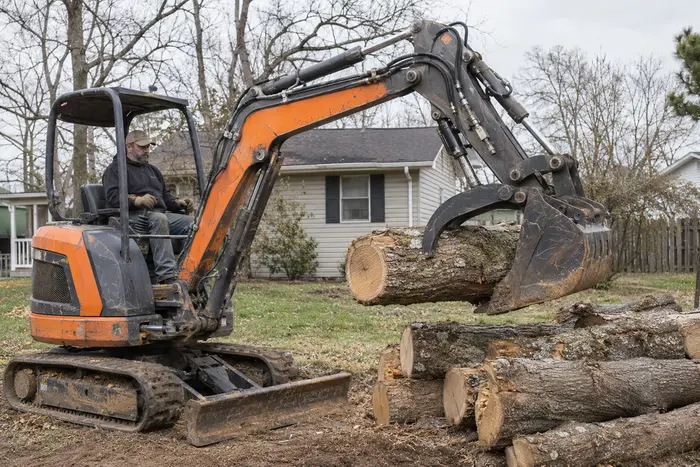
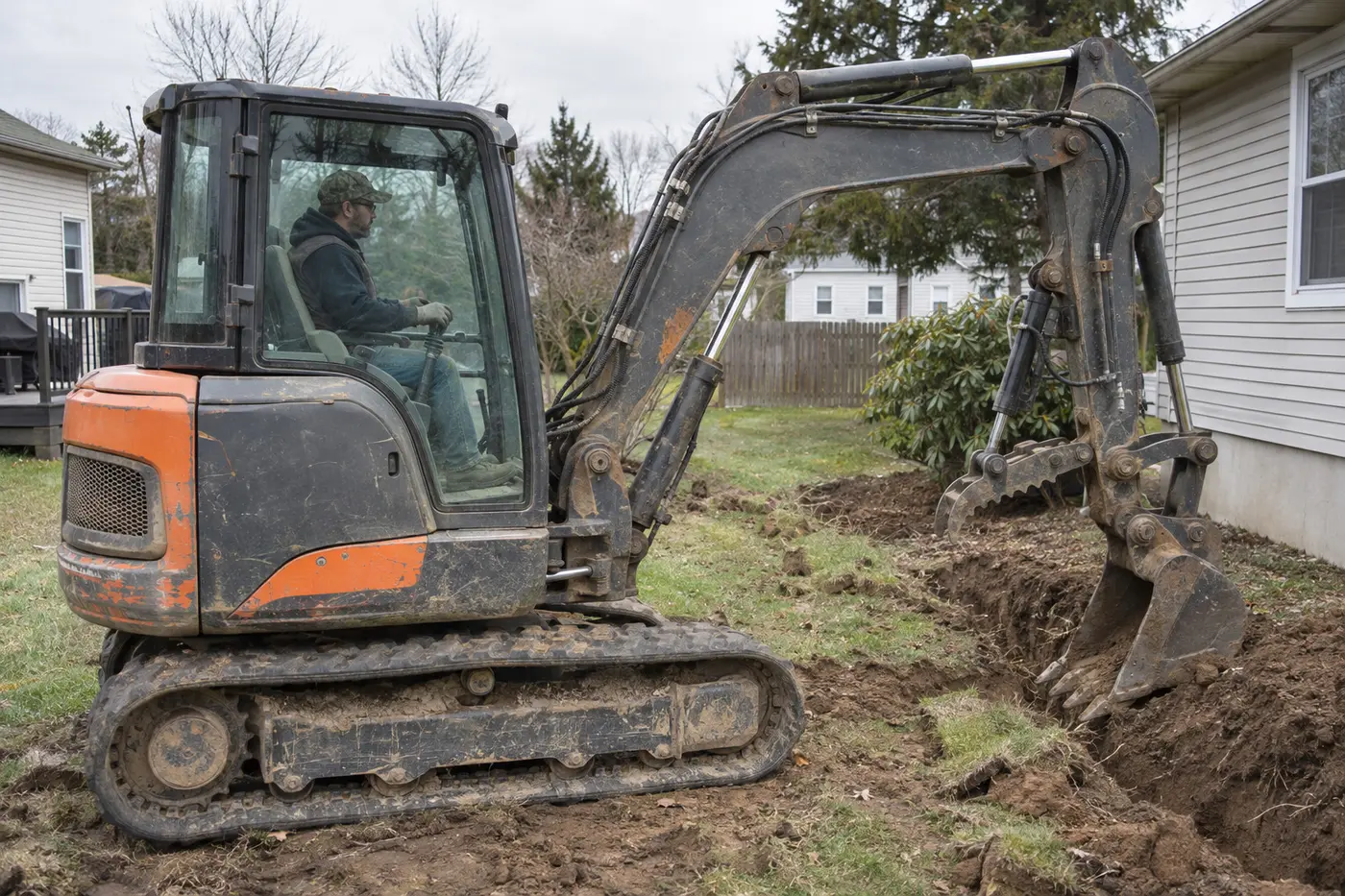
- Thumb. Adds a hinged gripping tool for logs, rock and debris.
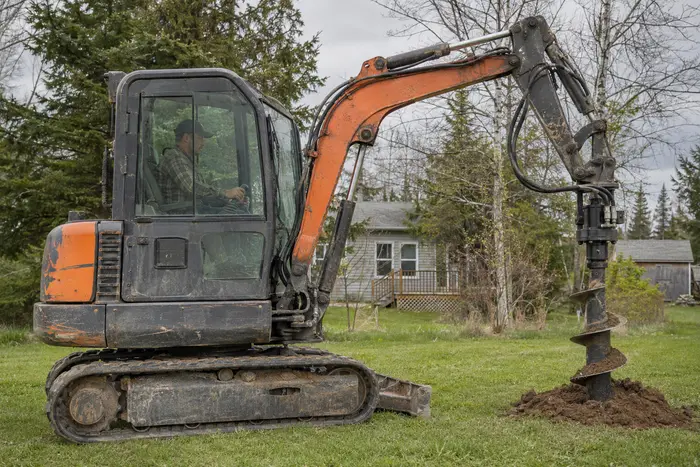
- Auger. Drills holes for posts, footings and planting.
That set covers most landscaping, utility and fencing work. Browse excavator buckets for styles and widths.
How do the main attachments compare?
| Attachment | Does | Hydraulic needs | Common jobs |
|---|---|---|---|
| Digging bucket | Digs and loads | None beyond the arm | Trenches, footings, loading |
| Grading bucket | Finishes and levels | None beyond the arm | Ditches, drainage, backfill |
| Thumb | Grips material against the bucket | Hydraulic or manual | Logs, rock, demolition debris |
| Auger | Drills holes | Auxiliary circuit | Posts, decks, planting |
| Hydraulic breaker | Hammers concrete and rock | Auxiliary circuit with proper flow | Demolition, trench breakout |
| Plate compactor | Compacts soil and gravel | Auxiliary circuit | Trench backfill, bases |
| Grapple | Grabs and holds | Auxiliary circuit | Brush, logs, scrap |
Why add a thumb?
A thumb is a hinged claw that closes against the bucket. It lets a digging machine pick up logs, rocks, pipe and brush that the bucket alone can't hold. Manual thumbs are pinned in place and set by hand. Hydraulic thumbs have a cylinder and are controlled from the cab. See mini excavator thumbs: hydraulic vs manual for the trade-offs, and excavator thumbs for options.
Which powered attachments are worth the investment?
Powered tools use the machine's auxiliary hydraulics. Augers, breakers, compactors, grapples and some brush cutters all rely on it. Before buying, confirm that your machine has the auxiliary lines, that the flow and pressure match the tool's requirements and that the couplers are compatible. A tool that needs more flow than the machine offers will run slowly or not at all. A tool that needs less is usually fine, although flow must still stay within the tool's rated range.
For specific tools, see mini excavator auger guide, mini excavator plate compactor guide and breaker hammers. A tiltrotator is a premium option that tilts and rotates the tool. It needs additional hydraulics and a compatible coupler, so check with a person first.
What fit checks matter most?
- Pin diameter and spacing. The attachment's pin pattern has to match the machine's stick and linkage, or the coupler.
- Weight. The attachment adds to the load on the machine. Heavier tools reduce the lift capacity at reach.
- Auxiliary hydraulic flow and pressure. Must match the tool.
- Coupler type. Pin-on, mechanical or hydraulic quick coupler, and which standard.
- Width. Bucket width should suit your trench width and the machine's size.
If you are comparing machine types, the mini excavator attachments buyer's guide goes deeper on the same checks.
What mistakes should you avoid?
Buying an attachment based on tonnage alone is the top mistake. Two machines labeled 3.5 tonnes can have different pin patterns, auxiliary flows and stick lengths. Others include ordering a heavy breaker that reduces stability, skipping the hydraulic line check on a new auger, and picking a bucket wider than the machine can lift full. Another is ignoring tracks and ground conditions: working on a slope with a loaded bucket at full reach tips machines.
Keep the operator manual's load chart handy, and don't exceed rated limits. If you work near utilities, follow your local locate rules before you dig.
How should you plan your attachment budget?
Buy in the order the work arrives. A coupler, a digging bucket and a cleanup bucket come first because every job uses them. A thumb comes next if you handle logs, rock or pipe, followed by an auger if you set posts. Powered tools such as breakers, compactors and grapples come last, once you know how often the work comes up. A tool you use twice a year can be rented. One you use every week often earns its keep in time saved.
Think about transport and storage too. Attachments are heavy, and a rack or a pallet near the machine keeps them off the ground and saves your back. A rack also keeps pins and couplers clean. Keep the pins, clips and lock pins for each tool together with it, labeled, so a swap in the field takes minutes and not an hour of hunting.
How do you keep attachments working?
Grease pins and bushings on the schedule in the manual. Check bucket teeth and cutting edges for wear and replace them before the base metal is damaged. Look at hydraulic hoses and fittings on powered tools for rubbing or weeping. Wipe the quick coupler and check the lock before every lift. These small checks prevent most field failures, and a dropped bucket is a serious safety event, so never skip the coupler lock check.
What about transport and ground conditions?
A 3 to 4 tonne machine usually rides a tag trailer behind a heavy-duty truck, so attachment weight matters on the road as well as in the dig. Add up the machine, the tools you carry and the trailer weight, and compare that total with your truck's towing and hitch ratings, the trailer's GVWR and your local licensing rules. On site, soft ground and slopes reduce stability at full reach. Set the blade down for support, keep the load close, and never swing a loaded bucket over a person. Browse excavator thumbs and other tools once you know the weights you can carry.
Get the right fit the first time
Buckets, thumbs and powered tools all depend on your machine's pin pattern, coupler and hydraulics. Send us the make, model and year and a person will check fit against the maker's specs. Your quote shows one delivered price, freight to your address included, and the order ships direct from the supplier. Get a fit-checked quote or call 1-888-245-1555.
Questions buyers ask
What attachments does a mini excavator need first?
A quick coupler, a digging bucket and a cleanup bucket cover most work. Add a thumb for handling logs, rock and debris, and an auger for post holes. Add powered tools like a breaker or compactor only when the jobs call for them.
Will any attachment fit a 3 to 4 ton mini excavator?
No. Pin size, pin spacing, coupler type, auxiliary hydraulic flow and weight all need to match. A tonnage label is a starting point, not a fit guarantee. A person should confirm fit against the maker's specs for your machine.
Do mini excavator attachments need auxiliary hydraulics?
Powered tools do, including augers, breakers, compactors, grapples and tiltrotators. Buckets and manual thumbs don't. Confirm your machine has auxiliary lines and that the flow and pressure match the tool's needs before you order. A person can check that for you.
Is a thumb worth it on a small mini excavator?
Usually yes if you handle logs, rock, pipe or demolition debris. A thumb lets the bucket grip material the bucket alone can't hold. A manual thumb is usually cheaper and simpler. A hydraulic thumb is controlled from the cab and is faster.
What is a quick coupler on a mini excavator?
A quick coupler is a mount on the end of the stick that lets you swap attachments quickly, often from the cab. It must match the machine's pin pattern and the attachments you plan to use, so check both.