Mini skid steer guide
Mini Skid Steer Auger: Post Holes and Planting
Quick answer
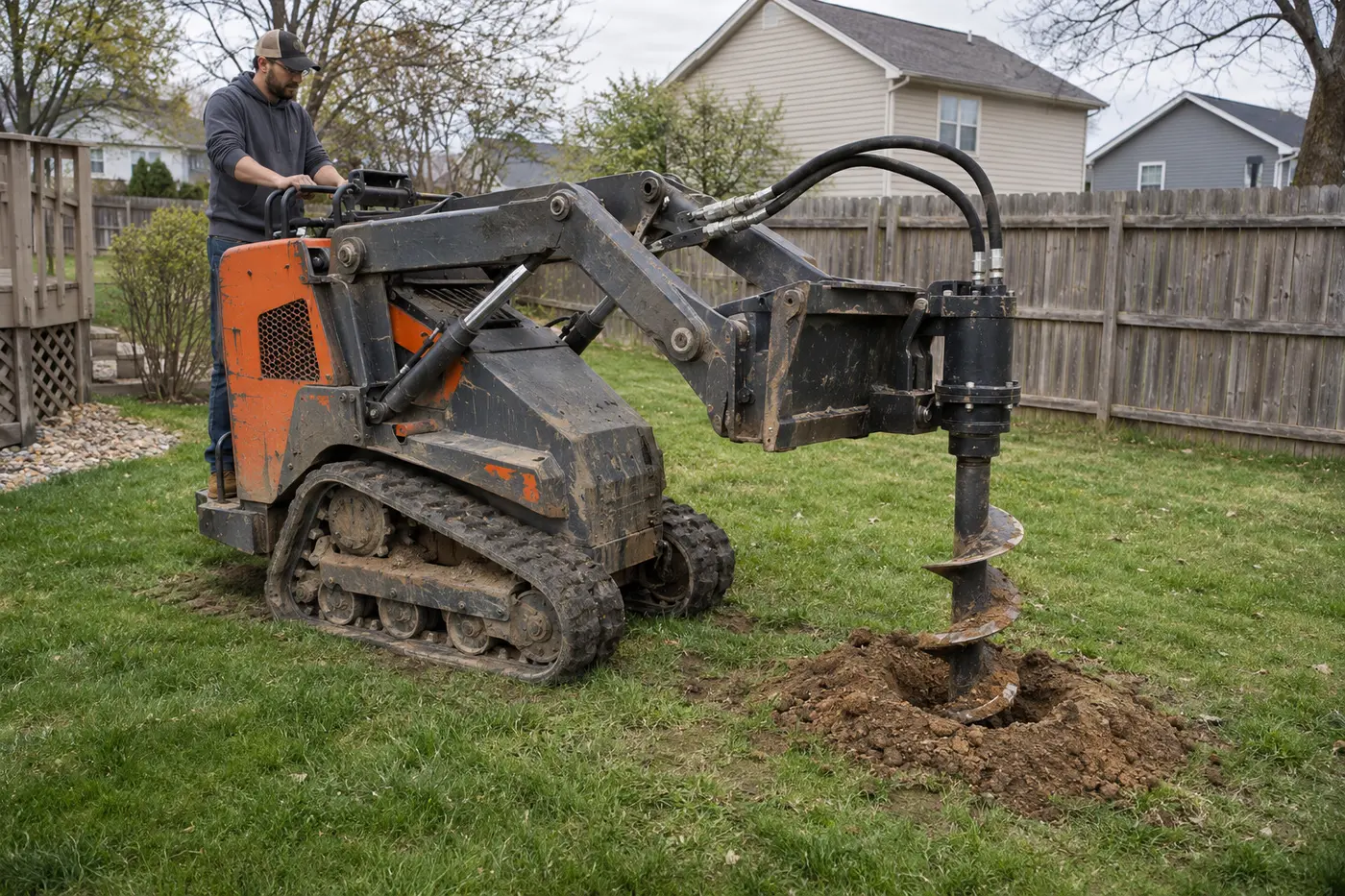
A mini skid steer auger is a compact hydraulic drive unit and bit that drills post holes, footings and planting holes in tight yards. Its small size limits hole diameter, depth and torque. Match the bit to the drive unit and your soil, and confirm auxiliary flow, couplers and the machine's capacity.
Shopping for this now? Get a fit-checked, delivered quote.
Key takeaways
- Mini machines carry lighter drive units, so hole size and depth are limited.
- Torque, not speed, decides what a bit can cut in your soil.
- Confirm auxiliary flow, couplers and the quick-attach plate.
- Keep the machine level, because a leaning bit drills a leaning hole.
- Rock and frozen ground may need a smaller bit or another tool.
A mini skid steer auger is a good fit when the yard is tight and the job is small: fence posts, a deck, a mailbox, a row of shrubs. The machine fits through a gate and the auger digs far faster than a crew with hand tools. This guide covers sizing, hydraulics and technique for a compact machine.
What is a mini skid steer auger?
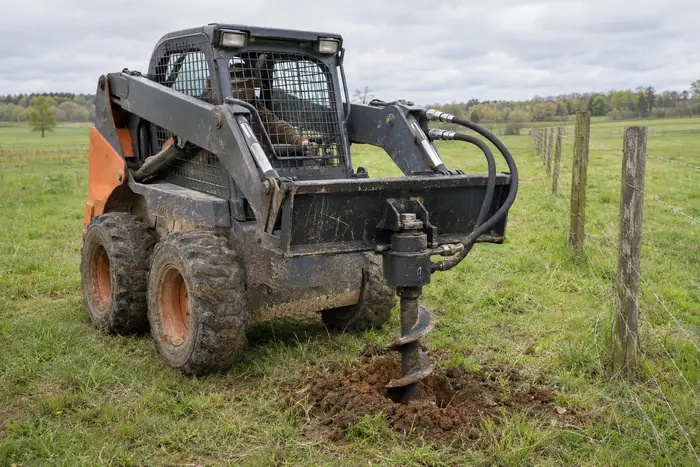
It's the same idea as a full-size skid steer auger, scaled down. A hydraulic motor and gearbox, mounted in a frame on the quick-attach plate, spin a bit with spiral flighting that bores the hole and lifts soil. Mini machines, which are narrower and lighter than full-size skid steers, run smaller drive units with less torque. You can swap bits on one drive unit, within its torque limit. Browse mini skid steer augers for the available options.
How is it different from a full-size skid steer auger?
Size is the main difference. A mini machine has lower hydraulic output and a lower rated operating capacity. That limits the bit diameter, the length and the amount of side load you can put on the drive unit. In return you get a unit that moves through tight gates, works on soft lawns with less damage and fits on a small trailer. If you need large holes or deep holes in hard soil, a larger machine may be a better match. For that comparison, see skid steer auger guide.
| Factor | Mini skid steer auger | Full-size skid steer auger |
|---|---|---|
| Typical hole size | Smaller diameters | Wider range up to large diameters |
| Torque | Lower | Higher |
| Access | Fits tight gates and yards | Needs more room |
| Ground impact | Lighter on lawns and soft ground | Heavier footprint |
| Best for | Fence, deck, planting | Pole, footing, rock, large planting |
What size bit should you choose?
Match the hole to the job. A fence post needs a hole wider than the post to allow backfill. A deck footing or a larger post needs more. Planting holes are wider and shallower. Then check the drive unit's torque rating for that diameter in your soil. A bit that is too big stalls the motor and can damage the gearbox. Heavy clay and wet soil need more torque than loose sand for the same hole. Ask the maker which diameters the drive unit supports and for what soil.
Depth is set by bit length and extensions. Frost depth, utility locates and local code affect how deep you should go, so check these before drilling. For fence posts, see how deep should a fence post be.
What hydraulics does a mini auger need?
An auger runs from the machine's auxiliary hydraulics. Mini machines have lower flow than full-size units, so check the drive unit's required flow and pressure against your machine's output. Matching matters: too little flow and the bit turns slowly with weak torque. Confirm the coupler type, the hose length and whether the drive needs a case drain. Check that the auxiliary control gives forward and reverse, so you can back the bit out of a hole.
How do you drill with a compact machine?
- Call before you dig and mark underground utilities.
- Choose firm, level ground for the machine, and avoid soft edges near trenches.
- Tilt the auger so the bit is plumb and lower the point onto the mark.
- Start the bit slowly and let it pull itself in without heavy downforce.
- Lift the bit to clear soil as the flighting fills, then lower again.
- If the bit sticks, reverse it. Don't try to pull it out with the lift arms.
- Keep people clear of the bit and the soil it throws.
A small machine is lighter, so it can lift or shift if the bit binds. Keep the seat belt on and the controls in hand.
What about rocky, frozen or wet ground?
Standard earth bits work best in loam, topsoil and sand. In gravel and cobble, a rock bit with carbide teeth does better, but it needs more torque. In frozen ground, tooth wear goes up and progress slows. In wet, sticky clay, flighting clogs and needs frequent clearing. If the ground is too hard for a mini machine's torque, a smaller diameter, a pilot hole or another method may be needed. Don't force a stalled auger against solid rock.
What should you check for fit?
- The quick-attach plate style on your machine.
- Drive unit weight against the machine's rated operating capacity.
- Hydraulic flow, pressure and coupler type.
- Drive shaft size and bit mounting style, for replacement bits.
- Bit lengths and extension options.
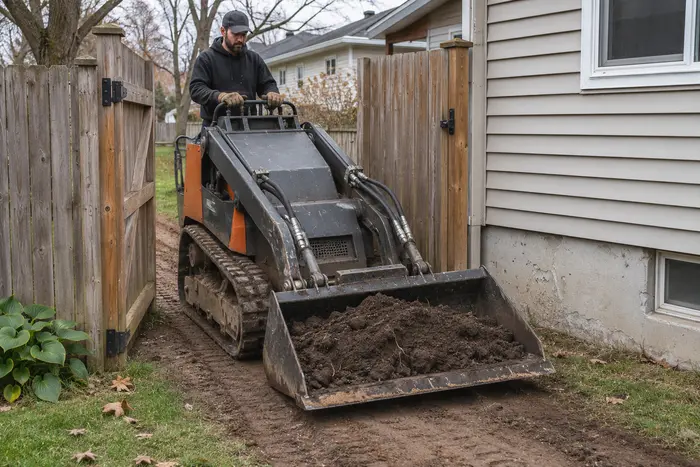
Small machines come in tracked and wheeled form, and in stand-on and ride-on layouts. See the mini skid steer guide for how the categories differ, and the fence installers category if you build fence lines.
How do you keep the auger working?
Check teeth and the pilot point for wear and replace them before they round off. Grease the points the maker lists. Look at hoses and fittings. Clean the flighting after wet clay work so soil doesn't harden. Store the bit off the ground. A dull auger slows work and loads the motor, so staying on top of wear saves time and keeps the machine from straining.
When is a mini auger the wrong tool?
It is the wrong tool for large-diameter holes, deep utility pole holes and hard rock. Those jobs need a larger machine or specialist equipment. It is also the wrong tool if the machine can't carry the drive unit's weight within its rated capacity. In that case, a hand-held or walk-behind auger might be the practical answer. If you are unsure, send your machine details and a person will check the fit.
What safety rules apply?
Call before you dig, and keep everyone clear of the rotating bit and the soil it throws. Wear eye and hearing protection, and gloves that won't catch on moving parts. Never lean over a spinning bit or reach for it. Roots and rocks can bind a bit and kick the unit, so keep the seat belt on and your hands on the controls. Shut off the auxiliary hydraulics and follow the manual's lockout steps before you clean the flighting by hand.
On small machines, side loads matter more. Don't drill on a slope steeper than the manual allows, and avoid drilling beside a trench or a retaining wall where the ground can give way. Plan the work so the machine sits on solid ground.
How do the jobs break down?
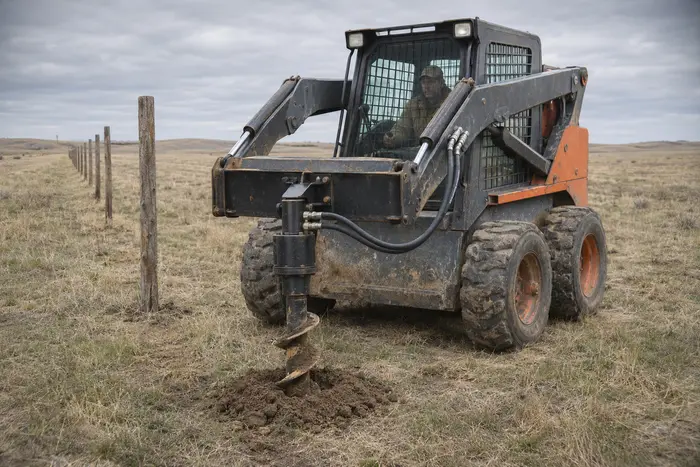
Fence lines are the classic use: space the holes, drill one at a time and set posts the same day while the holes are clean. Deck and pergola footings need accurate placement and depth, so mark them with stakes and string. Tree and shrub planting needs wider, shallower holes, and a wide bit does the job quickly. Landscape lighting, sign posts and mailbox posts are quick jobs with a small bit. In each case, take a moment to confirm underground lines first, because that is the mistake that costs the most.
Get the right fit the first time
Auger fit depends on your machine's plate, hydraulic flow and rated capacity. Send us the make, model and year and a person will check fit against the maker's specs. You see the delivered price on your quote before you pay. The supplier ships direct, and warranty terms, if any, are written on your quote. Get a fit-checked quote or call 1-888-245-1555.
Questions buyers ask
What can a mini skid steer auger drill?
It drills post holes, small footings, mailbox posts and planting holes in loam, topsoil and sand. Smaller diameters and shallower depths suit it best. Hard rock, frozen ground and large poles may need a larger machine or another method.
What size auger bit fits a mini skid steer?
The bit has to match the drive unit's torque and your soil. Smaller diameters work best on compact machines. Heavy clay needs more torque than sand for the same hole. Ask the maker which bit sizes the drive unit supports and for what soil.
Does a mini skid steer auger need high flow?
Usually standard auxiliary flow is what these units are built for, but you must still check the drive unit's flow and pressure against your machine's output. Too little flow gives weak torque. Confirm couplers and any case drain with a person before ordering.
How deep can a mini skid steer auger drill?
Depth depends on bit length, extensions and soil. Extensions add depth but increase side load on a small machine and make straight holes harder. Check the maker's limits, and follow frost depth and utility locate rules where you work.
Can I rent a mini skid steer auger?
Many rental yards offer them. Confirm that the drive unit and bit match your machine's plate, flow and capacity, since a rental that doesn't fit your machine is a problem. A fit check before you rent or buy avoids that.