Land clearing guide
Clear Brush With Skid Steer Attachments: A Guide
Quick answer
You can clear brush with skid steer attachments, using a brush cutter or mulcher to shred it in place, or a grapple, root rake or bucket to pull and pile it. Choose by brush size and what you want left behind. Match the attachment's hydraulic needs to your machine and work in controlled passes.
Shopping for this now? Get a fit-checked, delivered quote.
Key takeaways
- Brush cutters and mulchers shred vegetation in place; grapples, rakes and buckets pull and pile it.
- Brush size, density and ground conditions decide the best attachment.
- Cutters and mulchers need strong hydraulics; check flow and case drain needs.
- Plan where debris and mulch will go before you start.
- Wear protective gear, keep bystanders far back and watch for rocks, wires and buried items.
Overgrown fence lines, brushy corners and thickets can be cleared quickly with the right attachment on a skid steer. The best choice depends on how thick the brush is, what is under it and what you want the ground to look like afterward. This guide compares the main methods and walks through the job.
Can you clear brush with a skid steer?
Yes. A skid steer carries a range of attachments that cut, shred, pull or pile brush. Many attachments are powered by the loader's hydraulic system, which is why you can swap between them. The right choice depends on stem size, density, ground conditions and the finish you want.
What is the best way to clear brush with a skid steer?
| Method | How it works | Best for | Limits |
|---|---|---|---|
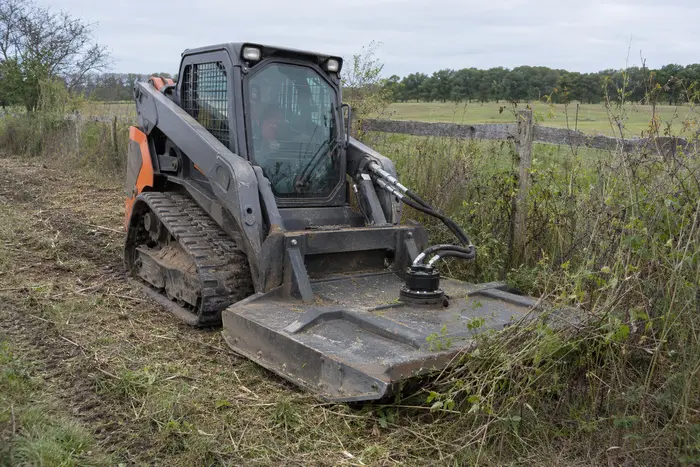
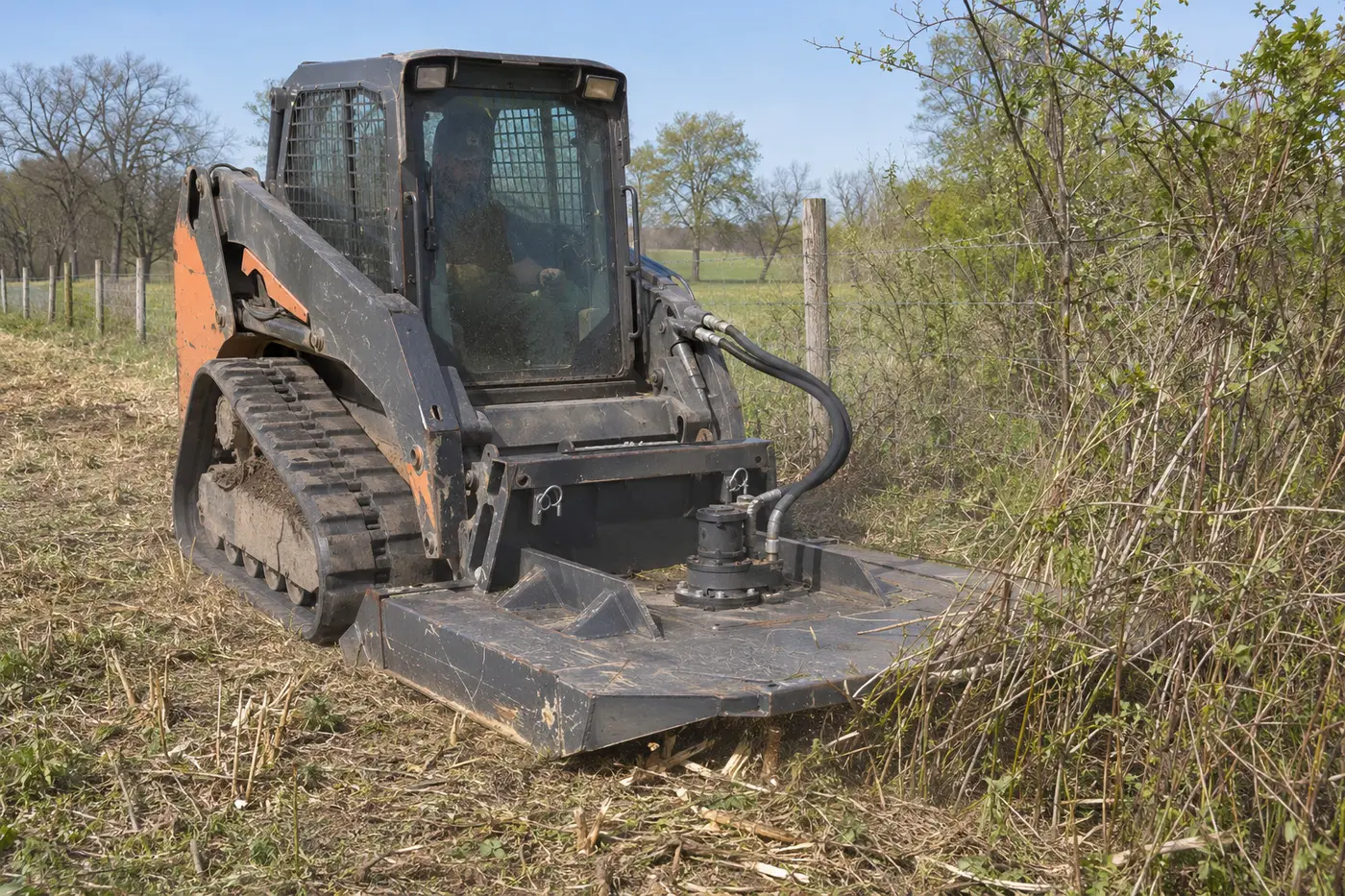
| Brush cutter | A rotary or flail head cuts brush and small stems | Grass, thick brush and saplings | Not for large trunks; leaves stumps and cut material |
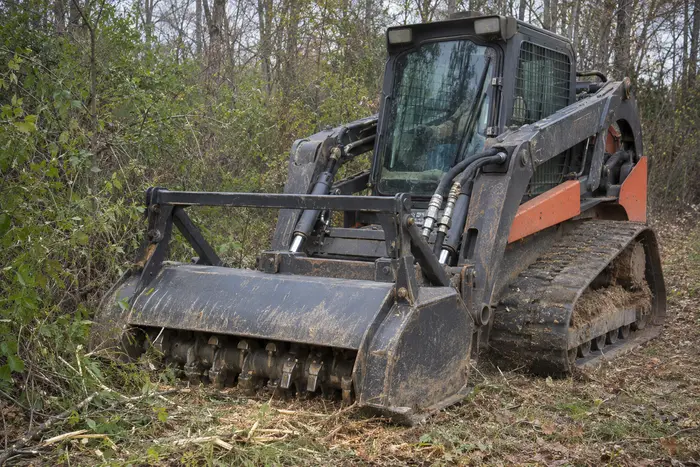
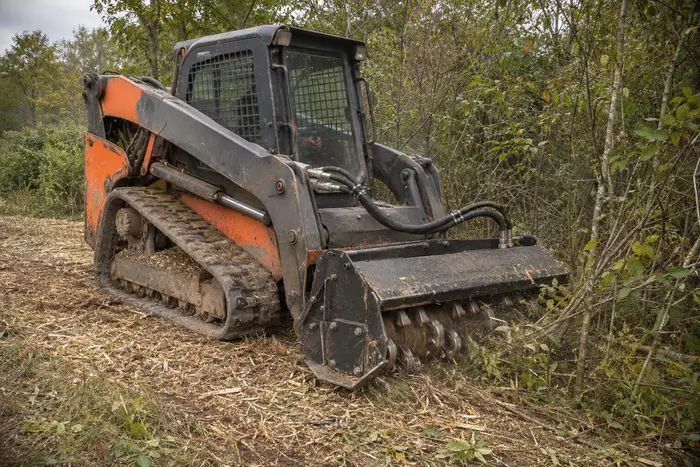
| Mulcher | A rotor with teeth grinds vegetation into chips in place | Dense brush, small trees and overgrown lots | Needs strong hydraulics, often high flow |
| Grapple | Grabs and moves brush, limbs and debris | Piling and loading cut material | Does not cut |
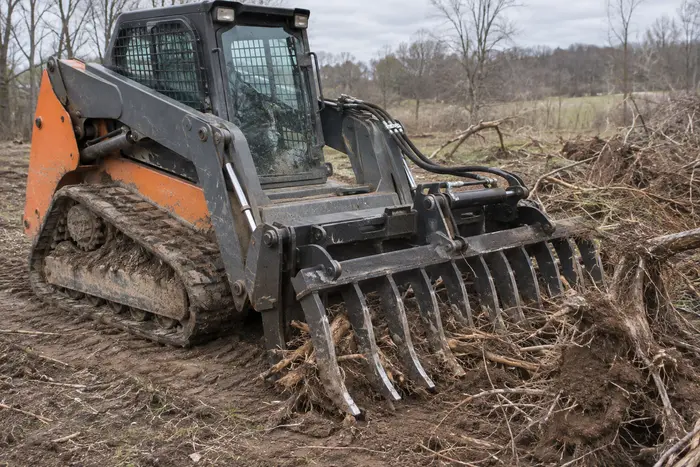
| Root rake | Tines pull brush and roots from the ground and leave soil behind | Clearing and cleanup before grading | Slower in heavy cover |
| Bucket | Scoops and pushes brush into piles | Light brush and small areas | Messy, and it carries soil with the brush |
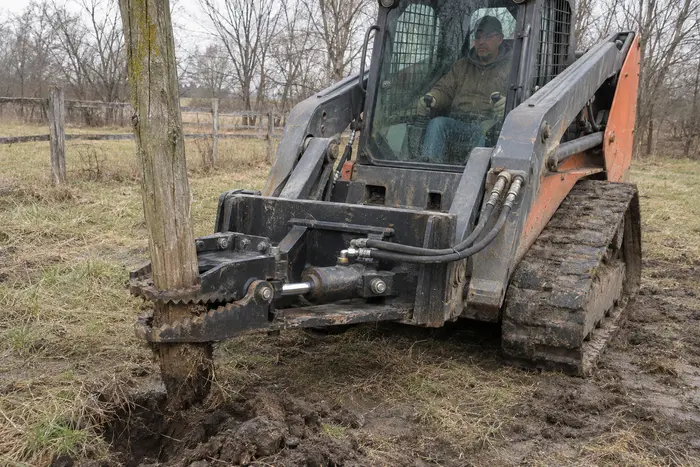
| Tree puller or tree shear | Pulls or cuts small trees | Selective tree removal | Needs the right size and force for each tree |
Forestry mulching is a land-clearing method that clears large areas of vegetation with a vehicle-mounted unit. Read what forestry mulching is to see how it compares with pulling and piling.
How do you choose between cutting and pulling?
- Cut or mulch when you want to leave the ground intact, avoid hauling and are fine with chips left behind. It is a good choice on slopes and soft ground.
- Pull and pile when you want bare soil for grading, planting or building. Roots come out with a rake or puller, and you then haul or burn the pile where allowed.
- Combine methods. Many jobs use a cutter or mulcher first, then a rake or grapple to finish.
See brush cutters, mulchers, grapples and post and tree pullers. For help choosing, our brush cutter buying guide and mulcher guide compare designs, and root grapple vs root rake covers pulling tools.
Can you clear brush with a bucket?
For light brush on small areas, yes. A bucket can push, scoop and pile limbs. It is slow and messy, and it picks up soil with the brush. A bucket also works poorly on rooted brush because it has no tines to let soil fall away. For anything more than a small patch, a rake or a grapple does a cleaner job.
How do you plan a brush clearing job?
- Walk the site. Look for rocks, stumps, fences, wires, holes, streams and wet spots.
- Mark utilities. Call before you dig or pull roots in the US or Canada.
- Check rules. Bylaws, wetlands, protected species and nesting seasons may limit clearing. Ask your local authority first.
- Choose the attachment. Match it to stem size and your hydraulics.
- Decide the finish. Mulch left in place, a pile to burn or haul, or bare soil.
- Set boundaries. Mark the area so you do not cut what you meant to keep.
- Work in passes. Start at one edge and move across in strips.
What do the attachments need from your machine?
Cutters and mulchers are hydraulic hogs. Standard-flow machines may run lighter brush cutters but struggle with big mulchers. Check the attachment's required flow and pressure and whether it needs a case drain. Our hydraulic flow guide explains the terms, and low-flow brush cutters shows options for lighter machines. Also check weight against the carrier's rated operating capacity and make sure the mount fits.
Tracks help on soft or wet ground, and cab protection matters. Many cutter and mulcher makers require a door or debris guard on the cab, so check the attachment manual before you run one on an open cab.
What do you do with the debris?
- Leave mulch in place. Wood chip mulch conserves soil moisture, moderates temperature and suppresses weeds. A normal mulch layer is about 5 cm (2 in) or more deep. Keep it away from buildings, since wood mulch can contain or attract termites.
- Pile and burn or haul. Check local burn rules and permits.
- Chip it. A chipper turns limbs into usable mulch. See skid steer wood chipper attachments.
- Leave habitat piles. In some areas a small pile left on site is fine and helps wildlife.
How do you clear brush safely?
- Wear a hard hat, eye and hearing protection, gloves and sturdy boots.
- Keep bystanders and pets far outside the work area. Cutters throw debris.
- Check for rocks, wire, fence posts and buried items before you cut.
- Inspect teeth, guards and hoses before each shift.
- Shut down the machine before you clear a jam.
- Follow the operator manual and the machine's rated operating capacity, and watch for rollover risk on slopes.
How does the work go, step by step?
- Mark the boundary and the trees you want to keep with tape or paint.
- Make a test pass at the edge to check how the machine and attachment handle the cover.
- Work in strips, slightly overlapping each pass, and keep the debris thrown away from the area you have already cleared.
- Stop to clear wrapped vines and wire from the rotor or tines before they damage seals.
- For roots, switch to a rake or puller after the first pass and work the soil in one direction.
- Walk the cleared area to find stumps, holes and wire you missed before you grade or plant.
What mistakes slow brush clearing down?
- Buying a light cutter for heavy brush, then running it at its limit all day.
- Forgetting the case drain on a motor that needs one, which can ruin a motor seal.
- Working in wet ground without tracks and getting stuck.
- Skipping teeth and blade checks. Dull teeth tear instead of cut and heat the oil.
- Not planning where the debris will go, then moving the same pile twice.
A little planning saves hours. If you are unsure about fit, hydraulics or the right head size, ask a person to check before you order.
Get the right fit the first time
Brush tools depend on your machine's flow and mount. Send us the make, model and year of your machine. A person checks fit against the maker's specs, you approve a delivered price before you pay, and the manufacturer ships direct. Get a fit-checked quote or call 1-888-245-1555.
Questions buyers ask
Can you clear brush with a skid steer?
Yes. Skid steers carry brush cutters, mulchers, grapples, root rakes, buckets and tree pullers. Cutters and mulchers shred brush in place, while rakes, grapples and buckets pull and pile it. Match the attachment to brush size and your machine's hydraulics.
What is the best skid steer attachment for clearing brush?
For dense brush and small trees, a mulcher or brush cutter is usually the best choice, because it shreds material in place. For pulling roots and piling debris, use a root rake or grapple. Many jobs combine a cutter first and a rake after.
Can I clear brush with a skid steer bucket?
For light brush in a small area, yes, but it is slow and picks up soil. A bucket lacks tines to let soil fall away, so roots and dirt come with the brush. A rake or grapple gives a cleaner result.
Do brush cutters need high flow?
Light-duty brush cutters often run on standard flow, but large cutters and mulchers may need high flow. Check each attachment's required flow, pressure and case drain against your machine. Low-flow cutters exist for lighter machines.
What should I do with the brush after clearing?
You can leave mulch in place, pile and haul or burn where permitted, or chip the limbs. Wood chip mulch helps hold moisture and suppress weeds, but keep it away from buildings. Check local burn rules and wildlife requirements before you decide.