Land clearing guide
Root Grapple vs Root Rake: Which One Do You Need?
Quick answer
A root rake sifts soil away from roots and brush with tines so you can clear land and leave dirt behind. A root grapple adds a hinged jaw that clamps and carries the load. Choose a rake for raking and piling, and a grapple when you also need to pick up and haul.
Shopping for this now? Get a fit-checked, delivered quote.
Key takeaways
- A root rake sifts debris from soil and drags it into piles.
- A root grapple clamps and carries, so it handles loading as well as clearing.
- A grapple costs more complexity: extra cylinders, hoses and wear points.
- Rakes suit big clearing jobs; grapples suit mixed pickup work.
- Check the machine's hydraulics and carriage before ordering either.
Root rake and root grapple get mixed up because they look alike from the front. Both have heavy tines. Both work on skid steers, compact track loaders and excavators. The difference is the moving jaw. This guide explains what each does, how they behave in the field and how to choose.
What is a root rake?
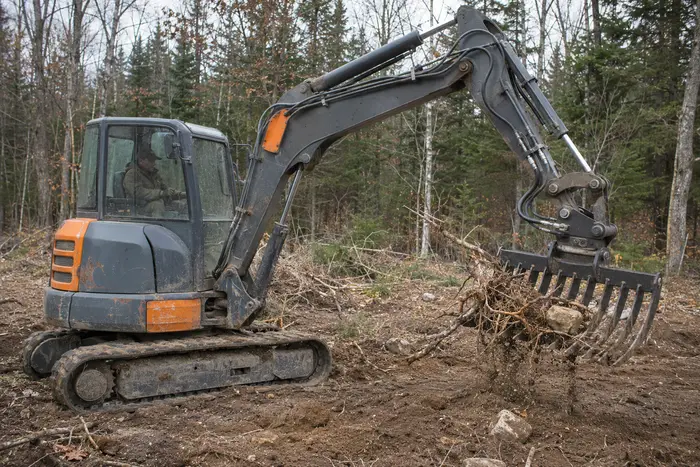
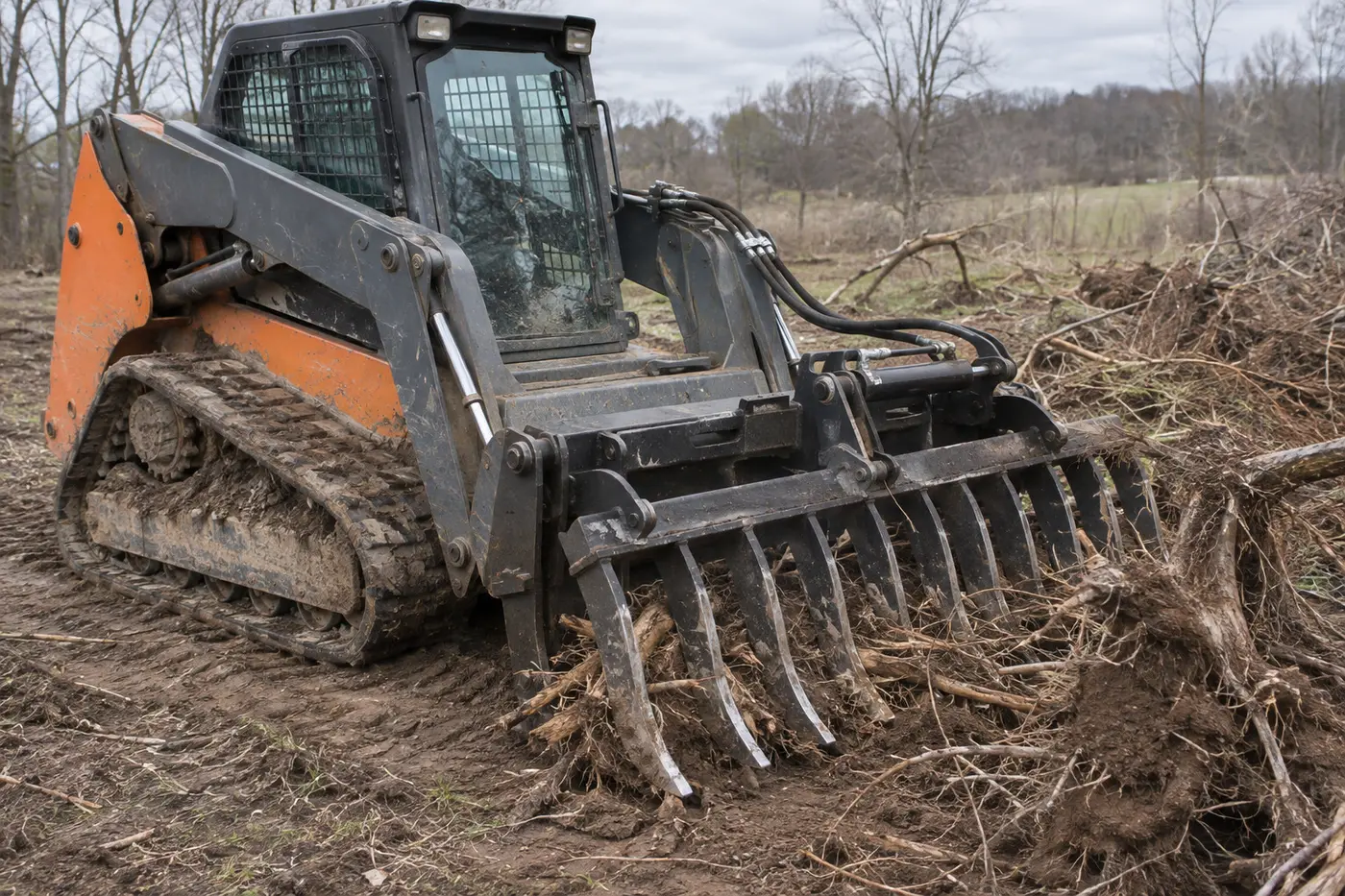
A root rake is a rigid frame with spaced tines, usually a row of curved teeth. You push the tines through loose soil, brush and root balls. Dirt falls through the gaps. Roots, stumps, rocks and branches stay on top, so you can drag them into a pile or windrow. It does one job and does it well: separating debris from topsoil.
Because there is no hinge, a root rake has fewer parts to break. That is an advantage in rocky ground and stumpy clearing work. You can learn more about the style in skid steer grapples and the excavator root rakes category.
What is a root grapple?
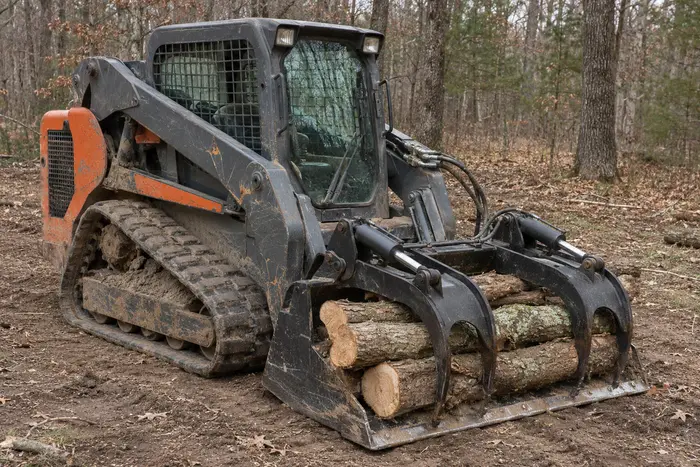
A root grapple combines tines with a hydraulic jaw. The jaw closes over the load and holds it while you lift, carry and dump. Many designs use two jaws, or one top jaw against fixed tines. The tines still let dirt fall through, but now you can pick up a brush pile instead of just pushing it. Grapples are a common answer to "how do I load a trailer or dump pile with the same attachment I cleared with?"
The cost is moving parts: cylinders, hoses, pins and bushings. A grapple needs auxiliary hydraulics on the machine. A rake generally doesn't.
How do they compare side by side?
| Feature | Root rake | Root grapple |
|---|---|---|
| Moving parts | None, a rigid frame | Jaw, cylinders, hoses, pins |
| Needs auxiliary hydraulics | No | Yes |
| Best at | Raking, sifting, windrowing | Picking up, carrying, loading |
| Handles loose brush piles | Pushes and drags | Clamps and lifts |
| Wear and repair | Replace tines or weld | Tines plus jaw, cylinders and hoses |
| Typical buyer | Clearing crews moving lots of ground | Mixed brush, log and debris work |
Which job calls for a root rake?
Pick a root rake when the work is mostly pushing and sifting: pasture clearing, fence lines, post-logging cleanup, building pad prep and rock removal from a field. If you want to leave topsoil in place and move everything else to one spot, a rake is the simple tool.
Rake work also suits operators on a budget or with a basic machine. No hose routing, no coupler questions, and fewer hydraulic leaks to fix at the end of the season.
Which job calls for a root grapple?
Pick a grapple when you pile and then load: brush pile removal, storm cleanup, small logs, mixed construction debris and stump handling. A grapple lets you move a pile that a rake would spill or push around. It is also better for loading a truck or burn pile because the load stays clamped on the move.
If you clear land professionally and move brush, a grapple can earn its place because it saves a second trip with another tool. For sizing and styles, read the skid steer grapple buying guide.
What to check before you buy either one
- Confirm the carriage: a universal skid steer plate, a specific excavator coupler or a tractor loader mount.
- Confirm the machine's rated operating capacity and that the attachment's weight fits.
- For a grapple, confirm auxiliary flow, coupler type and hose length.
- Ask about tine spacing. Wider gaps let more dirt fall through but let smaller debris slip too.
- Ask about tine thickness and steel grade, since tines take the abuse in rocky ground.
- Ask whether the grapple jaw closes against fixed tines or a second row, and which suits your debris.
Can you have both?
Some operators keep a rake for clearing and a grapple for loading. On an excavator, a rake plus a thumb can mimic a grapple. Our mini excavator root rake guide explains that setup. On a skid steer, a combined grapple rake is common, so a single attachment covers both tasks with a moving jaw.
Operating tips that apply to both
- Keep the load low while traveling and respect the machine's rated operating capacity.
- Don't use the attachment as a pry bar against buried rock. You bend tines and stress the machine.
- Work uphill or across a slope only as far as the operator manual allows.
- Keep bystanders out of the swing and the drop zone.
- Inspect tines, pins and welds before each day.
How do these perform on different ground?
Soil conditions change the answer. In loose, sandy or loamy ground, both tools sift well and a rake can move a lot of ground fast. In wet clay, soil clumps and clings to the tines, so wide tine spacing and a slower pass help. In rocky ground, a fixed rake takes hits better because there are no cylinders or hoses to damage, though you still need to watch for bent tines.
Stumps and large roots are a different story. A rake can drag small stumps out of loose ground, but big stumps often need to be loosened first with a bucket, a stump tool or an excavator. A grapple with a firm bite can carry a stump once it is free. Either way, don't force a tool against a stump the machine can't move by itself. Work around it and expose the roots before you pull.
What about wear parts and upkeep?
Tines are the main wear item on both tools. Check them for bending and cracks. Many tines are replaceable or can be built up with weld in the field. On a grapple, the pivot pins and bushings wear with use, so grease them as the manufacturer specifies. Look at hose routing too. Hoses rubbed against the frame are a common repair on grapples that have been used in brush.
Take a few minutes at day's end to clean packed soil from the frame. Dirt holds moisture and speeds up corrosion at the welds. A quick walk-around, with a look at the coupler, the tines and the hydraulic fittings, catches most issues before they stop work.
If you are unsure which one suits your ground, send a few photos of the site along with the machine details. A person can suggest a rake, a grapple or a grapple rake combination based on the debris, the soil and the machine's hydraulics, then confirm fit against the maker's specs.
Get the right fit the first time
Rakes and grapples depend on your machine's mount, hydraulics and rated capacity. Send us the make, model and year and a person will check fit against the maker's specs. You see the delivered price on your quote before you pay. The supplier ships direct, and warranty terms, if any, are written on your quote. Get a fit-checked quote or call 1-888-245-1555.
Questions buyers ask
What is a root rake used for?
A root rake sifts roots, stumps, rocks and brush out of loose soil so you can pile and remove them. Its fixed tines let dirt fall through. It is common in land clearing, pasture reclamation and building pad prep, where you want the topsoil left in place.
How does a root rake work?
You push the tines through the ground at a shallow angle and drive forward. Soil falls between the tines while roots and debris ride on top. You then drag the load to a pile and dump it by tilting the attachment.
Is a root grapple better than a root rake?
Neither is better overall. A rake is simple and tough for sifting and piling. A grapple adds a hydraulic jaw so you can carry and load. Pick based on whether your work is mostly clearing or clearing plus hauling.
Do I need auxiliary hydraulics for a root rake?
No. A standard root rake is a fixed steel frame and needs no hydraulic hookup. A root grapple needs an auxiliary circuit with enough flow and the right couplers. Confirm both with your machine before ordering.
Can a root rake fit a skid steer, excavator or tractor?
Yes, but the mount differs. Skid steers usually use a universal quick-attach plate, excavators use a coupler or pin pattern, and tractors use a loader mount. Send the machine make, model and year so a person can confirm fit.