Land clearing guide
Skid Steer Wood Chipper Attachments: A Buying Guide
Quick answer
A skid steer wood chipper attachment mounts on the loader's quick attach plate and runs off the auxiliary hydraulics to chip branches and small logs. Size it to the branch diameter you cut and to your machine's hydraulic flow. Keep the feed collar in place and follow the operator manual.
Shopping for this now? Get a fit-checked, delivered quote.
Key takeaways
- A loader-mounted chipper runs on the carrier's auxiliary hydraulics, so flow and pressure decide whether it works.
- Disc and drum designs chip differently; hydraulic feed rollers are a key safety feature.
- Match the throat opening to the branch diameter you actually cut.
- Chips make useful mulch, but keep wood mulch away from buildings.
- Never reach into the feed throat; stay clear and follow the operator manual.
After a storm or a tree trim you have a pile of limbs and a choice: burn, haul or chip. A wood chipper turns the pile into material you can spread. A chipper on a skid steer works because you already own the carrier. This guide explains how loader-mounted chippers work, how to size one, and how to use it safely.
How does a skid steer wood chipper attachment work?
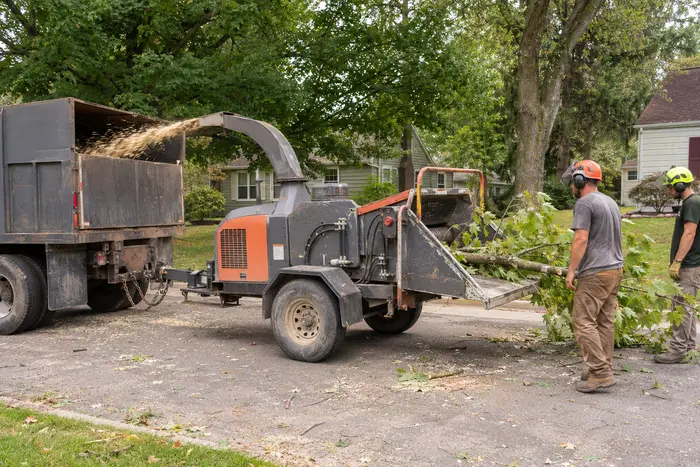
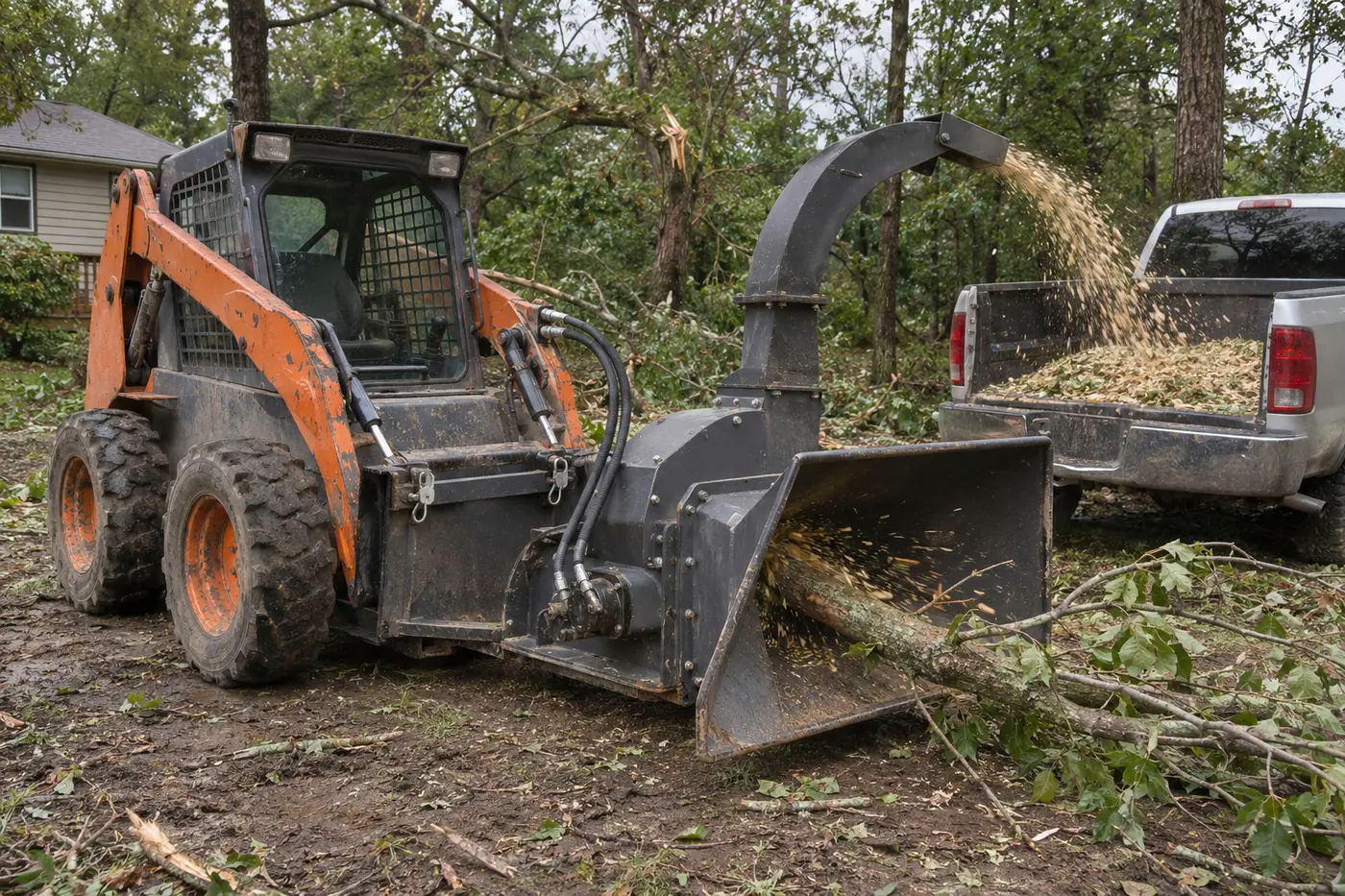
A chipper reduces limbs and small trunks into chips using sharp blades. The attachment has a hopper where you feed material, a chipping mechanism, and a chute that throws the chips out. On a loader attachment, the hydraulic motor spins the cutter, and powered feed rollers pull the branch into the blades at a steady pace. The skid steer supplies oil and lets you drive the chipper to the pile instead of hauling the pile to the chipper.
Many attachments for compact loaders are driven by the loader's hydraulic system, often through a quick connection that joins the hoses. That is why flow and pressure matter more than horsepower when you shop.
What is the difference between disc and drum chippers?
The two cutter styles chip differently, and the difference affects feed, chip size and jam risk.
| Design | How it cuts | Good for | Watch for |
|---|---|---|---|
| Disc | A steel disc with blades spins across the incoming wood. Chips are thrown out through a chute. | Clean, consistent chips from straight limbs | Blades need sharp edges; dull blades tear instead of cut |
| Drum | A large drum with blades on its surface spins toward the chute | Larger or mixed material | Needs enough hydraulic power to keep the drum turning under load |
Typical chips from a chipper are about 2.5 to 5 cm (1 to 2 in). Commercial disc models handle roughly 15 to 45 cm (6 to 18 in) of material diameter, and commercial drum models handle roughly 25 to 60 cm (9 to 24 in). Those are full-size commercial machines. A loader attachment runs on your carrier's hydraulics and sits at the small end of that range, so use the maker's stated capacity for the attachment you are considering.
How do you size a chipper to your skid steer?
- Know your branch diameter. Measure the biggest limb you cut on a regular basis. Buy for that, not for the rare monster.
- Check hydraulic flow and pressure. The attachment's spec sheet lists what it needs. Compare it to your carrier's standard and, if available, high-flow output. Our flow and pressure guide explains the terms.
- Check the return line. Motors on rotating cutters often need a case drain. Read what a case drain is.
- Confirm the mount. A universal quick attach plate fits most skid steers. Check the plate type before ordering.
- Think about weight. A chipper sits out front. Make sure the carrier's rated operating capacity covers the attachment's weight with margin.
- Plan discharge. Decide where chips will land. A chute that points at a truck bed or a clear patch of ground saves cleanup.
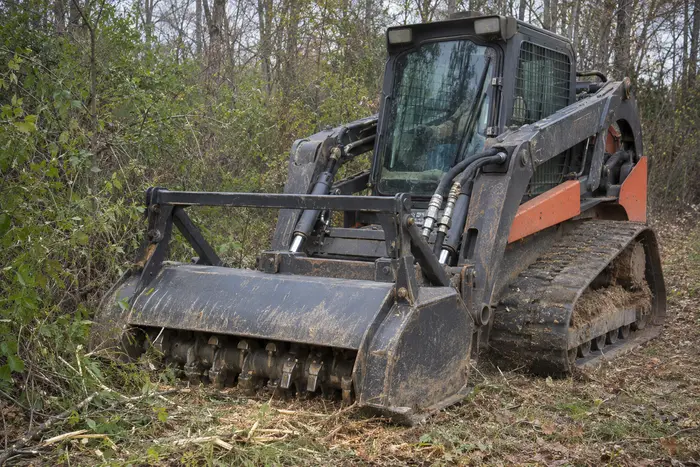
Compare designs on our skid steer wood chippers page. If most of your work is clearing standing brush, a mulcher may serve you better than a chipper, since it grinds in place. Our how wood chippers work guide covers the mechanics in more depth.
What can you do with the chips?
Chips are a useful byproduct. Wood chip mulch conserves soil moisture, moderates soil temperature and suppresses weeds. As a rule of thumb, mulch is normally 5 cm (2 in) or more deep, and arborist chips are often laid at least three inches thick. Leave a gap around soft-stemmed plants to reduce stem rot, and keep wood mulch away from building foundations because it can harbor termites and other pests.
Some local governments also chip infested branches so pests cannot spread. If you cut diseased trees, check local rules before you spread the chips on your own property.
How do you chip safely?
Chippers are among the more dangerous tools in the yard. Wood chipper accidents have caused deaths in the US, and the feed collar and reversible feed rollers exist for a reason. Treat every feed as if the machine could grab you.
- Wear a hard hat, eye and hearing protection, gloves and close-fitting clothes. Loose sleeves and drawstrings catch.
- Never reach into the throat. Feed the butt end of the limb first and let the rollers pull it in.
- Stand to the side of the feed line, not in front of it.
- Know where the reverse control is and test it before you start.
- Keep the guard and collar in place. Never bypass them.
- Stop and shut down the carrier before you clear a jam or work near the blades.
- Keep bystanders and pets well back from the feed area and the chute.
Follow the operator manual for both the chipper and the skid steer. Respect the machine's rated operating capacity.
What maintenance does a chipper attachment need?
Blades are the main wear item. Chips that look shredded or stringy usually mean dull knives. Rotate or sharpen blades on the schedule in the manual. Check bolts on the knife holders and the anvil gap. Look over the feed rollers and hoses for wear, and clean the throat and chute after each session. Dirt and sap build up fast. See our attachment maintenance guide for a general checklist.
Blades work best on clean wood. Rocks, nails and wire destroy knives, so pull obvious metal before you chip, and avoid dirty root balls.
Is a chipper right for you?
A chipper makes sense if you handle limbs and small trees regularly and want to remove the burn pile. If you clear brush in place, a mulcher or brush cutter is faster. If you cut large logs, a chipper will be too small, and splitting or hauling may be better. Think about the job you do most, then pick the tool.
What should you ask before you buy?
- What flow and pressure does the chipper need, and does my carrier supply it in standard or high-flow mode?
- Does it have powered feed rollers with a reverse, and a feed collar that cannot be removed?
- How are the knives held, and how easy are they to rotate or replace?
- What is the largest limb diameter the maker rates it for?
- Where does the chute point, and can I turn it?
A good answer to each of these tells you more than a long feature list. If a seller cannot say what flow the attachment needs, keep looking.
Get the right fit the first time
Chipper attachments vary a lot in hydraulic demand. Send us the make, model and year of your machine. A person checks fit against the maker's specs, you approve a delivered price before you pay, and the supplier ships direct. Get a fit-checked quote or call 1-888-245-1555.
Questions buyers ask
Can you put a wood chipper on a skid steer?
Yes. Chipper attachments mount to the quick attach plate and run on the skid steer's auxiliary hydraulics. Check the attachment's flow and pressure needs, the case drain requirement and the weight against your machine's rated operating capacity before you buy.
How big a branch can a skid steer chipper take?
It depends on the specific attachment. Full-size commercial disc chippers handle roughly 15 to 45 cm (6 to 18 in), but loader attachments are smaller. Use the maker's stated capacity for the model you are considering, and size to your regular limbs.
What is the difference between a disc and a drum chipper?
A disc chipper has blades on a spinning disc that meets the wood across the feed line, producing consistent chips. A drum chipper uses a spinning drum with blades on its surface and often handles larger material. Both need sharp knives and enough hydraulic power.
Is a skid steer wood chipper safe?
Chippers can be dangerous. Keep the feed collar in place, never reach into the throat, feed butt end first, know the reverse control, wear protective gear, stay to the side and shut down before clearing jams. Follow the operator manual for the attachment and carrier.
What can I do with wood chips?
Spread them as mulch. Wood chip mulch helps hold soil moisture, moderate temperature and suppress weeds. Apply it about 5 cm (2 in) or more deep, leave a gap around soft stems and keep it away from buildings.