Land clearing guide
Skid Steer Brush Cutter: What to Look for Before You Buy
Quick answer
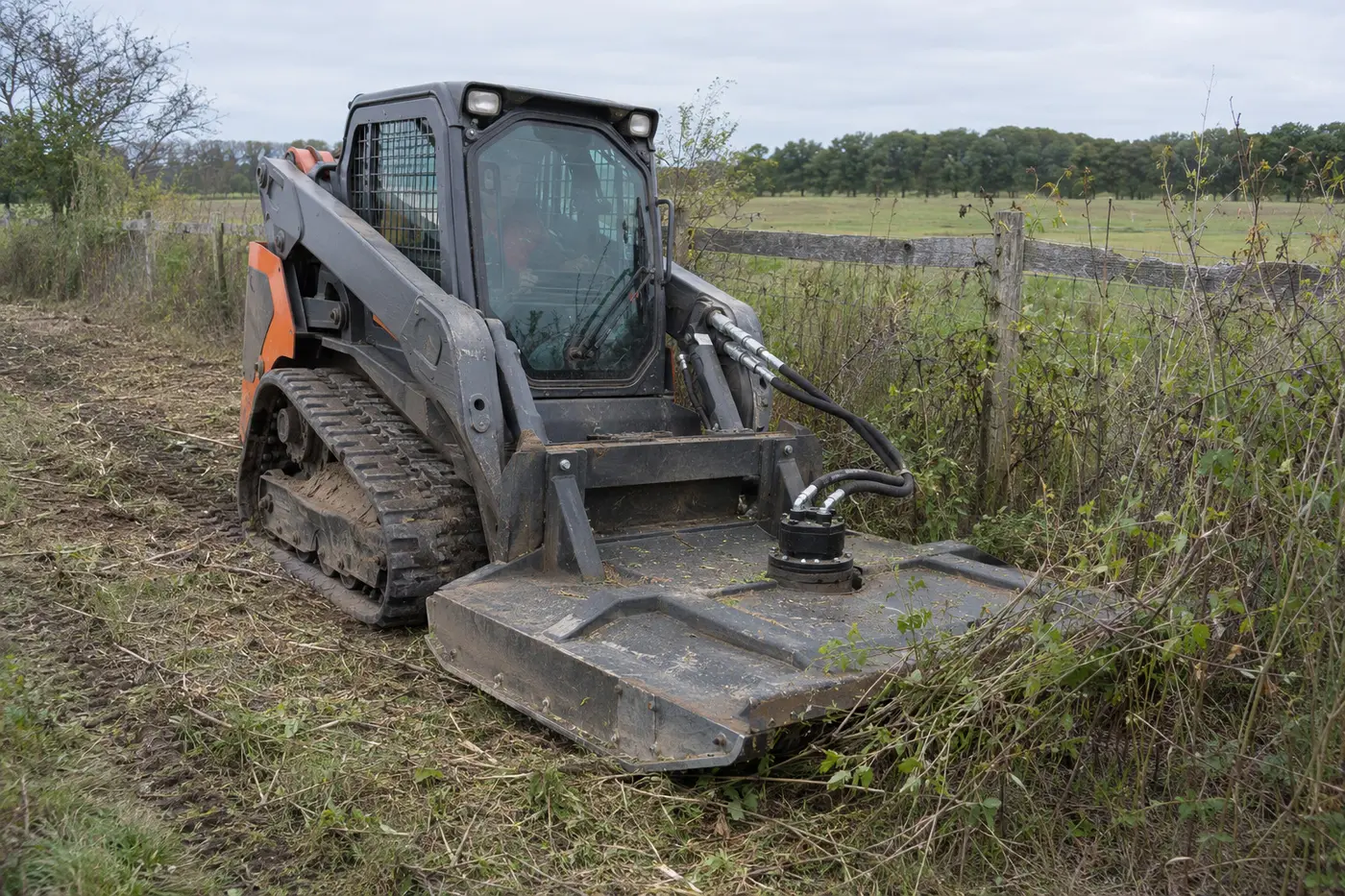
A skid steer brush cutter is a hydraulic-driven cutting deck that mows brush, saplings and tall grass in front of the machine. To choose one, match its hydraulic flow and pressure to your machine, pick a motor and deck that suit the growth you cut, and confirm the quick attach fit and guarding.
Shopping for this now? Get a fit-checked, delivered quote.
Key takeaways
- Match the cutter's flow and pressure needs to your skid steer before anything else
- Brush cutters mow and shred growth; mulchers grind it, including larger stems
- Motor type, blade style and deck width decide how it performs in thick growth
- Guarding and a clear view of the cutting area matter as much as horsepower
- Check coupler type and case drain needs on the spec sheet
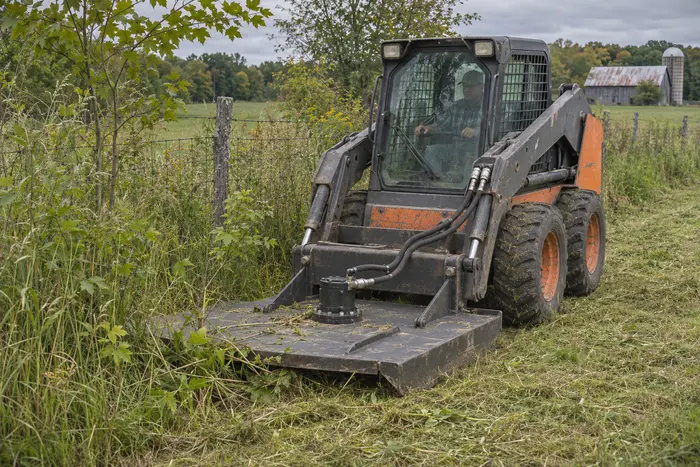
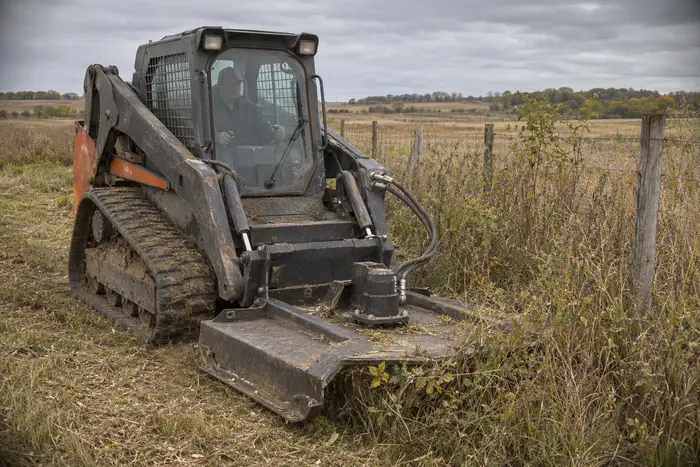
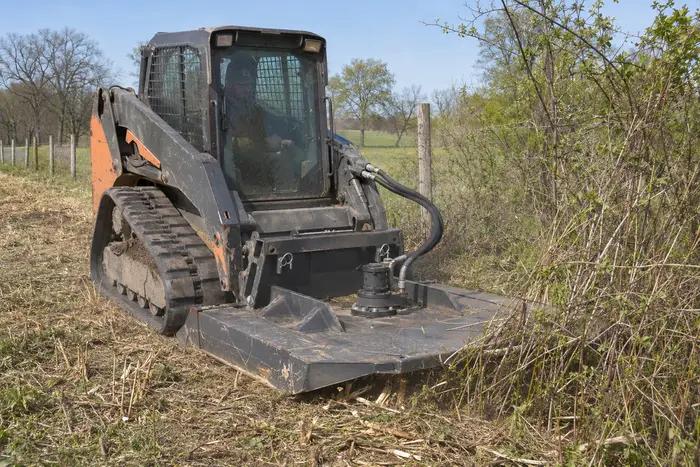
A skid steer brush cutter turns a loader into a clearing machine. It mounts to the front, runs off the auxiliary hydraulics, and cuts brush, saplings, thick grass and overgrown fence lines. People search for it when a field, ditch bank or lot has grown past what a mower can handle.
The right model depends more on your machine's hydraulics than on its brand or deck size. This guide walks through the choices in the order that saves the most trouble.
What is a skid steer brush cutter?
It is a cutting deck with blades, chains or knives driven by a hydraulic motor. Because it is driven by oil flow rather than a PTO, it needs auxiliary hydraulics on the machine. Skid steers are built for this: the loader has a quick attach plate for mounting and front couplers for the hydraulic hoses. Tracked and wheeled machines both work, though tracks help on soft ground.
Skid steers steer by skidding wheel or track pairs at different speeds, which lets the machine turn in its own length. That helps when cutting around trees and fences.
Brush cutter vs mulcher: which one do you need?
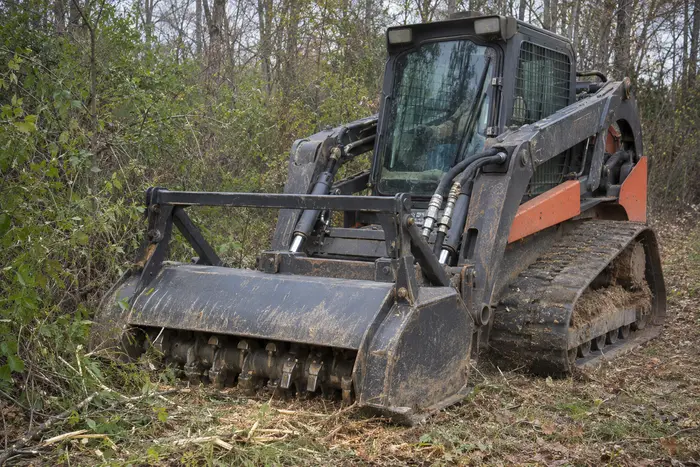
The two names overlap, and sellers use them loosely. A useful way to split them: a brush cutter is built to mow and shred small-diameter growth such as brush, briars and saplings, usually in an open, low-cut pass. A mulcher, often called a forestry mulcher, is built to grind larger stems and stumps down into chips. It is heavier and demands more from the machine's hydraulics.
| Job | Brush cutter | Mulcher |
|---|---|---|
| Tall grass and weeds | Good | Overbuilt |
| Brush, briars, small saplings | Good | Good |
| Trees with thicker trunks | Not the right tool | Better fit |
| Fence lines, ditch banks | Good | Fine |
| Machine demands | Lower hydraulic demand | Often needs high flow |
If most of your work is cutting growth thicker than a wrist, look at skid steer mulchers. If it is tall grass and brush, a skid steer brush cutter is usually the more economical choice. For a longer comparison of the two cutting styles, see our guide on disc and drum mulchers.
How do you match a brush cutter to your skid steer?
Start here, because a mismatch cannot be fixed with a bigger deck.
- Hydraulic flow. Flow is how much oil the auxiliary circuit delivers. Standard-flow machines run many brush cutters. High-flow machines run mulchers and heavier cutters. Find the attachment's required range on its spec sheet and compare it to your machine's auxiliary flow.
- Pressure. The machine's relief setting has to match the attachment's operating pressure.
- Frame size. A large deck on a small machine is hard to lift, and it makes the machine tip-prone. Machine weight and rated operating capacity limit the size you can carry.
- Coupler type. Flat-face couplers are common, but the size and pattern differ. A case drain port may also be needed for motor-driven decks.
- Quick attach. Universal skid steer quick attach plates are widely compatible, but confirm the pattern on your loader.
Our guide to skid steer hydraulic flow shows how to find your machine's number. Coupler and plate details can also vary with machine age, which is why we confirm fit before quoting.
What motor and blade styles are available?
Motor type. Gear motors are simple and common on lighter-duty brush cutters. Piston motors cost more and handle higher loads and heavier cutting more smoothly. The choice affects how well the cutter holds speed in thick growth. Read more in our piston vs gear motor brush cutter comparison.
Blades and chains. Most cutters use fixed or swinging blades that cut and shred as they go. Swinging blades can fold back when they hit a stump or rock. Some cutters use chains instead; ask how each design handles rocks and how far it throws debris. Blades, chains and their pivots are wear items. Ask how they are replaced and whether replacement parts are available from the manufacturer.
Deck design. A skid shoe, a rounded deck, and a guard behind the blades all reduce thrown debris and let the deck slide over uneven ground. Check how much the deck can tilt, because many models tilt to follow slopes.
Safety features worth paying attention to
- Debris shielding. Chains, flaps or a rear guard to stop thrown material.
- Cab protection. Use a machine with proper guarding for your attachment, such as a polycarbonate door or forestry-rated enclosure where the manual calls for it.
- Bystander distance. Keep people well clear while the cutter is running. Follow the operator manual's distance guidance.
- Rated capacity. Do not exceed the loader's rated operating capacity. The attachment's weight and its load on the arms count.
Always read and follow the operator manuals for the machine and the attachment.
How to run it well in the field
Technique changes how long the cutter lasts. Cut with the deck level or slightly nose-down and let the blades do the work. Walk the area first and look for rocks, stumps, wire and metal that hide in tall growth. Take thick patches in two passes instead of forcing one deep cut, and back off the travel speed when the motor starts to bog. Keep the deck off the ground when you turn, and clear wrapped vines or wire from the spindle area with the machine shut off.
After a day of cutting, walk around the deck. Look for loose bolts, cracked welds, and worn or damaged blades. Grease points on the pivot and check hose routing for rubbing. Ten minutes of checks beats a failure in the middle of the job. Our attachment maintenance checklist has a fuller routine.
What does a brush cutter cost to own?
Instead of chasing a purchase price, look at wear items and downtime. Blades, chains, belts and motor seals are the usual wear items. Hoses and couplers see abuse. Add a case drain kit if the machine needs one. Compare those costs across models, and ask for parts availability in writing. Rental is worth a look if the job is a one-off.
Wheels or tracks for brush work?
Both work. Tracked machines spread weight and grip on soft or wet ground, and they resist punctures from stubs and sharp stumps. Wheeled machines are quicker on firm ground and easier on turf. Cutting hides stumps, rocks and holes, so many operators prefer tracks or foam-filled tires for brush work. If your ground is mixed, pick based on the worst section you will cross. Our guide to skid steer wheels vs tracks goes deeper.
Questions to ask the seller
- What flow and pressure range does the cutter need, and what does it do at the low end?
- What is the maximum cutting diameter in the manual?
- Does the motor need a case drain line?
- Which wear parts are consumables, and can I buy them direct from the manufacturer?
- Who handles a warranty claim, and what does the manufacturer cover?
Buying checklist
- Write down your machine's make, model, year and auxiliary flow.
- Decide the largest growth you plan to cut.
- Check the cutter's flow, pressure and coupler needs against your machine.
- Check the motor type and where it is serviced.
- Confirm guarding and the carrier's lifting capacity.
- Ask about wear parts and how they ship.
Get the right fit the first time
Send us your machine make, model and year and what you plan to do with it. A person checks fit against the maker's specs, and you approve a delivered price before you pay. Get a fit-checked quote.
Questions buyers ask
What is the difference between a brush cutter and a mulcher?
A brush cutter mows and shreds brush, saplings and tall grass. A mulcher grinds larger stems and sometimes stumps into chips. Mulchers are heavier and often need high-flow hydraulics, while many brush cutters run on standard flow.
What size skid steer do I need for a brush cutter?
It depends on the deck width, the cutter's weight, and its hydraulic needs. Compare the cutter's flow and pressure range to your machine and keep the total within the loader's rated operating capacity. A fit check against the maker's specs settles it.
Can a skid steer brush cutter cut trees?
Brush cutters handle brush and saplings. Thicker trunks are the job of a mulcher or a tree-cutting attachment. Check the cutter's maximum cutting diameter in its manual, and never push the deck past that limit or force it into trunks.
Do I need high flow for a brush cutter?
Not always. Many brush cutters are made for standard flow, while heavier cutters and mulchers often need high flow. Check the attachment's required flow range against your machine's auxiliary flow rating before you buy, and ask us if you are unsure.
What is better, a brush cutter or a flail mower?
A flail mower uses many small swinging knives and finishes a cleaner cut on grass and light brush. A brush cutter is built for thicker, mixed growth. Pick based on the heaviest material you cut most often.