Land clearing guide
What Is Forestry Mulching? How It Works and When to Use It
Quick answer
Forestry mulching clears vegetation by grinding brush, saplings and small trees in place with a rotating mulching head, leaving a layer of wood mulch on the ground. There is no hauling or burning. It suits overgrown lots, trails and fence lines, and it needs a carrier with enough hydraulic power.
Shopping for this now? Get a fit-checked, delivered quote.
Key takeaways
- A mulching head on a carrier machine shreds vegetation where it stands.
- The chopped material stays as mulch, so there is no burn pile or haul-off.
- It works best on brush, saplings and small trees, not on large timber.
- Mulchers need strong hydraulics; many call for a high-flow circuit.
- Stumps and roots may remain below the cut; plan for them.
Clearing overgrown land the old way means cutting, piling, burning or hauling, and then raking up the mess. Forestry mulching does it in one pass. The machine chews up the vegetation where it stands and leaves a layer of chips on the ground. This guide explains how it works, what equipment is used and when it makes sense.
What is forestry mulching?
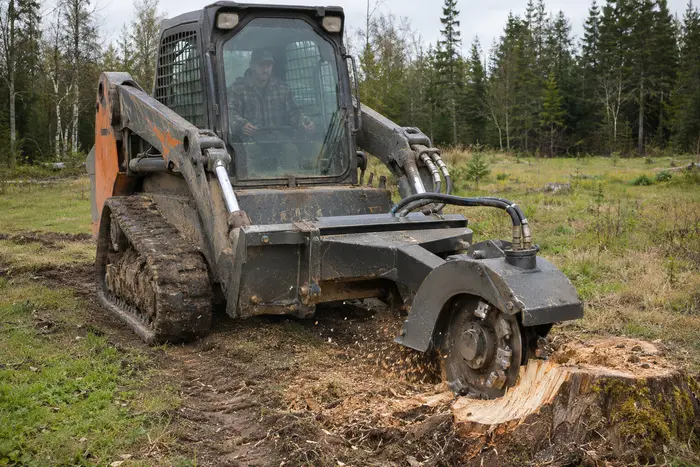
Forestry mulching is a land-clearing method that uses a vehicle-mounted unit to clear large areas of vegetation. A mulching head grinds or shreds brush, saplings and small trees into chips right where they stand. The chips stay on the ground as a layer of mulch. There is no cutting, stacking, burning or hauling.
How does a forestry mulcher work?
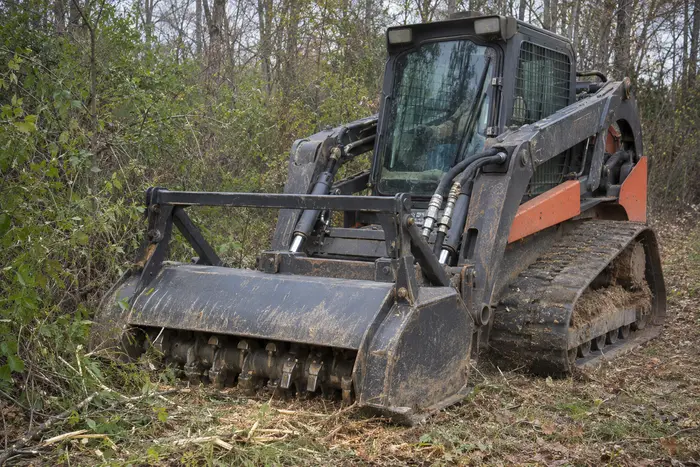
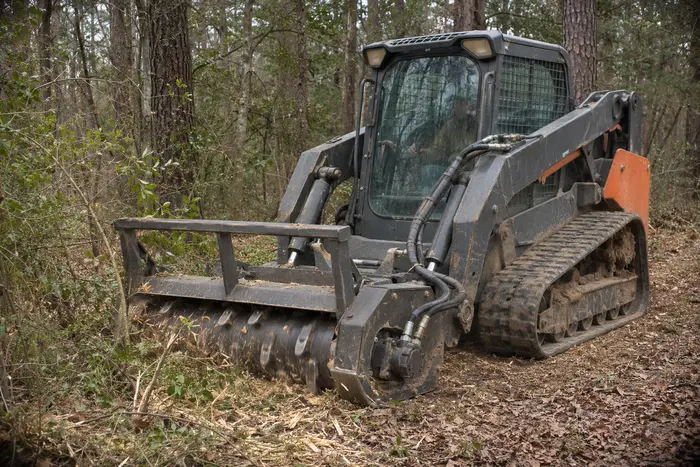
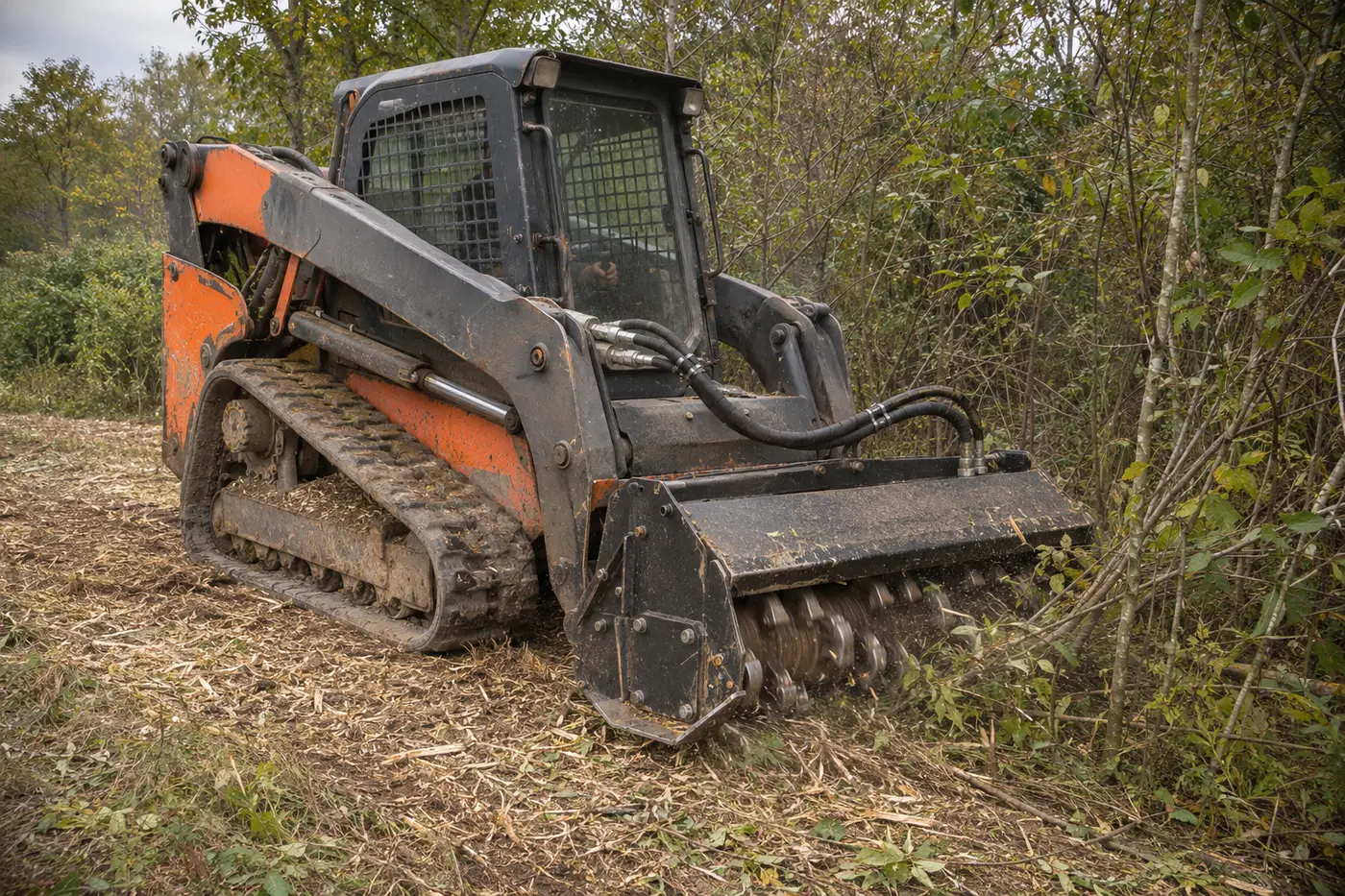
A forestry mulcher is a heavy-duty head with a rotating drum or disc fitted with teeth or knives. The operator drives the carrier into the vegetation and lowers the head. The rotor spins fast and the teeth strike the trunks, branches and brush, breaking them into small pieces. A shield and guard keep debris from flying out. The pieces fall to the ground and form a mulch layer.
The head is powered by the carrier's hydraulics. That is why hydraulic flow and pressure matter so much. A mulcher needs plenty of oil to keep the rotor turning when it hits thick material. Many mulchers call for a high-flow circuit. Our hydraulic flow guide explains the numbers.
What machines carry a mulching head?
| Carrier | Why use it | Limits |
|---|---|---|
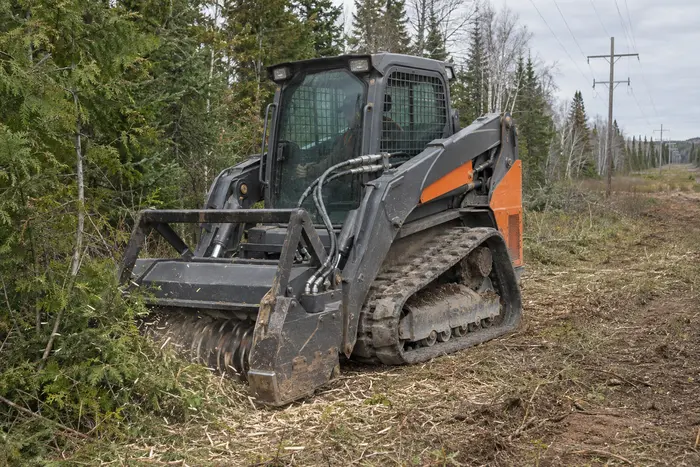
| Skid steer or compact track loader | Maneuverable, a wide range of heads, tracks for soft ground | Needs a high-flow circuit for larger heads |
| Mini skid steer | Fits tight access and light cover | Smaller heads only; lower flow |
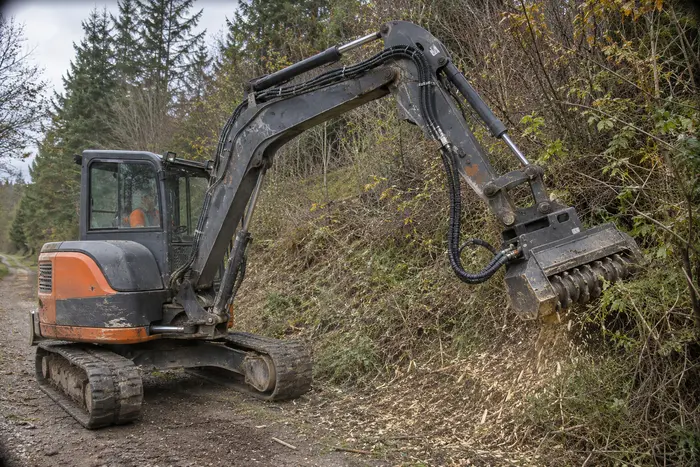
| Excavator | Reach over slopes, ditches and wet ground | Slower pace than a loader on flat ground |
| Dedicated forestry machine | Built for production clearing | Larger investment and transport |
See the range on our skid steer mulchers and excavator forestry mulchers pages. If you need to choose between head styles, read disc vs drum mulchers and the skid steer mulcher guide. For excavators, see the mini excavator mulcher guide.
When is forestry mulching a good choice?
- Overgrown lots and fields. Brush, saplings and small trees come down quickly.
- Trails, fire breaks and fence lines. Mulching keeps the ground intact and avoids burning.
- Soft or sensitive ground. There are fewer trips with hauling trucks, so less rutting.
- Erosion-prone slopes. The mulch layer helps cover soil instead of leaving bare ground.
- Sites with no place to burn or pile. The material stays on site.
When is it not the right tool?
- Large timber. Mulching heads are rated for a maximum diameter. Big trees need felling and removal.
- Full stump removal. A mulcher cuts at or near ground level. Stumps and roots remain unless you grind them separately. See stump grinders.
- Rocky ground. Rocks dull teeth and can throw debris.
- Sites that need bare soil. A thick mulch layer is not the same as a graded surface. For grading or building pads, you may need to remove the mulch first.
What does the mulch do afterward?
Wood chip mulch conserves soil moisture, moderates soil temperature and suppresses weeds. For landscape beds, references put applied mulch at about 5 cm (2 in) or more, and arborist chips often at three inches or more. Mulcher-cleared ground varies with the cover you cut. A very thick layer can make seeding harder, so plan any planting around it. Keep wood mulch away from buildings, since it can contain or attract termites. Leave a gap around soft-stemmed plants to reduce stem rot.
How do you plan a mulching job?
- Walk the site. Mark property lines, utilities, wells, septic systems and anything to protect.
- Identify the cover. Note the largest stem diameter and the density.
- Check rules. Local bylaws, protected species, wetlands and nesting seasons may limit clearing. Ask your local authority first.
- Choose the carrier and head. Match the head's flow needs to your machine.
- Set a path. Work in rows and keep clear of operators on foot.
- Plan the finish. Decide whether you will leave the mulch, spread it or rake it off.
What should you know about cost?
People search for "forestry mulching price per acre" and "forestry mulching cost" because rates vary widely. They depend on the density of the cover, terrain, access, machine size and location. We do not quote a figure here because the range is too wide to be useful. If you hire a contractor, ask for a quote based on a site visit. If you plan to do it yourself, compare the rental or ownership cost of a mulcher and a suitable carrier with the hours the job will take. Our land clearing cost guide can help you structure the comparison.
How do you mulch safely?
Mulching throws debris and makes noise. Use a machine with a protected cab and a strong guard, and keep everyone far outside the work area. Wear hearing and eye protection. Check hoses, teeth and guards before each shift. Watch for rocks, fences, wires and buried items. Stop and shut down before you clear a jam. Follow the operator manual and the carrier's rated capacity, and never use the head to push or lift anything it was not built to handle.
What are the main types of mulching heads?
- Drum heads. A horizontal rotor with teeth. They chew steadily and leave a fairly even mulch.
- Disc heads. A flat spinning disc with cutters. They can cut standing stems and are often used for fast clearing.
- Brush cutters. Lighter rotary or flail heads for grass, brush and small stems. Look at our brush cutters if your cover is lighter.
Each style has its place. Drum heads tend to give a uniform result, and discs can be faster in standing material. The right head depends on cover, carrier power and how fine you want the mulch.
What does teeth maintenance look like?
Teeth wear faster than anything else on the head. Check them daily and rotate or replace them when edges round over. Dull teeth slow the work, raise oil temperature and strain the motor. Keep spare teeth and bolts on the truck. Clean out wrapped vines and wire from the rotor ends before they damage seals.
Daily habits make a big difference. Grease the rotor bearings on schedule, check the oil level and cooler, and clear packed debris from the guard. A head that runs clean and sharp finishes faster and costs less to keep running.
Get the right fit the first time
Mulchers are among the most hydraulic-hungry tools a buyer will run. Send us the make, model and year of your machine. A person checks fit against the maker's specs, you approve a delivered price before you pay. Get a fit-checked quote or call 1-888-245-1555.
Questions buyers ask
What is forestry mulching?
Forestry mulching clears brush, saplings and small trees by grinding them in place with a mulching head on a carrier machine. The chopped material stays on the ground as mulch, so there is no burning or hauling. It suits overgrown lots, trails and fence lines.
What is the difference between forestry mulching and land clearing?
Traditional clearing cuts, piles and removes or burns vegetation, and may remove stumps. Forestry mulching shreds vegetation where it stands and leaves mulch behind. Stumps and roots usually remain below the cut, so grinding or removal may be a separate step.
What machine do you need for forestry mulching?
You need a carrier with a mulching head and enough hydraulic power for it. Skid steers, compact track loaders, excavators and dedicated forestry machines are common. Check the head's flow and pressure needs against your machine, because many call for high flow.
Can you mulch large trees?
Only up to the head's rated diameter. Mulching heads suit brush, saplings and small trees. Large trees are usually felled and removed first, or handled with a different machine. Check the maker's stated capacity for any head.
Is forestry mulching good for the soil?
Wood chip mulch conserves moisture, moderates temperature and suppresses weeds, and it covers soil on slopes. A very thick layer can make new planting harder, and wood mulch should stay away from buildings. Plan reseeding and site use around the mulch.