Forklift guide
How Much Does a Forklift Weigh? Weights by Type
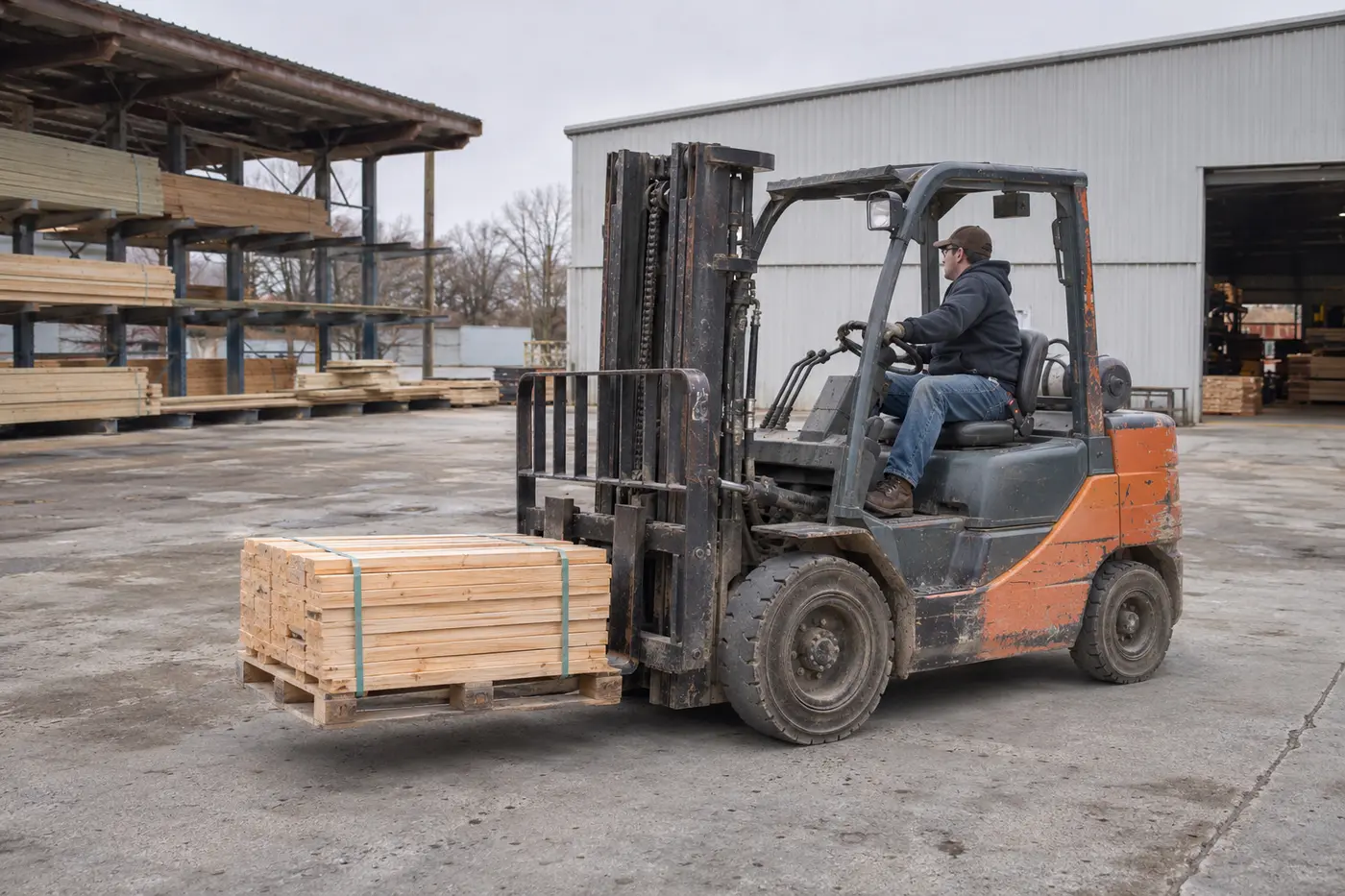
Quick answer
How much does a forklift weigh? A standard warehouse forklift weighs roughly 3,000 to 9,000 pounds (1,360 to 4,080 kg). Rough-terrain trucks run about 7,000 to 20,000 pounds, and heavy-duty units can pass 30,000 pounds. Weight is not the same as lifting capacity, so read the data plate on the truck.
Shopping for this now? Get a fit-checked, delivered quote.
Key takeaways
- Standard forklifts typically weigh about 3,000 to 9,000 lb (1,360 to 4,080 kg).
- Rough-terrain and heavy-duty forklifts weigh much more, up to 100,000 lb or more.
- Machine weight and lifting capacity are two different specs.
- The rear counterweight is a big part of total weight.
- The data plate on the truck is the number to trust, not a blog average.
If you are loading a trailer, checking a floor rating or pricing a transport job, you need a real weight, not a guess. Forklift weight varies a lot by type, so the honest answer is a range. Here is how those ranges break down and what drives them.
How much does a forklift weigh by type?
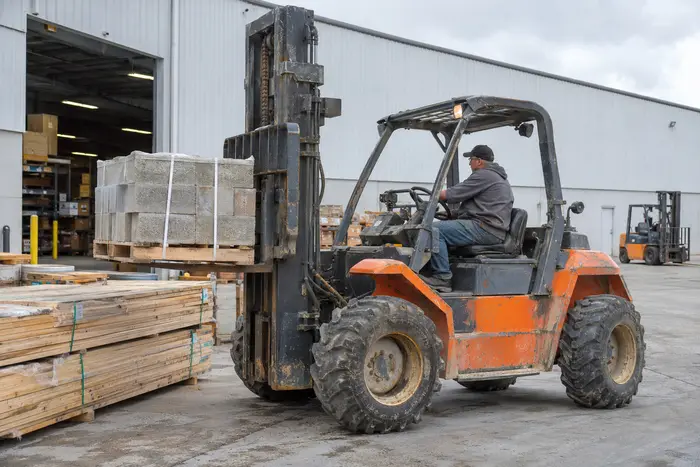
Published ranges from an equipment-rental guide put standard forklifts at about 3,000 to 9,000 lb (1,360 to 4,080 kg). Inside that band, electric trucks typically fall around 3,000 to 6,000 lb, and internal combustion trucks around 4,000 to 9,000 lb. Small electric units can come in near 2,000 lb. Rough-terrain forklifts, built for dirt and uneven ground, are heavier at roughly 7,000 to 20,000 lb. Heavy-duty trucks used for containers and large industrial loads run from about 30,000 to 100,000 lb or more.
| Forklift type | Typical weight (lb) | Typical weight (kg) |
|---|---|---|
| Small electric | Around 2,000 | Around 900 |
| Electric | 3,000 to 6,000 | 1,360 to 2,720 |
| Internal combustion | 4,000 to 9,000 | 1,810 to 4,080 |
| Standard (overall) | 3,000 to 9,000 | 1,360 to 4,080 |
| Rough-terrain | 7,000 to 20,000 | 3,175 to 9,070 |
| Heavy-duty | 30,000 to 100,000+ | 13,600 to 45,360+ |
Those are guide ranges, not specs for any one truck. Use them to plan, then confirm against the actual machine.
How much does a forklift weigh in tons or tonnes?
Convert from pounds. In US short tons, a 6,000 lb forklift is 3 tons. In metric tonnes, the same truck is about 2.7 tonnes. Always check which ton the source means before you do freight or axle math.
Why is a forklift so heavy for what it lifts?
A forklift is a lever. The load hangs out in front of the front wheels, and something has to balance it. On a counterbalance truck, that something is a big cast counterweight at the back. It is a major share of the machine's total weight. Higher-capacity trucks generally need heavier counterweights and stronger frames. In electric trucks the battery often does part of that job, which is why some electric models are heavier than you would expect.
The mast, engine or battery, tires and any attachments add to the total. Two trucks with the same capacity can differ in weight by thousands of pounds.
Is forklift weight the same as capacity?
No, and this is the most common mix-up. Capacity is how much the truck is rated to lift at a stated load center. Weight is what the empty machine weighs. A truck rated for 5,000 lb does not weigh 5,000 lb. Counterbalance trucks usually weigh more than their rated capacity, but the ratio changes by design, so check the plate.
Also remember that capacity drops as the load center moves farther out from the forks. Canadian occupational safety guidance says to stay within the rated capacity on the data plate and never add weight to the truck to make up for an overload.
Where do you find the exact weight?
- Look at the data plate on the truck. It lists model, serial number, and usually the weight, capacity and load center.
- Check the operator manual or the manufacturer spec sheet for the exact configuration.
- Account for options. Specs are often for a base unit, and a side shifter, extra-long forks or a heavier mast changes the number.
- If the truck carries a load, add the load. The plate weight does not include what is on the forks.
Why forklift weight matters on a job site
Weight decides what you can do with the machine around it.
- Floors and slabs. A loaded forklift concentrates weight through small tire contact patches. Check the floor rating before driving onto a mezzanine, dock plate or old slab.
- Trailers and ramps. Use ramps and trailers rated for the truck's weight plus any load, and secure it for transport.
- Dock edges. OSHA lists trucks driving off loading docks and lifts falling between a dock and an unsecured trailer as common injury scenarios.
- Training. Under US federal rules, operators must be trained and evaluated, and anyone under 18 may not operate a forklift in non-agricultural jobs.
What about a skid steer or telehandler instead?
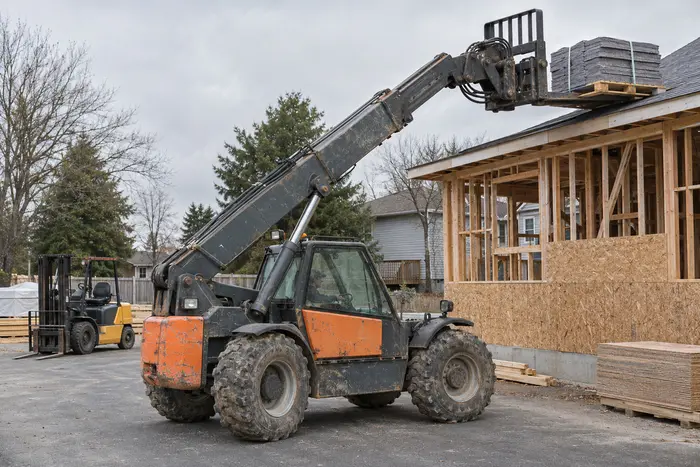
On a rough site, many crews skip the warehouse forklift. A skid steer with pallet forks moves pallets on dirt and gravel, and a telehandler reaches higher. Their weights and rated operating capacities follow the same rule: read the plate, not the brochure. If you already run a loader, skid steer pallet forks are the usual way to handle pallets without a second machine. For a sense of how the machine types differ, see our telehandler vs forklift comparison.
How heavy can a forklift get?
Very heavy. The rental guide above puts heavy-duty trucks at 30,000 to 100,000 lb or more, and general references note forklifts with lift capacities of up to 50 tons for loaded shipping containers. Those machines are in a different world from a warehouse truck and need specialist transport and ground planning.
Quick weight-check list before you move one
- Read the data plate and note the weight.
- Add attachments and any carried load.
- Check the surface, ramp or trailer rating.
- Confirm the operator is trained for that truck type.
- Follow the operator manual and the rated capacity every time.
Common weight questions answered
Does a bigger mast make a forklift heavier?
Yes. A taller or multi-stage mast adds steel, chains and hydraulic parts, and the truck needs more counterweight to stay stable when the load is raised. That is why two trucks of the same rated capacity can have different data-plate weights. Safety guidance also stresses that a raised load makes any truck less stable, so lift only as high as you need and keep the load low while you travel.
Why do electric forklifts weigh so much?
The battery on a battery-powered truck is heavy, and designers use it as part of the counterweight. A lead-acid battery pack can be a large share of the machine's total weight. If you swap to a different battery type, check the plate again, because the truck's stability rating depends on the battery weight listed there.
Does tire type change the weight?
A little. Solid or pneumatic tires, dual drive wheels and cushion tires all add or subtract some pounds, though far less than the counterweight and battery do. Tires matter more for ground pressure and traction, which is why rough-terrain trucks use large pneumatic tires and sit at the heavy end of the ranges above.
Weight, ground pressure and floor limits
Total weight is only part of the story. What a surface feels is the weight carried through each tire. A 6,000 lb truck carrying a 3,000 lb load puts about 9,000 lb across four contact patches, and most of that sits on the front axle when the load is on the forks. Old slabs, suspended floors, trailer floors and asphalt in summer heat can all fail under concentrated loads. If you are not sure, get the floor rating from the building owner or an engineer before driving on it.
The same thinking applies to trailers and ramps. A ramp rated for a given load must handle the machine plus anything on it. Chain the machine down using the tie-down points in the manual, and do not drive a loaded truck up a ramp unless the manufacturer allows it.
Quick weight conversions
- 2,000 lb equals 1 US short ton.
- 2,204.6 lb equals 1 metric tonne.
- 1 kg equals about 2.2 lb.
- A 3,000 lb truck is about 1,360 kg; a 9,000 lb truck is about 4,080 kg.
Get the right fit the first time
Not sure which machine or attachment you need to handle pallets? Send us the make, model and year of your loader, and a person will check fit against the maker's specs. You approve a delivered price before you pay, and the manufacturer ships direct. Start with a fit-checked quote.
Questions buyers ask
How much does a forklift weigh in pounds?
A standard forklift typically weighs about 3,000 to 9,000 pounds. Electric trucks tend to sit around 3,000 to 6,000 lb, and internal combustion trucks around 4,000 to 9,000 lb. Rough-terrain and heavy-duty trucks weigh far more, so check the data plate on your machine.
How much does a forklift weigh in tons?
Divide the pounds by 2,000 for US short tons. A typical 3,000 to 9,000 lb forklift is therefore about 1.5 to 4.5 tons. In metric, that is roughly 1.4 to 4.1 tonnes. Heavy-duty trucks can weigh many times that.
How much does a forklift weigh in kg?
A standard forklift typically weighs about 1,360 to 4,080 kg. Electric models run around 1,360 to 2,720 kg, and combustion models about 1,810 to 4,080 kg. Rough-terrain trucks are heavier, at roughly 3,175 to 9,070 kg, so confirm with the manufacturer's spec.
How much does a fork truck weigh compared with its lift capacity?
A counterbalance truck usually weighs more than it can lift, mainly because of the rear counterweight. A truck rated for 5,000 lb does not weigh 5,000 lb. The ratio varies by design, so read the data plate rather than guessing from the capacity rating.
How much can a forklift weigh at the top end?
Heavy-duty forklifts can weigh 30,000 to 100,000 pounds or more, and the largest port and container machines can be heavier still. These need specialist transport and ground planning. A standard warehouse truck is nowhere near that range, so size your ramps and floors to the machine.