Skid steer guide
Skid Steer Attachments: How to Choose the Right One
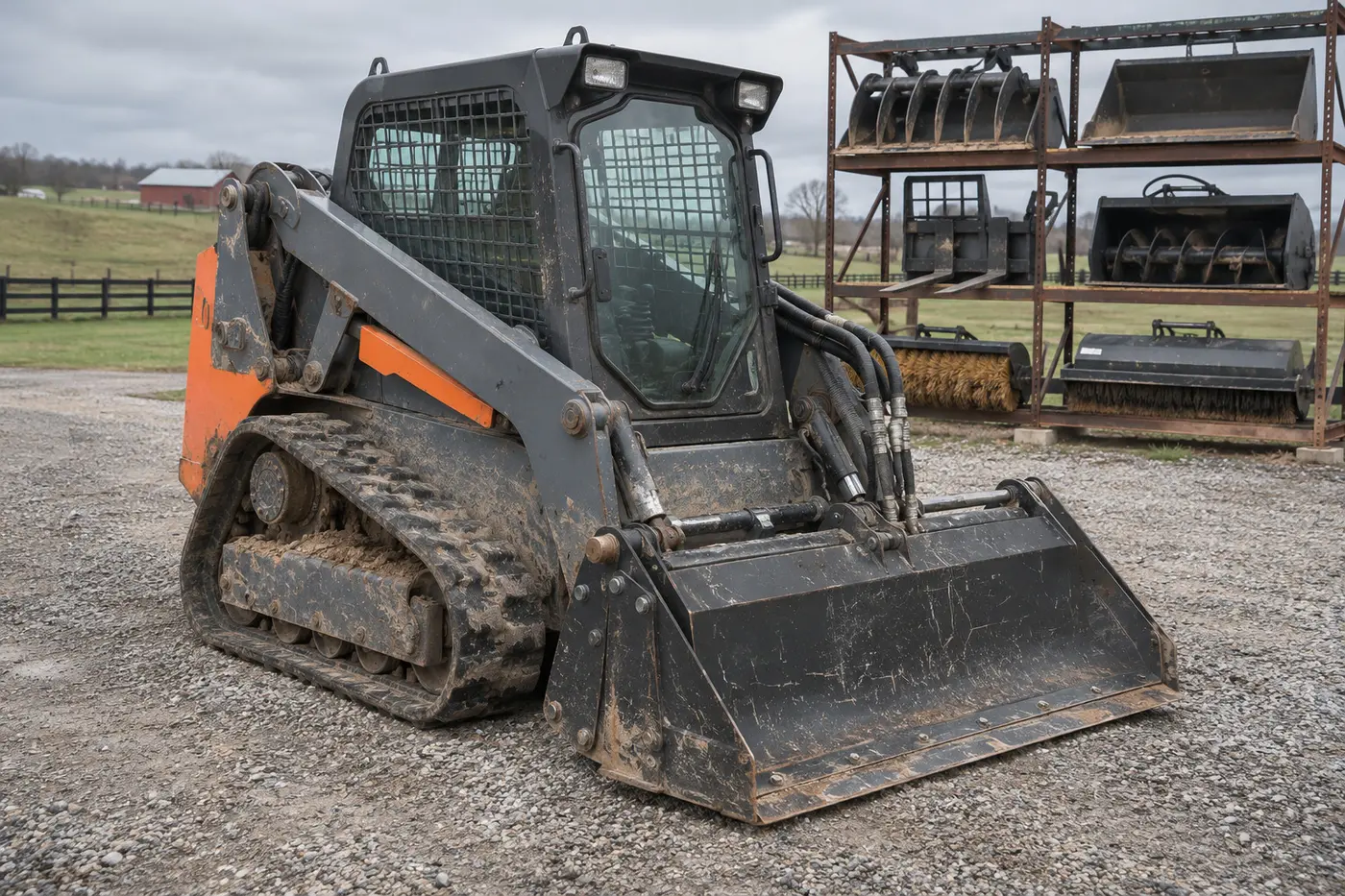
Quick answer
Skid steer attachments should be chosen by starting with your most frequent job, then confirming three things on your loader: rated operating capacity, auxiliary hydraulic flow and mounting plate type. Passive tools like buckets need no hydraulics. Powered tools like augers and mulchers do, so match flow before you buy.
Shopping for this now? Get a fit-checked, delivered quote.
Key takeaways
- Pick the job first, then the tool, then check the machine.
- Attachment weight counts against your rated operating capacity.
- Powered tools need the right hydraulic flow and couplers.
- A universal plate does not make hoses and motors universal.
- Get fit confirmed before you pay.
Pick the job first, then the attachment, then check that your machine can run it. Most buying mistakes happen in the opposite order: someone sees a deal on a tool, then finds out the loader cannot lift it or the hydraulics cannot drive it.
What should you check before choosing a skid steer attachment?
Run through this list before you compare any product. Every item can rule an attachment out on its own.
- The job. Write down what the attachment must do most often, not what it could do once a year.
- Rated operating capacity. The attachment plus its load must stay inside the rated operating capacity in your operator manual. Heavy tools eat into what you can carry.
- Auxiliary hydraulics. Powered tools need oil flow and pressure from the machine. Check the standard-flow or high-flow rating on your loader.
- The mounting plate. Most loaders take a universal skid steer quick attach plate. Confirm yours, and check the latch and pin geometry on any older or odd-brand plate.
- Coupler type. Flat-face couplers are common on modern loaders, but sizes vary. Case drain lines matter on some motors. Read our guide on case drains on a skid steer.
- Width and weight. A tool wider than the machine changes how you turn, load a trailer and fit through gates.
- Ground and material. Rock, clay, wet snow and asphalt all wear tools differently.
Do you need a powered or a passive attachment?
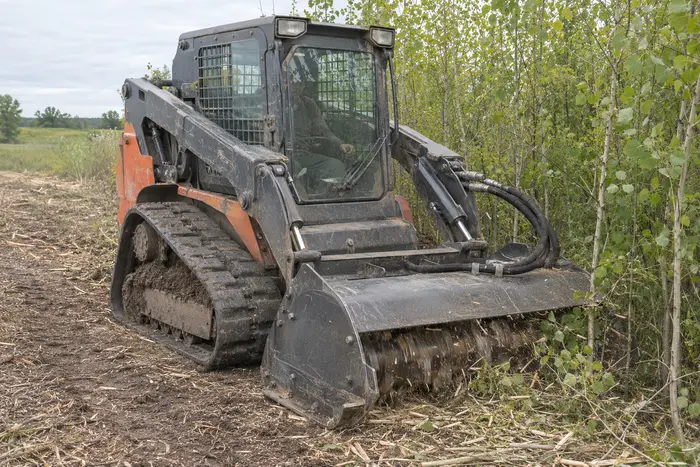
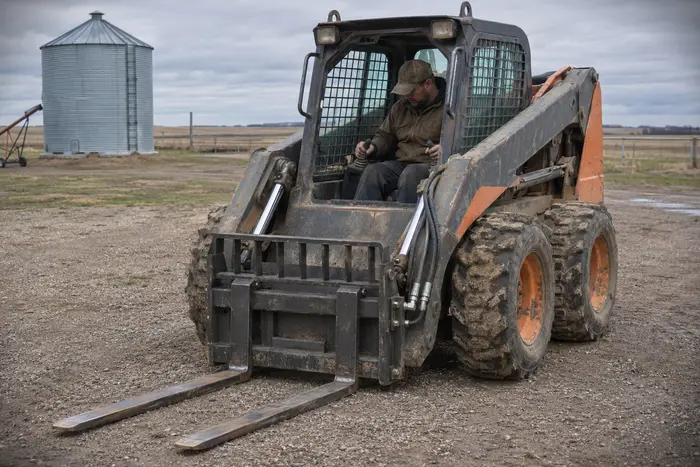
Passive attachments use the lift arms and tilt only. Buckets, pallet forks, dozer blades and box graders fall here. Powered attachments run off the auxiliary hydraulic circuit. Augers, brush cutters, trenchers, stump grinders and mulchers all depend on hydraulic flow.
Passive tools are simpler and cheaper to run. They work on any machine with a matching plate that can lift them. Powered tools are where compatibility bites. A mulcher or a cold planer may need high-flow hydraulics, which many loaders do not have. Our guide to skid steer attachments that need high flow lists the usual suspects.
Standard flow vs high flow in plain words
Flow is how much hydraulic oil the machine can push to the attachment each minute. Standard flow runs augers, small cutters and trenchers. High flow is a separate, stronger circuit that feeds hungry tools such as large mulchers and planers. If your loader lists only one auxiliary circuit, check the manual for the rating before you shop.
Which attachment fits which job?
This table matches common work to the usual first choice. It is a starting point, not a final answer.
| Job | Usual first choice | Needs hydraulics? |
|---|---|---|
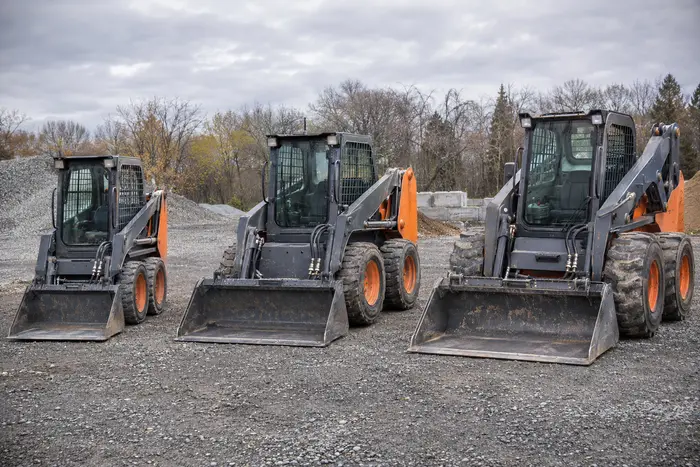
| Moving dirt, gravel, mulch | Bucket | No |
| Moving pallets and stacked material | Pallet forks | No |
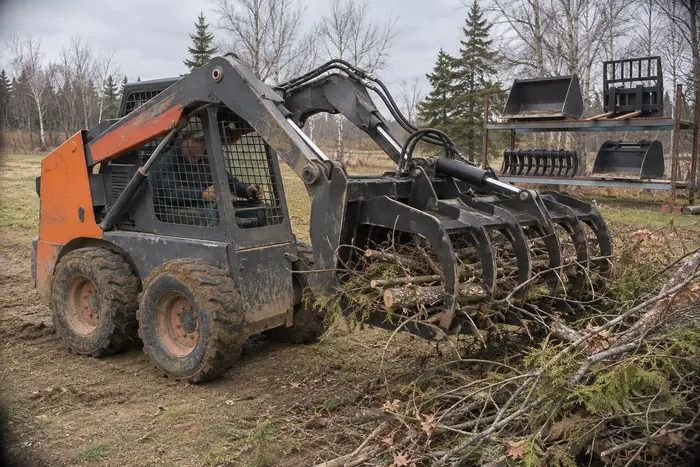
| Brush, logs and debris | Grapple | Yes |
| Fence posts and footings | Auger | Yes |
| Clearing brush and small trees | Brush cutter | Yes |
| Leveling a driveway or pad | Box grader or landscape rake | Usually no for box grader, sometimes for rake |
| Snow clearing | Snow pusher, plow or blower | Pusher and plow no, blower yes |
| Trenching for lines | Trencher | Yes |
Looking for something specific? Browse the full range of skid steer buckets and other tools, or send your machine details and we will narrow it down.
How do you match an attachment to your machine's size?
Skid steers come in frame sizes, and attachments are built for them. A small-frame loader and a large-frame track loader have very different lift capacity and hydraulic output. A wide, heavy tool that suits the big machine can tip a smaller one forward.
Look at three numbers in the operator manual: rated operating capacity, tipping load and auxiliary flow. Then add the attachment weight to the load you plan to carry. If the total sits close to the rated capacity, step down to a lighter tool or a smaller bucket. Our skid steer frame class guide explains where your machine fits.
Wheels or tracks also change the picture. Tracks spread weight and grip on soft ground, which helps with graders and tillers. Wheels turn tighter on hard surfaces. Neither blocks any attachment, but ground pressure and traction affect how well each tool performs.
Should you buy new, used or rent first?
Rent when you need a tool once or twice. Buy when you use it often enough that waiting on a rental hurts your schedule. Used can work for simple, rugged tools such as buckets and forks. For powered tools, ask for the motor and hose condition, and check the quick attach plate for wear or bends before you commit.
Online buying works well when someone checks fit before you pay. That is the whole point of a fit check: the make, model and year of your loader go against the attachment maker's published specs. Read more in our guide to buying attachments online.
Common mistakes when choosing an attachment
- Buying for the biggest job. A tool sized for the rare large job slows every routine job.
- Ignoring hydraulic flow. A powered tool on too little flow runs slow, heats the oil and wears out early.
- Skipping the weight check. Attachment weight counts against your load limit. Follow the manual.
- Assuming everything is universal. The plate may be, but hoses, motors and electrical connectors may not be. See are skid steer attachments universal.
- Forgetting freight and storage. A big tool needs a place to sit and a way to reach your yard.
What should a fit check cover?
A proper fit check goes beyond "it has a universal plate." It compares your machine's make, model and year against the attachment maker's specifications. The person doing it should confirm the plate style, the hydraulic coupler size, the flow and pressure range, the weight of the tool against your loader's rated capacity, and any electrical connector for tools with valves or lights. If any of those do not line up, the answer is a different model or an adapter, not a workaround in the yard.
Care and storage after you buy
Attachments last longer when you treat them as tools, not scrap. Grease pivot points on a schedule, check hoses for rubs and leaks, and keep couplers capped when disconnected so dirt stays out of the hydraulic system. Store heavy tools on a rack or on blocks, not on soft ground where they sink and rust. Follow the maker's maintenance schedule in the manual for each tool.
A simple way to decide
Pick the single job that earns you money or saves you the most time. Choose the attachment for that job. Confirm hydraulics, plate and capacity. Add a second tool only when the first has paid for itself. This keeps you from owning a row of tools that rarely leave the rack.
Get the right fit the first time
Send us the make, model and year of your machine and what you plan to do with it. A person checks fit against the maker's specs and sends a delivered price for you to approve before you pay, and the manufacturer ships direct. Ready when you are: get a fit-checked quote.
Questions buyers ask
How do I choose the right skid steer attachment?
Start with the job you do most. Then check your loader's rated operating capacity, auxiliary hydraulic flow and mounting plate type. Powered tools need enough flow, and every attachment adds weight that counts against your load limit. A fit check against the maker's specs catches mismatches before you buy.
What skid steer attachments do I need first?
Many owners start with a bucket and pallet forks because neither needs hydraulics and both handle daily work. Add a second tool based on your main job, such as an auger for posts, a brush cutter for clearing, or a snow pusher for winter. Buy the next one only after the first earns its place.
Are all skid steer attachments universal?
No. Many use a universal quick attach plate, so the mounting side fits many loaders. Powered attachments still need the right hoses, coupler type, flow and sometimes an electrical connector. Always confirm fit for your exact machine rather than assuming one size fits all.
Do skid steer attachments need high flow?
Only some do. Augers and small cutters usually run on standard flow. Large mulchers, cold planers and big snow blowers often need the stronger high-flow circuit. Check your loader's auxiliary hydraulic rating in the operator manual and compare it to the attachment's requirement.
Can a small skid steer run large attachments?
Not always. A smaller frame has lower rated operating capacity and less hydraulic output, so a heavy or wide tool can overload it. Compare the attachment weight and flow need against your manual. If the numbers sit close to the limit, choose a lighter or narrower model.