Mini skid steer guide
Skid Steer vs Mini Skid Steer: Which Fits Your Work?
Quick answer
A skid steer is the better choice for heavy lifting, big attachments and all-day production. A mini skid steer wins on access, transport and low ground impact. The deciding factors are your tightest gate, the heaviest load you lift, the hydraulic flow your attachments need and how you move the machine between jobs.
Shopping for this now? Get a fit-checked, delivered quote.
Key takeaways
- Full-size machines lift more, offer more hydraulic output and run bigger attachments.
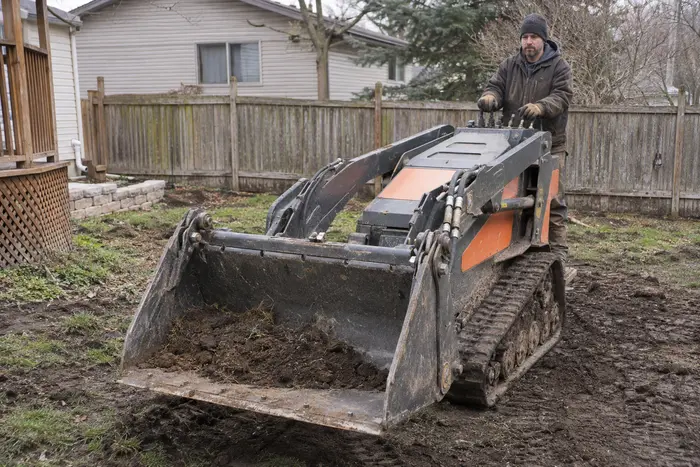
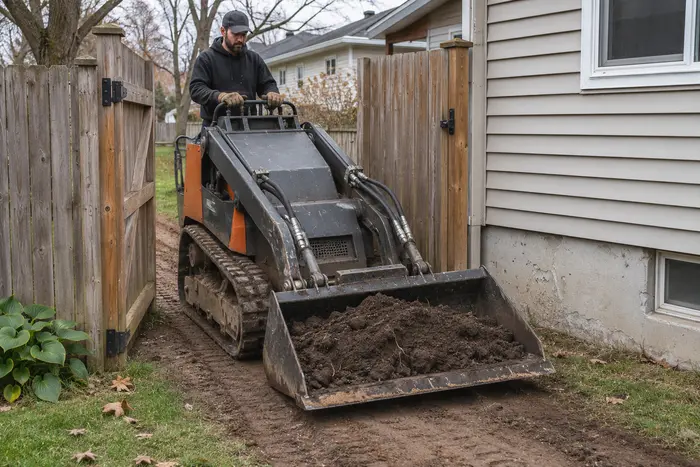
- Mini skid steers fit through narrow gates, trailer easily and leave a lighter footprint.
- Attachments are not interchangeable by default; plates, flow and weight differ.
- Tracks and wheels change traction and ground damage for both sizes.
- Pick for your hardest regular job and your tightest access, not the average day.
The choice between a skid steer and a mini skid steer usually comes down to one question: what will you regret more, a machine that is too big to get in, or one too small to finish the job? This guide compares the two on the points that matter and shows how to decide.
What is the difference between a skid steer and a mini skid steer?
Both machines steer by driving the wheels or tracks on one side faster than the other. Both carry a lift arm that accepts a wide range of attachments. The differences are scale and the work each is built for.
| Point | Skid steer | Mini skid steer |
|---|---|---|
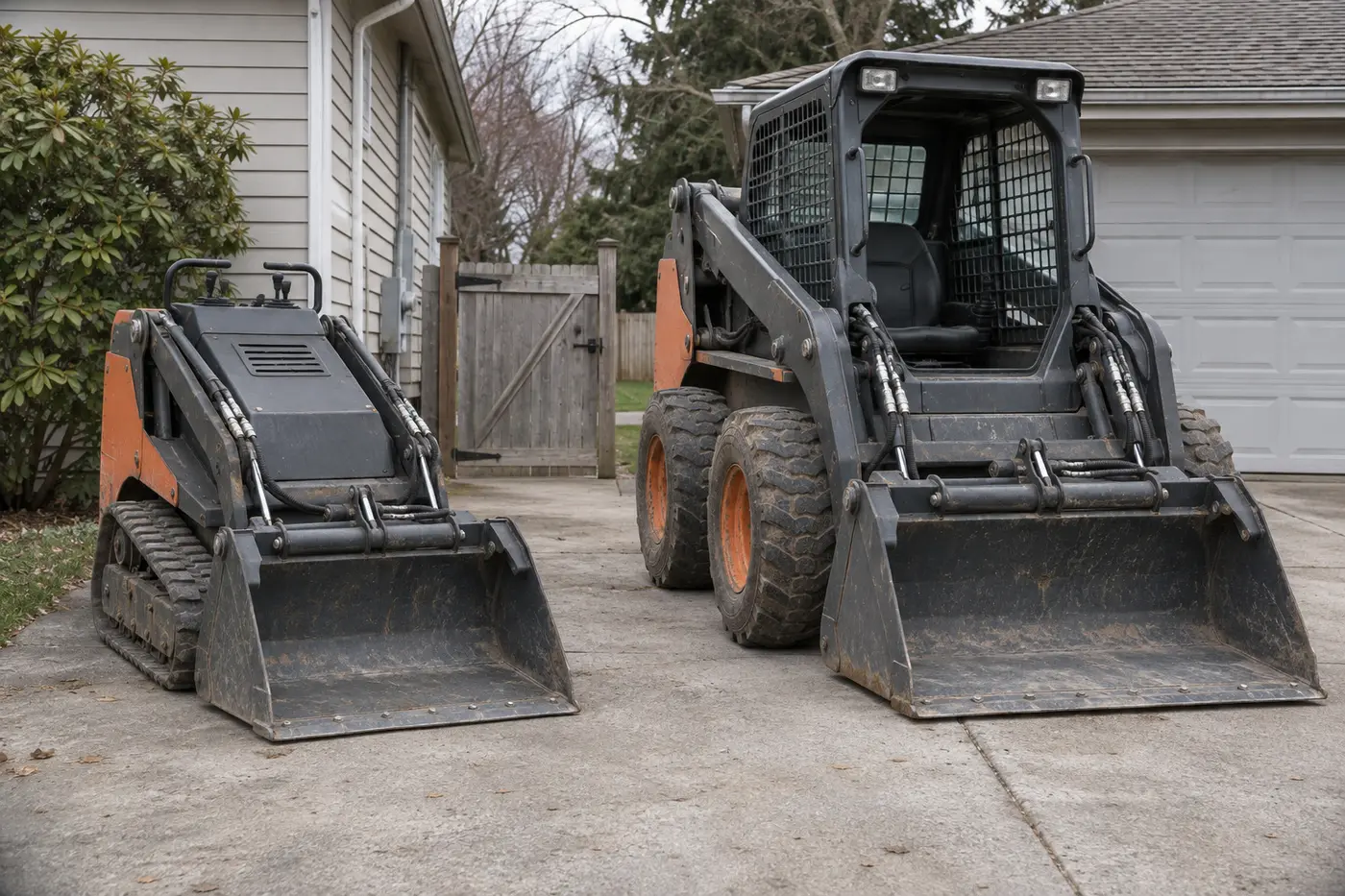
| Size and weight | Larger and heavier; needs a bigger trailer | Compact; often moves on a smaller trailer |
| Lifting | Higher rated operating capacity | Lower capacity, suited to lighter loads |
| Hydraulics | More flow and pressure; high-flow options on many models | Lower flow; attachments must be built for it |
| Access | Needs a wider gate and more room to turn | Fits through narrow gates and into tight yards |
| Ground impact | Heavier on turf and soft ground | Lighter footprint on lawns |
| Attachment range | Very broad, including heavy-duty tools | Narrower, and mostly lighter tools |
| Best for | Production work, loading, heavy site work | Landscaping, small jobs, tight access |
Our skid steer size and frame class guide and the mini skid steer guide go deeper on each class.
When does a full-size skid steer make sense?
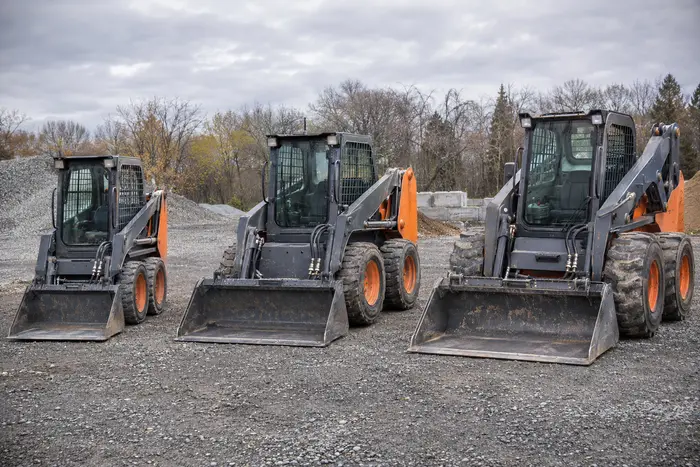
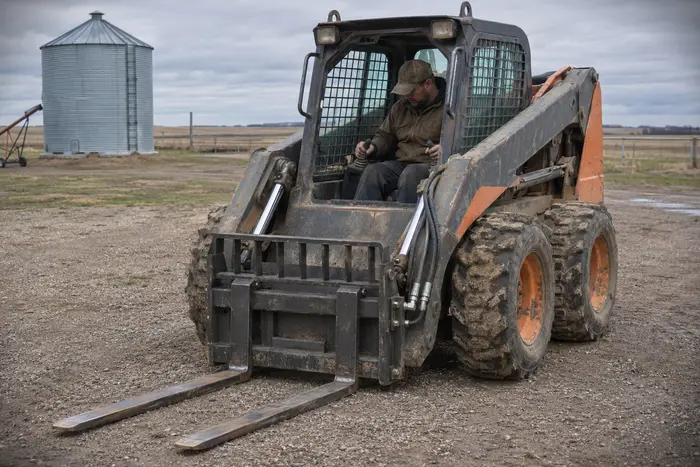
- You lift heavy loads. Pallets of block, large bales or heavy buckets of material push a small machine to its limit.
- You run power-hungry attachments. Mulchers, cold planers and big snow blowers want the flow a larger machine offers.
- You work all day. Bigger machines are built for long production shifts.
- You have open access. A wide gate and room to turn make size an advantage, not a problem.
When does a mini skid steer make sense?
- Access is tight. Side yards, narrow gates and backyards are what mini machines were made for.
- You protect the ground. Lower weight means less rutting on lawns and landscaped beds.
- You move the machine daily. A smaller trailer and lighter tow vehicle cut a lot of effort.
- Your work is light to medium. Augers, small buckets, trenching and landscape tools are a good match.
If your jobs are mostly digging, compare a mini skid steer with a mini excavator before you decide, because the digging tool may suit you better than a loader.
Do attachments fit both machines?
Not automatically. Compact loaders generally use quick attach plates so you can switch tools, and a universal skid steer quick attach plate is a common standard. Mini machines often use different plates, hose layouts and sizes. A tool made for one may not mount on the other. An adapter plate can bridge the mount, but it does not fix flow, weight or size differences. A heavy attachment on a mini machine can exceed its rated operating capacity or tip it.
Before you move a tool from one machine to another, check:
- The plate or mount type on both machines.
- The attachment's flow and pressure range against the new machine's circuit.
- The attachment's weight against the new machine's rated operating capacity.
- The hose size and coupler type.
- The width and height clearance when the tool is mounted.
Read whether skid steer attachments are universal for the full picture. You can browse skid steer mounting plates and mini skid steer mounting plates to see what exists.
Wheels or tracks: does it change the choice?
Both sizes come in wheeled and tracked versions; full-size tracked machines are usually called compact track loaders. Skid steers are typically four-wheeled or tracked vehicles. High ground friction from a wheeled skid steer can tear up soft or fragile surfaces, which is one reason tracked and mini machines are popular on lawns. Tracks spread weight and grip on soft ground. Wheels are often simpler and cheaper to maintain on hard surfaces. See wheels vs tracks for the full comparison.
Are mini skid steers worth it?
They are worth it if access, transport or ground damage is your main constraint. They are not worth it if you need to lift heavy loads or run big hydraulic tools, because they will cost you time on every job. A common mistake is buying small to save money and then renting a bigger machine every month. If that sounds like you, price the rental days against the machine you really need.
How do you decide?
- Measure your tightest gate and compare it to each machine's width.
- List your three most common attachments and their weight and flow needs.
- Find the heaviest load you lift on a regular basis.
- Decide how you will move the machine, and check the trailer and tow vehicle limits.
- Look at the ground you work on. Turf and soft soil favor lighter or tracked machines.
If the answers split, you can sometimes own the smaller machine and rent a larger one for the occasional heavy job. Always follow the operator manual and the machine's rated capacity. If you are new to the terms, start with what a skid steer is.
Which attachments suit which machine?
| Job | Better on a full-size skid steer | Better on a mini skid steer |
|---|---|---|
| Moving material | Large buckets, pallet forks, bale handling | Small buckets and light pallet loads |
| Land clearing | Mulchers and large brush cutters on high flow | Small brush cutters and forestry claws |
| Digging | Trenchers and augers for long runs | Narrow trenchers and light augers |
| Grading and finishing | Box graders, land planes and power rakes | Small landscape rakes and dozer blades |
| Snow | Large pushers and blowers | Compact blowers and blades for walks and small lots |
Use this as a starting point only. Every attachment has its own weight and hydraulic needs, so confirm against the actual machine. Browse mini skid steer landscape rakes and box graders to see how the two ranges differ.
What do spec sheets leave out?
- Check the lift capacity at the height you work, not only on level ground. Reach reduces what a machine can safely carry.
- Ask about service access. A compact machine can be harder to work on in the field.
- Think about the second machine. Many crews end up with both sizes because each does a different job well.
Those are not rules, but they are worth asking about before you commit.
Get the right fit the first time
Not sure which size fits your attachments? Send us the make, model and year of your machine. A person checks fit against the maker's specs, you approve a delivered price before you pay, and the supplier ships direct. Get a fit-checked quote or call 1-888-245-1555.
Questions buyers ask
What is the difference between a skid steer and a mini skid steer?
A mini skid steer is a smaller, lighter machine with lower lift capacity and lower hydraulic output. It fits tight spaces and trailers easily. A full-size skid steer lifts more, runs bigger attachments and suits production work, but needs more room.
Are mini skid steers worth it?
They are worth it when tight access, easy transport or low ground impact matter most. They are a poor fit for heavy lifting or high-flow attachments. Compare your heaviest regular job and tightest gate with the machine's specs before deciding.
Can skid steer attachments fit a mini skid steer?
Not always. Mounting plates, hose layouts, weight and hydraulic needs differ. An adapter plate may solve the mount, but flow, pressure and weight limits still apply. Check each point against the mini machine's specs before using a skid steer tool.
Which is better for landscaping, a skid steer or a mini skid steer?
For residential landscaping with narrow gates and lawns, a mini skid steer is often easier to move and gentler on turf. For large sites and heavy material handling, a full-size machine is faster. Choose by access and the loads you handle.
Can I trailer a mini skid steer behind a pickup?
Often, but it depends on machine, attachment and trailer weight against your truck's tow rating and the trailer's rated capacity. Check ratings before loading, and follow local road rules. A full-size skid steer usually needs a heavier setup.