Skid steer guide
Types of Skid Steers Explained: Lift Style, Size and Drive
Quick answer
Skid steers are grouped by lift path (radial or vertical), drive (wheels or tracks), frame size, control style and hydraulic flow. Radial lift suits digging and grading, vertical lift suits loading at height, and tracks suit soft ground. Pick the type by the work you do most often.
Shopping for this now? Get a fit-checked, delivered quote.
Key takeaways
- Lift path: radial lift is strong for digging, vertical lift is better for loading trucks
- Drive: wheels are quick on firm ground, tracks float on soft ground
- Frame size sets lift capacity, weight and transport needs
- Control style and hydraulic flow affect comfort and attachment choice
- Size and type should follow your top three jobs
Skid steers look alike from a distance, but their differences decide what they do well. A machine that digs well may be poor at loading a high truck, and one that runs a mulcher well may be wasted on pallet work. This guide covers the main ways skid steers are classified so you can match type to work.
What defines a skid steer?
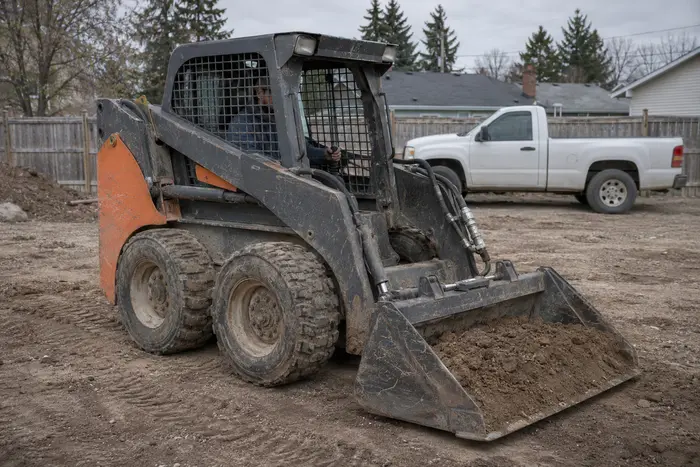
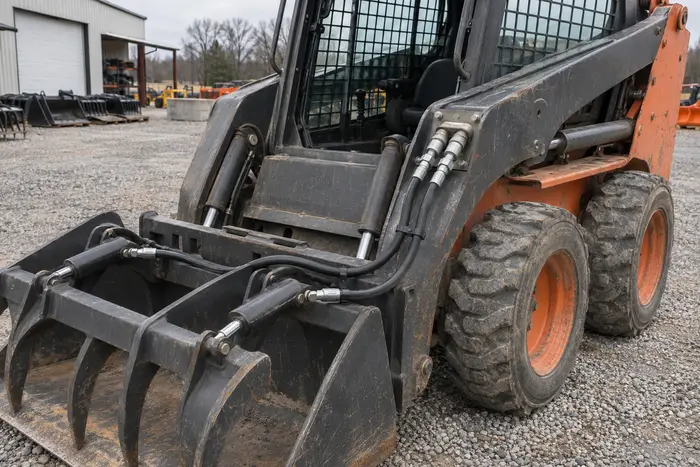
A skid steer loader steers by running the left and right sides at different speeds. The wheels or tracks have a fixed orientation, so the machine skids across the ground when it turns. This lets it spin within its own length. Most modern machines use two separate hydrostatic drives, one per side. The front has a quick-attach system and hydraulic couplers for the attachment. Machines on tracks are usually called compact track loaders.
Radial lift vs vertical lift
The lift arms follow one of two paths.
- Radial lift. The arms swing in an arc. The bucket reaches farthest forward at about mid-height. This gives strong digging and breakout force near the ground and good reach at mid-height. It is a good all-round choice for grading, digging and landscaping.
- Vertical lift. The arms travel in a more vertical path and keep more forward reach at full height. This helps when loading trucks or placing pallets at height, because the load clears truck sides and stacks more easily. It suits loading, stacking and material handling.
| Lift path | Strong at | Less suited to |
|---|---|---|
| Radial | Digging, grading, landscaping, general work | Reaching into tall trucks |
| Vertical | Loading trucks, stacking, pallet work | Maximum digging force near the ground |
Wheels vs tracks
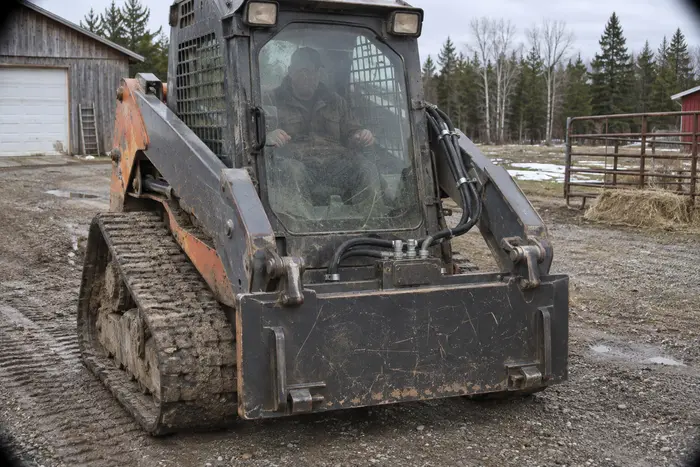
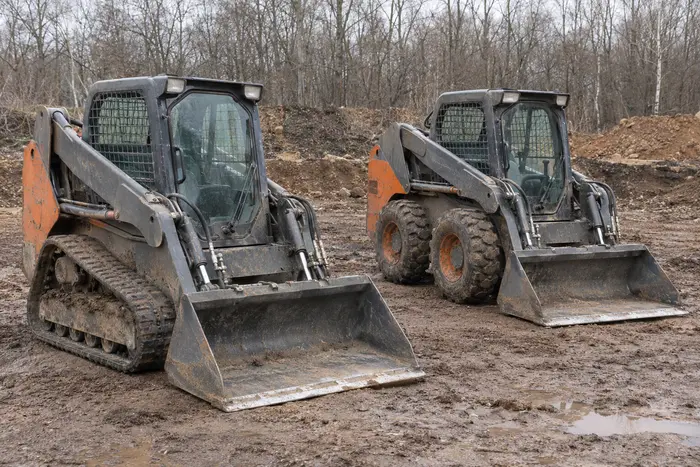
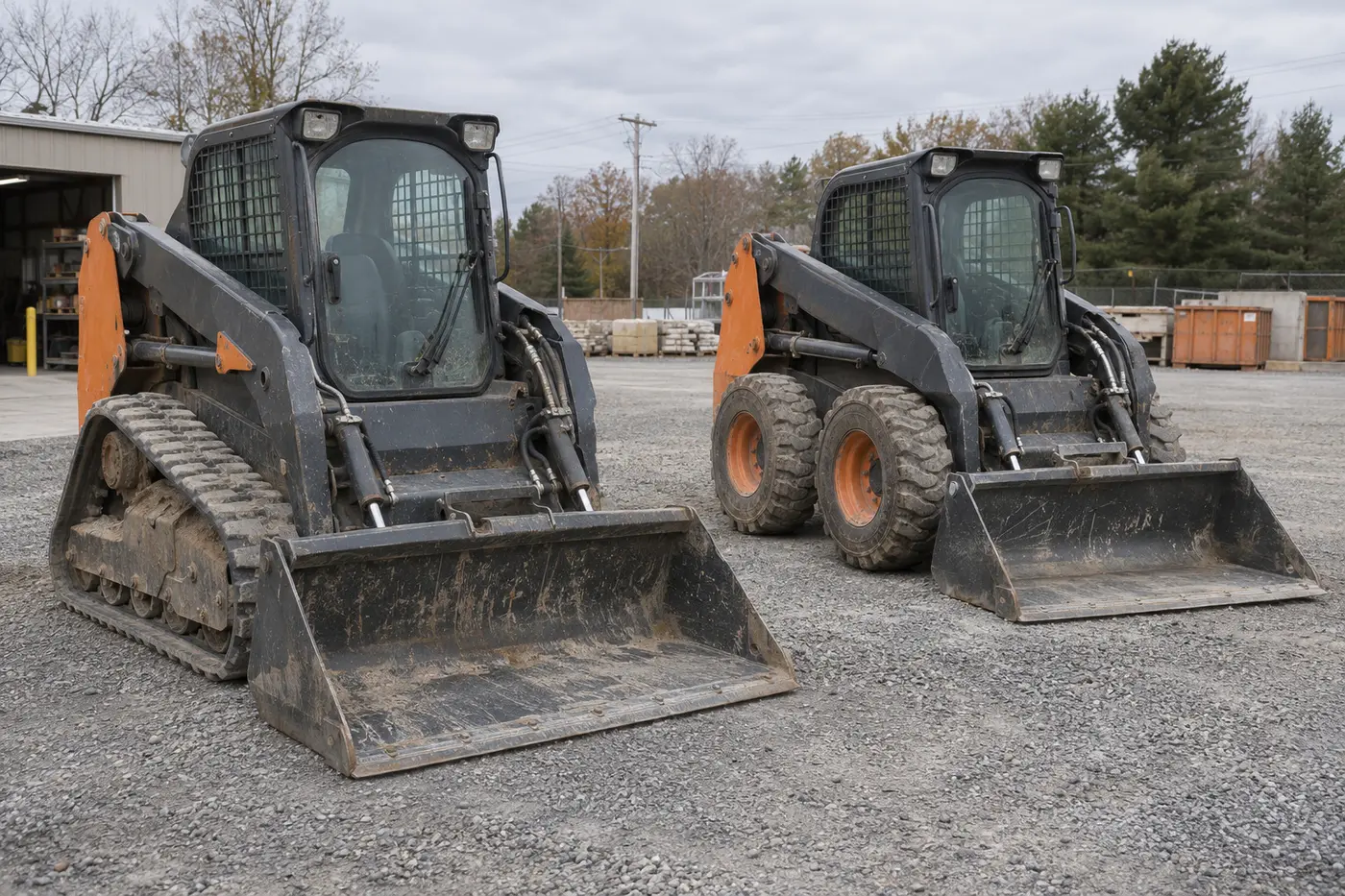
Wheeled machines are quick on firm surfaces, cheaper to run on tires than tracks, and easier on pavement. Tracked machines spread weight, grip on soft or muddy ground, and float over sand and wet soil. They are heavier and have more undercarriage to maintain. High ground friction from skidding can damage soft or fragile surfaces, so tracks and careful turns help on lawns. See our wheels vs tracks guide for a longer comparison, and over-the-tire tracks if you want a track option for a wheeled machine.
Frame size
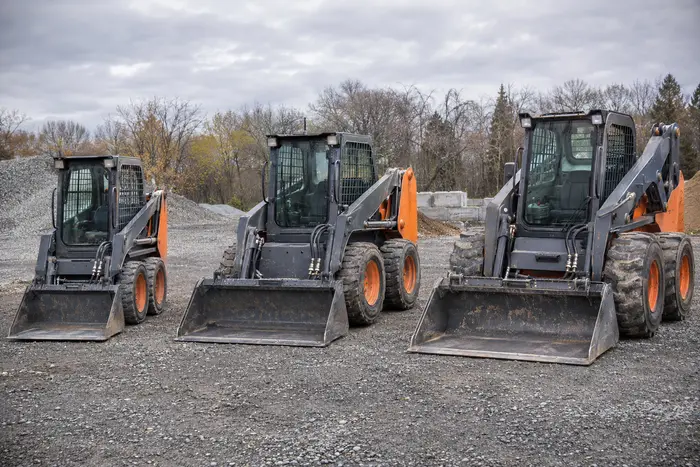
Makers group skid steers by frame size, and the names vary. In broad terms, a smaller frame is lighter, narrower and easier to trailer, but it lifts less and has lower hydraulic output. A larger frame lifts more and runs heavier attachments, but it needs a bigger trailer and tow vehicle. At the smallest end are mini skid steers; our mini skid steer guide covers those, and our guide on frame classes goes deeper into the sizes. Look at three numbers on a spec sheet: rated operating capacity, operating weight and auxiliary hydraulic flow.
Control types
Older machines used two levers, one per side, that directly control each drive. Modern machines add joystick controls that handle driving, lift and tilt with pilot or electronic inputs. Some offer a choice between control patterns. Pick one that you can use comfortably for hours, and test it before you commit. Stand-on and walk-behind models use different controls and have smaller footprints.
Hydraulic flow: standard vs high flow
Skid steers supply hydraulic oil to attachments. Standard flow runs buckets, forks, grapples and many augers. High flow means a larger flow rate and is needed by hungry tools such as large mulchers, cold planers and some snow blowers. Not all machines have a high-flow option. Check the attachment's flow range against the machine's. We explain this in our hydraulic flow guide.
Tires: the wheeled options
Wheeled machines can run several tire types. Pneumatic tires ride softly and grip well, but a puncture stops the job. Foam-filled tires resist punctures and cost more and weigh more. Solid tires cannot go flat and give a firm, rougher ride and less traction on loose ground. Choose by your site: sharp debris, demolition and brush point to puncture-proof options, while smooth finished surfaces favor softer tires. Our guide on foam-filled vs solid skid steer tires compares them in detail.
Tracks: the undercarriage options
Compact track loaders use rubber tracks on an undercarriage of rollers, idlers and sprockets. Rubber tracks are quiet and fairly gentle on surfaces, but they can be cut by sharp edges. The undercarriage is the main wear cost, so keep it clean, keep tension in range, and avoid spinning in place on abrasive ground. See our undercarriage care guide for a routine to follow.
Other types and features
- Stand-on and walk-behind. Small footprint, good for tight spaces.
- Electric machines. Quiet and without exhaust, good for indoor or low-noise work.
- Enclosed cab vs open. A sealed cab with heat and air improves comfort and keeps out dust and debris.
- Specialty packages. Forestry guarding, snow packages and demolition guards are available on some machines.
- Powered attach and hydraulic connection. Some newer machines lock attachments from the seat, and a few connect hydraulics without leaving the cab.
Attachments by type of work
The type of machine you choose limits or opens up attachments. Standard-flow machines fit buckets, pallet forks, grapples and many augers. High-flow machines extend into mulchers, cold planers and heavy snow blowers. The common attachment types and their needs are in our guide on how to choose a skid steer attachment.
Cab, comfort and visibility
Seat time adds up. A sealed cab with heat and air keeps out dust, noise and weather, and it makes long days easier. Visibility matters just as much: look at the sight lines to the front corners, the attachment and the rear. Some machines have cameras, and some have lower-profile lift arms for a clearer view. Sit in the seat before you buy and try reaching the controls and getting in and out.
How to choose a type
- Write down your top three jobs. Digging and grading point to radial lift. Loading trucks and stacking point to vertical lift.
- Check the ground. Soft, wet or sandy sites point to tracks. Paved and firm sites suit wheels.
- Pick the frame size from your lifting needs, your trailer and your gate widths.
- Check hydraulic flow against the attachments you plan to run.
- Try the controls and the cab for comfort.
- Plan for upkeep. Tracks and hydraulic hoses wear fastest in rough work.
None of these choices is permanent for attachments. A universal quick attach plate lets you swap tools in minutes, which is why many buyers pick the machine for the heaviest job and add tools over time.
Get the right fit the first time
Send us your machine make, model and year and what you plan to do with it. A person checks fit against the maker's specs, and you approve a delivered price before you pay. Get a fit-checked quote.
Questions buyers ask
What are the different types of skid steers?
Skid steers are grouped by lift path (radial or vertical), drive (wheels or tracks), frame size, control style and hydraulic flow. There are also stand-on, walk-behind and electric versions. Choose by the work you do most.
What is the difference between radial lift and vertical lift skid steers?
Radial lift arms swing in an arc and are strong for digging and grading. Vertical lift arms rise more upright and keep the reach out at full height, which suits loading trucks and stacking pallets. Pick by your main job.
Are tracked skid steers better than wheeled ones?
Tracks are better on soft, wet or sandy ground because they spread weight and grip well. Wheels are quicker on firm surfaces, simpler to maintain and cost less to run. The best choice depends on your ground and your work.
What is high flow on a skid steer?
High flow means a skid steer's auxiliary hydraulics deliver a larger oil flow to attachments. Tools such as large mulchers and cold planers need it. Check the attachment's required flow range against the machine's rated auxiliary flow before you buy.
What size skid steer do I need?
Choose by rated operating capacity, operating weight and hydraulic flow, measured against your heaviest regular job, your trailer and your gate widths. A smaller frame is easier to transport, while a larger one lifts more and runs heavier tools.