Telehandler guide
Telehandler Buckets: Sizes and Types
Quick answer
A telehandler bucket lets a reach machine load, carry and dump loose material over walls and into tall trucks. Size it by your machine's rated capacity at the reach you use and by material density, not by volume alone. Check the load chart with the bucket fitted and the carriage lock before lifting.
Shopping for this now? Get a fit-checked, delivered quote.
Key takeaways
- Capacity and density decide usable bucket size, not volume.
- The bucket's weight counts against rated capacity.
- Reach reduces capacity; read the load chart.
- Light-material buckets suit mulch, grain and snow.
- Confirm the carriage or adapter lock is engaged.
A telehandler bucket turns a reach machine into a material loader that can dump into high trucks, hoppers and across obstacles. The size and type you want depend on what you carry, how dense it is and how much your telehandler can lift at the reach you use. Capacity, not bucket volume, is the real limit.
What is a telehandler bucket used for?
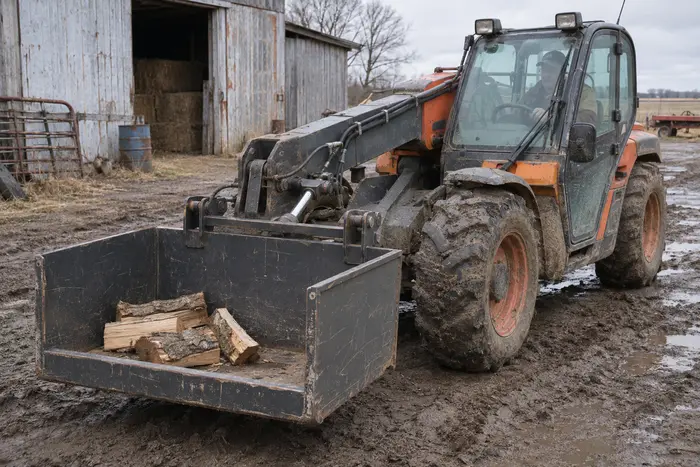
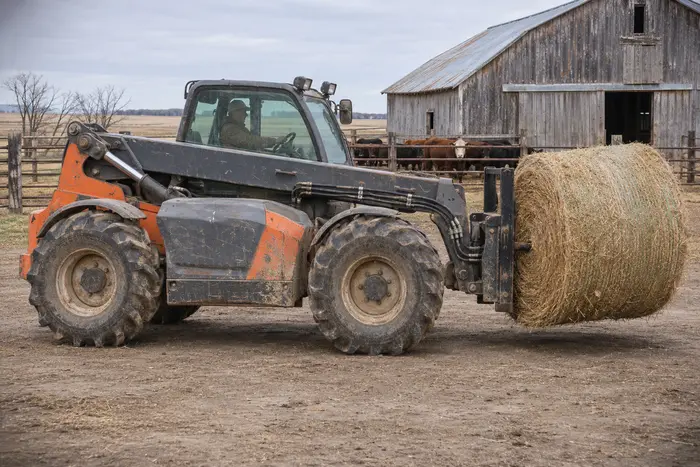
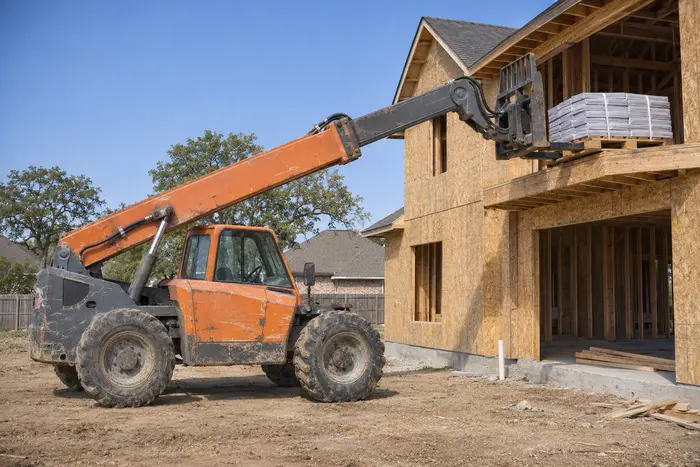
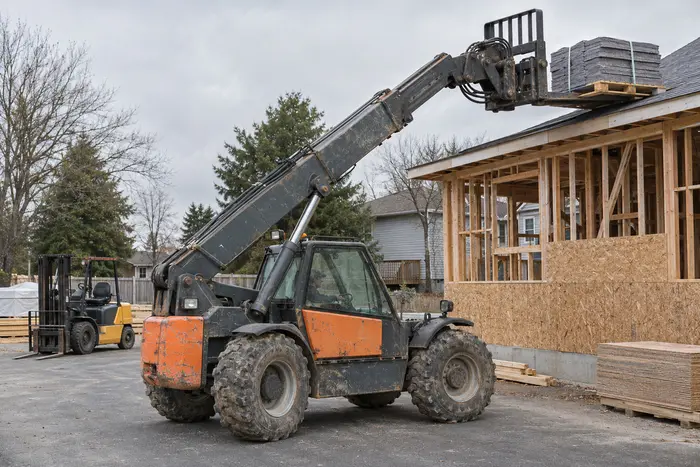
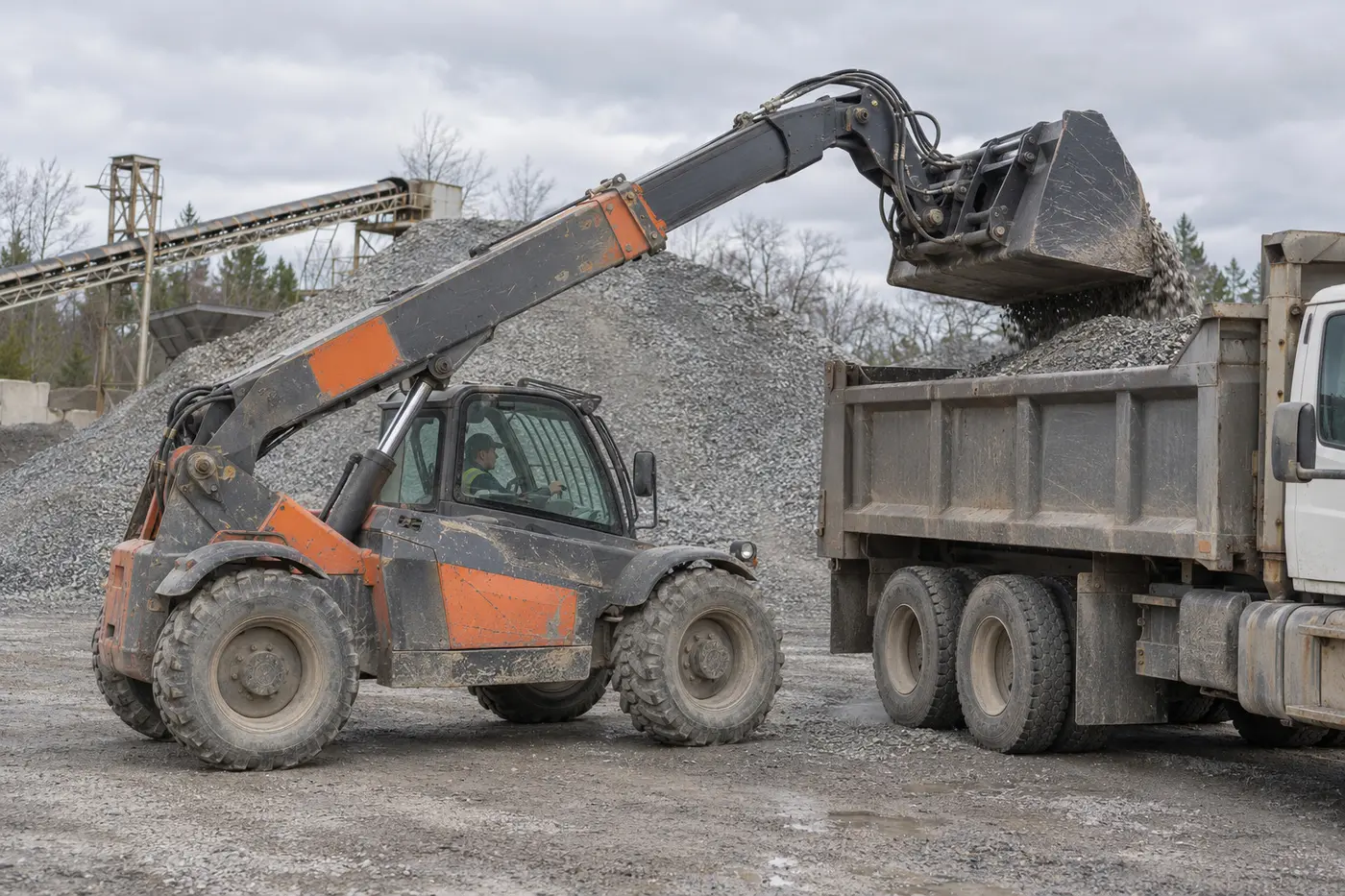
A telehandler, also called a telescopic handler, reach forklift or zoom boom, has a boom that extends forward and upward. The boom can be fitted with different attachments, including a bucket, pallet forks, a muck grab or a winch. A bucket lets the machine move loose material such as sand, gravel, soil, grain, mulch, snow and debris. Its advantage over a regular loader is reach. You can place material into a tall truck, over a wall or onto a stockpile that a front loader cannot reach.
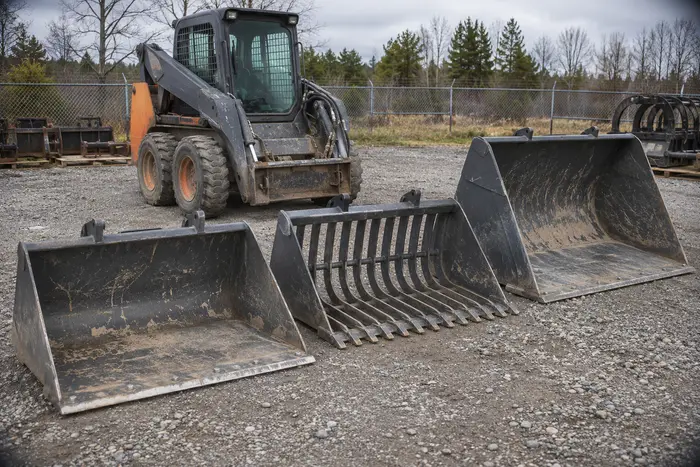
Types of telehandler buckets
| Bucket | What it is | Best for |
|---|---|---|
| General-purpose bucket | Standard shape and strength | Soil, sand, gravel, mulch |
| Light-material or high-capacity bucket | Larger and lighter, for low-density material | Grain, wood chips, snow, compost |
| Heavy-duty or rock bucket | Extra steel, strong edges | Rock, demolition, hard digging |
| Grapple bucket | Bucket with a clamp on top | Brush, scrap, irregular loads |
| Side-dump or tipping bucket | Tips to the side instead of forward | Tight spaces and loading over walls |
| Multi-purpose bucket | Clam-style opening bucket | Grading, loading and dozing |
Browse telehandler buckets and related telehandler grapples to compare options. For a general overview, see our telehandler attachments guide.
How to size a telehandler bucket
Two numbers matter: the bucket's volume and the machine's lift capacity at the reach you use. Volume tells you how much the bucket holds. Capacity tells you how much the machine can lift without tipping. Material density links them. A bucket full of dry mulch is far lighter than the same bucket full of wet sand or crushed stone. You often cannot fill a large bucket with a dense material, because the load would exceed what the telehandler can safely lift.
- Find the rated capacity. It is on the machine's data plate and load chart, and it changes with boom angle and extension.
- Subtract the attachment weight. The bucket's own weight counts against your capacity.
- Know the material. Dry and fluffy is light. Wet, dense and rocky is heavy.
- Pick the volume. Choose a bucket you can fill safely with your usual material, not the largest you can find.
- Check the width. Make sure the bucket suits your tires, gates and loading points.
Our guide on loader bucket types explains how general-purpose, light-material and heavy-duty buckets differ, and our guide on skid steer bucket sizes shows how the volume and density calculation works on a loader.
Why does a bucket reduce telehandler capacity?
A forklift's rated capacity is based on a load center, which is the distance from the vertical face of the forks to the load's center of gravity. A bucket pushes the center of gravity farther from the machine than a pallet would, and the farther out the boom reaches, the less the machine can safely carry. Telehandlers also have load charts that show capacity at specific boom lengths and angles. Always read the load chart for your machine as equipped with the specific attachment, and never go over it. Ask the maker or dealer for a chart that includes the bucket if you are not sure.
Matching the bucket to your material
- Mulch, wood chips, compost: light, bulky material. A large light-material bucket moves more per trip.
- Grain, seed and feed: flows easily and is moderately dense. Use a bucket with smooth walls and a clean dump.
- Soil and sand: dense, especially when wet. A general-purpose bucket sized well under the machine's capacity.
- Gravel and crushed stone: heavy and abrasive. Use a heavy-duty bucket and fill it only part way if needed.
- Snow: light but bulky. A big bucket can work, but watch for ice buildup and slippery ground.
- Debris and brush: a grapple bucket holds irregular loads that would spill from a standard bucket.
Buying tips
Ask for the bucket's weight, volume, width and the carriage style it fits. Check that the maker lists your machine or a compatible carriage. Look for replaceable cutting edges and bolt-on teeth if you work in hard material. If you plan to share one bucket between a telehandler and a loader, ask whether an adapter is safe for both machines. Always confirm fit before you buy, because a bucket that does not seat or lock properly is a serious hazard.
Mounting: carriage, quick attach and adapters
Telehandler attachments connect to a carriage at the end of the boom. Some use a frame-style carriage. Others use a universal skid steer quick attach plate through an adapter. If you want to use a skid steer bucket on a telehandler, check the adapter's rating and the effect on reach and capacity. See telehandler skid steer adapters. Make sure the locking system is fully engaged before lifting. Follow the telehandler maker's attachment instructions and the bucket maker's guidance.
Using a telehandler bucket safely
- Read the operator manual and the load chart for the exact machine and attachment.
- Do a pre-shift inspection. Check the boom, chains or hoses, the attachment lock and the tires.
- Level the machine as the manual requires, and use outriggers or stabilizers if fitted.
- Keep the boom low and retracted when traveling with a load.
- Do not swing, drive or turn with a raised, extended load.
- Keep people clear of the load and out from under the boom.
- Do not use a bucket to lift people. Use a rated work platform attachment instead. Our work platform FAQ explains the rules.
- Watch for overhead lines. A telehandler boom can reach them quickly.
Telehandler or forklift classes?
OSHA's powered industrial truck list groups rough terrain forklifts as Class VII, and that class includes variable-reach models with a telescopic boom. A telehandler is that boom type, with different reach and attachment options from a straight-mast forklift. If you are comparing them for a job, read telehandler vs forklift and what a telehandler is.
Maintenance and wear
Check the bucket edge and teeth for wear. Look at the lugs, pins and welds. Clean the quick attach points so dirt does not hold the lock open. Grease the pivots on a regular schedule and watch for cracks in thin sections of the bucket. Replace edges and teeth before the bucket body wears through. After snow or salt work, rinse off corrosive material and let the bucket dry.
Get the right fit the first time
Send us the make, model and year of your machine and what you plan to do with it. A person checks fit against the maker's specs and sends a delivered price for you to approve before you pay. Ready when you are: get a fit-checked quote.
Questions buyers ask
What size bucket do I need for a telehandler?
Choose by your telehandler's rated capacity at the reach you use and by the density of your material. Subtract the bucket's own weight. A large bucket suits light materials like mulch or grain. Dense materials like wet sand or rock call for a smaller or heavy-duty bucket.
What are the types of telehandler buckets?
Common types are general-purpose, light-material or high-capacity, heavy-duty rock, grapple, side-dump or tipping, and multi-purpose clam-style buckets. Pick by your material and job, then check weight, width and how it mounts to your telehandler's carriage.
Can a telehandler use a skid steer bucket?
Sometimes, with an adapter that connects a universal quick attach plate to the telehandler carriage. Check the adapter's rating and the effect on reach and capacity, read the load chart for the machine with that attachment, and follow both makers' instructions.
Does a bucket reduce telehandler lifting capacity?
Yes. The bucket weighs something and moves the load's center of gravity farther from the machine, and capacity falls as the boom reaches out. Always use the load chart for your machine as equipped with the bucket, and never exceed it.
Is a telehandler bucket better than a front loader?
It depends on the job. A telehandler bucket reaches over walls and into tall trucks or hoppers. A front loader is faster for digging and moving large piles at ground level. Choose by whether reach or loading speed matters more for your work.