Telehandler guide
Best Telehandler Attachments for Farms and Job Sites
Quick answer
The most useful telehandler attachments are pallet forks and fork extensions, buckets, grapples, bale spears, truss booms and jibs, lifting hooks and work platforms. Each attachment changes the machine's capacity, so match the carriage type, rated load and load chart before you buy or use one.
Shopping for this now? Get a fit-checked, delivered quote.
Key takeaways
- Forks, buckets and grapples cover most farm and yard work; booms, jibs and platforms cover lifting at height.
- The attachment's weight and center of load reduce what the machine can lift at any reach.
- Check the carriage type and any hydraulic circuit before buying.
- Never use an attachment the manual does not list, especially for lifting people or hanging loads.
A telehandler is only as useful as the tool on its carriage. The same machine can unload a truck, feed cattle, stack trusses or move soil, depending on the attachment. This guide covers the main telehandler attachments, what each one does and how to choose. Check the operator manual and the load chart before using any of them.
How telehandler attachments mount
Telehandlers have a carriage at the boom tip. It tilts and often accepts a quick-attach plate. Common systems include a standard forklift-style carriage for forks and a quick coupler plate for bucket-type tools. Some machines accept skid steer style attachments through an adapter. Our skid steer adapters can bridge the two, but weight and balance still matter: the adapter adds weight and a longer reach from the boom tip.
Some attachments need hydraulic power, such as grapples, rotators and some platforms. Check that the machine has an auxiliary circuit and that the coupler type matches.
Why attachments change capacity
A telehandler's load chart shows the rated capacity at each boom angle and extension. The attachment sits at the end of the boom, so its weight is part of the load. A heavy attachment reduces what you can carry, and a long one moves the load center farther out. As a reference example, a machine that lifts a large load with the boom retracted may be able to lift only a small fraction of that at full reach. Always subtract the attachment's weight and use the load chart for that attachment. For the basics, see what a telehandler is.
Main telehandler attachments
| Attachment | Job | Where it shines |
|---|---|---|
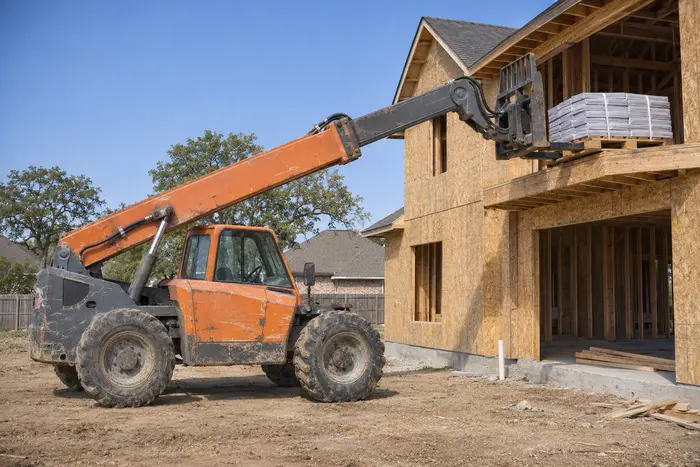
| Fork extensions | Longer forks for long or wide loads | Pipe, lumber, large pallets |
| Buckets | Scoop and carry bulk material | Grain, soil, gravel, snow |
| Grapples | Clamp brush, logs, loose loads | Land clearing, storm cleanup |
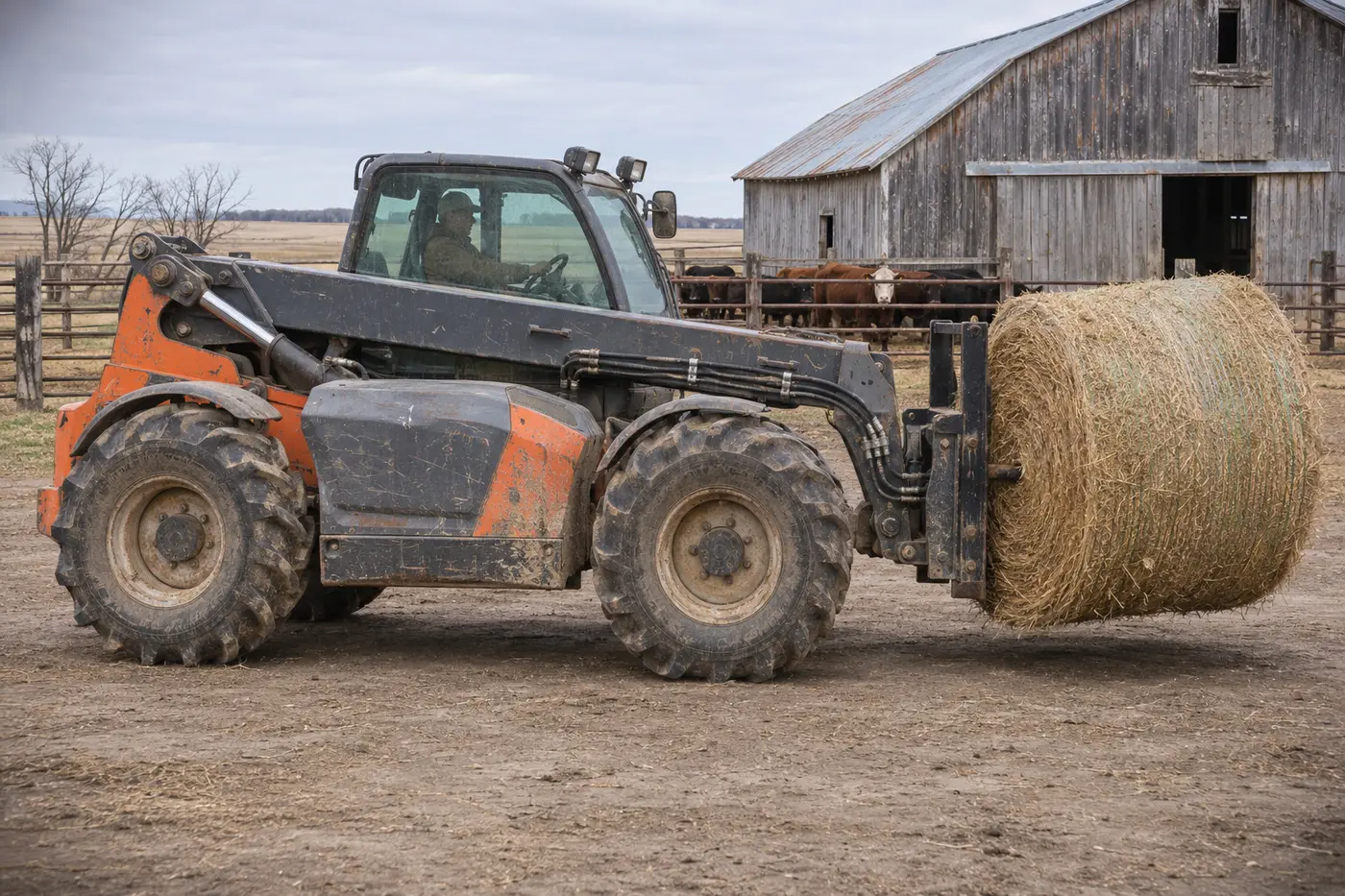
| Bale spears | Pick up and move bales | Hay and straw handling |
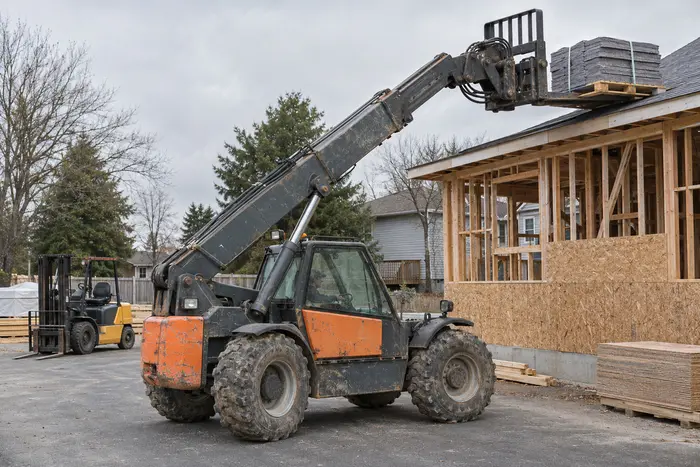
| Truss booms and jibs | Hang and place loads | Trusses, beams, framing |
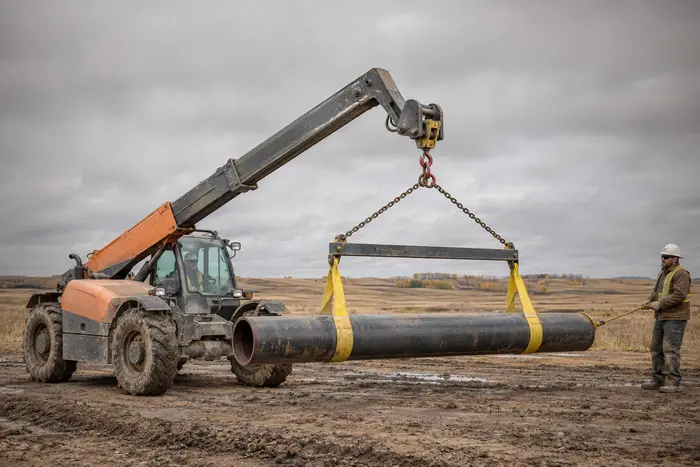
| Lifting hooks | Hang and lift suspended loads | Pipe, tanks, rigged lifts |
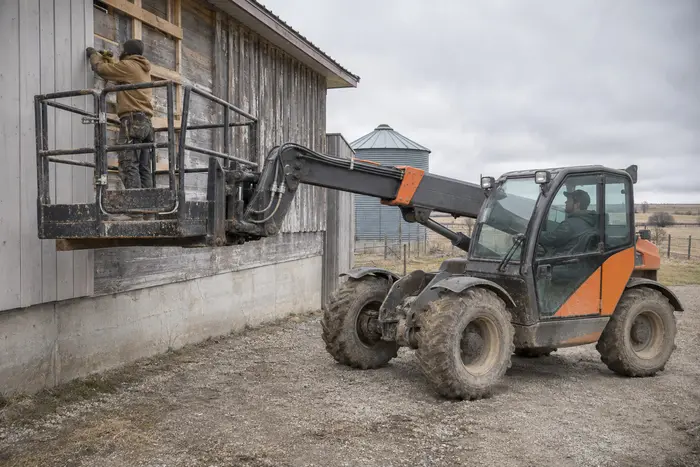
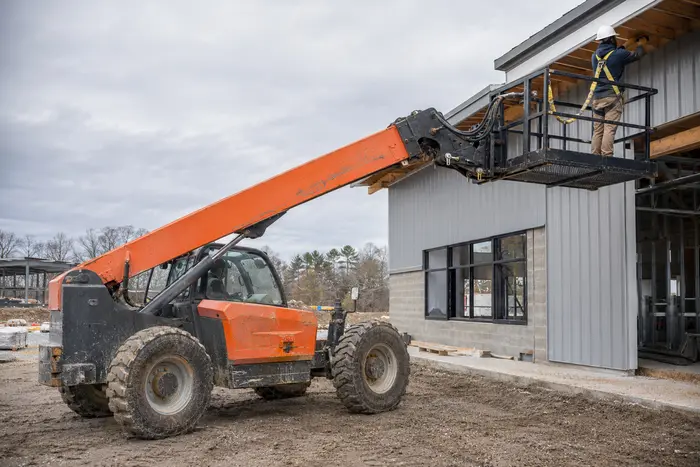
| Work platforms | Raise people at height | Maintenance, siding, painting |
| Loading boxes | Carry loose or bagged material | Yard jobs, roofing, firewood |
Attachments for farms
On a farm the telehandler is often a feed and bale machine. Bale spears and bale handlers move round and square bales. A bucket moves grain, silage and manure. Forks stack pallets of feed and supplies. A grapple clears brush and handles fence-line debris. If you move round bales, see how to move round bales for safe practice. For a wider farm tool list, see attachments for farm and acreage.
Attachments for construction sites
On a job site, forks and fork extensions unload trailers and stack material. A truss boom or jib places trusses, beams and panels. A loading box carries tools and light material up to the work. A concrete hopper can place concrete in hard-to-reach spots. A work platform lifts people, but only if the machine and platform are approved for it. See our concrete hoppers and trash hoppers for more site tools.
How to choose an attachment
- Write down the job. What will you lift, how heavy is it and how high and far must it go?
- Check the load chart. Confirm the chart for that attachment allows the reach and load.
- Check the carriage. Match the mount to the machine.
- Check hydraulics. Confirm circuits, couplers and pressure for powered tools.
- Check the rating. The attachment should carry a marked rated capacity.
- Read the manual. The machine's manual should allow that type of attachment.
- Plan storage. Attachments are heavy. Have a safe way to change and store them.
Safety rules for telehandler attachments
- Use only attachments approved by the machine maker for your model.
- Do not exceed the load chart, and include the attachment weight.
- Never lift a person without an approved platform and the maker's permission.
- Check pins and locks every time you change an attachment, and confirm the locking device is engaged.
- Keep loads low while traveling, and avoid slopes with raised loads.
- Use a rigger and a signal person for hung loads.
In US construction, OSHA's crane rules can apply when a telehandler is set up with a winch or hook to hoist and move a suspended load. One of those rules (29 CFR 1926.1417) requires rated capacities and operating procedures to be readily available in the cab and bars operating beyond rated capacity. In Canada, provincial rules apply, so check with your regulator. See our guide to telehandler work platforms before using one.
Telehandler vs skid steer attachments
Telehandler attachments are usually built for reach and lift. Skid steer attachments are usually built for working the ground. Some tools exist in both worlds, such as buckets and grapples, but they are sized differently. If you own both machines, see telehandler vs forklift and our skid steer categories for tools built for the ground work.
Choosing forks and fork extensions
Forks are the default tool, and they are where most mistakes happen. Check the fork length, the capacity rating and the carriage class. Fork extensions slip over the original forks to carry longer loads, but they move the load center forward, which cuts capacity. Check the machine maker's guidance on capacity with extensions fitted, and keep the load within it. Use them only for loads that need the length, and keep the load as close to the carriage as you can. Forks and extensions should be locked in place with the retaining pins the manual calls for.
Buckets, grapples and bale spears in practice
A bucket on a telehandler works best for loose, light material such as grain, wood chips and snow, because the bucket sits on the end of a long arm and heavy dense material uses up capacity fast. A grapple, by contrast, holds irregular loads like brush, logs and storm debris that a bucket would not hold. A bale spear is simple and effective, but a bale on a long boom swings, so lift low and move slowly. For stacked bales, check the height you need against the machine's rated reach.
Inspecting an attachment
- Look at the mounting plate, pins and locks for wear and cracks.
- Check welds, especially at the tips of forks, the back of buckets and the pivots of grapples.
- Look at hoses and couplers for leaks, chafing or crushed ends.
- Confirm the rating tag is present and readable.
- Test any powered function with no load before you lift something.
Whatever you choose, test it empty first, then with a light load, before you rely on it for real work.
Get the right fit the first time
Send us your telehandler's make, model and year and the job you need to do. A person checks the carriage and capacity against the maker's specs, you approve a delivered price before you pay. Get a fit-checked quote.
Questions buyers ask
What attachments can I use on a telehandler?
Common ones are pallet forks and fork extensions, buckets, grapples, bale spears, truss booms and jibs, lifting hooks, loading boxes and work platforms. Each must be approved for your machine and carry a rated capacity that fits the load chart.
How do attachments affect telehandler capacity?
The attachment's weight and load center count against the machine's rated capacity at that reach. A heavy or long attachment reduces what you can lift. Use the load chart that matches the attachment and subtract its weight from the allowable load.
Can I use skid steer attachments on a telehandler?
Sometimes, through an adapter, but only if the weight, reach and hydraulics suit the telehandler and the maker approves it. The adapter adds weight and moves the load forward, so check the load chart carefully before using one.
What telehandler attachments are best for farms?
Bale spears, buckets, pallet forks and grapples cover most farm needs: bales, feed, grain, manure and brush. Pick sizes that match your machine's capacity and the loads you move. Check hydraulic needs for grapples before you buy.
Do telehandler attachments need hydraulic connections?
Some do. Grapples, rotators and certain platforms need an auxiliary hydraulic circuit and matching couplers. Simple tools like forks, hooks and fork extensions do not. Check your machine's circuit and the attachment's flow and pressure requirements.