Telehandler guide
Telehandler Work Platform: Buying Questions Answered
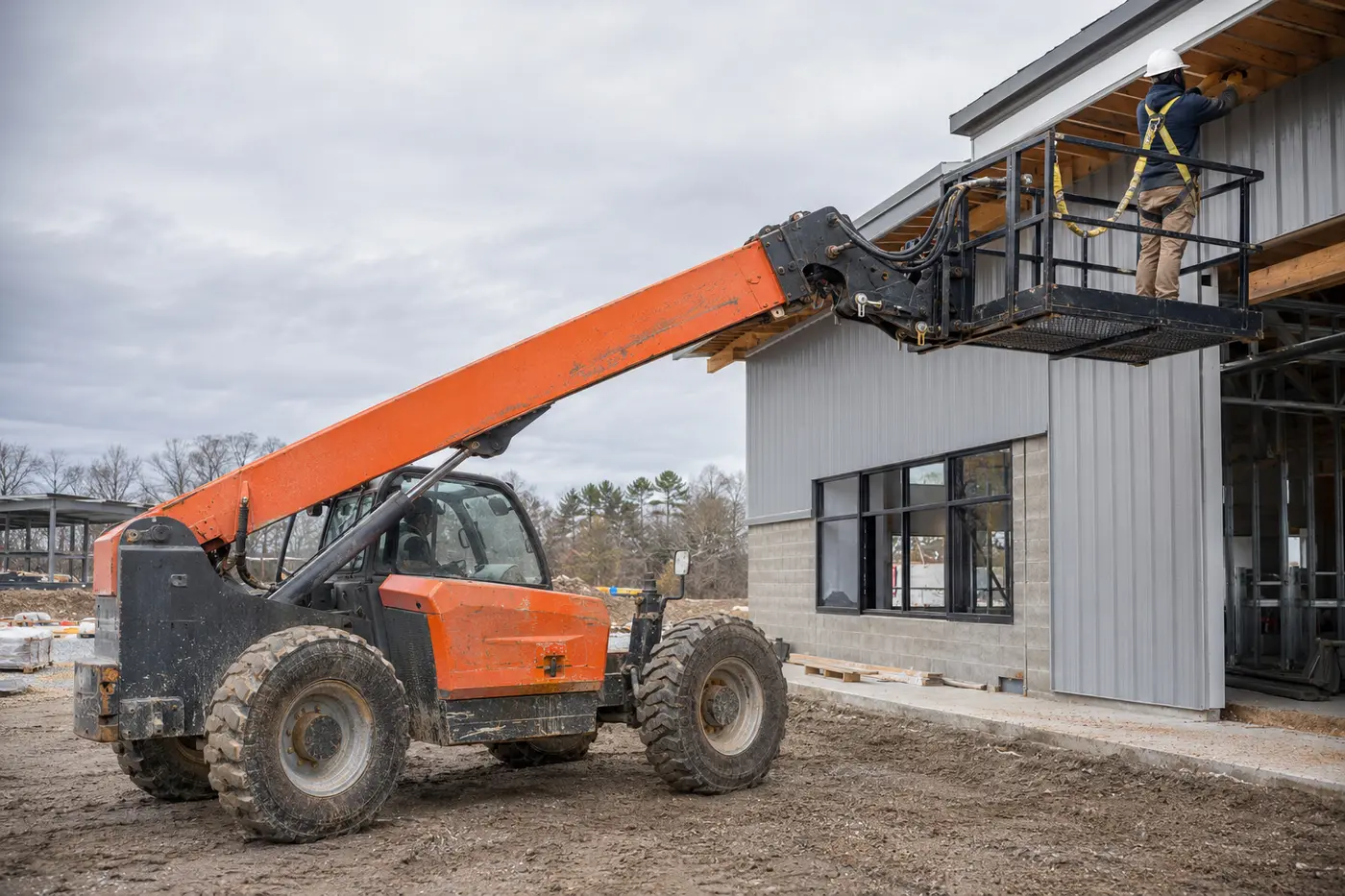
Quick answer
A telehandler work platform is a removable cage or deck that mounts to the carriage or forks so workers can be lifted to height. It must be approved by the telehandler maker, rated for the machine, and used only when no other practical option exists. Check the data plate and operator manual first.
Shopping for this now? Get a fit-checked, delivered quote.
Key takeaways
- A work platform is a removable attachment, and the machine has to be marked for it.
- OSHA's guidance says personnel lifts on rough terrain forklifts are a last resort.
- The platform must match the telehandler's design and manufacturer approval, not just the carriage.
- Never use a pallet or a bucket as an improvised platform.
- Provincial and state rules can be stricter than the federal baseline.
People search for a telehandler work platform, a "man basket," or a forklift work platform and mean the same thing: a cage or deck that lets a worker stand at height while the machine holds it. This page answers the questions buyers ask most. It is general guidance, not a legal opinion. Your operator manual, the platform's data plate and your local regulator have the final word.
What is a telehandler work platform?
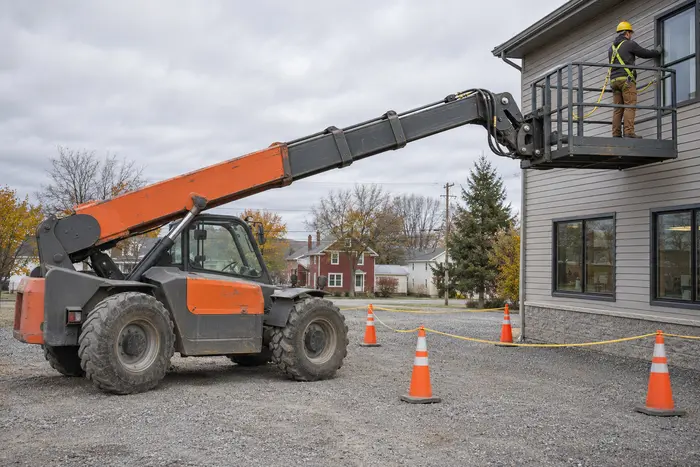
A telehandler work platform is a purpose-built basket or deck with guardrails, a gate, a toe board and a floor. It attaches to the telehandler's carriage, or to the forks through a fork-mounted frame, and lifts one or more people to a work position. Some include a control box so the person in the basket can signal or operate limited functions. Others rely on a ground operator or a person in the cab.
It is not a pallet with a crate on it. It is not a bucket. Improvised platforms are the main reason regulators write rules about this equipment at all.
Are telehandler man baskets allowed?
Under OSHA's published interpretation letters, a rough terrain forklift, which includes telehandlers, should not lift personnel unless there is no other practical option. When that test is met, the platform has to meet the design requirements in the ANSI/ITSDF B56.6 standard and the user has to follow that standard's precautions for elevating personnel. OSHA also treats a forklift work platform as a removable attachment.
In plain terms: if a scissor lift or boom lift can reach the work, use that. If the job truly needs a telehandler, use a platform made for it and follow the manual. States and provinces with their own plans can add rules, so check yours. For Canadian sites, confirm provincial requirements with your health and safety regulator, and read CCOHS guidance, before you buy.
What does "attachment" mean for a platform?
Because the platform is an attachment, the user has to see that the telehandler is marked to identify it. The B56.6 standard, as quoted in OSHA's letter, calls for markings that show the attachment, the approximate combined weight of truck and attachment, and the capacity with the attachment at maximum elevation and the load centered. If your machine's data plate doesn't list the platform, stop. Ask the telehandler maker how to get it approved. A cage that fits physically but isn't approved for the model is a compliance and liability problem.
Which questions should you ask before buying?
- Is the platform approved for my telehandler make, model and year, and does the maker say so in writing?
- What carriage does it mount to: a universal skid steer style plate, a telehandler-specific carriage, or a fork frame?
- What is the platform's rated capacity, and how many people does that allow with tools?
- Does the machine's capacity chart cover the platform at full height and full reach?
- Does it have a self-leveling or tilt-compensating feature, and does my machine need one?
- What fall protection anchor points are on the platform, and what harness lanyard is specified?
- Does it come with a data plate, a manual and an inspection checklist?
If you already know the machine, browse telehandler work platforms and then send the details for a fit check.
How do the common platform styles compare?
| Style | Mounts to | Typical use | Watch for |
|---|---|---|---|
| Fork-mounted cage | Forks, with a secured frame | Short jobs, maintenance, siding, lighting | Fork spacing and securing method must match the platform |
| Carriage-mounted platform | Telehandler carriage | Repeated work at height, steel and framing | Carriage type must match the machine |
| Platform with controls | Carriage or forks | Tasks where the worker needs to position the boom | Added hydraulic or electric connections and extra approvals |
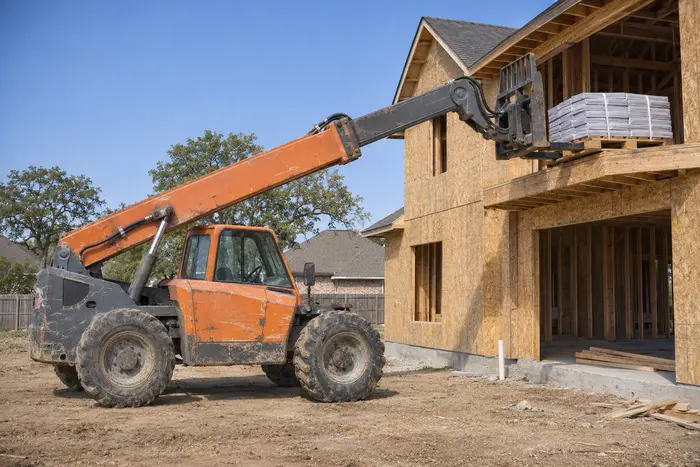
| Mesh or material cage | Forks | Moving materials, not people | Not a personnel platform unless built and marked for it |
What rules apply once it's on the machine?
The platform has to be attached to the forks or carriage the way the maker specifies. Don't drive the machine while people are in the basket unless the manual allows it, and many manuals and standards bar or tightly limit travel while the platform is occupied. Keep the boom within the load chart. Wear fall protection tied to the anchor points on the platform, not to the boom. Inspect the platform, welds, gate latch and pins before each shift.
The operator needs training on both the telehandler and the platform. Never carry more people or tools than the data plate allows. Never stand on the guardrails or climb out onto a structure from a raised basket unless your site plan explicitly covers it. If wind or ground conditions change, bring the platform down.
Should you rent or buy a work platform?
Rental fits one-off jobs. Buying fits crews that use the platform often and want the data plate and inspection records in one place. Rental platforms can still be a poor fit if the machine and platform were never matched, so confirm the same fit questions with the rental company. If you buy, compare options for your machine class, including other telehandler attachments you might add later.
For a plain-language overview of how a telehandler differs from a standard forklift, read what is a telehandler. For the rules around forklift baskets in general, see forklift man basket rules.
What mistakes do buyers make most often?
- Buying on carriage fit alone and skipping the manufacturer approval step.
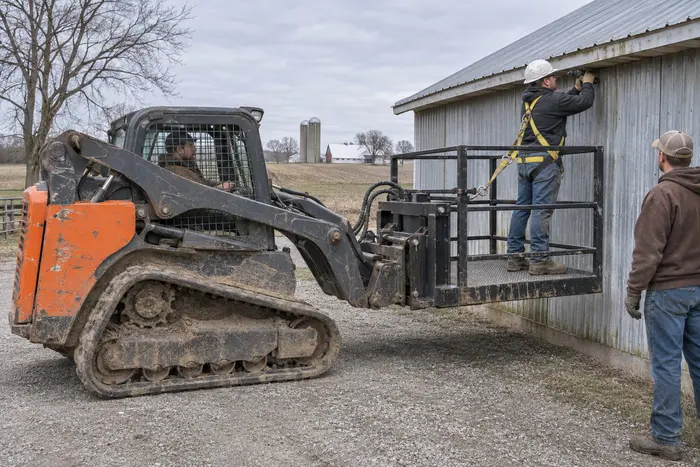
- Assuming a skid steer work platform is fine on a telehandler. Different machines, different load charts and different rules.
- Ignoring the weight of the platform itself when reading the capacity chart.
- Skipping the pre-use inspection because the platform "looks fine."
- Using the platform for materials in a way the data plate does not allow.
How should you plan the lift?
A good platform lift starts on the ground. Walk the route and the work area before anyone climbs in. Look for overhead lines, soft ground, slopes, wind exposure and anything that limits boom travel. Set the machine level on firm ground, with outriggers or stabilizers deployed if the machine has them. Check the load chart for the working radius and height you actually need, with the platform, the people and the tools counted in the load.
Agree on signals before the lift. A ground person or a person in the cab should be able to stop the boom at once. Radios help on noisy sites. Make sure the platform operator knows what to do if hydraulic power fails, including how the machine lowers the boom manually. Keep the plan short and written, so the next crew can follow it.
What about inspection and records?
Treat the platform like any other piece of lifting gear. Inspect it before each shift, and keep a record of periodic inspections. Look at welds, the floor, guardrails, toe boards, the gate latch, mounting pins and any locking devices that keep the platform on the carriage. Replace bent or cracked parts. Do not field-weld repairs on a rated platform unless the maker approves the repair.
Keep the manual and data plate with the platform. If the plate is missing or unreadable, the platform is out of service until it is replaced. This is also where the question of used platforms comes up. A used platform without its plate and paperwork is hard to approve, even if it looks fine.
Get the right fit the first time
Platforms, forks and hooks all depend on your machine and its rated capacity. Send us the make, model and year and a person will check fit against the maker's specs. You approve a delivered price before you pay. Get a fit-checked quote or call 1-888-245-1555.
Questions buyers ask
Is a telehandler man basket legal?
It can be, when no other practical option exists and the platform meets the manufacturer's design requirements for that machine. OSHA's interpretation letters point to the ANSI/ITSDF B56.6 standard. Provincial and state rules can add conditions, so confirm with your regulator and follow the operator manual.
What is the difference between a telehandler work platform and a forklift work platform?
Both lift people on a removable cage. A telehandler platform is built for a boom that reaches out and up, so the load chart, carriage and controls differ from a mast forklift. Always match the platform to the exact machine type and the maker's approval.
Can I use a pallet and a cage as a telehandler work platform?
No. A pallet with a cage is an improvised platform. Safety guidance, including CCOHS, warns against using elevated pallets as a makeshift work platform. Use a platform designed, tested and marked for the telehandler, with guardrails, a gate and fall protection anchors.
Do I need fall protection in a telehandler work platform?
Follow the platform maker's instructions and your site's fall protection plan. Platforms usually have anchor points rated for a worker's lanyard. Tie off to those points, not to the boom or the machine, unless the manual says otherwise.
How do I know if a work platform fits my telehandler?
Check that the carriage type matches, the platform is approved for your model by the maker, and the capacity chart covers the combined weight at full reach. A person should confirm fit against the machine's specs before you pay.