Telehandler guide
Telehandler vs Forklift: Key Differences and When to Use Each
Quick answer
A telehandler has a telescopic boom that reaches forward and up, so it places loads where a forklift's mast cannot. A forklift lifts straight up a mast and is best on smooth floors and in warehouses. Choose a telehandler for reach and rough ground, and a forklift for pallets on flat surfaces.
Shopping for this now? Get a fit-checked, delivered quote.
Key takeaways
- A telehandler's boom adds forward reach; a forklift lifts straight up
- Telehandler capacity drops as the boom extends; read the load chart
- Forklifts work best on smooth, level floors; telehandlers handle rough ground
- Telehandlers take more attachments, including work platforms and buckets
- Training and licensing differ by machine type, so check your local requirements
Telehandlers and forklifts both lift loads on forks, so people often treat them as the same thing. They are built for different work. A forklift is a precise pallet mover for floors and docks. A telehandler is closer to a small crane on wheels that places loads out and up. This guide shows where they differ and how to pick.
What is the main difference between a telehandler and a forklift?
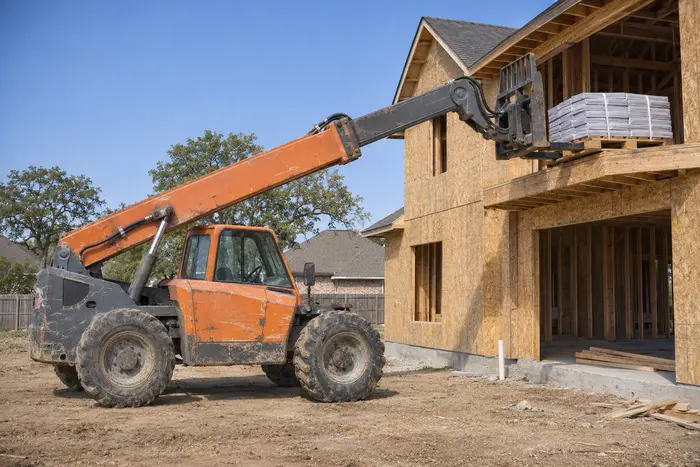
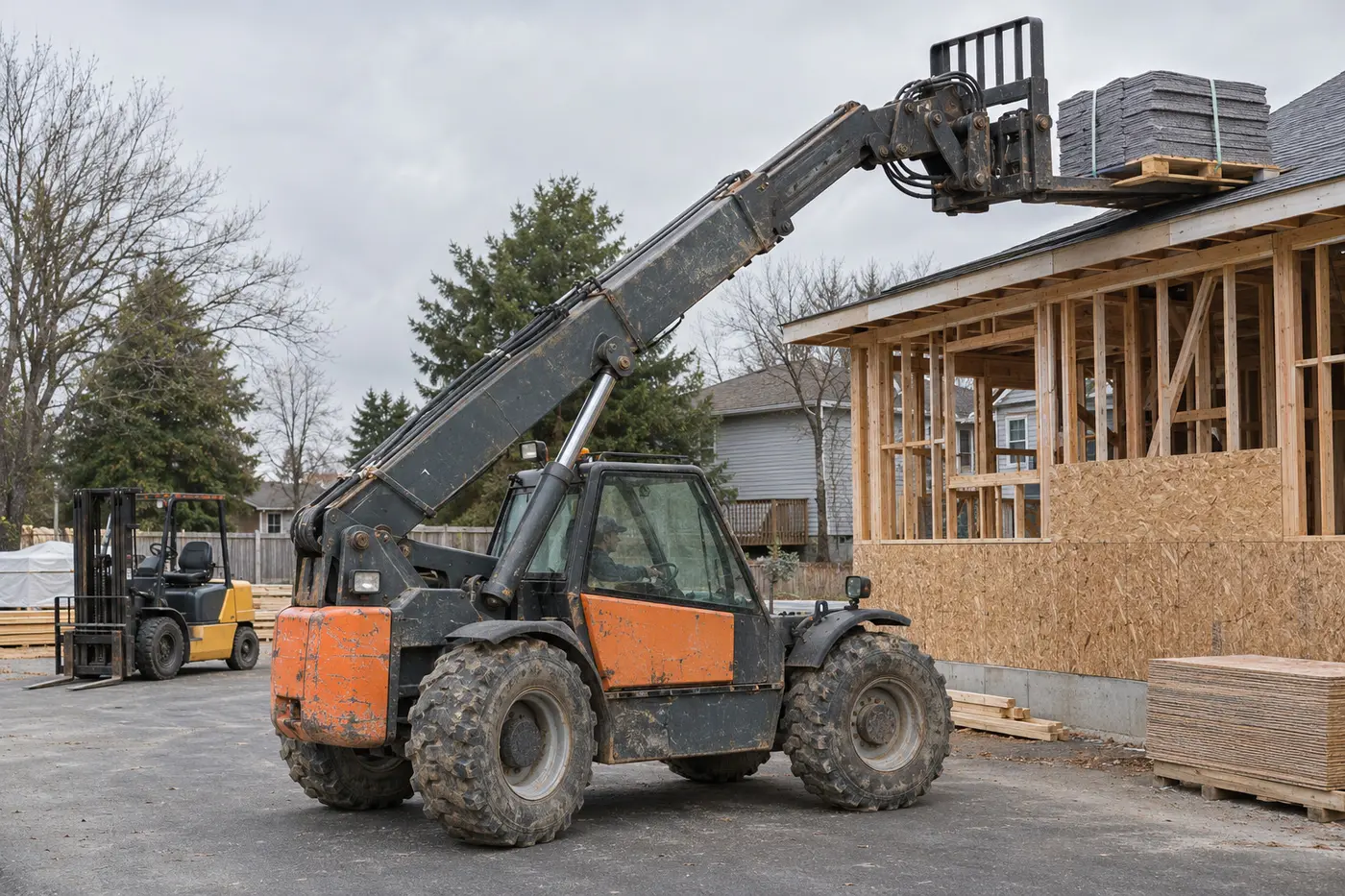
A forklift has a vertical mast. The forks and carriage ride up and down it, so the load stays close to the machine's front axle. A telehandler (also called a telescopic handler or reach forklift) has a boom that extends forward and upward from the machine. That boom lets it reach over obstacles, across gaps and up to roofs or upper floors.
One description puts it this way: because of the telescopic boom, a telehandler is more like a crane than a forklift. That is a useful way to think about it, since a boom acts as a lever and changes how the machine handles loads.
How does capacity differ?
A forklift has a rated capacity at a specified load center, shown on its data plate. A telehandler's capacity depends on boom angle, reach and height, and it is shown on a load chart. As the boom extends, the load moves farther from the machine and the capacity falls. One example in a reference describes a telehandler rated for 5,000 lb with the boom retracted that may safely lift as little as 400 lb with the boom fully extended at a low angle.
The lesson is that a telehandler's headline rating means little until you read its chart at the reach you need. Many modern machines have sensors that warn the operator or cut off control input when limits are exceeded.
Comparison table
| Feature | Forklift | Telehandler |
|---|---|---|
| Lift path | Straight up a mast | Out and up on a boom |
| Reach | Limited to the front of the machine | Forward reach, over obstacles |
| Capacity rating | Data plate at a load center | Load chart by angle, reach and height |
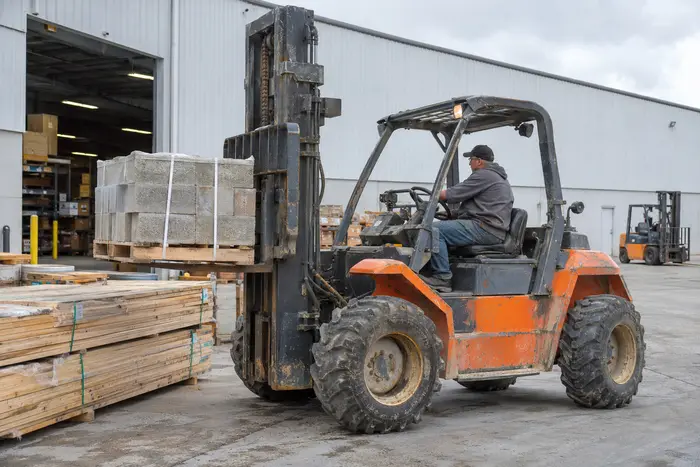
| Ground | Best on smooth, level floors | Rough-terrain versions work on uneven ground |
| Typical work | Warehouses, docks, yards | Construction, agriculture, roofing, material placement |
| Attachments | Forks, side shifters, some specialty heads | Forks, buckets, truss booms, jibs, work platforms, winches |
| Stability aids | Counterweight, low center | Counterweight, sometimes stabilizers and sensors |
Where does each machine work best?
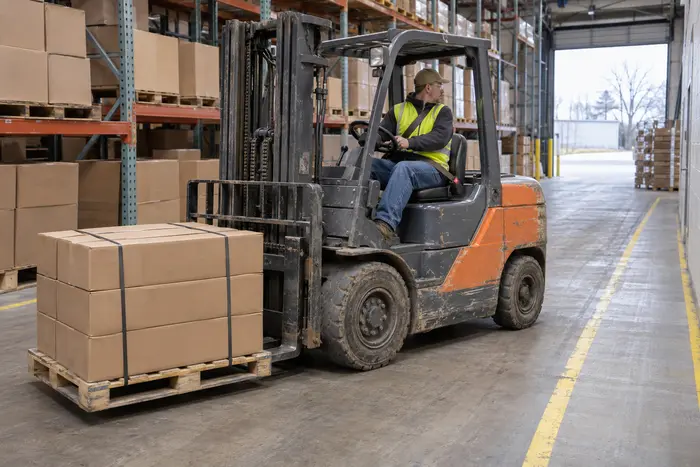
Forklifts. Warehouses, factory floors, loading docks and yards with firm surfaces. They are quick and precise with pallets, and many models are compact and agile in aisles. Electric models suit indoor work. Our types of forklifts guide goes through the main styles.
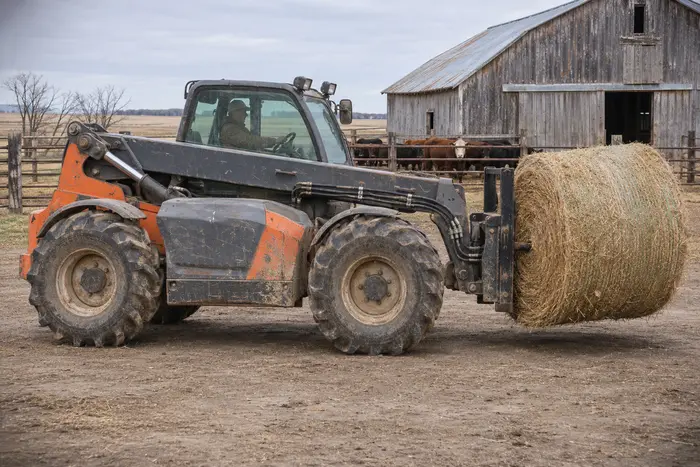
Telehandlers. Construction sites, farms and anywhere loads have to go up and over. Typical jobs include placing materials on a roof or scaffolding, loading trailers from the side, moving bales, and stacking pallets on rough ground. Agricultural versions can use buckets and grabs; some can also take three-point linkage and a power take-off. You can read more in our guide on what a telehandler is.
What attachments do telehandlers use?
Pallet forks are the most common, but the real advantage is the range. Buckets, grain buckets, power booms, winches and work platforms are all options, and so are truss booms, jibs and lifting hooks. Browse truss booms and jibs, work platforms and buckets to see what the machine can do beyond forks.
Attachment fit depends on the carriage. Some telehandlers have a maker-specific carriage, and others use a universal skid steer pattern through an adapter. That is why a person confirms fit before a quote.
Stability and risk
A forklift can tip forward if overloaded or if the load is raised while traveling. A telehandler has those risks and more, because the boom changes the load's distance from the machine. Rear counterweights partly offset this. Front stabilizers can extend the stationary lifting range. Sensors and load-moment indicators warn the operator before limits are reached, but they do not replace the operator reading the chart.
- Check the load chart before every lift.
- Keep the boom low when traveling with a load.
- Do not use forks or boom to lift people unless a purpose-built platform and your rules allow it.
- Work only on ground that can bear the machine's weight, and level it.
Do you need different training or a different license?
In many places, yes. Training and licensing schemes often treat the two machines separately, and some schemes treat a telehandler fitted with a work platform as an elevating work platform for licensing. The names and requirements vary by country, state or province, and by site. Ask your employer, training provider or regulator which certificates apply. Do not assume that a forklift ticket covers a telehandler.
How to choose: a short decision list
- Is the ground smooth and level? If it is, and the work is pallets, a forklift is simpler.
- Do loads need to go out, over or up? If so, a telehandler's boom is the tool.
- What is the heaviest load at the farthest reach? Check the load chart for the telehandler. A forklift's data plate does not show this.
- Do you need attachments beyond forks? A telehandler has more options.
- Who will run it? Make sure operators have training that matches the machine.
- Where will you store and transport it? Telehandlers are larger and may need a bigger trailer.
Common mistakes when choosing
The first is buying on headline capacity. A telehandler's top number applies at a short reach and a steep boom angle, so test your own job against the chart. The second is buying a telehandler when most of the work is pallets on a flat slab. A forklift is usually cheaper to run and faster there. The third is ignoring access: a telehandler is long and wide, and it may not fit through the doorways or gates a forklift can. The fourth is skipping training, which is both a safety and a compliance risk. Finally, many buyers forget attachment compatibility. Forks, booms and platforms must match the carriage and the rated capacity, so confirm each one against the machine before you order.
Renting or buying?
If you only need reach a few times a year, rental often makes sense. If you lift every week, ownership is worth pricing out. Whichever way you go, the attachment is a smaller part of the budget than the machine, so choose attachments that will carry over if you change machines later.
What about a skid steer with forks?
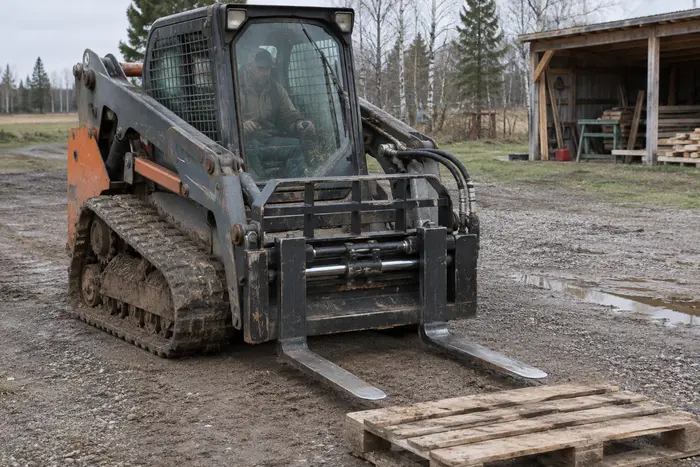
A skid steer with pallet forks can move pallets on rough ground, but it lifts less at height and has no boom reach. It suits smaller sites where one machine does many jobs. If you often lift to roofs or upper floors, a telehandler is the better tool.
Get the right fit the first time
Send us your machine make, model and year and what you plan to do with it. A person checks fit against the maker's specs, and you approve a delivered price before you pay. Get a fit-checked quote.
Questions buyers ask
What is the difference between a telehandler and a forklift?
A forklift lifts loads straight up a mast and works best on smooth floors. A telehandler has a telescopic boom that extends forward and up, so it can reach over obstacles and place loads at distance. Capacity falls as the boom extends.
Is a telehandler better than a forklift?
Neither is better in general. A forklift is simpler and quicker for pallets on firm, level ground. A telehandler is better when loads need reach, height or rough ground, and when you want attachments beyond forks.
Do you need a different license for a telehandler than a forklift?
Often yes. Training and licensing schemes frequently treat telehandlers and forklifts separately, and some regions apply elevating work platform rules when a telehandler carries a work platform. Requirements vary by region and site, so ask your regulator or training provider.
Can a telehandler do everything a forklift can?
It can move pallets on forks, but it is bigger and not made for tight warehouse aisles. A forklift is usually quicker and more precise inside buildings. A telehandler wins outdoors and on rough ground.
What are the main risks of using a telehandler?
The boom acts as a lever, so capacity drops as it extends and the machine can tip if overloaded. Read the load chart, keep the boom low when traveling, use level ground and follow the operator manual.