Skid steer guide
Skid Steer Grader Attachment: How to Choose One
Quick answer
A skid steer grader attachment is a blade or box that levels, shapes and spreads gravel or soil. Grader blades angle and tilt, box graders carry and spread, and land planes fine-finish large flat areas. Check width, hydraulic needs and weight against your loader's rated capacity.
Shopping for this now? Get a fit-checked, delivered quote.
Key takeaways
- Match the tool to the job: blade, box, plane or rake.
- Hydraulic angle and tilt save time on every pass.
- A replaceable cutting edge is a wear item, not an option.
- Shallow, overlapping passes give a flatter finish.
- Check width and weight against rated capacity.
A skid steer grader attachment gives your loader a blade that angles, tilts and cuts, so you can shape gravel drives, level pads and finish a grade without owning a full-size road grader. Which one you want depends on whether you need a blade that angles, a box that carries material, or a flat plane for fine finishing.
What is a skid steer grader attachment?
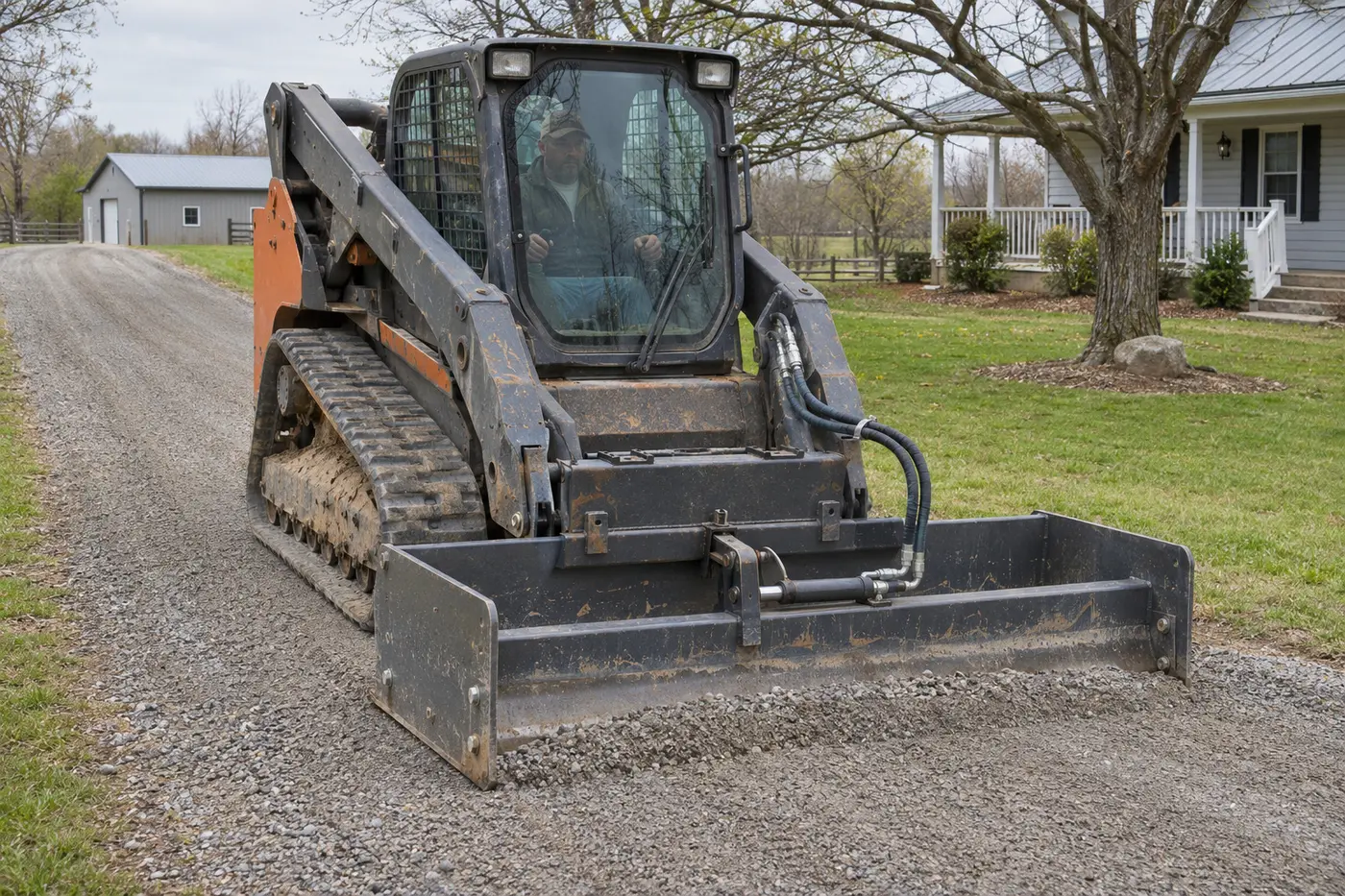
A road or motor grader is a machine with a long blade used to create a flat surface during grading. The blade angle and tilt are adjusted to finish the grade after heavy equipment does the rough work. A skid steer grader attachment brings the same idea down to loader size. It is a blade or box that mounts to your quick attach plate and works by driving the machine forward or backward while you control the blade.
The term covers several different tools. Be clear which one you mean before you shop, because they behave differently.
Types of grader tools for skid steers
| Tool | What it does | Best for |
|---|---|---|
| Grader blade | Angles and tilts to cast or cut material to one side | Gravel roads, ditches, crowning, snow and cleanup |
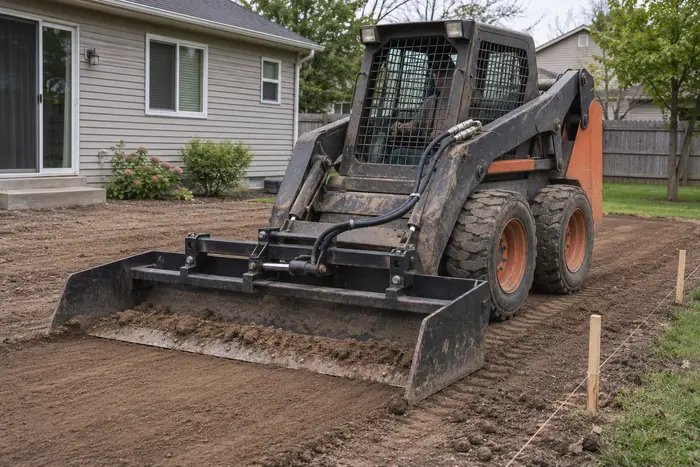
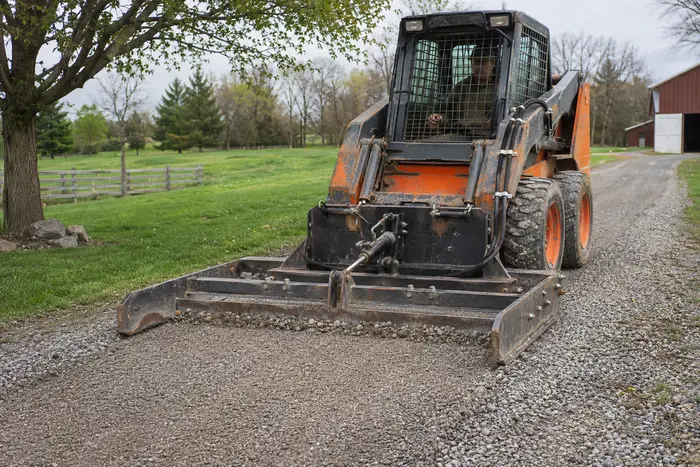
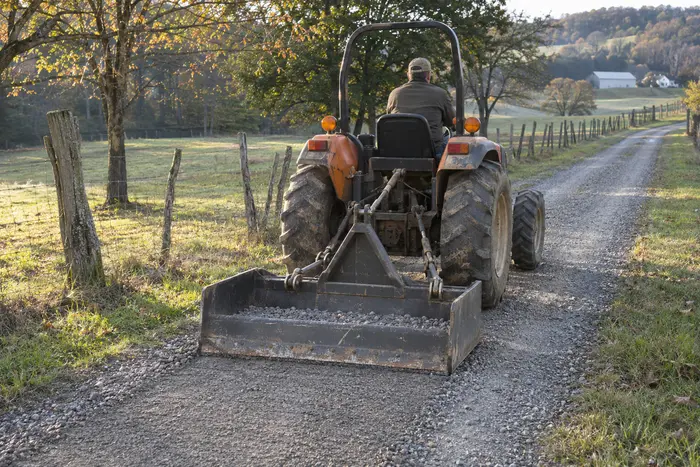
| Box grader | Boxed frame with a cutting edge that scrapes, carries and spreads | Driveways, building pads, spreading fill |
| Land plane | Long, flat frame that planes high spots into low ones | Large flat areas, fine finish before seeding |
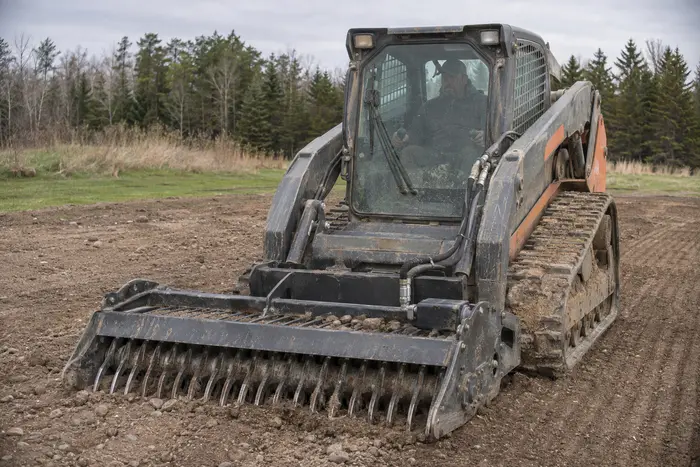
| Landscape rake | Tines or a rake bar loosen, level and clear stone | Seedbed prep, topsoil leveling, rock removal |
If you only grade now and then, a box grader is often the most forgiving. If you maintain long gravel drives, a grader blade with hydraulic angle gives more control. For big, flat lawns or ball fields, a land plane takes the high spots off over many passes. Our guide to skid steer land planes covers that option.
Which grader attachment is right for your job?
Gravel driveways and farm roads
A box grader or a grader blade works best. The goal is a crowned surface, higher in the center with a gentle fall to the sides, so water runs off. Our how-to on using a box blade on a gravel driveway and our guide on building a gravel driveway go deeper on that work.
Building pads and fill
A box grader carries and spreads fill. Rippers or scarifier teeth on some models loosen compacted material first. Keep passes shallow and compact in lifts, following your project specs.
Finish grading before seed or sod
A land plane or a landscape rake leaves a fine, even surface. A laser or GPS control system is helpful on bigger jobs, where hand-eyeing the grade drifts. Our guide on leveling ground with a skid steer shows the usual workflow.
Features to check before you buy
- Working width. Wider blades cover more but need weight and traction. A blade much wider than the loader makes turning harder.
- Angle and tilt control. Manual pin angle is simplest. Hydraulic angle and tilt save time on every pass but need auxiliary hydraulics.
- Cutting edge. Look for a bolt-on, replaceable edge. Edges wear and you will replace them.
- Frame strength. A grader attachment takes sideways loads. Heavy steel and good welds matter.
- Weight. Heavy blades dig in better but add to your load. Compare with the loader's rated operating capacity in the manual.
- Mounting plate. Make sure it fits your loader's plate style. Some tools need a floating or free-pivot hitch to follow the ground.
- Control options. Laser or GPS compatibility can matter on larger projects.
Do skid steer graders need high flow?
Passive models, such as a fixed box grader, need no hydraulics at all. Blades with hydraulic angle, tilt or side shift use the standard auxiliary circuit. They do not usually need high flow. Check the attachment's specification for flow and pressure, and compare it with your machine's auxiliary rating. Our guide to skid steer hydraulic flow explains how these numbers work.
How to grade with a skid steer: tips from the seat
- Know your target. Mark where high and low spots should end up. Use stakes or a laser reference for larger areas.
- Start with a rough pass. Move material from high to low areas with the blade slightly angled.
- Work in straight lines. Overlap passes. Zig-zagging leaves ridges.
- Keep ground speed steady. Slow, consistent travel gives a flatter finish than quick bursts.
- Back-drag to finish. Dragging in reverse with the blade flat smooths ridges. Watch your visibility behind the machine.
- Check as you go. Step out and look. Re-check against stakes, string or a laser.
- Compact when the manual or project calls for it. A graded surface that is not compacted can settle.
Tracks or wheels for grading?
Both work, but they behave differently. Tracks give a steadier platform and better grip on loose gravel, and they spread weight so you disturb the surface less. Wheels pivot tighter and cost less to run on hard ground, but they can scuff and rut a finished grade when you turn. If most of your work is finish grading, tracks have an edge. If you also load trucks and move material around a yard, wheels may do fine. Our guide on skid steer wheels vs tracks goes into the trade-offs.
Maintaining a grader attachment
Check the cutting edge and end bits before every job. A worn edge pushes material instead of cutting it and can wear into the blade body, which is far more expensive to fix. Flip a reversible edge, or replace it, when it wears down. Grease pivots and hydraulic cylinder ends on schedule. Look over welds and mounting points after heavy use, especially if you grade in rocky ground. Keep hydraulic couplers clean and capped when the attachment is off the machine.
At the end of the season, clean out packed dirt and gravel from the frame, touch up bare steel and store the attachment on blocks. A little care keeps the blade true and the angle mechanism free.
Safety basics
Follow your loader and attachment manuals. Keep the seat belt buckled and the restraint bar down. Know where people are before you reverse. Watch for overhead lines, soft ground, drop-offs and buried utilities. Never use a blade on a slope in a way that tips the machine. Lower the attachment, shut down and engage the parking brake before you leave the seat.
Common mistakes
- Taking cuts that are too deep and bogging down the machine.
- Skipping a replaceable edge check, which leads to bent or worn blade bodies.
- Ignoring ground conditions. Wet clay and loose sand need lighter passes.
- Choosing a width the loader cannot control.
- Assuming every blade is a true grader. Some are scrapers or pushers with limited adjustment.
Get the right fit the first time
Send us the make, model and year of your machine and what you plan to do with it. A person checks fit against the maker's specs and sends a delivered price for you to approve before you pay. Ready when you are: get a fit-checked grader quote.
Questions buyers ask
What is a skid steer grader attachment?
It is a blade or box that mounts on a skid steer quick attach plate and is used to level, shape and spread gravel or soil. Types include grader blades with angle and tilt, box graders, land planes and landscape rakes. They suit driveways, pads and finish grading before seeding.
Can you grade a gravel driveway with a skid steer?
Yes. A box grader or a grader blade works best. Make shallow, overlapping passes, keep a crown so water runs off, and refresh the gravel as needed. Check ground conditions and rated operating capacity first, and avoid grading when the surface is soaked.
What is the difference between a box grader and a grader blade?
A box grader is a boxed frame with a cutting edge that scrapes, carries and spreads material. A grader blade angles and tilts, often by hydraulics, and casts material sideways. Box graders suit pads and driveways. Grader blades suit long roads, ditches and finish work.
Can a skid steer grader attachment use laser or GPS control?
Some models and kits support it, mainly on larger projects where precise grades matter. Check that the attachment has hydraulic control for height or tilt and that the control kit is compatible with your loader. For small jobs, stakes and string work well.
Do skid steer grader attachments need hydraulics?
It depends on the model. A basic box grader has no hydraulics. Blades with hydraulic angle, tilt or side shift use your auxiliary circuit. Most run on standard flow, but confirm the flow and pressure range with the maker and your loader's manual before you buy.