Landscaping guide
Skid Steer Land Plane: Leveling Driveways and Arenas
Quick answer
A skid steer land plane is a long, wide leveling attachment that shaves high spots and fills low spots as you drive, leaving a flat, smooth surface on gravel driveways, arenas, pads and fields. Its long frame bridges dips, and optional scarifier shanks loosen hard ground first. Size it to your machine's weight and hydraulics.
Shopping for this now? Get a fit-checked, delivered quote.
Key takeaways
- A land plane levels by bridging low spots with a long frame while its blade shaves the highs.
- Scarifier shanks or rippers loosen compacted surfaces before the blade finishes them.
- It works best on gravel, sand, crushed stone and loose soil, not on rock or heavy clay without prep.
- Size the width and weight to your carrier's rated operating capacity and the surface you plan to level.
- Many land planes use manual or hydraulic angle and depth adjustment; check what your hydraulics support.
Gravel driveways wash out. Horse arenas get washboard. A pad that was flat last spring now holds water. A land plane fixes the problem by leveling the surface in a few passes. This guide explains what a skid steer land plane is, how it works, how to size one and how to run it so the finish stays flat.
What is a skid steer land plane?
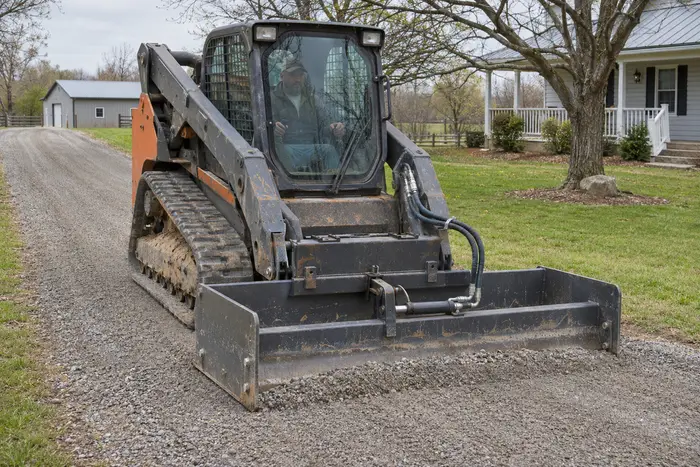
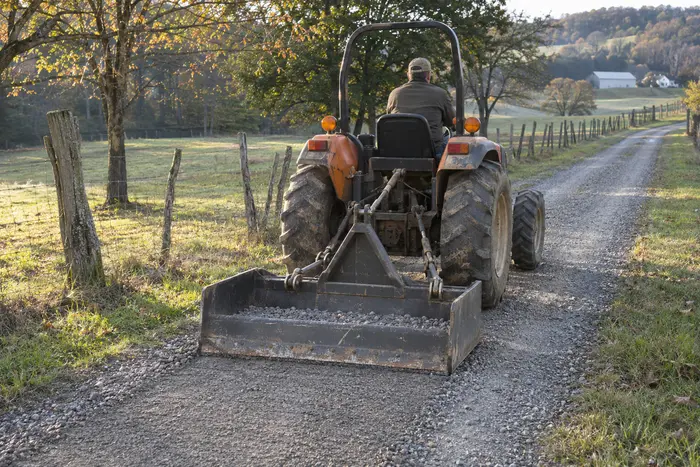
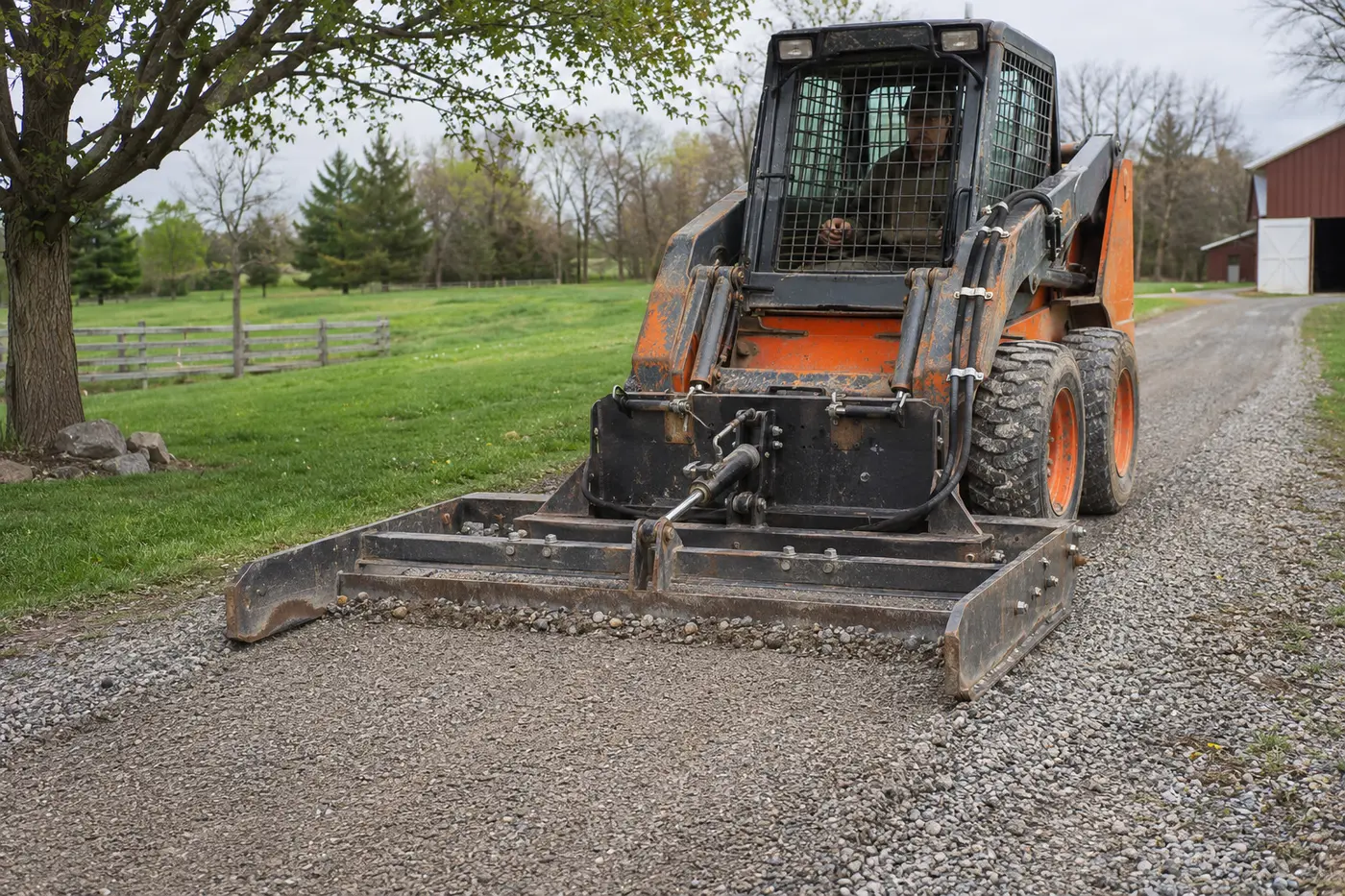
A land plane, sometimes called a land planer, is a long leveling attachment that mounts on the front of the carrier. It has a flat frame with a blade or cutting edge underneath. As you drive forward, the long frame rides over the surface and bridges the low spots. The blade shaves the high spots and drops the material into the dips. The result is a smooth, level surface.
That differs from a bucket or a box blade. A bucket moves material in lumps. A land plane works as a finishing tool: the long reference length lets it find flat. Graders do similar work on a large scale. They handle the "finish grade," and their blades adjust in angle, tilt and height with a high degree of precision. A land plane brings that finish-grade idea to a compact loader.
What can you use it for?
- Gravel driveways and farm lanes. Remove potholes and washboard and restore crown.
- Riding arenas and paddocks. Level footing without gouging the base.
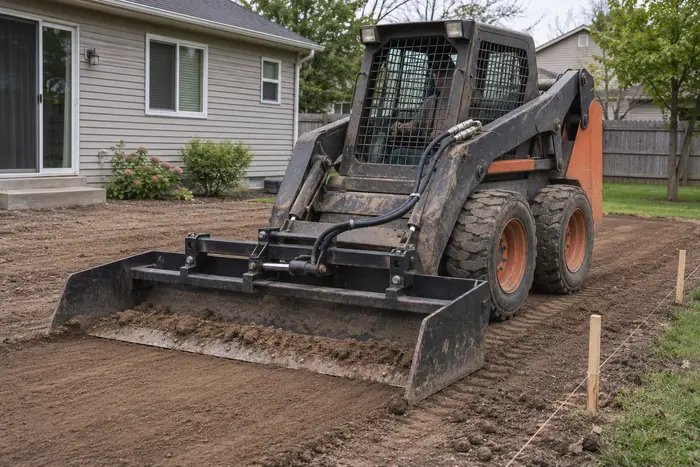
- Building pads and parking areas. Prepare a flat base course before stone or paving.
- Fields and food plots. Level ground ahead of seeding.
- Sports and play areas. Smooth loose surfaces.
It is not a digging tool. If you need to move large volumes of soil, start with a bucket or dozer blade, then finish with the land plane. See how to level ground with a skid steer for the full sequence.
What is the difference between a land plane, a box blade and a power rake?
| Tool | How it works | Best for |
|---|---|---|
| Land plane | Long frame with a blade; bridges dips for a flat finish | Final leveling of gravel, sand and loose soil |
| Box blade or box grader | Box with a blade and optional shanks; cuts, carries and spreads material | Moving and shaping material, rough grading |
| Power rake | Rotating tines that loosen and level soil, and remove rocks | Seedbed prep and surface cleanup |
| Dozer blade | Straight or angled blade that pushes material | Pushing and backfilling |
Browse skid steer land planes, box graders, power rakes and landscape rakes to compare. Mini machines have their own range of mini skid steer land planes.
What are scarifier shanks and rippers?
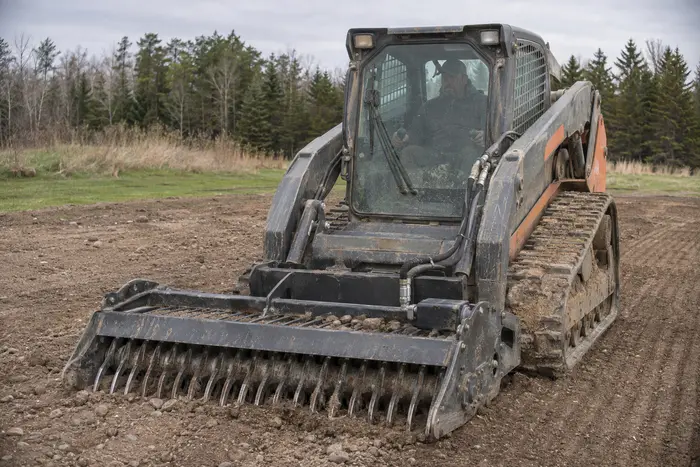
Many land planes come with scarifier shanks, also called rippers. These are teeth that sit ahead of the blade and break up compacted ground, hardpan or old gravel. Loosening the surface first lets the blade move material and finish it. Without shanks, a land plane on hard ground just skates over the top. With them, you can reshape an old driveway without a heavier machine.
Shanks add weight and resistance. Check that your carrier can handle the extra load, and lift them out of the ground for the final passes if you want a smooth finish.
How do you size a land plane for your skid steer?
- Width. Wider tools finish faster but need more weight and a wider path. For driveways, match the width to the lane. For fields, go as wide as the carrier can handle.
- Weight. Check the attachment weight against the machine's rated operating capacity. Plan for the tool plus the load it drags.
- Hydraulic needs. Some land planes use hydraulic angle or tilt. Confirm your auxiliary circuit supplies the flow and has the connections the tool needs.
- Mount. Check the quick attach plate type. A universal skid steer plate is common.
- Frame length. A longer frame bridges bigger dips. A shorter one turns tighter.
- Cutting edge. Look for a replaceable edge, so you can swap it when it wears.
Our grader attachment guide and box blade on a gravel driveway guide compare approaches.
How do you level a gravel driveway with a land plane?
- Walk the surface. Mark soft spots, drainage paths and anything that could catch the blade.
- Check moisture. Slightly damp gravel moves and compacts better than dry or soaked material.
- Loosen with shanks if needed. Make one pass at moderate depth.
- Make long passes at steady speed. Drive slowly in a straight line. Speed makes washboard.
- Overlap each pass. Work from the edges toward the crown, or the reverse, but keep a plan.
- Add material where needed. The tool moves what is there. It cannot make up for missing gravel.
- Finish with a lighter pass. Raise the shanks and run the blade across for a smooth finish.
- Compact. A roller or traffic helps lock the surface.
Our gravel driveway guide covers base, crown and drainage. Good drainage keeps the surface level far longer than any amount of grading.
What mistakes cause a poor finish?
- Driving too fast, which creates washboard.
- Working in dry, loose gravel with no moisture.
- Planing without fixing the base or the drainage.
- Skipping the shanks on hard, compacted ground.
- Ignoring the crown, which sends water down the middle of the lane.
Always follow the operator manual and your machine's rated capacity. Keep bystanders away from the tool while it is working, and watch for buried lines and stones.
How do you take care of a land plane?
A land plane has few moving parts, so care is simple, but it matters. The cutting edge is the wear item. Check it often and flip it (if reversible) or replace it when it rounds over, because a worn edge skips instead of cutting. Grease pivot points and adjustment screws. Inspect shanks, bolts and mounting pins for cracks and wear, since the tool works against hard ground. If your model has hydraulic adjustment, look over hoses and cylinders for leaks before each job.
Store the attachment on a flat surface so the frame does not twist. Keep the blade clean and lightly oiled in wet seasons to slow rust.
Is a land plane worth owning?
It can pay off if you maintain long gravel lanes, an arena or large pads each year. If you level once and never again, renting or hiring the work may make more sense. If you already own a box blade, check whether it can do the finishing you need before buying a second tool. A land plane is the better finisher, and a box blade is the better mover of material. Some owners end up with both.
Get the right fit the first time
Land planes vary a lot in weight and adjustment style. Send us the make, model and year of your machine. A person checks fit against the maker's specs, and you approve a delivered price before you pay. Get a fit-checked quote or call 1-888-245-1555.
Questions buyers ask
What is a skid steer land plane used for?
A land plane levels gravel driveways, arenas, pads, farm lanes and fields. Its long frame bridges low spots while the blade shaves high spots, leaving a flat finish. Optional scarifier shanks loosen compacted ground first.
What is the difference between a land plane and a box blade?
A land plane is a long finishing tool that bridges dips to produce a flat surface. A box blade is a shorter box with a blade and optional shanks that cuts, carries and spreads material. Many jobs use a box blade first, then a land plane.
Do I need scarifier shanks on a land plane?
They help on hard or compacted ground. Shanks loosen the surface so the blade can move and finish it. On loose gravel or sand you may not need them. They add weight, so check your carrier's rated capacity.
Can a mini skid steer run a land plane?
Yes, if the land plane is sized for it. Mini machines have lower weight and hydraulic capacity, so choose a mini-specific land plane and confirm weight, mount and hydraulic needs with the maker before you buy.
How do I avoid washboard when leveling a gravel driveway?
Drive slowly at a steady pace, work when the gravel is slightly damp, loosen compacted areas first and make a lighter final pass. Fix drainage and add gravel where needed, since a planer cannot create material that is missing.