Landscaping guide
How to Use a Box Blade on a Gravel Driveway
Quick answer
To use a box blade on a gravel driveway, set the top link so the blade sits level, drop the rear edge to cut high spots and drag material into low spots, then make light finishing passes at a slow, steady speed. Work from the center out so the surface keeps a slight crown that sheds water.
Shopping for this now? Get a fit-checked, delivered quote.
Key takeaways
- Slow, light passes beat deep aggressive ones. Let the box carry material instead of digging.
- The top link sets the cutting angle: shorter tips the box back so the rear edge cuts, longer tips it forward so the rear edge cuts less.
- Scarifier teeth loosen compacted gravel so you can reshape it; retract them for finish passes.
- Keep a gentle crown so water runs off the sides and does not wash out the driveway.
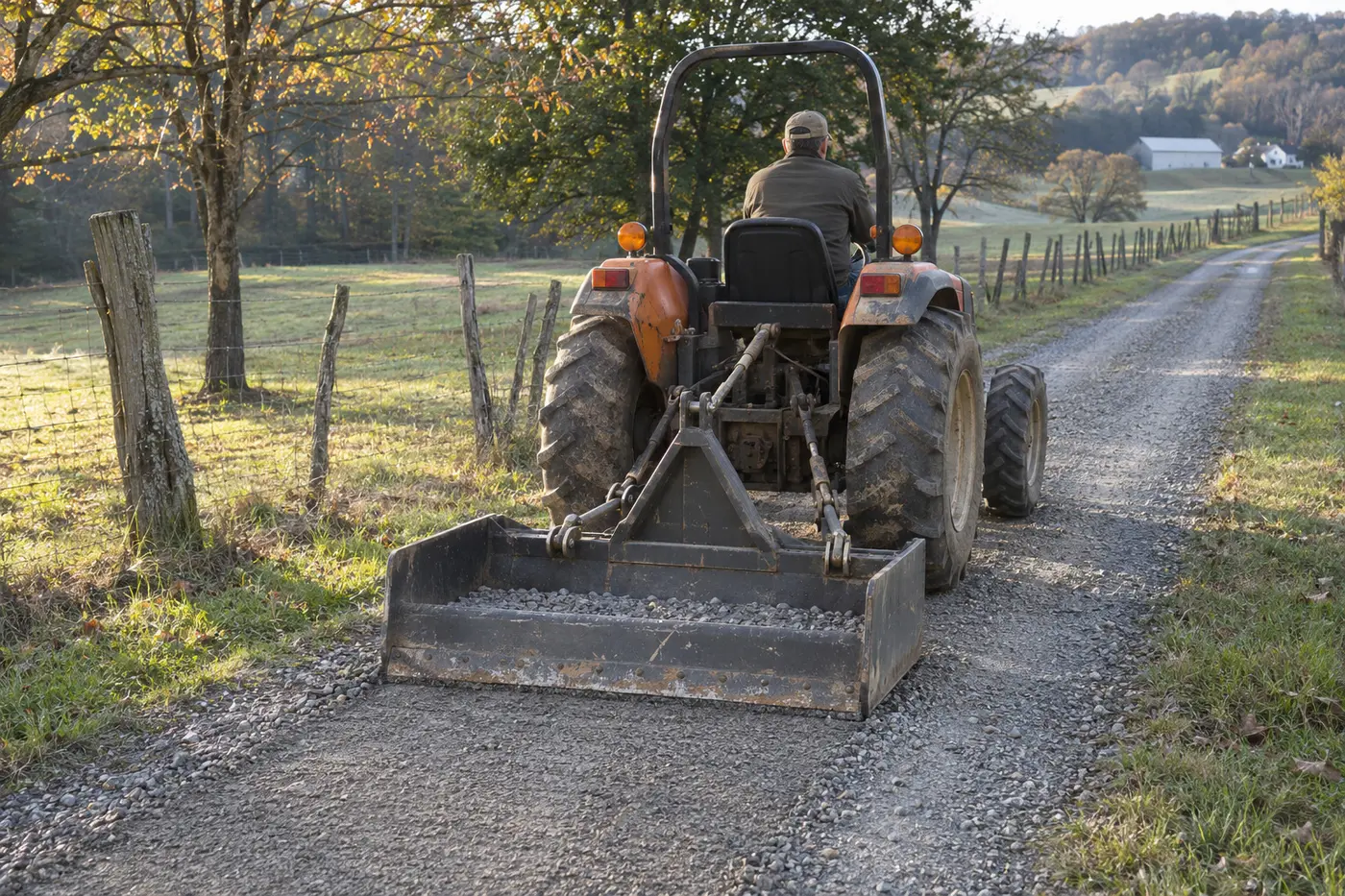
A box blade is the standard tool for maintaining a gravel driveway behind a compact tractor. It has a rear and front cutting edge, side walls to hold material, and optional teeth called scarifiers. Used well, it fills potholes, removes washboard and restores a crown. Used badly, it digs holes and pushes gravel off the road. This guide shows how to use a box blade on a gravel driveway, step by step.
What a box blade does
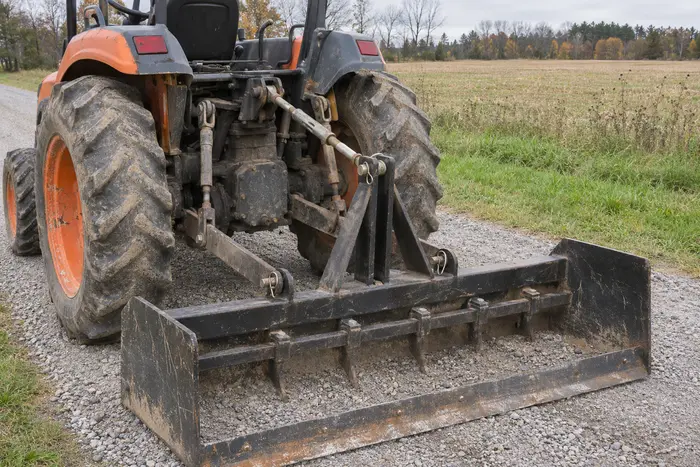
A box blade is a three-point hitch implement. It has a flat bottom with a rear blade, a front blade, and two side walls. The box holds material while you move. You can cut material from a high spot, carry it in the box and drop it in a low spot. The scarifier teeth at the front break up compacted ground and old gravel so it can be moved. Sizes vary, and the right one depends on your tractor's weight and lift. See our guide to three-point hitch categories for the fit rules.
Before you start
- Check the hitch and the weight. The box blade must match the tractor's hitch category and lift capacity. A box blade that is too light will skip. One that is too heavy can lift the front end.
- Check the driveway. Walk it and look for potholes, washboard, ruts and low spots. Note where water collects.
- Know what is under the surface. Mark culverts, buried lines and drain tile.
- Wait for the right moisture. Damp gravel is easier to shape than bone-dry or soaking wet. Right after a rain, when the surface is damp but not muddy, is often best.
- Set sway chains or stabilizers so the blade does not swing.
- Inspect the box. Check bolts, cutting edges and scarifier shanks for damage.
Set up the box blade
Two adjustments matter most.
- Top link. Shortening the top link tips the box back, so the rear edge digs in and cuts more. Lengthening it tips the box forward, so the front edge and scarifiers do more of the work and the rear edge mostly spreads and smooths. For most driveway work, start with the blade close to level and adjust from there.
- Scarifiers. Lower them to break up hard, compacted or rutted gravel. Raise them out of the way for finish passes, so they do not cut new grooves.
Adjust the lift arm levelers so the blade is level side to side, unless you want to shape a crown or ditch.
How to use a box blade to fix a gravel driveway
- Start with a slow pass. Drive at a walking pace to see how the blade behaves. Do not rush the first run.
- Loosen hard spots. Lower the scarifiers and make a pass over compacted or rutted areas. Go in the same direction as the traffic flow.
- Cut high spots. Lower the rear blade slightly and pull material from the ridges.
- Carry and fill. As the box collects gravel, drive to the potholes and lower the blade to leave material there. Lift or tilt the blade to feather the edge.
- Raise the scarifiers. Lower the blade again for a finishing pass with the rear edge only.
- Shape the crown. Work from the center to the edges so the middle sits slightly higher. This sheds water. A flat or dished driveway holds water and fails fast.
- Make finishing passes. Go slowly with the blade light. Overlap passes by a few inches.
- Compact. Traffic will do some compaction. A roller or a few passes with a heavy vehicle can help on soft spots.
Fixing common gravel driveway problems
| Problem | Cause | Fix with the box blade |
|---|---|---|
| Potholes | Water and traffic scoop out soft spots | Scarify the area, carry gravel in, then smooth and crown |
| Washboard | Fast, repeated traffic and loose gravel | Scarify, remove ridges and finish slowly |
| Ruts | Wheel tracks and poor drainage | Loosen, fill, reshape the crown, and fix the water source |
| Gravel on the shoulders | Crown too steep or too flat, or traffic push | Pull material back toward the center and reset the crown |
| Thin spots | Gravel lost over time | Add fresh gravel, then work it in |
How much gravel does a driveway need?
A box blade moves gravel, but it cannot create it. If the surface has thinned, you need to add material. Published guidance on gravel depth varies by source and by use: some suggest a surface layer of about 4 to 6 inches for a basic gravel surface, while others suggest a layered build of 8 to 13 inches in total, with a coarse base, a finer base and a surface layer. The right depth depends on your soil, your traffic and your climate. Our guide to how to build a gravel driveway covers the layers.
Box blade vs land plane vs grader
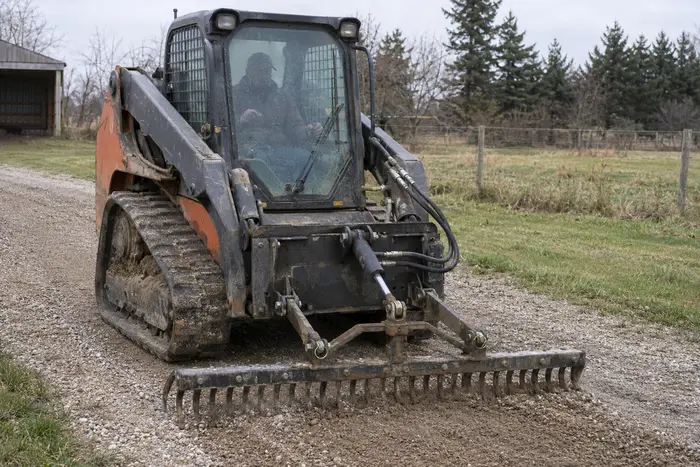
A box grader is great for cutting, carrying and shaping. A land plane has a long frame that rides over bumps and gives a flatter finish, which suits long, straight drives. A grader blade on a loader gives powerful control but takes more skill. Many owners use a box blade for repairs and a land plane for routine smoothing. See the land plane guide and the grader attachment guide for the differences.
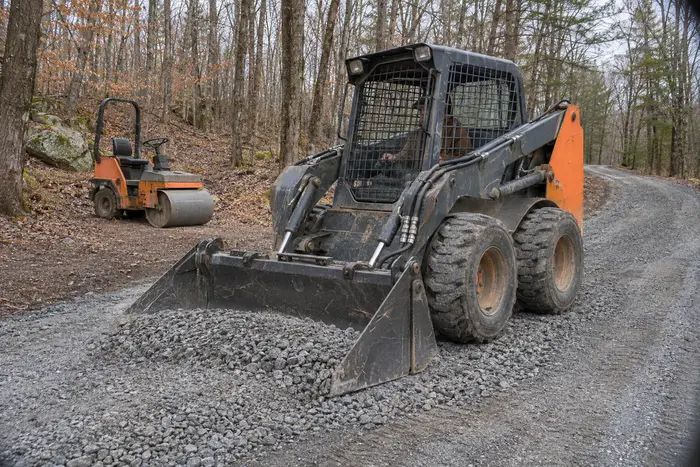
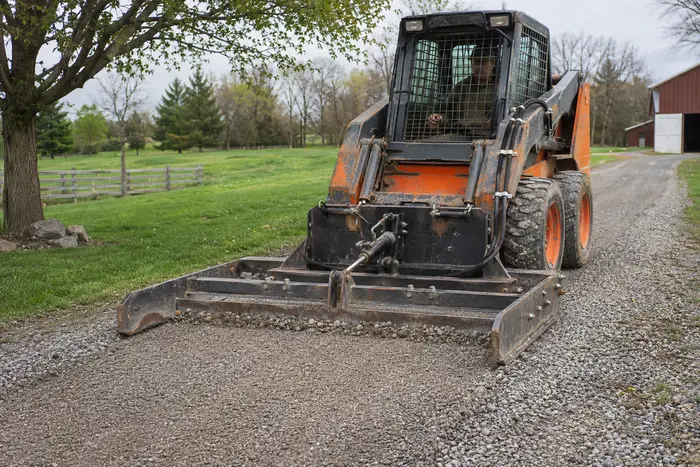
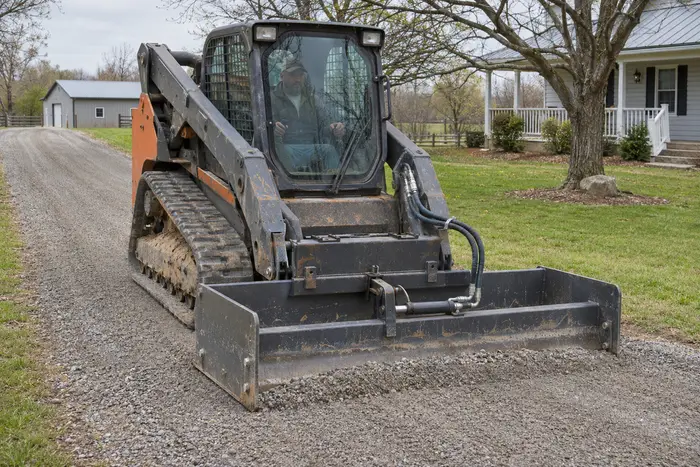
If you run a skid steer rather than a tractor, look at our skid steer box graders, which adapt the same idea to a loader.
For a smoother finish after repairs, a land plane is worth a look.
Mistakes to avoid
- Cutting too deep. Deep cuts dig grooves and make washboard worse. Make several shallow passes.
- Going too fast. Speed makes the blade skip and bounce. Slow and even gives a better finish.
- Ignoring drainage. A perfect surface with no way for water to leave will fail. Fix culverts and ditches.
- Working dry. Dry gravel will not bind. A little moisture helps.
- Dragging fines off the road. Keep the box moving along the drive. Fines hold the surface together.
- Skipping safety. Keep the PTO shield and ROPS in place. Never get under a raised blade.
Safety basics
Use the tractor's seat belt and roll bar as the manual requires. Lower the box to the ground when parked. Keep bystanders clear of the blade. Check the hitch pins and the top link before every use. Do not exceed the tractor's lift capacity. Follow the operator manuals for both the tractor and the implement.
When to call it done
Stop when the surface is smooth, the crown is even from end to end, and water has a clear path off the sides. Walk the drive, then drive it slowly to feel for soft spots. Traffic will settle the gravel over the next days, so plan a quick touch-up pass after a week or two. A short maintenance pass each season costs far less than a full rebuild.
Get the right fit the first time
Send us your tractor or loader's make, model and year, and a person checks the hitch category and the weight against the maker's specs. You approve a delivered price before you pay, and the supplier ships direct. Get a fit-checked quote.
Questions buyers ask
How do you use a box blade on a gravel driveway?
Set the top link so the blade is near level, scarify compacted spots, then cut high spots and carry gravel to low spots. Finish with light passes at a slow speed, working from the center out so the driveway keeps a slight crown.
How do you adjust the top link on a box blade?
Shortening the top link tips the box back so the rear edge cuts more. Lengthening it tips the box forward so the rear edge cuts less and mostly spreads material. Start near level and adjust in small steps. Always check the setting against the operator manual.
Should I use scarifiers on a gravel driveway?
Yes for compacted gravel, ruts and potholes. Scarifiers loosen the surface so you can reshape it. Raise them for finish passes so they do not cut new grooves. On loose gravel, you may not need them.
How deep should a gravel driveway be?
Guidance varies. Some sources suggest 4 to 6 inches for a basic surface, while layered builds with a coarse base, a finer base and a top layer total about 8 to 13 inches. Soil type, traffic and climate change the answer.
Is a box blade or a land plane better for a gravel driveway?
A box blade is better for repairs: cutting, carrying and filling. A land plane gives a flatter finish for routine smoothing on long drives. Many owners keep a box blade for repair work and add a land plane for upkeep.