Landscaping guide
How to Build a Gravel Driveway With Compact Equipment
Quick answer
To build a gravel driveway, mark the route, strip topsoil and soft material, grade a crowned subgrade, add a coarse stone base in layers, compact each layer, then top with finer crushed stone. Published guidance on total depth ranges from about 4 inches for light use to 8 to 13 inches in layers.
Shopping for this now? Get a fit-checked, delivered quote.
Key takeaways
- Drainage decides whether a driveway lasts: shape a crown and give water a way out.
- Strip topsoil and soft material, then build in compacted layers rather than one deep dump.
- Published depth advice varies: about 4 to 6 inches for light surfaces up to 8 to 13 inches total in layers.
- Angular crushed stone locks together; rounded stone rolls and migrates.
A gravel driveway is one of the most cost-effective surfaces you can build, and with compact equipment you can do much of the work yourself. The key is the base. A thin layer of stone on soft ground will rut and wash out in the first wet season. This guide shows how to build a gravel driveway, step by step, and what depth the published guidance suggests.
Plan the route and drainage first
Before you move any dirt, walk the site and decide where water goes. Water is the main enemy of a gravel driveway. Plan these points:
- Route and width. Choose a path that avoids low, wet areas and steep slopes. Allow room for turning and passing.
- Slope. A gentle slope drains better than a flat site. Steep slopes need extra drainage control and may need additional stone.
- Drainage. Decide where ditches, culverts or swales will carry water away. Never let water run down the driveway itself.
- Utilities. Call before you dig. In the United States, dial 811. In Canada, use your provincial one-call service.
- Permits and codes. Check local rules on driveway access, culverts and setbacks.
Equipment you will use
| Task | Compact equipment |
|---|---|
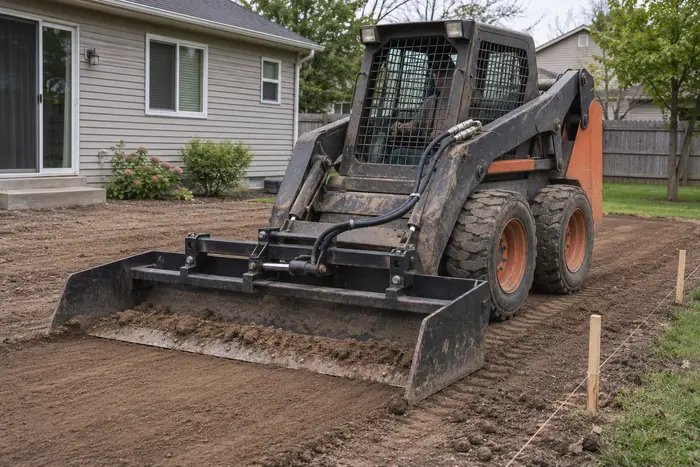
| Strip topsoil, dig ditches | Skid steer bucket or mini excavator |
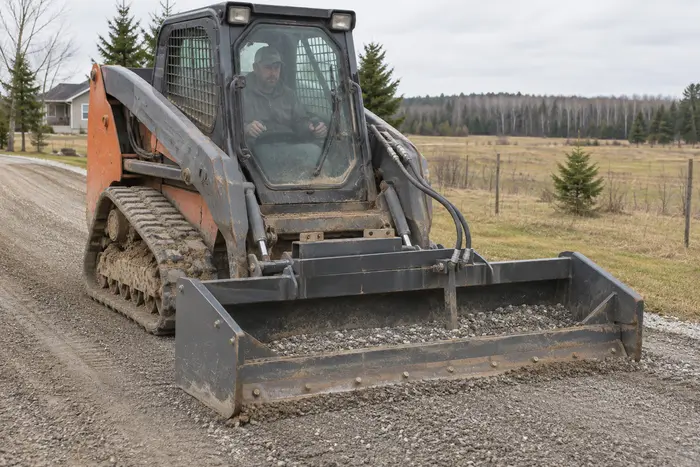
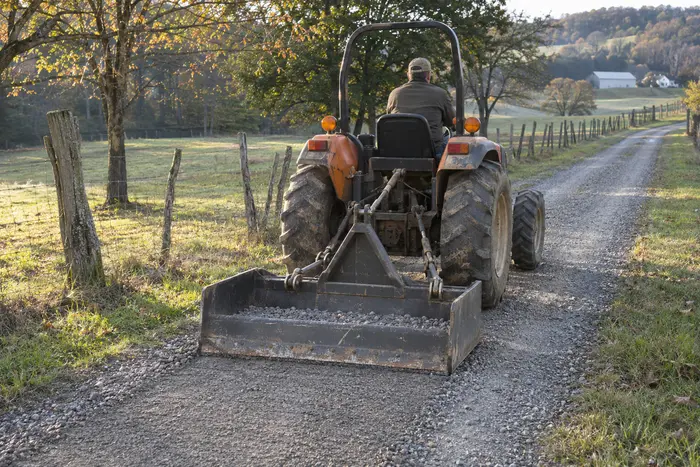
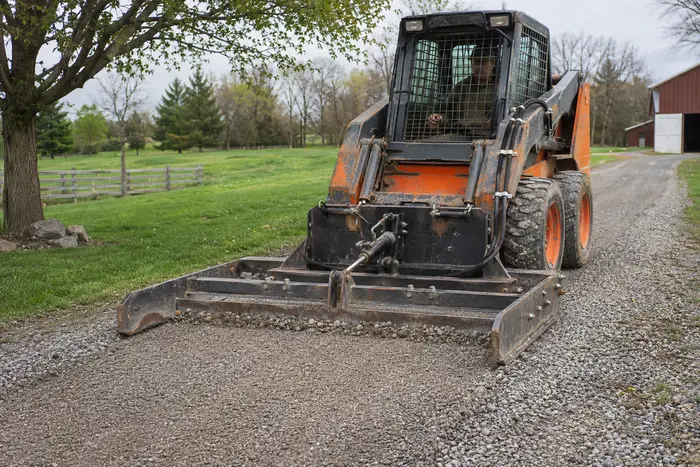
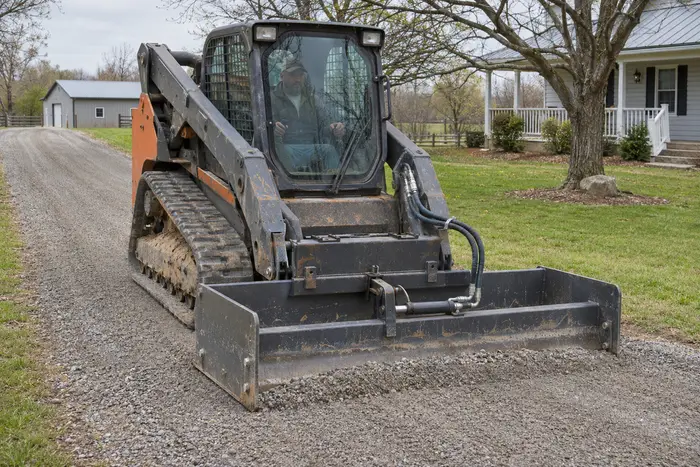
| Grade subgrade and shape the crown | Skid steer with a grader or land plane, or a box blade on a tractor |
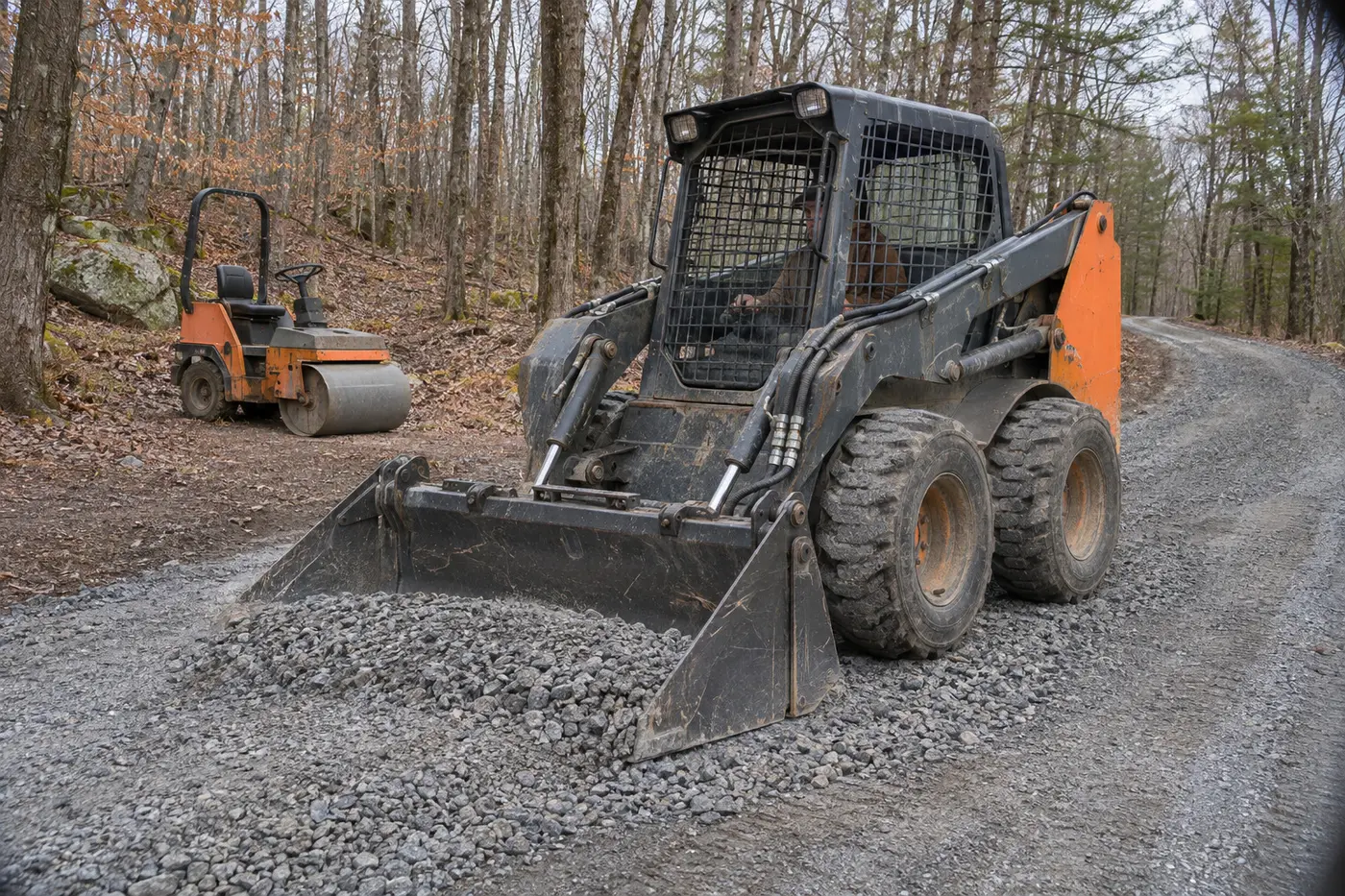
| Spread stone | Skid steer bucket, then a box blade or land plane |
| Compact each layer | Vibratory roller or plate compactor |
See our guides on leveling ground with a skid steer and using a box blade on a gravel driveway for the grading techniques.
How deep should a gravel driveway be?
Published guidance varies, and the right answer depends on your soil and traffic.
| Approach | Published depth | When it fits |
|---|---|---|
| Basic surface | About 4 to 6 inches of stone | Light traffic on firm soil |
| Layered build | About 7 to 10 inches compacted, in a base and a top layer | Typical residential driveway |
| Full sub-base, base and surface | About 8 to 13 inches total | Soft soil, heavier traffic, or wet climates |
Build in lifts your compactor can handle. Thinner lifts compact better, and the roller or plate maker's guidance sets how thick each lift can be. If your soil is soft clay or wet, plan toward the deeper end and consider a geotextile fabric under the stone to keep layers from mixing. Ask a local aggregate supplier what stone works in your region.
How to build a gravel driveway step by step
- Mark the layout. Use stakes and string or paint. Check the width and the curve.
- Strip the topsoil. Remove grass, roots and organic soil down to firm subsoil. Topsoil rots and settles, and it will cause ruts.
- Shape the subgrade. Grade the subsoil with a slight crown, so the center is higher than the edges, or a one-way slope that drains to a ditch. Fill soft spots with stone.
- Compact the subgrade. Make passes with a roller or plate compactor so it is firm.
- Lay geotextile fabric. Use it on soft or clay soils to separate the stone from the soil.
- Spread the sub-base. Use larger crushed stone, in a layer thickness your compactor can handle. Level it with a blade.
- Compact the sub-base. Use a roller. Add water if the material is dry so it binds.
- Add the base layer. A smaller crushed stone, spread and compacted the same way.
- Add the surface layer. A finer crushed stone with fines that bind. Shape the crown and compact.
- Finish the edges and ditches. Dress the shoulders, clear the ditches and set culvert ends.
Choose the right stone
- Use angular crushed stone. The faces lock together under compaction. Rounded stone, such as pea gravel, rolls and moves.
- Use graded sizes. Larger stone for the base, smaller for the surface. A mix of fines in the top layer helps bind the surface.
- Avoid all-fines surfaces in wet areas. They can turn to mud.
Local suppliers name their products differently, so ask for a base stone and a surface stone that suit driveways in your area. We keep this guide generic because grades differ from place to place.
Special cases: slopes and clay soil
Slopes. Water speeds up on a slope and carries stone with it. Build a crown, add cross-drains or water bars to turn water off the driveway, and use well-graded crushed stone. Steeper drives often need deeper stone and a more careful drainage plan. Clay soil. Clay holds water and softens when wet. Use geotextile, a deeper sub-base and strong drainage. Compact in dry weather.
Maintenance after you build
- Regrade with a box blade or land plane once or twice a year.
- Fill potholes early, before they widen.
- Keep ditches and culverts clear.
- Add stone as needed where traffic thins the surface.
- Re-crown after snow plowing to prevent edge washouts.
Costs and planning without guesswork
Driveway costs come from stone, hauling, equipment time and any culverts or fabric. Stone is the biggest line, and haul distance changes it a lot. Use a volume calculator from a local supplier: multiply length by width by depth to get cubic volume, then convert to the units your supplier sells, and add a margin for compaction. Compaction squeezes the volume, so order a little more than the plain math says. Ask your supplier for delivered rates and for a stone type that suits your area. Because prices differ by region and season, get at least two quotes and compare what is delivered, not just the unit price.
Common mistakes to avoid
- Leaving topsoil in place. It compresses and creates ruts under traffic.
- Dumping one thick layer. Thick lifts do not compact well. Build in thinner layers.
- Skipping the crown. A flat driveway holds water on the surface.
- Ignoring the edges. Unsupported edges spread and thin out. Keep the shoulders firm and the ditches clean.
- Using the wrong stone. Rounded stone will not lock. All fines will turn to mud when wet.
- Working in wet weather. Wet soil will not compact, and equipment tears it up.
Finally, give the new surface a few weeks of ordinary traffic and then make a light grading pass. Settling is normal, and a quick touch-up locks in a smooth, crowned finish.
Get the right fit the first time
If you plan to grade, rake or roll your own driveway, send us your machine's make, model and year. A person checks the fit of the attachments against the maker's specs, you approve a delivered price before you pay, and the manufacturer ships direct. Get a fit-checked quote.
Questions buyers ask
How do you build a gravel driveway?
Plan drainage, strip the topsoil, shape and compact a crowned subgrade, then add stone in compacted layers: a coarse sub-base, a base and a finer surface. Finish with a crown and clear ditches so water leaves the driveway quickly.
How deep should a gravel driveway be?
Published guidance varies. Some suggest about 4 to 6 inches for a basic surface, others 7 to 10 inches compacted, and layered builds on soft soil total about 8 to 13 inches. Soil type, traffic and climate decide the right depth.
What is the best gravel for a driveway?
Angular crushed stone is the usual choice because it locks together under compaction. Use larger stone for the base and a finer, graded stone with fines for the surface. Avoid rounded pea gravel on slopes or driveways with regular traffic.
How do you build a gravel driveway on clay soil?
Strip topsoil, compact the subgrade, and consider a geotextile fabric to separate the stone from the clay. Use a deeper sub-base, a strong crown and good drainage, since clay holds water. Work in dry weather and compact each layer.
Do I need to compact a gravel driveway?
Yes. Compact the subgrade and each layer of stone so they lock together and carry traffic. Skipping compaction leads to ruts and potholes. Use a roller or plate compactor, and add water if the material is too dry to bind.