Fencing guide
How to Choose a Hydraulic Post Driver
Quick answer
To choose a hydraulic post driver, match it to your carrier machine's hydraulic flow and mount, the largest post you will drive, your soil and your lift height. Skid steer, excavator and tractor versions exist, and rocky ground may need a pilot hole from an auger first.
Shopping for this now? Get a fit-checked, delivered quote.
Key takeaways
- Match the driver to your carrier's mount, flow and lift height.
- Check the cup fits your post style and size.
- Rocky or hard ground may need an auger pilot hole.
- Call 811 or your local one-call service before driving.
What is a hydraulic post driver?
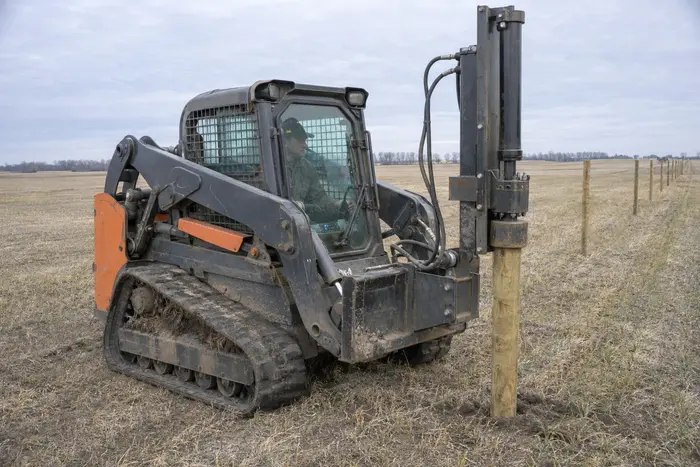
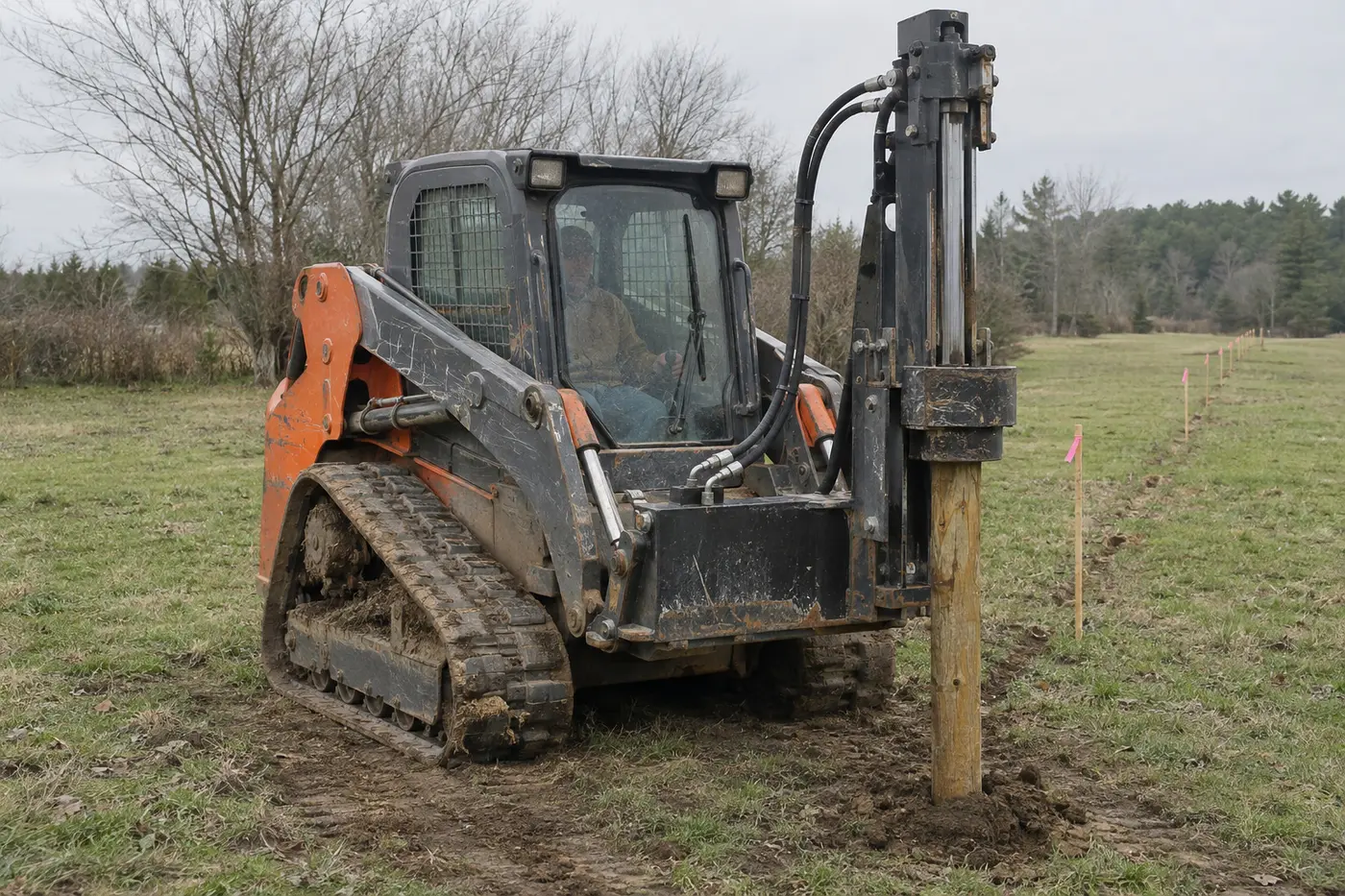
A hydraulic post driver is an attachment that pushes fence posts into the ground with repeated hard strokes instead of digging a hole. A weight or ram rides in a frame, a hydraulic cylinder lifts it and drops or drives it, and a cup or collar at the bottom holds the post on target. It mounts on a skid steer, compact track loader, tractor loader, backhoe or excavator. You pick it up, set the post, and drive it.
The benefit is speed and straight lines. You skip hand digging and tamping backfill, and the soil around the post stays firm and undisturbed. The trade-off is ground. Driving works in soil that a post can be pushed through. Rock, hardpan and buried debris stop a post, and you may need to pre-drill or use an auger instead.
How do you choose a hydraulic post driver?
Work through these points in order. Each one narrows the field.
- Carrier machine. Decide what will carry it. A skid steer unit mounts on a universal quick attach plate. An excavator unit mounts on the stick or a coupler. A tractor unit may use a three-point or loader mount. Make, model and year tell us the hydraulic and mounting details.
- Hydraulic flow and pressure. The driver needs enough oil flow and pressure to cycle at a useful rate. Compare the driver's requirement with your machine's standard or high-flow circuit. Our hydraulic flow guide explains the difference.
- Post type and size. Wood posts, round pipe, T-posts, U-channel and heavy steel posts each need a matching cup, collar or head. Choose a driver that handles the largest post you plan to drive, with the right cup for each style.
- Post length and mast height. The mast has to be taller than your post plus the stroke and clearance, so you can load a long post and still drive it. For tall posts, check the carrier's lift height too.
- Driving force. A heavier ram and longer stroke drive harder soils and bigger posts. A lighter unit is easier on a smaller carrier. Ask the maker for the driving energy range rather than relying on a brochure headline.
- Controls and guidance. A good driver lets you keep the post plumb. Look for side-to-side and front-to-back tilt or a sturdy post guide, and a clear view of the post.
Skid steer, excavator or tractor post driver: which fits?
| Carrier | Strengths | Limits |
|---|---|---|
| Skid steer or compact track loader | Fast to move down a fence line, strong hydraulics, universal mount | Needs a flat, firm travel path; limited reach on slopes |
| Mini or compact excavator | Reach, tilt and rotation for slopes and awkward spots | Slower to reposition along a long straight line |
| Tractor with loader | Often already owned, good for farm fencing | May have limited flow; check the hydraulic outlet |
If you already run a skid steer, start with our skid steer post drivers. If you own a mini excavator, see the excavator post drivers. Smaller carriers have a mini skid steer post driver option.
Do you need a pre-drill or an auger?
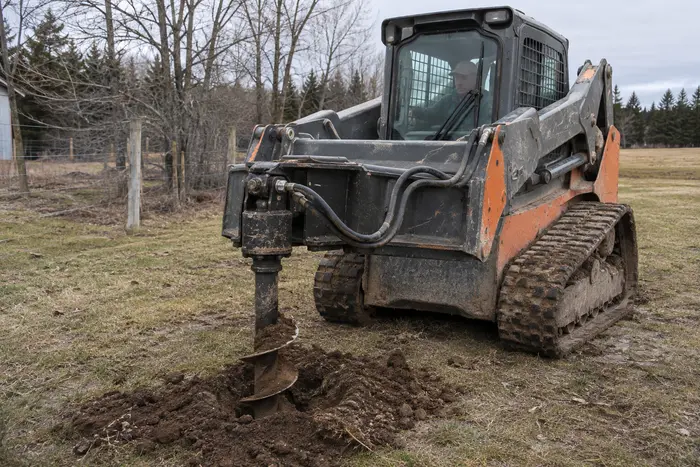
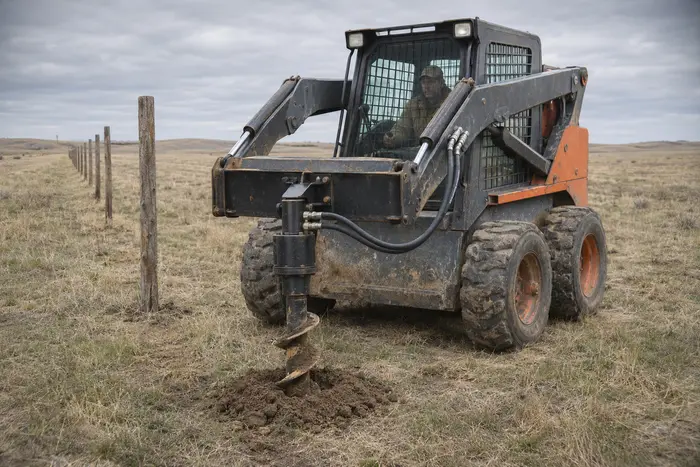
Hydraulic drivers shine in soft to medium soil. In stony ground, caliche, frozen ground or heavy clay with cobbles, a post may deflect, split or stop short. Common fixes are a pilot hole from an auger, or an auger-set post where the hole is dug first. Mixed jobs may call for both tools. See our skid steer augers if your soil is difficult.
Always call before you dig or drive. Underground utilities are a real hazard. In the US, dial 811 before any digging or driving. In Canada, contact your provincial or territorial one-call service. Do not drive a post until the lines are marked.
Post spacing and depth: plan before you drive
The driver puts posts where you tell it. A little planning avoids rework. Stake the line, mark corner and brace posts first, and decide spacing from the fence type. Our guide on how far apart fence posts should be covers typical spacings, and the guide on post depth helps you pick the driving depth. Corner and gate posts take the most strain, so many fencers set those with an auger and concrete or bracing, then drive line posts between them.
Operating tips
- Check the driver, cup and pins for wear before each day.
- Keep the mast square to the ground and the post plumb as you start. A post that begins crooked finishes crooked.
- Start with light strokes to seat the post, then increase.
- Keep people and animals well clear of the machine and the post. A driven post can split or kick.
- Wear hearing protection. Driving is loud.
- Follow the operator manual of both the carrier and the attachment, including rated operating capacity and the maker's lift-height limits.
Rent, buy or hire it out?
If you set a lot of posts each year, owning can pay back in saved labor. For a single fence, renting a driver or hiring a fence crew may make more sense. Whatever you choose, confirm the fit with your machine first. A driver that needs more flow than your skid steer delivers will drive slowly and heat the oil.
Common mistakes when buying a post driver
- Ignoring lift height. The carrier must raise the driver high enough to stand a full-length post upright and still have room above it. A tall post on a low-lift loader will not fit.
- Underestimating flow. A driver that needs high flow and gets standard flow drives slowly. It also generates heat, which wears seals and oil.
- Buying one cup. If you use mixed post types, ask what cups are available and how they swap. A bad cup fit lets the post wander and splits the post top.
- Skipping the test strip. Drive a few posts in your soil before you commit to a long line. If posts stop short, you have time to change the plan.
- Driving without a layout. Mark every post location first. Fixing a crooked line after driving is much harder than staking it correctly.
Which fences suit a driven post?
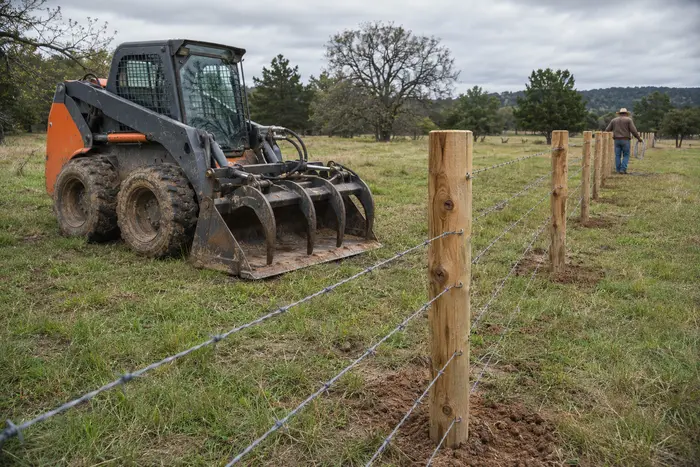
Driven posts are popular for livestock fence, high-tensile wire, woven wire, rail-and-post and vineyard or orchard trellis lines. Where the fence carries heavy tension, such as a long straight run or a gate, brace assemblies at the ends and corners are set deeper or in concrete. The driver handles the repeated line posts. Bring the layout and fence type with you when you ask for a quote so the correct cup and size are chosen.
Get the right fit the first time
Send us your machine make, model and year and tell us the job. A person checks the attachment against the maker's specs, then you get a fit-checked quote with delivered pricing before you pay. The supplier ships direct, and warranty terms, if any, are written on your quote.
Questions buyers ask
What size hydraulic post driver do I need?
Size the driver to your largest post, your soil and your carrier. It must handle the post's diameter and length, deliver enough driving force for the ground, and match your machine's hydraulic flow and lift height. Share your machine make, model and post details for a fit check.
Can you use a hydraulic post driver on a skid steer?
Yes. Many drivers mount on a universal skid steer quick attach plate and run off the loader's auxiliary hydraulics. Confirm that your machine's flow, pressure and coupler type match the driver's needs before you order.
Does a post driver work in rocky soil?
Not well. Rock, hardpan and cobbles can stop or deflect a driven post. Many fencers drill a pilot hole with an auger first, or set posts in augered holes. Hydraulic drivers work best in soft to medium soils.
What posts can a hydraulic post driver handle?
It depends on the cup or head. Common options cover wood posts, round pipe, T-posts and steel channel. Pick a driver rated for the biggest post you plan to drive and use the matching cup for each style.
Is it better to drive posts or dig holes?
Driving is usually faster and leaves firm, undisturbed soil around the post, but it needs ground that a post can penetrate. Digging with an auger suits rocky ground and corner or gate posts that need concrete. Many jobs use both methods.