Fencing guide
How a Hydraulic Post Pounder Works
Quick answer
A hydraulic post pounder drives fence posts into the ground with repeated hammer blows powered by your machine's auxiliary hydraulics. A frame holds the post plumb while a driving weight or piston strikes the cap. It is faster and straighter than hand driving, and it needs the right hydraulic connection and mount.
Shopping for this now? Get a fit-checked, delivered quote.
Key takeaways
- The pounder runs off the carrier's auxiliary hydraulic circuit, so the machine must supply oil flow and a return line.
- A guide frame keeps the post plumb while the hammer drives it.
- Soil, rock and post type decide whether driving works or you need to pre-drill.
- Mount type, hose fittings and flow must match the carrier before you buy.
- Stay clear of the post and drive zone, and follow the operator manual.
If you have set fence posts by hand, you know the problem: a sledge swings out of line, a post leans, and the day goes slow. A hydraulic post pounder fixes that by letting your skid steer, tractor or excavator do the striking. Here is how it works, what the machine needs to supply, and how to run one without wrecking posts or yourself.
How does a hydraulic post pounder work?
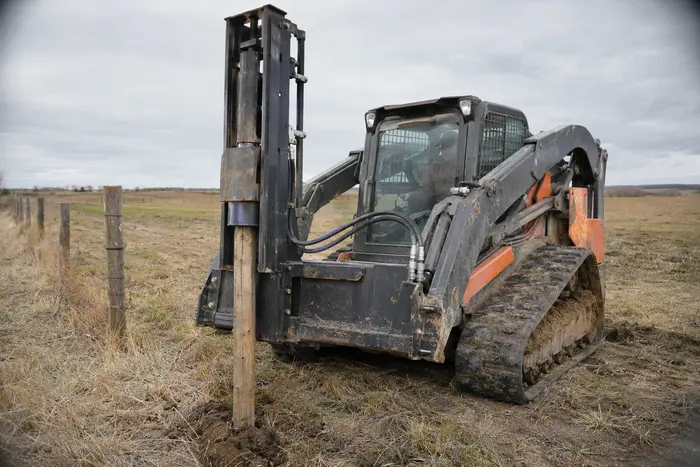
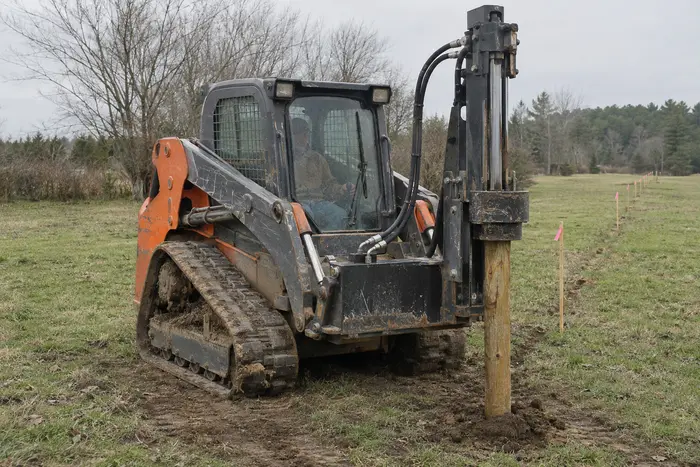
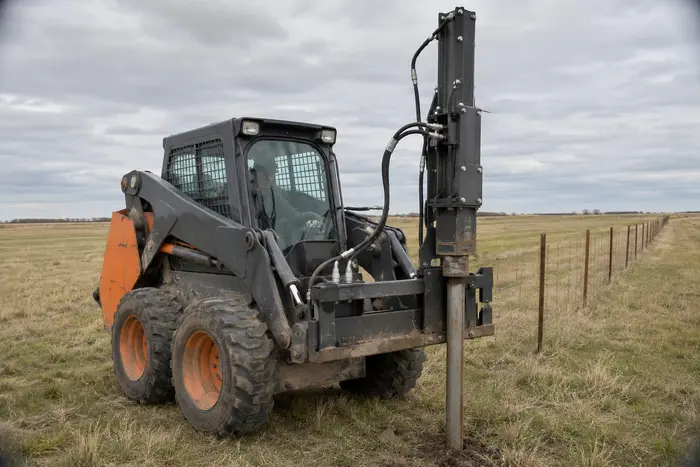
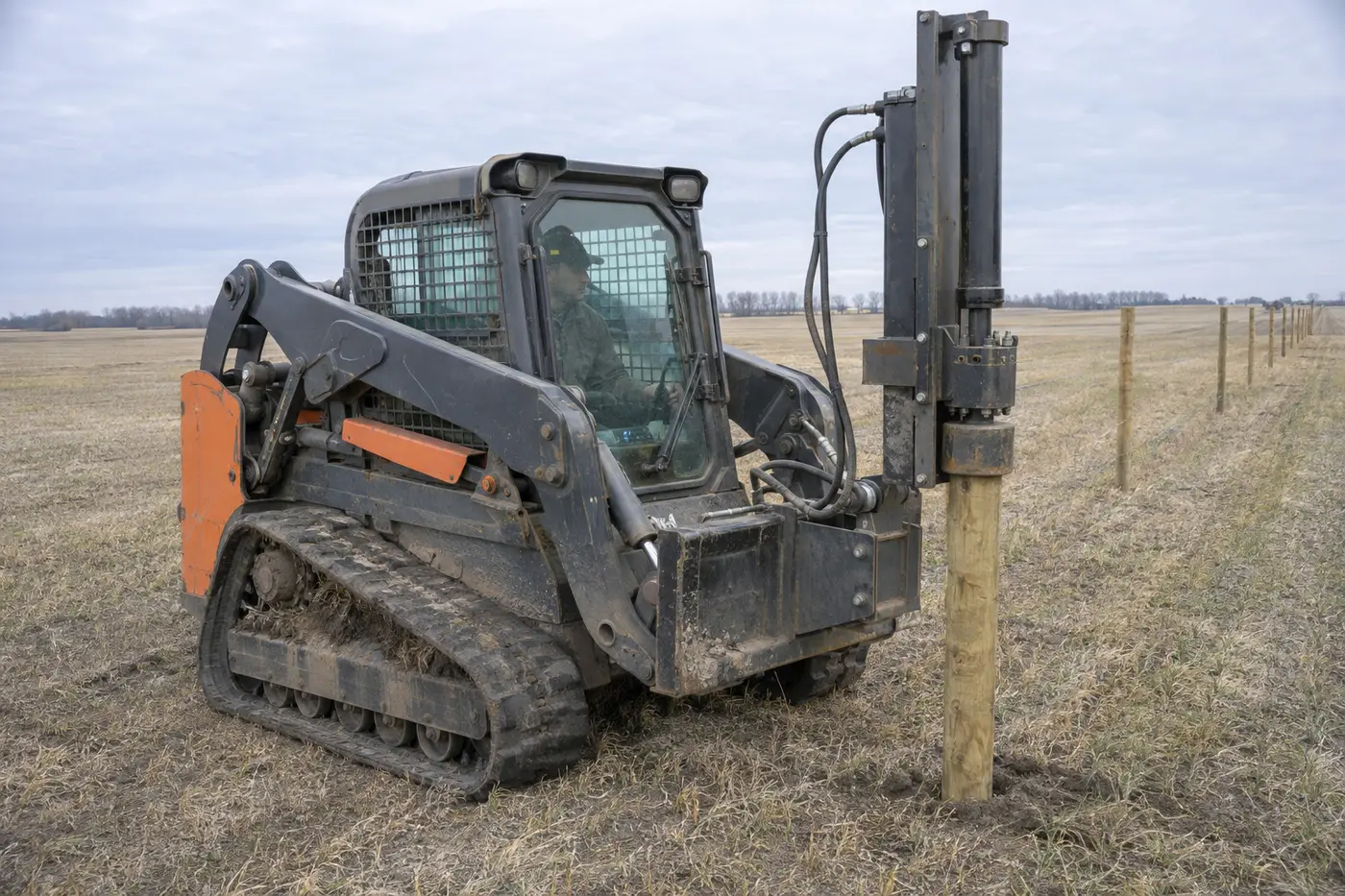
Think of it as a powered hammer on a guide. The attachment has three working parts:
- A frame or mast that holds the post straight and aligned with the line you set.
- A hammer assembly. Depending on the design, a heavy weight is lifted and dropped, or a hydraulic piston drives a striker repeatedly into a cap on the post top.
- A hydraulic circuit that takes oil from the carrier machine and turns it into striking motion.
The carrier machine does not swing anything. It positions the frame, holds it steady and supplies oil. The hammer strikes the post cap again and again, and the post sinks a little with each blow. The operator watches alignment and stops when the post reaches depth.
What does the machine need to supply?
Hydraulic tools need an auxiliary circuit, which is the line of hoses that carries pressurized oil to an attachment. Many loaders and tractors have one built in. On compact loaders, many attachments are driven by the loader's hydraulic system, and the machine often has a quick connection system to join the hoses. On excavators, all movement is hydraulic, so a tool circuit on the boom or stick supplies the oil.
Before you buy, check these four things:
- Flow and pressure. The pounder's spec sheet lists what it needs. Your carrier must meet it. Too little flow slows the hammer, and too much can overspeed the tool and heat the oil.
- Return line. Some percussive tools need a low-restriction return or a case drain. Check the spec sheet, because the wrong return setup can damage seals.
- Hose fittings. Flat-face couplers are common on modern loaders. Match the type and size.
- Mount. Most skid steers use the universal quick attach plate. A tractor loader may use a different mount. An excavator needs a coupler or pin-on bracket.
Our guide to flat-face couplers and hoses explains the fittings, and what a case drain does covers the return line.
Which carrier machines work best?
| Carrier | Strength | Watch for |
|---|---|---|
| Skid steer or track loader | Fast positioning, easy quick-attach mounting | Keep the loader level on soft ground |
| Mini skid steer | Gets into tight yards | Lower hydraulic output limits post size |
| Compact tractor | Good on farm fence lines | Needs a loader or hitch mount and remote hydraulics |
| Mini excavator | Reach over ditches and slopes | Tilt and slew adjust alignment, so set it carefully |
Look through skid steer post drivers, mini skid steer post drivers and excavator post drivers to see what fits each carrier class.
How do you drive a post step by step?
- Mark your line and post spots. Call before you dig in the US or Canada so buried lines are marked.
- Check the soil. Soft clay drives easily, while gravel, cobble or rock can bend or split a post.
- Seat the post in the frame and clamp or brace it per the attachment's instructions.
- Fit the correct cap for your post type. The cap protects the post top and keeps the blows centered.
- If your pounder has a rate or speed control, start low to seat the post, then increase as the post bites.
- Check plumb from two sides every few seconds early on. A post that starts leaning rarely fixes itself.
- Stop at your target depth and move to the next mark.
How deep a post goes is a design call, not a machine one. Our fence post depth guide and post spacing guide help you set both.
What posts can you drive?
Steel T-posts, round wood posts and some square posts drive well when the soil allows. Pressure-treated wood with a clean cut top takes blows better than a post with a rough end. Brittle or thin-wall posts can split. If a post stops moving, do not force it. Pull it, pre-drill a pilot hole and try again.
Frozen ground is a common trap. Driving into frost can crack posts and stress the attachment. Wait for thaw or pre-drill.
How do you stay safe around a post pounder?
Percussive tools throw debris and make noise. Plan for it.
- Wear hearing protection, eye protection, a hard hat and gloves.
- Keep helpers well clear of the post and the hammer's travel path. Do not hold a post by hand while it is driven.
- Check hoses and couplers for leaks before each shift. High-pressure oil can inject through skin.
- Follow the operator manual and the machine's rated operating capacity. Do not use the attachment to lift or push anything.
- Watch for overhead lines and underground utilities.
Is a post pounder worth it compared with augering?
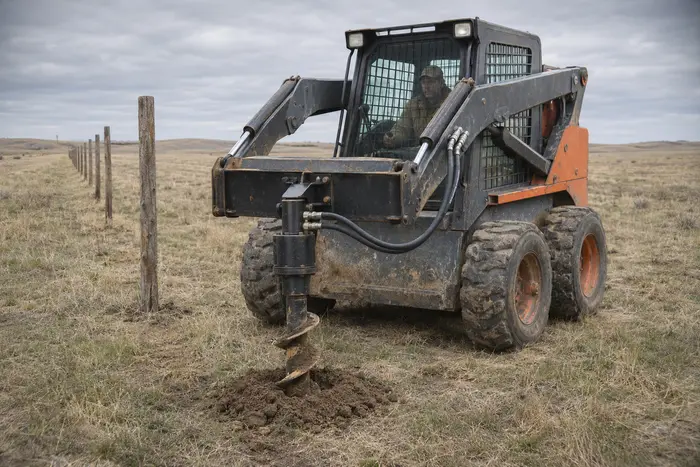
For long fence lines in workable soil, driving is often faster than digging a hole, setting the post and tamping. It also disturbs less ground. For concrete-set gate posts or very rocky ground, augering still wins. If you do both, pair a pounder with a skid steer auger. The best hydraulic post driver guide compares designs, and the fence installer guide covers all-in-one rigs.
What problems come up, and how do you fix them?
| Problem | Likely cause | Fix |
|---|---|---|
| Post leans as it goes in | Frame not plumb, or a hidden rock deflecting the post | Stop, pull the post, reset the frame on level ground and start again |
| Hammer feels weak | Low flow, wrong settings or hot oil | Check the carrier's flow against the spec and let the oil cool |
| Post top mushrooms or splits | Wrong cap or too much hammer speed on a soft post | Use the correct cap, slow the hammer and start gently |
| Oil leaks at couplers | Dirty or worn fittings, or mismatched sizes | Clean, replace worn couplers and match sizes before restarting |
| Post will not go past a certain depth | Cobble, rock layer or frost | Pre-drill a pilot hole or move the post a short distance |
How do you look after a post pounder?
Daily care is short. Grease the pivot points and guide surfaces as the manual says. Inspect the striker, cap and mounting pins for cracks or loose bolts. Hammering shakes things loose, so tighten fasteners at the start of each shift. Keep hoses clear of the frame so they do not rub, and cap the couplers when the tool is off the machine. A clean coupler is the cheapest way to avoid a hydraulic problem down the line.
Store the attachment on a stand or rack so the frame does not twist, and keep the cap and any spare adapters with it. If it will sit through winter, wipe it down and check the paint and welds before the next season.
Get the right fit the first time
Not sure your hydraulics can run a post pounder? Send us the make, model and year of your machine. A person checks fit against the maker's specs, you approve a delivered price before you pay, and the manufacturer ships direct. Get a fit-checked quote or call 1-888-245-1555.
Questions buyers ask
How does a hydraulic post pounder work?
It uses oil from your machine's auxiliary hydraulics to drive a hammer or weight that strikes a cap on the post top. A frame holds the post plumb while repeated blows drive it into the ground. The operator positions the frame and monitors alignment.
What do I need to run a hydraulic post pounder on a skid steer?
You need an auxiliary hydraulic circuit with enough flow and pressure for the pounder, matching hose fittings, a correct return line, and a mount that matches your loader, which on most skid steers is the universal quick attach plate. Check the pounder's spec sheet against your skid steer's specs before buying.
Can a hydraulic post pounder be used on a mini excavator?
Yes, if the excavator has a tool circuit with the right flow and pressure and the pounder mounts to its coupler. Smaller excavators drive smaller posts. Confirm the pounder's requirements against your machine before ordering.
Can you drive posts in rocky or frozen ground?
Rock and frost can bend, split or stall posts. Pre-drilling a pilot hole helps in many cases, and heavy rock may need an auger instead. Never force a stalled post. Pull it, check the soil and try another method.
Is a post pounder safe to operate?
It can be run safely when used as designed. Wear hearing and eye protection, keep helpers clear of the post and hammer, check hoses for leaks, and follow the operator manual and rated capacity. Never hold a post by hand while it is driven.