Fencing guide
How Deep Should a Fence Post Be? Rules and Checklist
Quick answer
How deep should a fence post be? Bury at least one-third of the post's total length. A 6-foot post needs a hole about 2 feet deep at minimum. Go deeper where soil is soft, the fence takes wind or livestock pressure, or the frost line is deeper than that. Check local codes.
Shopping for this now? Get a fit-checked, delivered quote.
Key takeaways
- Bury at least one-third of the post length; some guides allow up to half.
- Dig the hole about three times the post width.
- Use a few inches of gravel at the bottom for drainage.
- Frost depth and soil can override the one-third rule, so check locally.
- Large jobs go faster with an auger or hydraulic post driver.
Fence posts fail from the ground up. A post that is too shallow leans, heaves in frost or pulls out when a gate swings or livestock pushes. Getting the depth right is the cheapest insurance on the whole fence. Here is the rule, where it bends, and how to build the hole.
How deep should a fence post be?
The common rule of thumb is to bury at least one-third of the post's total length. A home-improvement guide states it this way: dig deep enough to put the bottom third of the post below ground, so a six-foot post gets a two-foot hole. Treat one-third as the minimum. Some guides allow up to half the length where the fence is under more strain.
| Post length | Minimum buried (1/3) | Above ground |
|---|---|---|
| 6 ft | 2 ft | 4 ft |
| 8 ft | About 2 ft 8 in | About 5 ft 4 in |
| 9 ft | 3 ft | 6 ft |
| 10 ft | About 3 ft 4 in | About 6 ft 8 in |
The table is arithmetic from the one-third rule, not a code requirement. For a 6-foot-tall fence at the one-third rule, a 9-foot post leaves 6 feet above ground and 3 feet below. Many builders use 8-foot posts set about 2 feet deep, which is less than one-third, so check local practice, frost depth and the fence maker's instructions.
When should a post go deeper than one-third?
- Frost line. In cold climates, soil freezes and heaves. Posts that sit above the frost line can be pushed up and out of line. Check the local frost depth with your building department, and go below it where required.
- Soft or sandy soil. Loose soil offers less grip. Go deeper, or use concrete.
- Gates and corners. These posts take far more force than line posts and need to be larger and deeper.
- Wind and snow loads. Solid privacy fences act like sails. Taller, windier sites need more depth.
- Livestock. Animals lean and push. Brace corners and set them deep.
How deep for a fence post in Canada?
Frost depth varies widely across Canada and the northern United States, and it often exceeds the one-third rule for a 6-foot fence. The right depth is local. Your municipality or a local contractor can tell you the frost depth and any permit requirements. The same home-improvement guide recommends checking local building codes because they may set required depth and diameter.
How wide should the hole be?
Make the hole about three times the width of the post, so a standard 4x4 gets a hole about 12 inches across. Keep the walls flat and the width the same from top to bottom. A shovel tends to make a cone shape, which is why a post-hole digger or an auger is the better tool.
How to set a post: step by step
- Mark post locations with string and stakes, and call before you dig to locate buried utilities.
- Dig each hole to at least one-third of the post length, deeper if frost or soil requires.
- Add about 3 inches of gravel and tamp, then add another layer of about 3 inches and tamp. This helps drain water away from the post.
- Set the post, check it is plumb with a level on two sides, and brace it.
- Fill with concrete or compacted backfill. For concrete, fill slightly above the soil line and slope the top away from the post so water does not pool.
- Let it cure before you hang rails or panels.
A 60-pound bag of concrete mix yields a little under half a cubic foot, so plan your bag count by hole volume and check the yield printed on the bag you buy. Mix only what you can place before it sets, following the package instructions.
Concrete or tamped backfill?
Concrete gives a rigid footing and suits gates, corners, tall privacy fences and soft soil. Tamped gravel or soil backfill can work for line posts in firm ground, and it drains well, which helps wood last. Either way, the depth rule stays the same. The wrong answer is a shallow hole filled with concrete, which only creates a block that heaves as one piece in frost.
Digging the holes faster
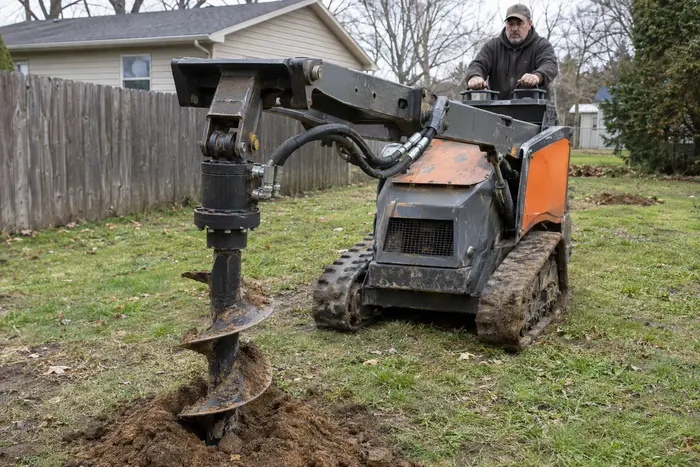
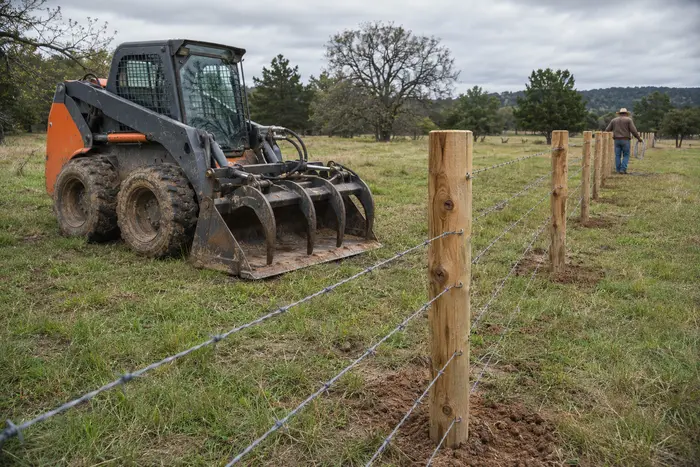
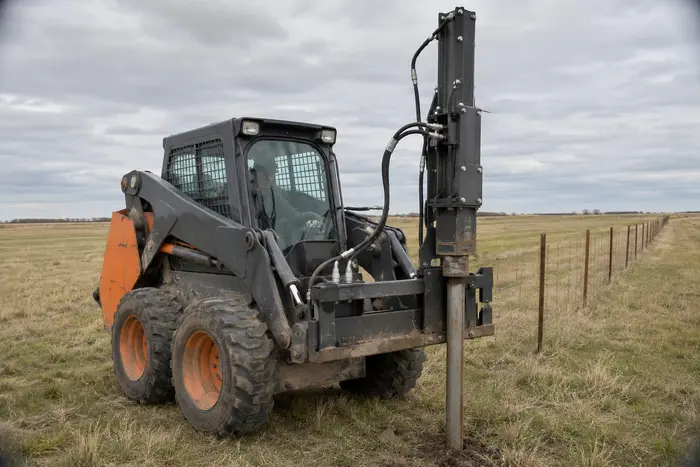
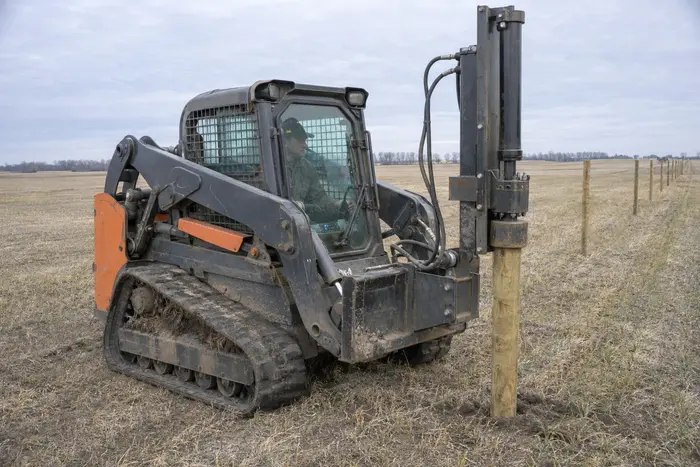
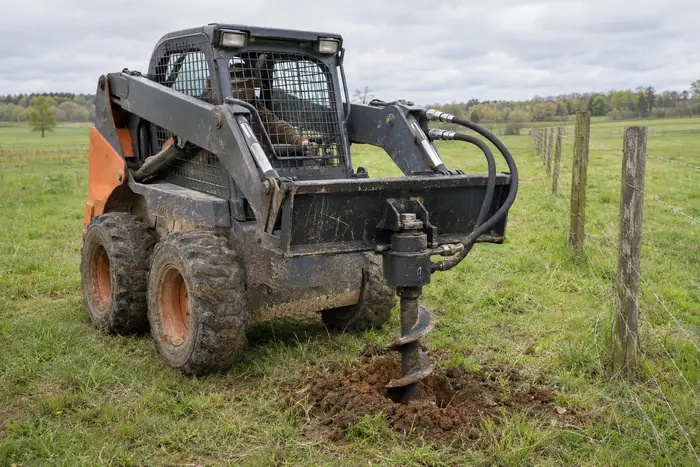
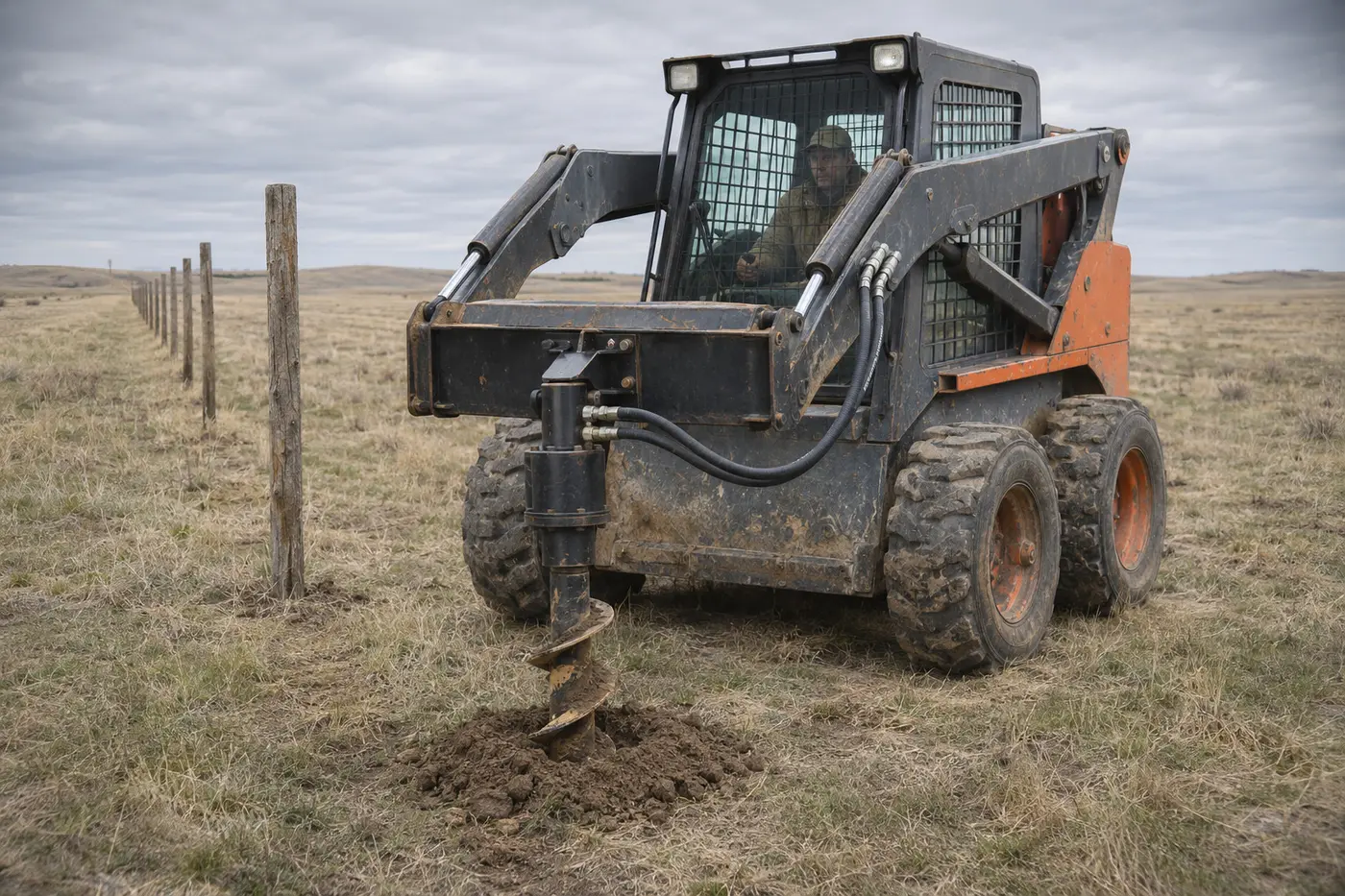
A few posts go fine with a hand digger. A long fence line does not. A skid steer with an auger bores consistent holes quickly, and a hydraulic post driver pushes posts into the ground without digging at all in suitable soil. Browse skid steer augers, mini skid steer augers and post drivers. For fencing machines, see the skid steer fence installer guide, and for spacing see fence post spacing.
Common mistakes
- Digging a cone-shaped hole that is narrow at the bottom.
- Skipping gravel, so water sits around the post and rots it.
- Setting corner and gate posts the same as line posts.
- Ignoring local frost depth and building rules.
- Not checking for buried utilities before digging.
Safety
Wear eye and hearing protection, and keep hands clear of augers and post drivers. Operate machine attachments within the machine's rated operating capacity and the operator manual. Locate underground utilities before any digging.
Fence type changes the rule
Wood privacy fences
Tall solid fences catch wind like a sail, so they ask more of their posts. Use the one-third rule as a floor, set posts in concrete in loose soils, and keep post tops above the ground level of wet areas so water does not sit against the wood.
Chain link and wire
Terminal posts at ends, corners and gates carry the tension of the entire run and need to be sized and set deeper than line posts. Line posts carry less load. Follow the chain link maker's installation guide. Terminal post footings are usually larger and deeper than line post footings, and in freeze and thaw climates they should reach below the local frost line.
Livestock and farm fences
Animals lean and rub. Corners and gate posts take heavy loads and need strong bracing. Driven posts can work well in suitable soil, and a hydraulic driver speeds up a long line. Check local fencing rules for any required spacing and height.
Testing your soil before you commit
Dig one test hole first. If the walls are firm and the bottom is dry, you have a good base. If you hit water, loose sand or rocks, adjust. In wet ground, make the hole deeper and add more gravel. In rocky soil, an auger with rock bits or a hydraulic driver may be easier than a hand tool. Remember that digging into buried lines is dangerous, so call your local utility locating service before you dig.
Get the right fit the first time
Ready to drill or drive a full fence line? Send us your machine's make, model and year, and a person will check fit against the maker's specs. You approve a delivered price before you pay, and the manufacturer ships direct. Start a fit-checked quote.
Questions buyers ask
How deep should a fence post be buried?
Bury at least one-third of the post's length. A 6-foot post needs about a 2-foot hole. Go deeper in soft soil, on windy sites, for gates and corners, or where the local frost line is deeper. Check local building codes.
How deep should a fence post be for a 6 foot fence?
At the one-third rule, a 6-foot-tall fence needs about 3 feet of post in the ground, which means a 9-foot post. Many builders set 8-foot posts about 2 feet deep, which is shallower than one-third. Deeper may be needed for frost, wind or soft soil, so check local rules.
How deep should a fence post be in Canada?
It depends on your local frost depth, which can exceed the one-third rule in many parts of Canada. Check with your municipality or a local contractor for the frost line and permit rules, and set the post at the greater of the two depths.
How deep should a fence post be in concrete?
Concrete does not change the depth rule. Still bury at least one-third of the post, with gravel under it for drainage, and go below the frost line where needed. Slope the concrete top away from the post so water does not pool.
How wide should a fence post hole be?
About three times the width of the post. For a 4x4 that is roughly 12 inches. Keep the walls flat and the width constant to the bottom. A post-hole digger or auger gives a straighter hole than a shovel.