Fencing guide
How Far Apart Should Fence Posts Be?
Quick answer
How far apart should fence posts be? It depends on the fence type. Extension guidance gives standard barbed wire line posts about 12 to 20 feet apart, board fence posts about 8 feet, and high-tensile wire posts 16 to 90 feet. Check your fence maker's instructions and brace corners firmly.
Shopping for this now? Get a fit-checked, delivered quote.
Key takeaways
- Barbed wire: roughly 12 to 20 ft between line posts.
- Board fence: about 8 ft, matched to board length.
- High-tensile: 16 to 90 ft; corners carry the load.
- Posts needed = length divided by spacing, plus one.
How far apart should fence posts be?
It depends on the fence type. Oklahoma State University Extension gives a useful set of figures for livestock wire fences. Standard barbed wire fence, usually three to five strands, has line posts about 12 to 20 feet apart. Board fences typically have posts every 8 feet, though you should always check board length first. High-tensile wire is held in tension along posts spaced 16 to 90 feet apart. Suspension barbed wire, which uses stays or droppers to hold the wires apart, can run line posts about 80 to 120 feet apart. Always follow the fence manufacturer's instructions for the product you buy.
Spacing is a balance between strength, cost and the animals or purpose the fence serves. Closer posts make a stiffer fence and use more posts. Wider spacing saves posts and labor but needs excellent corner and brace assemblies.
Fence post spacing chart
| Fence type | Typical line post spacing | Notes |
|---|---|---|
| Standard barbed wire (3 to 5 strands) | 12 to 20 feet | Common for cattle. Typical heights are about 51 to 54 inches. |
| Suspension barbed wire | 80 to 120 feet | Needs stays or droppers and very stable corners. |
| High-tensile wire | 16 to 90 feet | Spacing depends on terrain, design and fence goals. |
| Board fence | About 8 feet | Match post spacing to board length so boards land on a post. |
Those ranges are from one extension fact sheet written for livestock fencing. Woven wire, welded wire, chain link, privacy and panel fences each have their own rules. Check the manufacturer's installation guide, and your local extension office or building authority, for specifics.
How does the fence type change spacing?
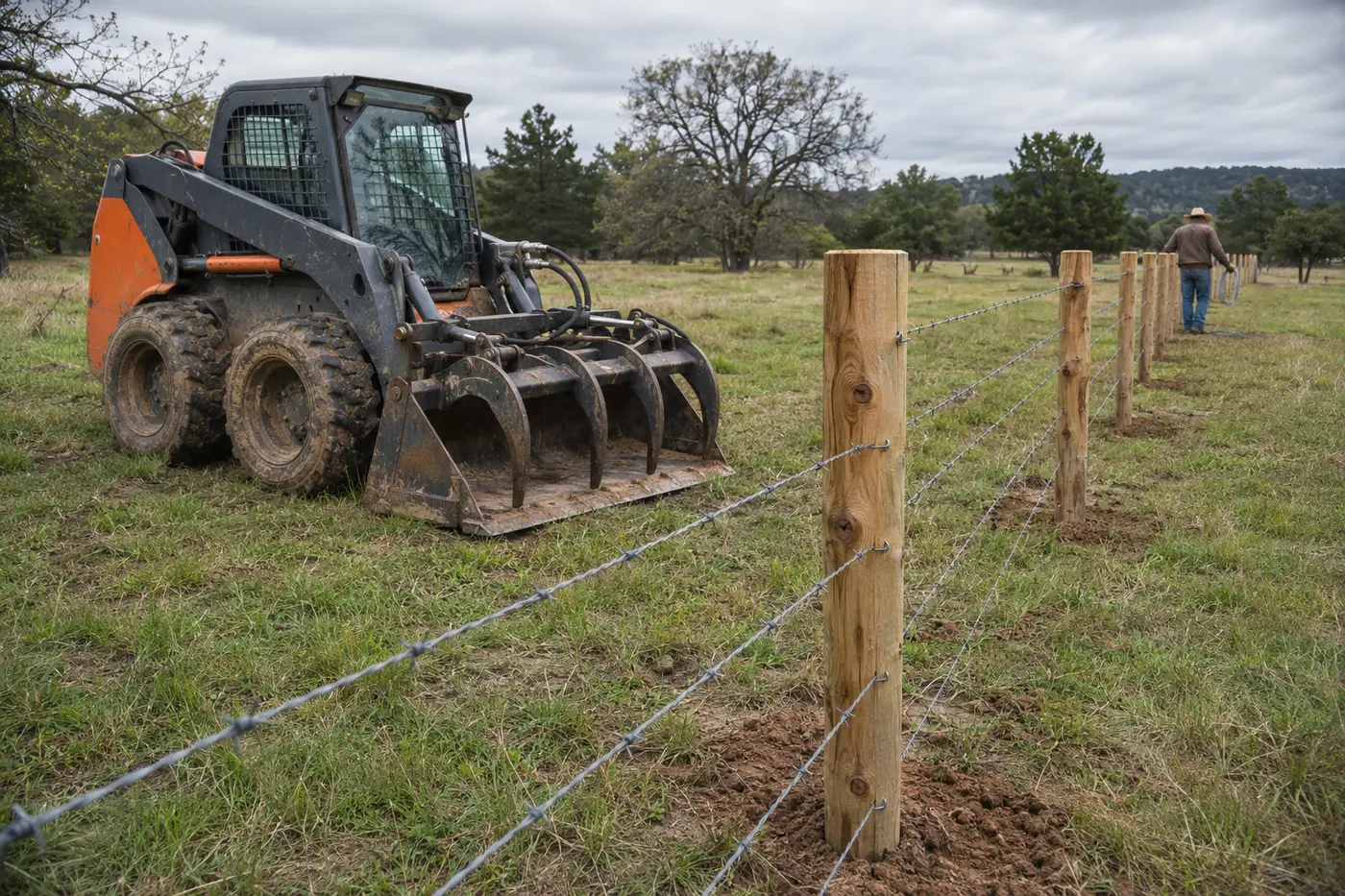
- Barbed wire. The most common livestock fence. Posts are close enough to hold the wire up and keep strands from sagging between them.
- Woven wire. Heavier and stiffer, with vertical stay wires. It needs strong end and corner assemblies and posts set close enough to keep the mesh upright. Follow the fence maker's guidance.
- High-tensile wire. Light but under very high tension. Spacing varies widely. In long runs with stays, posts can be far apart, but the braces at the ends carry the load. The extension reference lists wire tension at installation of roughly 200 to 250 pounds.
- Board or rail. Spacing is set by the length of the board or rail and the load it must carry.
- Panels. Posts match the panel width plus the gap the hardware needs. Measure the actual panel before you stake.
What affects post spacing in the real world?
- Animals. Bulls, horses and goats stress a fence in different ways. Strong animals and heavy pressure call for closer posts or sturdier materials.
- Terrain. Dips and rises need extra posts at the low and high points so the wire does not pull posts out of the ground or lift off.
- Soil. Soft or wet soil holds a post less firmly. Rocky ground can force you to adjust spacing around obstacles.
- Corners and ends. Corner, end and gate posts take far more load than line posts. They need deeper settings and bracing, no matter how wide your line spacing.
- Climate. Frost heave, flooding and heavy snow load change how posts perform over time.
How many posts do you need?
A quick method is to divide the fence length by your post spacing, then add one. For example, a 640-foot straight run with posts every 16 feet has 640 divided by 16, which is 40 spans, so 41 posts including both ends. Add extra posts for corners, gates, braces and low spots. If the line runs around a field, count each corner separately. Mark every post location with a stake before you drive or dig anything, and double-check the total before you order.
Setting posts faster
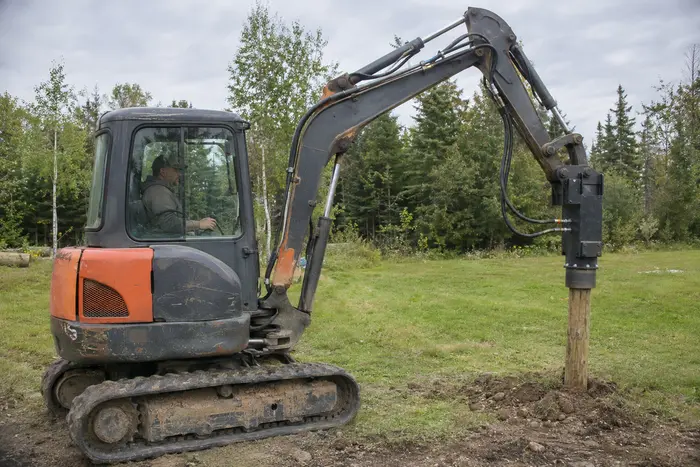
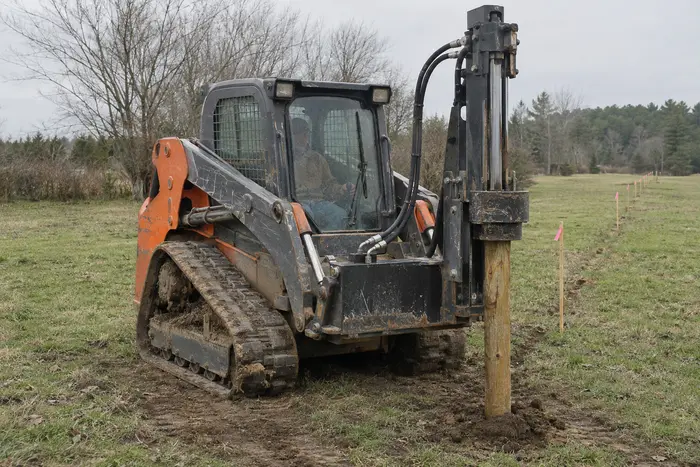
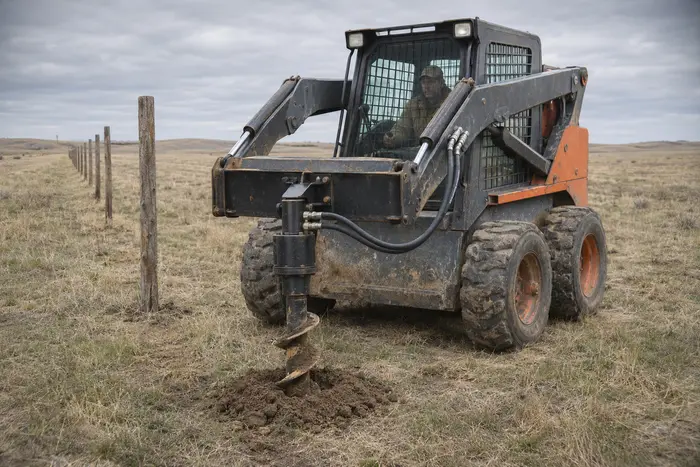
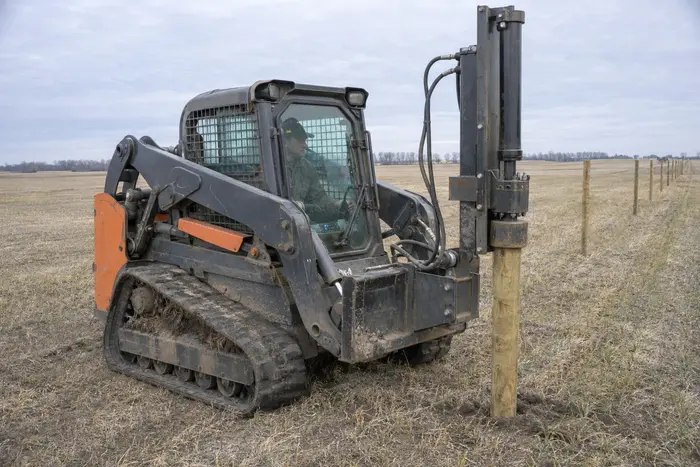
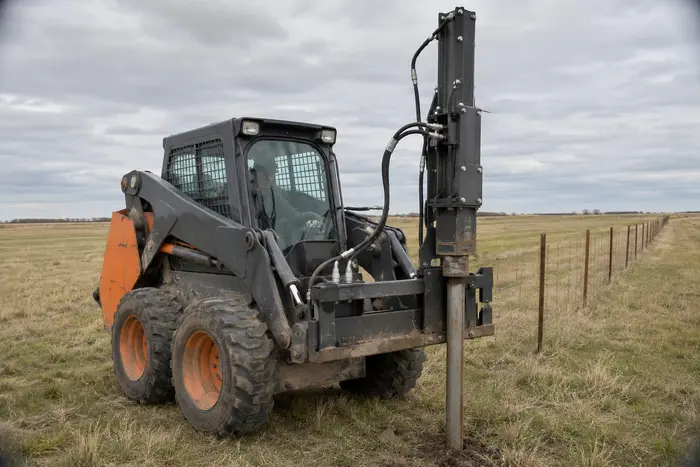
Spacing is only part of the work. Setting hundreds of posts by hand is slow. A hydraulic post driver on a skid steer, tractor or excavator can set line posts much faster than hand driving, in soil that allows driving. An auger sets deeper holes for corner and gate posts, or pre-drills in hard ground. Browse skid steer post drivers and augers, or see the fence installer attachments for tools that combine tasks. Our guides on how to choose a hydraulic post driver and how deep a fence post should be help you plan the rest.
Plan before you dig
- Call 811 in the US, or your provincial or local utility locating service in Canada, before you dig or drive posts.
- Confirm property lines and local fence rules with your municipality.
- Walk the line and flag rocks, trees, ditches and wet spots.
- Set corner and end posts first, then string a line to place the rest straight.
- Follow the operator manual for any machine you use to drive or drill posts.
Corners, ends and gates matter more than line posts
Line posts mostly hold the wire up. Corner, end and gate posts hold the tension. Extension guidance for suspension barbed wire stresses that H-braces or corner posts must be very stable and must resist up-heaving and kick out, and the same idea applies to any tensioned wire fence. A wide line-post spacing only works if the ends are rock solid. Build the braces first and strain the wire against them. Set gate posts deep and brace them, since a gate swings and pulls on its post every time it opens.
Common spacing mistakes
- Spacing posts evenly across a bumpy line. Add posts at humps and dips so the wire follows the ground.
- Skipping the layout. Without stakes and a string line, a fence wanders. Crooked lines also make rails and panels hard to hang.
- Forgetting board or panel size. If boards or panels do not meet at the post, you will cut them or re-set posts.
- Short-changing the ends. A strong line with a weak corner fails at the corner.
- Ignoring the fence maker's guide. The product instructions override rules of thumb in a general article.
Electric fence note
Electric fences work by deterrence and do not need the same strength as a conventional physical barrier. They still need sound construction, strong corners and good insulators on wood or steel posts, and the controller should meet recognized safety standards. Spacing varies with the design, the terrain and the animals. Follow the energizer and wire maker's instructions and local rules.
Get the right fit the first time
Send us your machine make, model and year and tell us the job. A person checks the attachment against the maker's specs, then you get a fit-checked quote with delivered pricing before you pay. The supplier ships direct, and warranty terms, if any, are written on your quote.
Questions buyers ask
How far apart should fence posts be for cattle?
For standard barbed wire, which is common for cattle, extension guidance gives line posts roughly 12 to 20 feet apart. Suspension or high-tensile designs can run wider but need strong braced corners. Follow the fence manufacturer's instructions and local advice.
How far apart should fence posts be for goats?
Goats need tighter, taller fence. Extension guidance calls heavy woven wire at least 39 inches high a good goat fence, and goat-proof barbed wire needs at least five to six wires spaced 3 to 5 inches. Post spacing follows the wire type, so check the maker's guide.
How far apart should posts be for woven wire fence?
It depends on the product, terrain and animals. Woven wire is heavier than barbed wire and needs strong end and corner assemblies, with line posts spaced to keep the mesh upright. Follow the maker's installation instructions for your exact fence.
How do you calculate how many fence posts you need?
Divide the total fence length by the post spacing and add one. A 640-foot run with posts every 16 feet needs 41 posts. Then add extra for corners, gates, braces and low spots, and mark every location before digging.
How far apart should board fence posts be?
Extension guidance says board fence posts are typically spaced every 8 feet, but you should check the board length first. If you buy longer boards, post spacing may need to be shortened so each board lands on a post.