Skid steer guide
Skid Steer Dozer Blade: Six-Way Blades Explained
Quick answer
A skid steer dozer blade pushes, cuts and spreads material like a small bulldozer. A six-way blade moves six ways: up and down, angle left and right, and tilt left and right. The loader's own tilt adds pitch. Choose by width, loader capacity, hydraulic circuits and cutting edge.
Shopping for this now? Get a fit-checked, delivered quote.
Key takeaways
- Six-way = lift, angle and tilt, each in two directions.
- Check your auxiliary circuits and coupler.
- Blade weight sits far forward, so check rated capacity.
- A blade spreads and levels; a bucket digs and hauls.
What is a skid steer dozer blade?
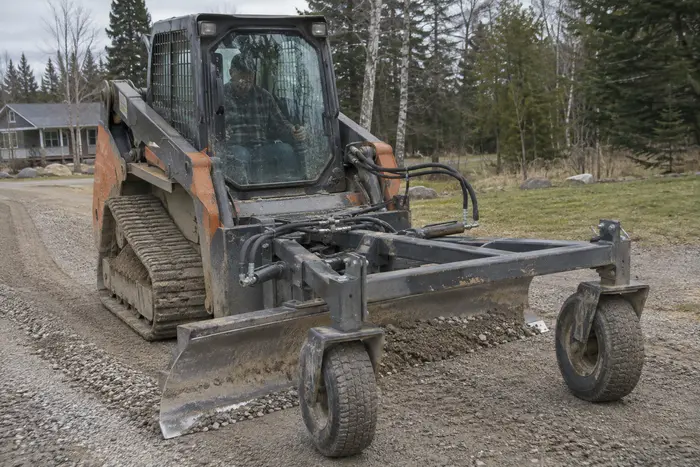
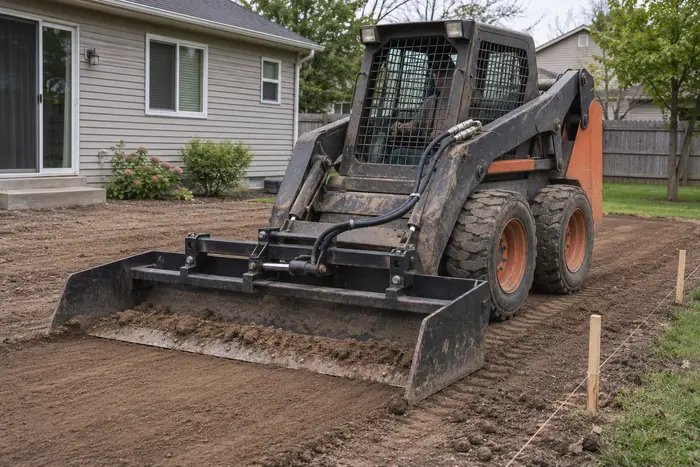
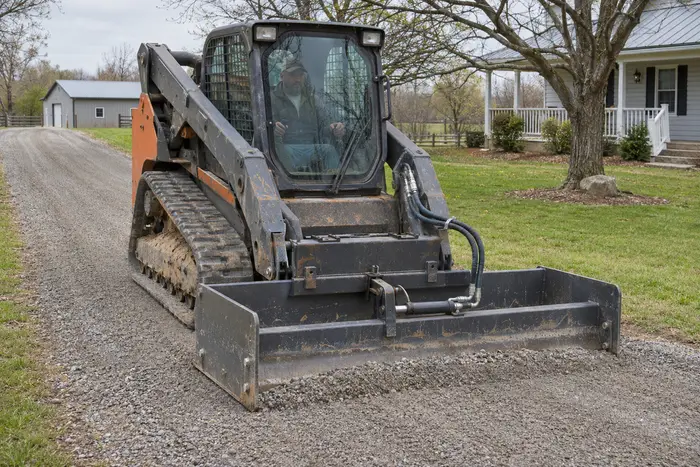
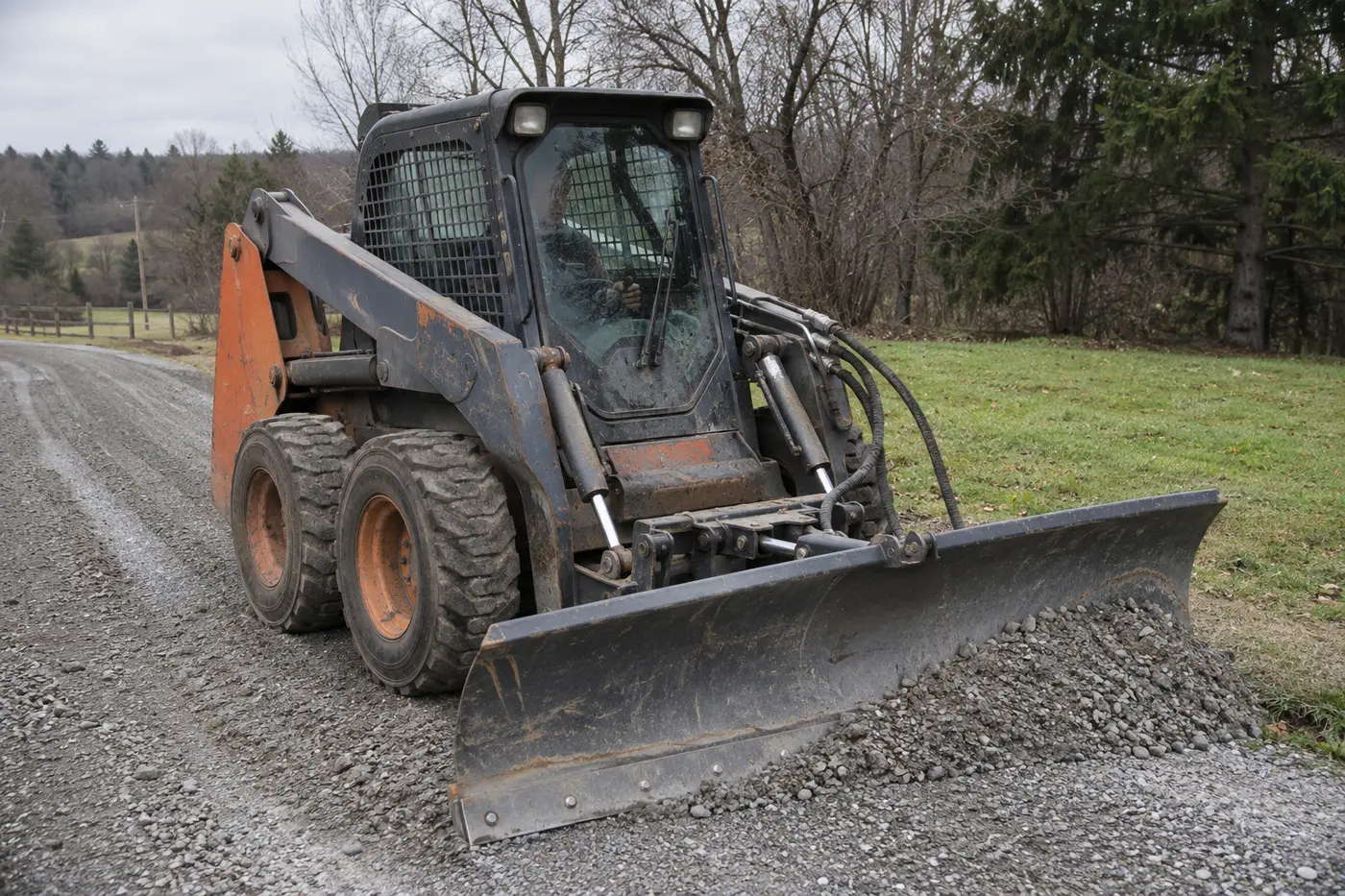
A skid steer dozer blade is a wide steel blade that mounts on the loader's quick attach plate and pushes, cuts and spreads material like a small bulldozer. A basic blade is rigid. A hydraulic blade can angle left and right so material rolls off to the side, and a six-way blade adds tilt as well. Dozer blades are common for grading driveways, leveling lots, backfilling trenches, spreading gravel and pushing snow.
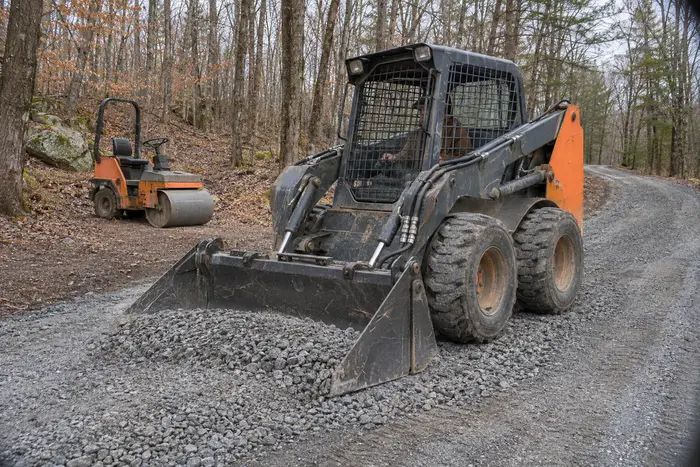
Compared with a bucket, a blade pushes material along the ground without carrying it. That keeps the weight off the machine's front end and makes long, even passes easy. A blade is a finishing and spreading tool more than a digging tool.
What does six-way mean?
A six-way blade moves in six directions: up and down, angle left and right, and tilt left and right. Together, the loader and the blade's hydraulic cylinders handle the motions, and the loader's quick attach tilt adds pitch:
- Lift up and down. The loader arms raise and lower the blade.
- Angle left and right. The blade rotates on its vertical axis, so you can cast material off to either side.
- Tilt left and right. One end of the blade moves higher than the other so you can cut a side slope or a crown.
- Pitch forward and back (from the loader). Curling the quick attach plate leans the blade forward to dig and back to float or to carry.
In practice, a six-way blade gives much of the flexibility of a small dozer's blade. Depending on the maker, some models are called six-way and some four-way. Check which hydraulic functions the blade includes and how many auxiliary circuits it needs. Some use two or more hydraulic circuits and a selector or joystick controls. Our skid steer dozer blades category lists the options. Smaller carriers can run a mini skid steer dozer blade.
Dozer blade types compared
| Blade type | Movements | Best for |
|---|---|---|
| Fixed straight blade | Lift only | Basic pushing and backfilling |
| Manual angle blade | Lift plus pin-set angle | Light grading and snow |
| Hydraulic angle blade | Lift plus angle from the seat | Driveways, snow, side casting |
| Six-way blade | Lift, angle and tilt (pitch from the loader) | Finish grading, crowning, ditching, slopes |
How do you choose a skid steer dozer blade?
- Width. Choose a blade wider than your machine's tires or tracks so you can work in one pass without leaving a ridge. Do not go so wide you cannot control it.
- Weight and rated operating capacity. Blade weight sits far forward. Make sure the loader's rated operating capacity covers it with margin. See how much a skid steer can lift.
- Hydraulic circuits. A six-way blade needs more than one auxiliary function. Check that your loader has the auxiliary circuits, or a diverter, and the right coupler type. Read the hydraulic flow guide.
- Cutting edge. A bolt-on, replaceable edge saves the blade body. Ask about the steel grade and thickness of the edge and the mold board.
- Frame and pivot design. Look for strong pivot pins and bushings and replaceable wear parts.
- Controls. A single joystick with a selector for angle and tilt is easier on the operator than juggling multiple switches.
- GPS or laser readiness. Some blades accept grade-control systems for precise finish work. If that matters to you, ask what the blade supports.
Dozer blade vs grader, box grader and land plane
These tools overlap, but each has a sweet spot. A dozer blade pushes and spreads large volumes. A box grader scarifies and levels loose material with its rear blade and shanks. A land plane draws a long, flat float across a surface for fine grading. A grading attachment with a built-in laser or gradeable bucket can finish a flat pad. If you maintain gravel roads, compare the box graders and graders with a dozer blade. Our grader attachment guide covers when to choose each.
Techniques for good results
- Start with a plan. Mark the finished grade and drainage direction. Walk the site.
- Rough in first. Make a first pass to move bulk material to low spots. Do not try to finish on the first pass.
- Work in straight, overlapping passes. Overlap a bit so you do not leave ridges.
- Keep a small windrow. A little material in front of the blade fills hollows. Too much loads the machine.
- Use angle and tilt for the finish. Angle the blade to cast material to the side. Tilt to build a crown or to match a slope.
- Finish at a slow, steady speed. Smooth operator inputs make a smooth surface.
For more on grading, read how to level ground with a skid steer and how to build a gravel driveway.
Snow work with a blade
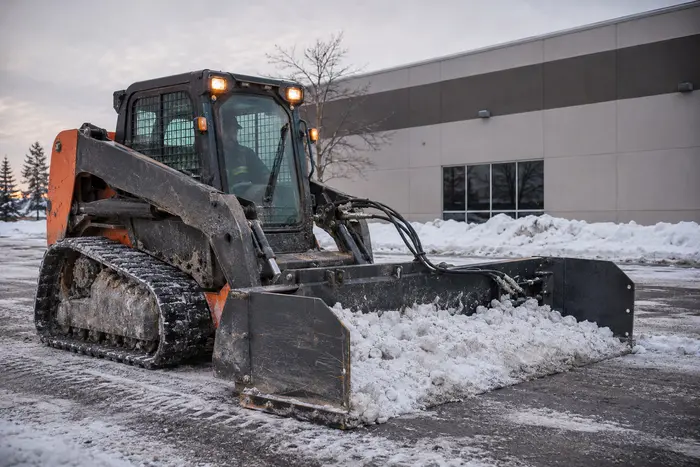
Skid steer loaders use specialized attachments for snow depending on conditions and work. Snow pushers move large volumes of snow across open areas, while angled blades direct snow to the side of a travel path. A hydraulic angle or six-way blade works well on driveways and narrow lanes where you want to cast snow to one side. For big lots, a pusher may move more per pass. See snow removal with a skid steer for a comparison.
Safety and care
- Check for utilities, septic tanks and buried obstacles before grading. In the US, call 811. In Canada, contact your provincial one-call service.
- Keep bystanders away from the blade and the machine's path.
- Work slopes only as the loader manual allows, and keep the blade low when traveling.
- Inspect hoses, cylinders and pivot pins daily. Grease where the manual calls for it.
- Replace worn cutting edges before they gouge the mold board.
Tires or tracks: how the carrier affects results
A blade copies what the machine does. On wheels, soft ground pushes ruts that the blade then has to fix. On tracks, the carrier floats better and leaves a smoother base, which helps on loose gravel and wet soil. Track loaders also carry more weight low and keep traction when the blade is loaded. If you do a lot of finish grading, think about the carrier as well as the blade. Weight on the front axle also matters: heavy blades on a light wheeled loader can lift the rear and cost you traction when you need it most.
Common mistakes with dozer blades
- Trying to cut too deep. Take shallow passes. A deep cut stalls the machine and leaves a rough surface.
- Carrying too much material. An overloaded blade bogs the machine and spills over the sides.
- Ignoring the weight. A heavy blade at full lift can exceed rated operating capacity and make the machine tip forward.
- Forgetting drainage. A level pad that holds water is a failure. Plan the slope before you start.
- Skipping edge checks. A worn edge or loose bolts cause chatter and uneven cuts.
Get the right fit the first time
Send us your machine make, model and year and tell us the job. A person checks the attachment against the maker's specs, then you request a fit-checked quote with delivered pricing before you pay. The supplier ships direct, and warranty terms, if any, are written on your quote.
Questions buyers ask
What is a 6 way blade on a skid steer?
A six-way blade moves in six ways: up and down from the loader arms, angle left and right, and tilt left and right. Pitch comes from the loader's quick attach tilt. That gives dozer-style control for finish grading, crowning, ditching and slopes.
Does a skid steer dozer blade need special hydraulics?
Hydraulic angle blades need one auxiliary circuit. Six-way blades need more than one function, so check your loader's auxiliary circuits and coupler type, and whether a diverter or joystick selector is available. Share your machine make, model and year for a fit check.
Can a mini skid steer run a 6 way blade?
Some smaller six-way and angle blades are built for mini skid steers. They are narrower and lighter, and the carrier's hydraulic output and capacity set the limit. Choose a blade sized to your machine and confirm fit before ordering.
Is a dozer blade better than a bucket for grading?
For spreading and leveling, often yes. A blade pushes material along the ground in long passes and does not carry weight on the loader arms. A bucket is better for digging and hauling. Many jobs use both.
What width of dozer blade should I get?
Pick a blade wider than your tires or tracks so one pass covers your wheel path, within your loader's rated operating capacity. A wider blade is heavier and sits further forward, so check capacity and hydraulics before ordering.