Land clearing guide
Disc Mulcher vs Drum Mulcher: Which Is Better?
Quick answer
Disc mulcher vs drum mulcher: a drum mulcher swings teeth on a rotating horizontal drum and gives a more consistent, finer mulch. A disc mulcher spins cutting teeth on a flat disc and is often favored for fast clearing of larger material. Neither is universally better. Match the head to your tree size, ground and loader flow.
Shopping for this now? Get a fit-checked, delivered quote.
Key takeaways
- Drum heads usually give finer, more even mulch.
- Disc heads are often chosen for faster clearing of larger wood.
- Rocks and soil contact wear teeth on both, so cut above grade.
- Both need enough hydraulic flow; check your loader first.
- Tooth cost and upkeep matter as much as the head type.
Forestry mulchers turn standing brush and small trees into a layer of chips without hauling anything away. The two main head designs, drum and disc, solve the problem differently. Here is a straight comparison so you can decide.
What does a forestry mulcher do?
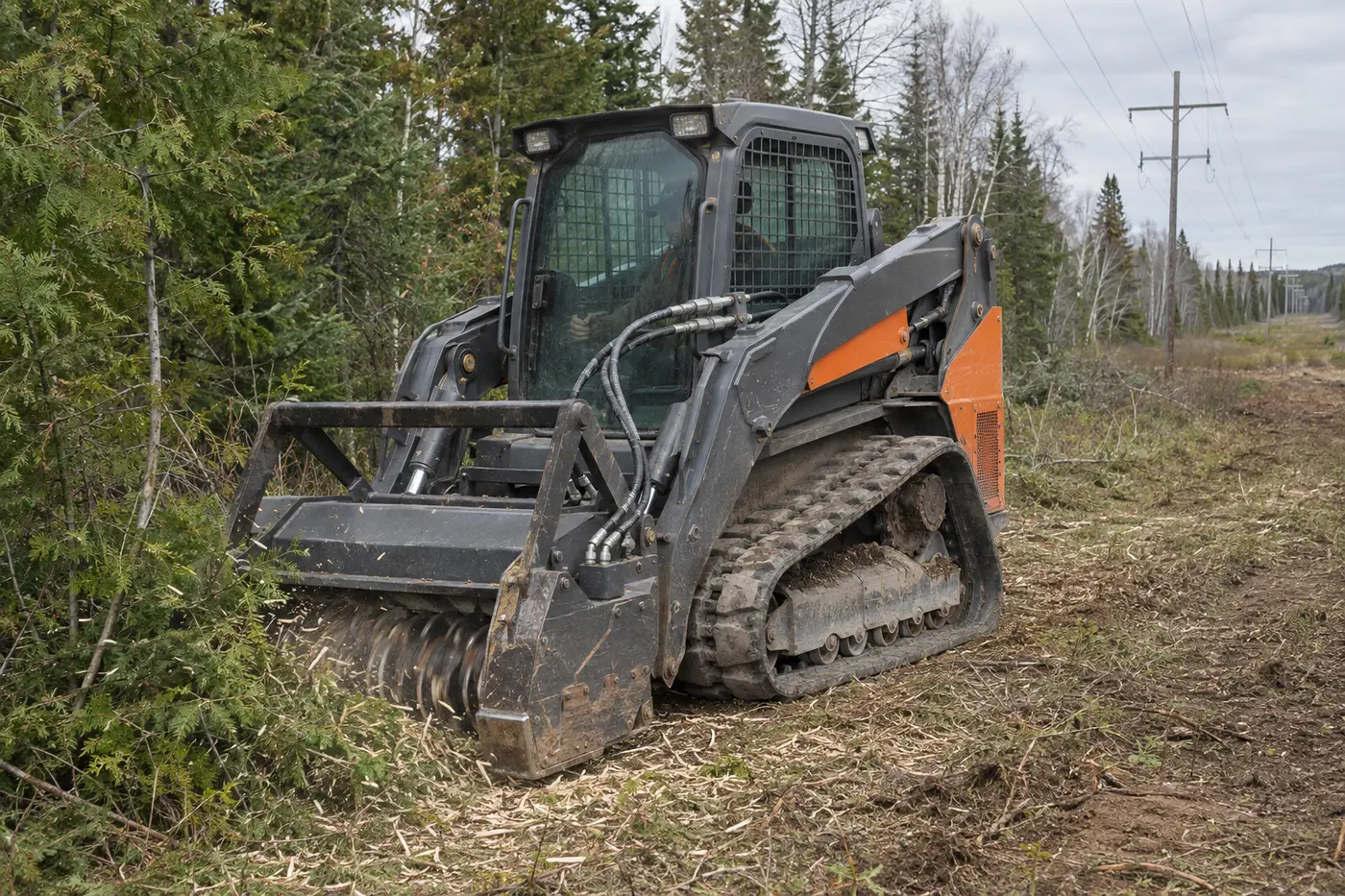
A mulcher shreds vegetation where it stands. A general reference describes the tool as a rotary drum equipped with steel chipper tools or blades that shred plants, available as complete machines or as attachments for tracked and rubber-tired carriers, skid steers and excavators. The advantages include processing material in place, so there is less hauling and cleanup, and leaving the soil structure largely intact with mulch that can help hold the ground against erosion.
How does a drum mulcher work?
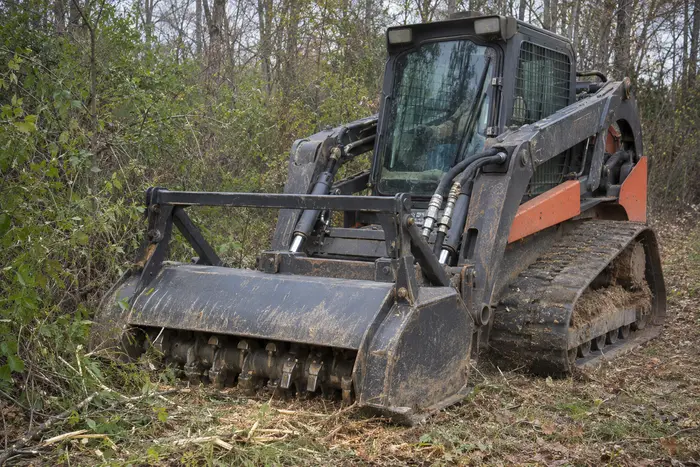
A drum mulcher has a horizontal cylinder with teeth or blades around it. The drum spins and the teeth strike the material and chop it against a fixed bar or shield. It works like a very heavy lawn mower reel. Because many teeth hit the material in quick succession, a drum often produces a uniform, finer chip.
How does a disc mulcher work?
A disc mulcher spins a large flat disc fitted with cutting teeth. Material is cut and thrown as the disc moves through it. Operators often choose discs when they want to take down larger stems quickly, and the cut tends to be more aggressive. Chip size is typically a bit coarser and less uniform than a drum, which matters if you want a finished surface.
Tree size limits depend on the head, its rotor speed and the power of the carrier behind it. Each manufacturer states a maximum stem diameter for each head, and a skid steer head is rated well below a dedicated forestry machine, so use the maker's number for the exact head, not a general one.
Disc mulcher vs drum mulcher side by side
| Drum mulcher | Disc mulcher | |
|---|---|---|
| Cutting action | Rotating horizontal drum with teeth | Spinning flat disc with teeth |
| Mulch quality | Finer, more even | Coarser, less uniform |
| Speed on larger wood | Steady | Often quicker |
| Finish for seeding or paths | Better | Rougher |
| Rocks and soil | Wears teeth fast | Wears teeth fast |
| Hydraulic demand | High, check the spec | High, check the spec |
| Upkeep | Replace teeth and holders | Replace teeth and holders |
The table shows tendencies, not rules. Specific machines overlap.
Which is better for a skid steer?
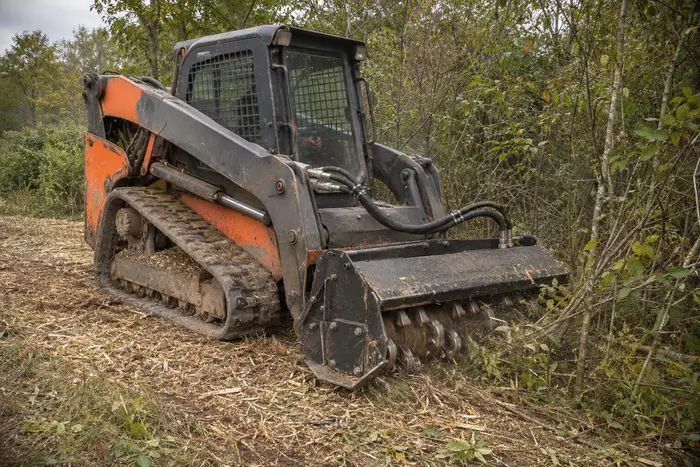
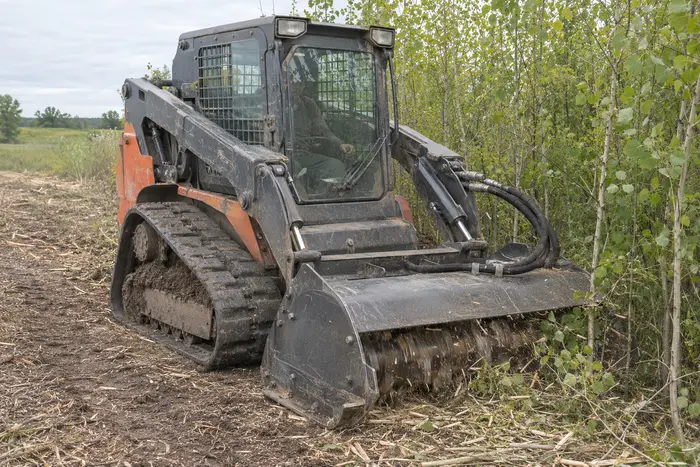
For most skid steer owners, the deciding factors are loader flow, target tree size and finish quality. A drum head sized to your loader usually gives the cleaner result on brush and small trees. A disc head is worth a look if your priority is clearing bigger stems fast and you do not mind rough mulch. Either way, you need enough flow. Check which skid steer attachments need high flow before you shop, and read our skid steer mulcher guide for sizing.
Which is better on a mini excavator?
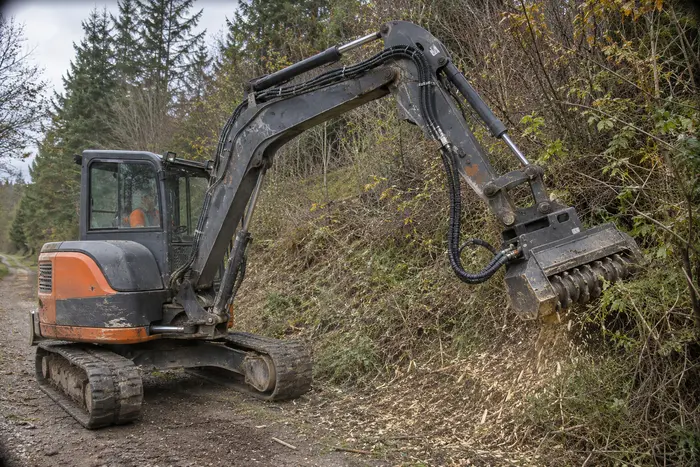
Excavator-mounted mulchers let you place the head precisely and reach over wet or sloped ground. A tilting bracket helps keep the head square to the work on slopes and uneven ground. See the mini excavator mulcher guide and browse excavator forestry mulchers.
What are the limits of any mulcher?
- Rocks. Mulchers cannot process stone. Hitting it wears the teeth and can cause sparks and fire risk.
- Heavy stands. Dense stands of large trees are slow to mulch. Felling the biggest trees first, or using a larger dedicated machine, can be faster.
- Site access. You need access for fuel and maintenance.
- Wear parts. Teeth, hammers and blades are replaceable wear items and a real running cost.
Checklist for choosing
- List the largest stem diameter you expect.
- Decide if you need a fine finish or just a cleared site.
- Get your loader's rated flow and pressure.
- Match the head's flow range and the manufacturer's stated tree-size limits.
- Look at tooth style, cost and availability.
- Ask about guards, door design and warranty.
Safety and ground conditions
Mulchers throw debris. Operate with a cab that has proper guarding, keep bystanders well clear, and wear hearing, eye and head protection. Walk the site and mark rocks, stumps with metal and buried wire. Do not cut in dry, windy conditions without a fire plan. Follow the operator manual and your machine's rated operating capacity.
Which fits your land: brush, trees or both?
Think in jobs, not heads. If your property is overgrown with brush and saplings and you want a tidy surface for pasture or trails, a drum head sized to your carrier tends to leave the cleanest finish. If you are opening up a heavily wooded site and speed matters more than looks, a disc head can reduce the time per acre, with the trade-off of a rougher mulch layer you may need to smooth later.
A mixed property may be best served by renting or hiring the right head for the heavy section and owning the one that suits your everyday work. Clearing rate depends on terrain, density and material, and a dedicated forestry machine clears far faster than a skid steer head, so plan your schedule around your own carrier.
Tooth and wear costs
Teeth, holders and anvils are consumables on either head. Hitting dirt dulls them faster than wood does, and the cost per hour of mulching is shaped more by how clean you cut than by the head type. Ask the manufacturer how teeth are mounted, how many you need per set, how long a set typically lasts in your material, and whether replacements are easy to source. A head with simple, standard teeth saves money and downtime over a few seasons.
Hydraulics and carrier match
Mulcher heads are among the biggest hydraulic users you can run. Most need the loader's high-flow circuit, the right pressure and a case-drain line in many cases. Skid steers, compact track loaders and excavators each supply flow differently, so a head that works on one carrier may not suit another. A track loader generally provides better flotation and traction on soft ground than a wheeled machine, which is a plus in mulching conditions. Always compare the head's requirements to your carrier's specification, not to a general rule.
Fire and debris risk
Mulching throws chips and can spark if the teeth strike rock or metal. Keep a fire extinguisher on the machine, carry water on dry sites, and stop work in conditions that raise wildfire risk. Check local rules on open burning and equipment use during fire season.
Get the right fit the first time
Send us your machine's make, model and year, and a person will check fit against the maker's specs. Your quote shows one delivered price, freight to your address included, and the order ships direct from the supplier. Request a fit-checked quote.
Questions buyers ask
Is a disc mulcher or drum mulcher better?
Neither is better everywhere. A drum mulcher usually gives finer, more even mulch. A disc mulcher is often picked for fast clearing of larger material. Match the head to your tree size, finish needs and your loader's hydraulic flow, and follow the maker's limits.
What is the difference between a disc mulcher and a drum mulcher?
A drum mulcher uses a rotating horizontal drum with teeth, while a disc mulcher uses a spinning flat disc with teeth. Drums tend to produce finer chips. Discs tend to be more aggressive on larger wood and leave a coarser result.
Can a skid steer run a disc or drum mulcher?
Yes, if the loader supplies enough hydraulic flow and pressure. Mulchers are among the most flow-hungry attachments. Check your loader's rated flow against the head's required range before you buy, and use a cab with proper guarding.
Do mulchers handle rocks?
No. Mulchers cannot process stone, and grinding against rocks wears teeth quickly and can cause sparks. Cut above ground level where you can, and walk the site first to mark rocks and buried metal.
How big a tree can a mulcher cut?
It depends on the head and the carrier. Each maker states a maximum stem diameter for each mulcher head, and a skid steer head is rated well below a dedicated forestry machine. Use the limit for your exact head and your loader's flow, and fell larger trees another way.