Land clearing guide
Piston vs Gear Motor Brush Cutter: Which to Buy
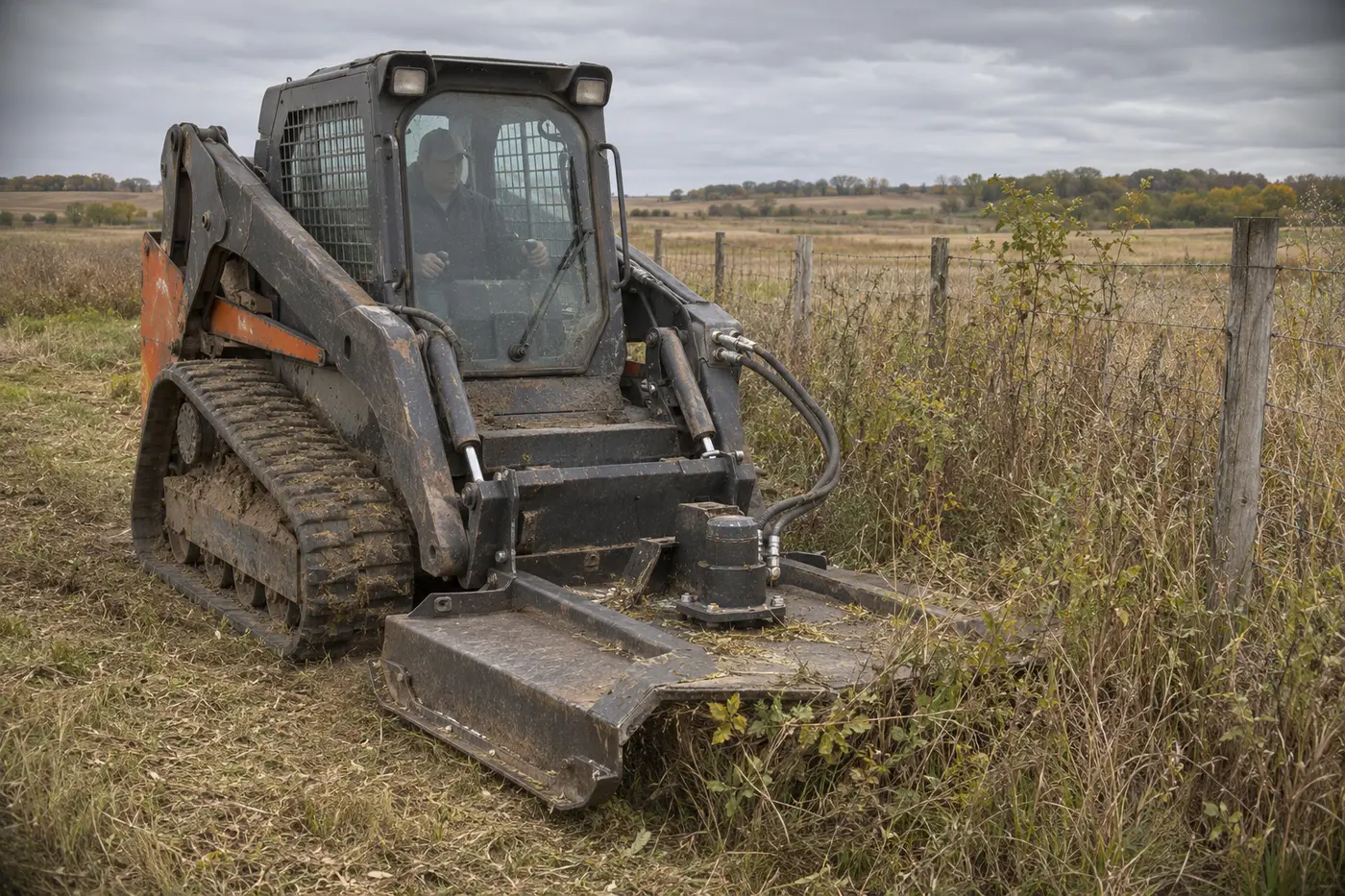
Quick answer
Hydraulic piston motor vs gear motor on a brush cutter: gear motors are simpler and fit standard-flow loaders, while piston motors are more efficient, handle higher pressure and suit high-flow machines and heavy brush. The motor must match your loader's hydraulic flow. Pick on flow first, then on how hard you work the cutter.
Shopping for this now? Get a fit-checked, delivered quote.
Key takeaways
- Match the motor to your loader's hydraulic flow before anything else.
- Gear motors are simpler and common on standard-flow brush cutters.
- Piston motors are built for efficiency and heavier, longer duty.
- Gear motor wear usually lowers efficiency gradually rather than failing suddenly.
- Check the case drain and couplers for whichever motor you choose.
The motor is the part of a brush cutter that decides what it can chew through, how much your loader has to supply, and what you will pay for. Most buyers see "gear motor" and "piston motor" on a spec sheet and are not sure what it means for them. This is the plain version.
What does the motor do on a brush cutter?
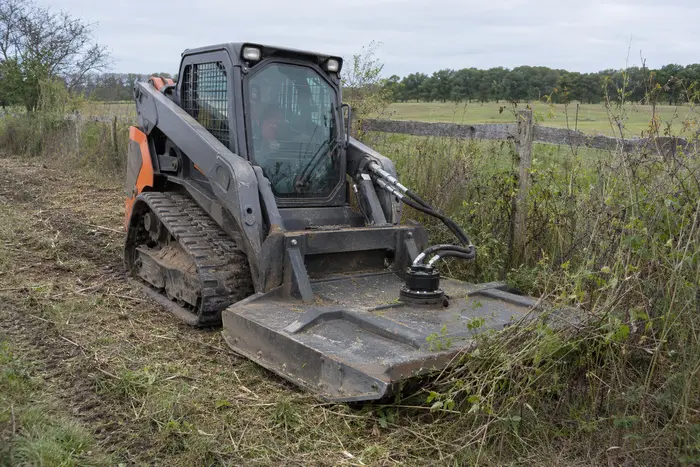
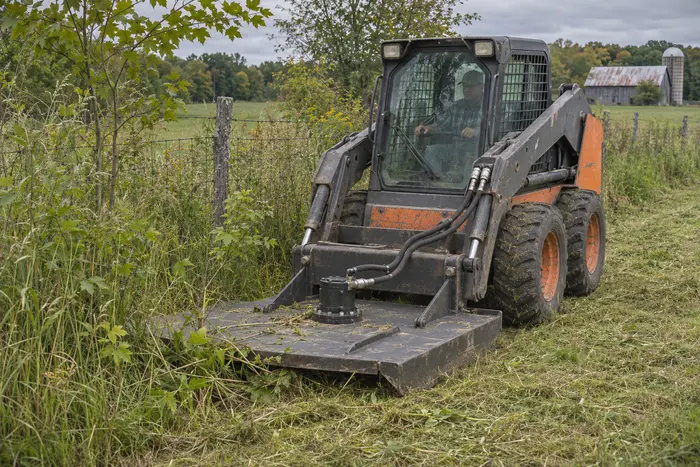
A hydraulic brush cutter is a spinning blade deck turned by a motor, which is driven by oil from your skid steer or track loader. More oil flow and pressure into the motor means more blade speed and torque. The motor type sets how efficiently that oil becomes spin.
Piston vs gear motor: the basic difference
A gear motor uses two meshing gears inside a housing. Oil pushes the gears around. It is a simple, sturdy design. A piston motor uses a rotating group of pistons moving against a plate or cam. It is a more complex design that can hold efficiency across a wider range of speed and load.
| Gear motor | Piston motor | |
|---|---|---|
| Design | Meshing gears | Pistons in a rotating group |
| Typical use on cutters | Standard-flow loaders, lighter brush | High-flow loaders, heavy brush, long days |
| Complexity | Simple | More complex |
| Efficiency | Good, slowly declines with wear | Strong across a wide range |
| Purchase cost | Generally lower | Generally higher |
| Repair | Often straightforward | Usually a specialist job |
That table is general. Specific figures vary by manufacturer, so check the spec sheet for the cutter you are considering.
How do gear motors wear?
A reference on hydraulic motors notes that catastrophic breakdown of a gear motor is less common than in most other types. What usually happens is gradual wear that lowers volumetric efficiency. Oil slips past the worn gears, the motor spins slower for the same flow, and heat goes up. A cutter that used to hold speed through thick brush starts to bog. Once hoses, couplers and flow check out, that points to a tired motor.
What are piston motors good at?
Piston motors cover a wide range of speeds and loads at acceptable efficiency. Some radial piston designs also have very high starting torque. On a cutter, that means better blade-speed control and more punch when the blade hits a thick stem. They are also the usual choice when the loader has high flow to feed them.
Which one matches your loader?
Start with flow. Standard-flow loaders often pair with gear-motor cutters. Piston motors are common on high-flow cutters, and some standard-flow cutters use them too. Running a cutter that needs more flow than your machine supplies gives you slow blade speed and poor results. Our guide on skid steer hydraulic flow explains how to read your machine's spec, and low-flow skid steer brush cutters covers the lighter end.
Does the motor type change the size of brush you can cut?
Indirectly. Blade speed and torque, plus deck design and blade type, set the brush size. A piston-motor cutter on a high-flow loader generally handles denser, larger stems more consistently. A gear-motor cutter is usually matched to grass, saplings and light brush. Follow the manufacturer's stated cutting limits, and never push past what the cutter and loader are rated for.
Checklist: choosing a brush cutter motor
- Find your loader's auxiliary hydraulic flow and pressure in the manual.
- Match the cutter's flow requirement to that number, not above it.
- Decide how much heavy brush and how many hours per season you expect.
- Confirm the coupler type and whether a case-drain line is required.
- Ask about replacement motor availability and who services it.
- Ask for the warranty terms in writing.
What is a case drain and why does it matter?
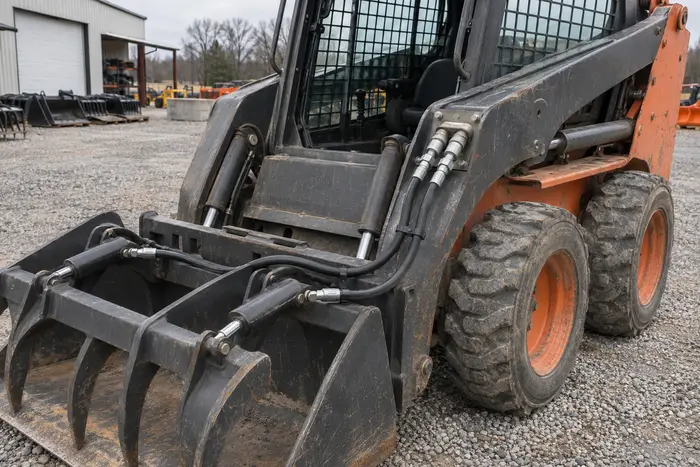
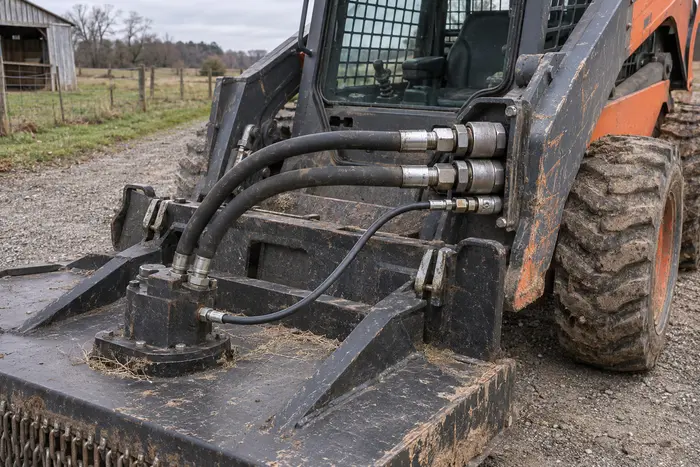
Many motors need a return line for internal leakage, called a case drain. Piston motors especially use it to protect shaft seals. If your cutter requires one, your loader needs a matching port. Our explainer on what a case drain is on a skid steer shows what to look for.
Replacing a brush cutter motor
If your existing motor is slow or hot, confirm the problem before replacing it: check hose size, couplers, relief setting and oil level first. A restricted line can mimic a worn motor. If the motor is the cause, replace it with one that matches the original displacement and mounting pattern, or ask the maker for the correct part. Do not guess on parts that spin a blade at high speed. Follow the operator manual and lock out the machine before any work.
Browse skid steer brush cutters and mini skid steer brush cutters to compare what is offered at each flow level.
Real-world scenarios
Mowing grass and light saplings on a standard-flow loader
A gear-motor cutter is the straightforward choice here. The loader supplies enough flow, the work does not hold the motor at its limits for hours, and there is less to go wrong. If a motor wears down in a few seasons, it is typically a repair you can plan for.
Clearing overgrown lots with heavy stems on a high-flow machine
This is where a piston-motor cutter earns its price. High flow lets the blade hold speed in thick material, and the motor's efficiency keeps heat down over a full day. Plan on better hoses and clean couplers too, because pressure and heat are higher on this setup.
Mixed work on a farm or acreage
If you do both, buy to your loader's flow, not to the toughest day of the year. A cutter sized well for your machine will cut cleaner than an oversized one that starves for oil. If you only face heavy brush once, consider renting the bigger tool and owning the right-sized one.
Maintenance that protects the motor
- Keep hydraulic oil clean and at the right level. Dirt is a leading cause of wear in both motor types.
- Replace return and pressure filters on schedule.
- Check hoses for kinks, bulges and weeping fittings before each shift.
- Keep couplers clean, and cap them when the cutter is off the machine.
- Watch temperature. A hot motor loses efficiency and ages seals faster.
- Do not stall the blade in thick material. Back off and let the blade recover.
Treat the blade as a rotating hazard. Stop the machine, relieve pressure and follow lockout steps in the operator manual before you touch a blade, bolt or hose.
Get the right fit the first time
Not sure which brush cutter motor matches your loader? Send us your machine's make, model, year and flow if you know it. A person confirms fit against the maker's specs, and you see the delivered price on your quote before you pay. Start a fit-checked quote.
Questions buyers ask
What is the difference between a piston motor and a gear motor?
A gear motor uses meshing gears turned by oil. A piston motor uses pistons in a rotating group. Gear motors are simpler and often cheaper. Piston motors hold efficiency across a wider range of speed and load, and they usually suit high-flow machines.
Is a piston motor better than a gear motor on a brush cutter?
Not always. A piston motor is better for heavy brush, long hours and high-flow loaders. A gear motor is often the better fit for standard-flow machines and lighter work. Match the motor to your loader's flow first, then to the workload.
Why does my brush cutter motor run slow?
A slow cutter can mean a worn motor, low flow, a kinked hose, an undersized coupler, or a relief valve set low. Gear wear lowers efficiency gradually. Check flow, hoses and couplers first, then the motor. Follow the manual before servicing.
Can I put a piston motor on a standard-flow skid steer?
You can mount one, but the cutter must be matched to your loader's actual flow and pressure. A cutter built for high flow will run slowly on a standard-flow machine. Check the spec sheet and manual, and ask the manufacturer before ordering.
Do brush cutter motors need a case drain?
Some do. Many hydraulic motors need a return line for internal leakage so shaft seals are not damaged. If your cutter requires a case drain, your loader needs a matching port or kit. Confirm this in the attachment's specs before buying.