Excavator guide
Mini Excavator Bucket Types Explained
Quick answer
Mini excavator bucket types include general-purpose digging, trenching, ditch or grading, heavy-duty rock, skeleton, tilt and screening buckets. Choose by your main job, then match the width, edge style and weight to your machine's weight class and make sure the pin spacing or coupler fits.
Shopping for this now? Get a fit-checked, delivered quote.
Key takeaways
- Match bucket type to the job: dig, trench, grade, rock or sift.
- Toothed edges break hard ground; smooth edges finish grade.
- Width must suit the machine's weight class and breakout force.
- Pin spacing and coupler style must match.
- Check teeth, edges and pins on every shift.
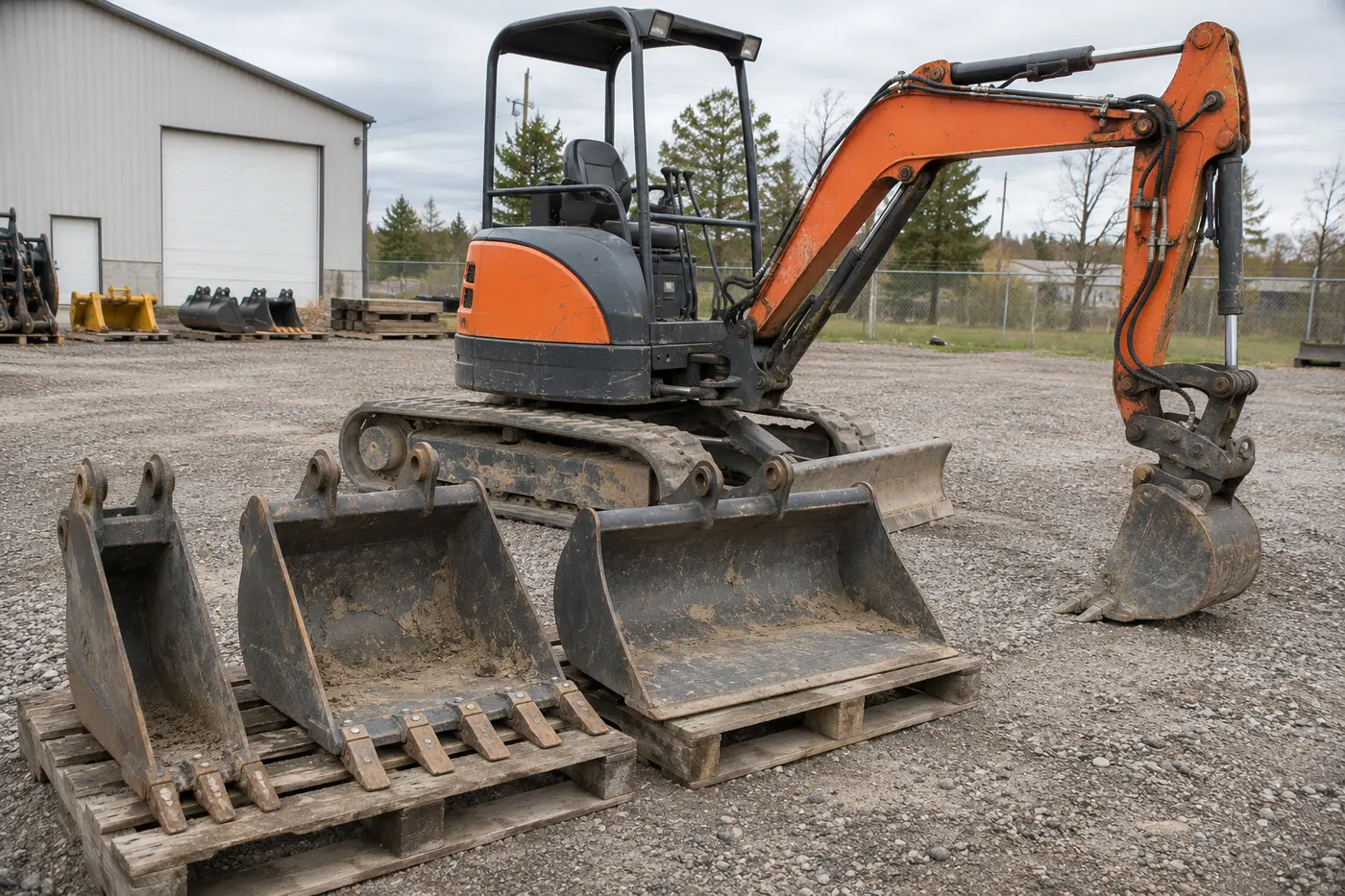
Mini excavator bucket types come down to five jobs: general digging, trenching, grading and cleanup, heavy rock work and sifting. The width, edge style and tooth setup change how each bucket performs. Pick by the work you do most, then match it to your machine's weight class and coupler.
Are all mini excavator buckets the same?
No. Buckets differ in width, depth, shape, edge, strength and how they connect to the machine. A narrow bucket cuts a tight trench. A wide, shallow bucket grades and cleans up. A reinforced bucket survives rock and demolition. A skeleton bucket lets dirt fall through. The wrong bucket slows the work, wears fast or stresses the machine. The arm's digging force comes from hydraulic cylinders, so a bucket's shape and width directly affect how well that force turns into digging.
The main mini excavator bucket types
| Bucket | Shape | Best for | Watch out for |
|---|---|---|---|
| General-purpose digging bucket | Medium width, toothed edge | Everyday digging in soil, clay and gravel | Wears faster in sharp rock |
| Trenching bucket | Narrow, deeper | Utility lines, drains, footings | Too narrow for general loading |
| Ditch or grading bucket | Wide, shallow, smooth edge, sometimes tilting | Finish grading, ditch cleanout, slopes | Weak for hard digging |
| Heavy-duty or rock bucket | Extra steel, strong edges | Rock, demolition, hard ground | Heavier, so smaller loads |
| Skeleton bucket | Bars with gaps | Sifting soil from rock and roots | Does not hold fine material |
| Tilt bucket | Hydraulic tilt left and right | Slope work, shaping, grading | Needs auxiliary hydraulics |
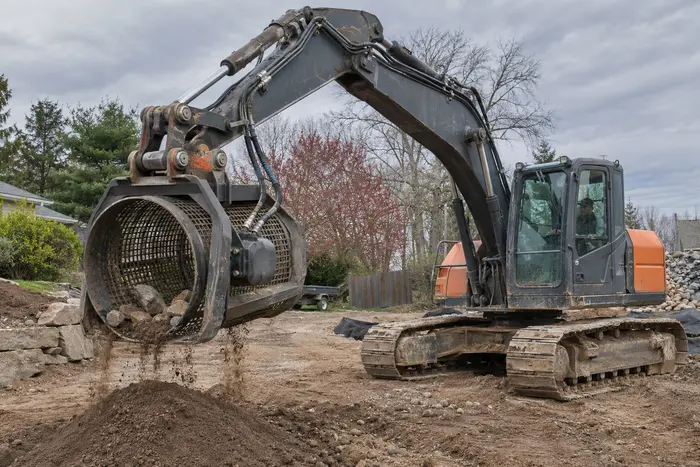
| Screening bucket | Bucket with a built-in screen | Separating soil, rock and debris | Needs flow and power |
See our full range of excavator buckets and screening buckets, and read the screening bucket guide to see how that tool works.
Toothed edge or smooth edge?
Teeth concentrate force into small points. They break hard soil, roots and compacted gravel. A smooth edge, sometimes called a cleanup or ditching edge, leaves a clean bottom and does not tear up the finished grade. Many general buckets have bolt-on teeth you can remove for light work and fit back for hard digging. When teeth wear down, replace them before the bucket body wears. Teeth cost far less than a bucket.
Side cutters, the extra edge strips along the bucket sides, protect the bucket body and help widen a trench. They add width and wear, so check their effect on your machine's capacity.
What bucket width should you choose?
Width depends on the job and on the machine's size. A narrow bucket needs less force to bite. A wide bucket moves more material per cycle but requires more breakout force, which is the force the bucket can apply at the tip. If a bucket is too wide for the machine, it digs slowly or stalls. If it is too narrow, you waste cycles. Match bucket size to the weight class of your excavator in the maker's guide. Compact excavators run up to about 8.5 tonnes of operating weight, and a bucket sized for one end of that range does not suit the other. Our guide to attachments for 3 to 4 tonne mini excavators shows typical sizes for one popular class.
How do buckets connect to the machine?
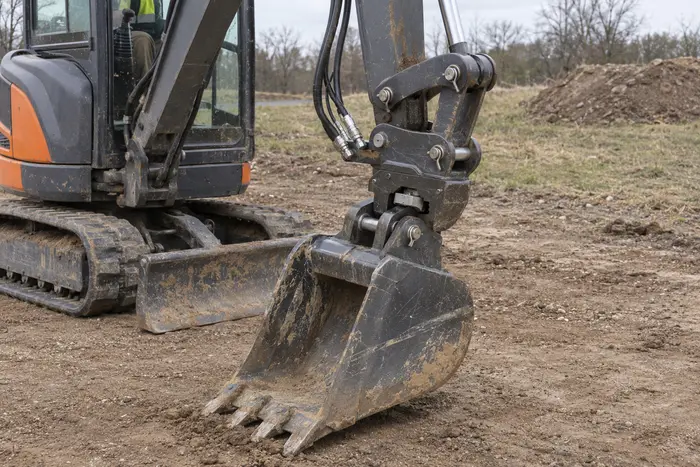
Buckets attach by pins or through a quick coupler. For pin-on, the bucket has holes that line up with the dipper arm and linkage. For a coupler, the bucket has hooks or pins that the coupler captures. Pin spacing, pin diameter and arm width must match. Read our quick coupler guide and look at quick couplers before you order a bucket, because a bucket made for one coupler style may not fit another.
Thumb compatibility
A thumb closes against the bucket to grab logs, rocks and debris. For the thumb to work, the bucket needs to match its tine spacing and have the right profile. Some buckets have thumb-ready brackets or cut-outs. See our thumb guide and thumbs for pairing details.
Which bucket for which job?
- Utility trenches: a narrow trench bucket, with a wider bucket for backfill.
- Foundations and footings: a narrow or medium bucket for shape, with a ditch bucket for cleanout.
- Finish grading and landscaping: a wide, shallow grading bucket, ideally tilting.
- Rocky ground and demolition: a heavy-duty bucket with strong teeth or edge guards.
- Clearing roots and sifting: a skeleton bucket or a screening bucket.
- Everything else: a general-purpose bucket sized to your machine.
Backhoe buckets and mini excavator buckets
Backhoe loaders also dig with a bucket at the end of a boom and dipper, and their buckets are replaceable, so people sometimes ask if the buckets interchange. The pin spacing, width and weight limits are set for each machine, so do not assume they do. Check the specs, and compare against the guide on rock bucket vs skeleton bucket to understand edge and structure differences.
Steel quality and wear protection
Two buckets of the same width can last very differently. Thicker side and bottom plates, wear strips, replaceable edges and heavier lugs all add life in abrasive ground like sand, shale and crushed rock. They also add weight, which takes away some of your capacity and slows the cycle. For light residential work, a standard bucket is usually the better trade. For rock, demolition or daily commercial digging, heavier steel pays off. Ask the maker what the bucket is built from and what wear parts are bolt-on, so you know what to replace instead of scrapping the whole bucket.
Care and wear checks
- Check teeth and adapters each shift. Replace worn teeth before they damage the adapter.
- Inspect the cutting edge. Weld on a new edge or bolt on a new one when it is worn thin.
- Look at the bucket pins and bushings. Loose pins increase play and wear.
- Check welds around the lugs and sidewalls for cracks.
- Grease pivot points on the schedule in the manual.
- Store the bucket off the ground to keep it from rusting.
Common mistakes when buying a bucket
- Buying only by width and ignoring weight class and breakout force.
- Ordering a bucket with the wrong pin spacing or coupler style.
- Choosing a grading bucket for hard digging.
- Forgetting that thicker steel adds weight and cuts lift capacity.
- Using a worn bucket until the edge or the lugs fail.
Get the right fit the first time
Send us the make, model and year of your machine and what you plan to do with it. A person checks fit against the maker's specs and sends a written quote with the delivered price before you pay. The supplier ships direct, and warranty terms, if any, are written on your quote. Ready when you are: get a fit-checked bucket quote.
Questions buyers ask
What are the types of mini excavator buckets?
The main types are general-purpose digging buckets, trenching buckets, ditch or grading buckets, heavy-duty rock buckets, skeleton buckets, tilt buckets and screening buckets. Each has a different width, depth and edge. Choose by your most common job and match the size to your machine's weight class and coupler.
Are all mini excavator buckets the same?
No. Width, depth, edge style, strength and connection type all vary. A narrow trench bucket, a wide grading bucket and a heavy rock bucket behave very differently. Buckets also differ in pin spacing and coupler fit, so confirm compatibility with your machine before ordering.
What size bucket should I use on my mini excavator?
Use the maker's recommended bucket range for your machine's weight class. A wide bucket moves more material but needs more breakout force. A narrow bucket bites easier. If a bucket is too big, the machine digs slowly or stalls. Too small wastes cycles.
Should a mini excavator bucket have teeth?
For hard soil, clay, roots and gravel, yes. Teeth concentrate force and break material loose. For finish grading and cleanup, a smooth edge works better and leaves a clean surface. Many buckets have bolt-on teeth you can remove for light work.
What is a skeleton bucket used for?
A skeleton bucket has bars with gaps that let soil fall through while it holds rocks, roots and debris. Use it to sift and sort material or to clear roots. It does not carry fine material, so a standard bucket is better for general digging.