Excavator guide
Screening Buckets: How They Work and When to Use One
Quick answer
A screening bucket is a hydraulic bucket that sifts material as you scoop it, separating fine soil from rock, roots and debris on site. Drum, shaker and star designs do the sorting. It saves hauling and buying material, but needs the right hydraulic flow and a carrier sized to carry the extra weight.
Shopping for this now? Get a fit-checked, delivered quote.
Key takeaways
- A screening bucket sorts material as you load it, so small jobs do not need a separate screening plant.
- Rotating drum, shaker and star-disc designs each suit different materials.
- Wet, sticky clay clogs most screens. Dry or damp soil works best.
- Check hydraulic flow, pressure and the carrier's lifting capacity before buying.
- Mesh or screen size sets the particle size you get out.
Anyone who has screened soil by hand knows how slow it is. A screening bucket does the same job from the seat of an excavator, skid steer or loader. It turns a pile of mixed ground into usable topsoil, clean fill and sorted rock, right where you stand. This guide explains how a screening bucket works, the main designs, and how to choose and use one.
What is a screening bucket?
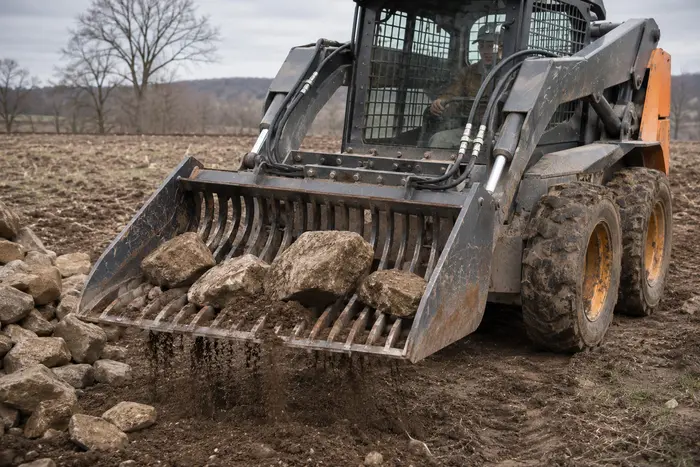
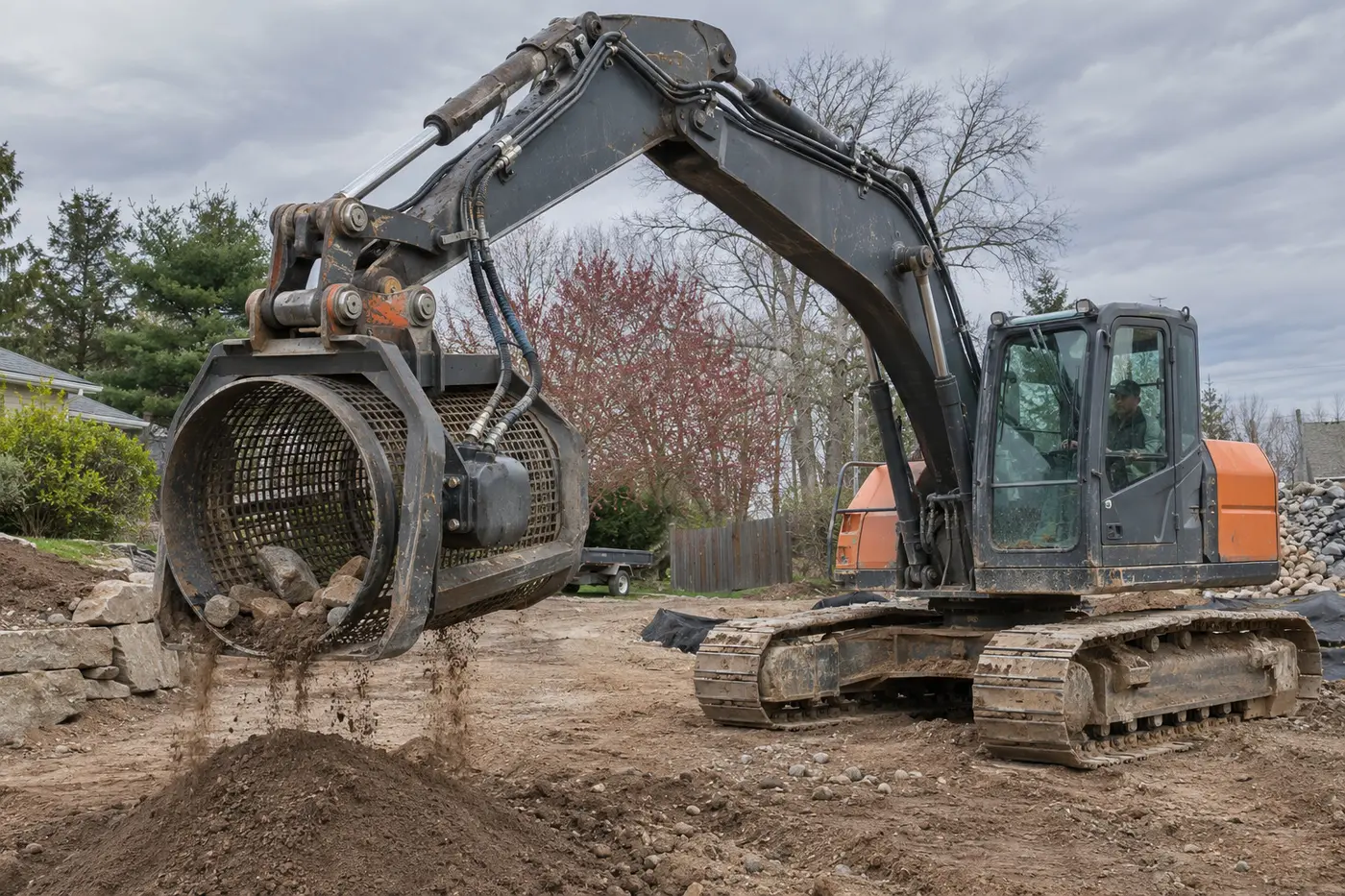
A screening bucket is a bucket with a built-in sorting mechanism. You scoop mixed material, such as soil with rocks, roots, brick or demolition waste. The mechanism shakes or rotates, the fine material falls through the screen, and the oversize pieces stay in the bucket. You then dump the oversize pile separately. Excavators use them alongside breakers, grapples, augers and crushers as one of the common hydraulic tools. They also mount on skid steers, wheel loaders and tractor loaders.
How does a screening bucket work?
The method depends on the design, but the idea is the same. Hydraulic oil from the carrier powers a motor in the bucket. The motor drives a screening element. Material that is smaller than the openings falls out of the bucket onto the ground. Material that is larger stays inside until you dump it.
| Design | How it screens | Good for |
|---|---|---|
| Rotating drum | A cylinder with openings turns and tumbles material | Topsoil, compost, mixed soil and rock |
| Shaker or vibrating | A screen deck or bars shake the load | Dry soil, sand, gravel, fine material |
| Star or disc | Spinning discs with gaps pass fines and lift oversize | Wetter or sticky material, wood waste, mixed debris |
The openings are set by the mesh, bar spacing or disc gap. A smaller opening gives finer material but works slower. A larger opening is quicker but lets bigger pieces through. Many buckets can use interchangeable screens or inserts.
When should you use a screening bucket?
- Cleaning up topsoil. Remove rocks and roots from native soil so you can reuse it on site.
- Preparing a seedbed. Sift out stones before you grade for a lawn.
- Recycling demolition material. Separate small pieces from larger chunks for reuse as fill.
- Sorting gravel and sand. Remove oversize stone from a pit run or driveway material.
- Processing compost or mulch. Remove oversize pieces and make a uniform product.
- Cleaning a beach, pond or lot. Pull rocks and debris from soft ground.
- Reclaiming trench spoil. Reuse good fill from the dig and haul away less.
The big benefit is that you reduce hauling and buying. You turn the soil you already have into a usable product. See our related guide on how to remove rocks from a field for another approach.
What materials work best?
Dry or slightly damp soil screens well. Sticky clay, wet topsoil and mud clog the openings and slow everything down. If your material is wet, wait for it to dry, spread it to air out, or choose a star or disc design that handles damp material better. Frozen soil and big boulders also cause trouble, so remove the largest pieces first.
How do you choose a screening bucket?
- Know your material. Dry soil, wet soil, compost, gravel and demolition waste each call for a different design.
- Choose the opening size. Pick the screen to give you the particle size you need. Consider interchangeable screens if you work with different products.
- Match the carrier. Check the bucket's weight against the excavator's or loader's rated lifting capacity. A screening bucket is heavier than a regular bucket of the same capacity.
- Check hydraulic needs. The motor needs a certain flow and pressure from the auxiliary circuit. Confirm that your machine delivers what the bucket asks for.
- Look at the mounting. Excavators use pin-on or quick couplers. Most full-size skid steers use the universal quick attach plate. Confirm the pattern.
- Check build quality. Look at wear parts, shaft seals and how easy it is to clean or replace the screen.
Browse excavator screening buckets to see the range, and read the hydraulic flow guide if you are unsure what your machine can deliver.
How do you use a screening bucket well?
- Do not heap the bucket. Overfilling slows the screening action and strains the motor, so follow the fill guidance in the attachment manual.
- Keep the bucket moving. Hold it just above the ground and let it work.
- Rock the bucket gently if the material hangs up.
- Dump the oversize into a separate pile.
- Clean the screen often. Wet material builds up quickly.
- Watch for large stones and rebar that can damage the screen or jam the drive.
- Follow the operator manuals for the machine and the attachment, and keep people clear of the bucket while it runs.
What are the limits of a screening bucket?
A screening bucket is not a magic fix, and it helps to know where it falls short before you buy.
- Production rate. It sorts a bucket at a time. A stationary screening plant moves far more material per hour. A bucket wins on convenience and low setup, not on bulk output.
- Material condition. Wet, sticky and frozen material slows it down or stops it.
- Carrier size. The extra weight and hydraulic demand mean a very small machine may not run it well. Size up the carrier or choose a smaller bucket.
- Operator skill. Getting a steady, even feed takes some practice. Early passes are often slow.
- Wear. Screens, bars and bearings are wear items in abrasive soils. Budget for replacement parts.
If you know those limits and your job fits the tool, a screening bucket can pay back in saved trucking and bought material. If you do not, a rental or a trial day can show you what to expect before you commit.
What about maintenance?
Grease the bearings and pivots on schedule. Inspect the screen, bars or discs for wear and replace them before they fail. Check hoses and fittings for leaks. Clean out packed soil at the end of the day, because dried clay is hard to remove. Check the drive chain or belt, if the design has one, and tighten or replace it as the manual advises.
Screening bucket or crusher bucket?
They do different jobs. A screening bucket sorts. It does not reduce the size of what stays in the bucket. A crusher bucket breaks concrete and rock into smaller pieces. Some jobs use both: crush first, then screen. If you work mostly with demolition debris, look at concrete crushers as well.
Get the right fit the first time
A screening bucket has to match your carrier's size, hydraulics and mount. Send us your make, model and year, and tell us what material you screen. We will confirm fit against the manufacturer's specs and give you a delivered price to approve before you pay. Start with a fit-checked quote.
Questions buyers ask
How does a screening bucket work?
You scoop mixed material, and a hydraulic motor drives a screen, drum or set of discs inside the bucket. Fine material falls through the openings onto the ground, while rocks, roots and debris stay in the bucket. You then dump the oversize separately. The openings set the size of what passes through.
Can a skid steer use a screening bucket?
Yes. Screening buckets are made for skid steers, wheel loaders and tractor loaders as well as excavators. The machine needs an auxiliary hydraulic circuit with enough flow and pressure, and enough lifting capacity for the heavier bucket. Check these against the manufacturer's specs.
What is a screening bucket used for?
It is used to separate soil from rock, roots and debris on site. Typical jobs include cleaning topsoil, sorting gravel, recycling demolition waste, preparing seedbeds and reclaiming trench spoil. It saves hauling and buying material by letting you reuse what you already have.
Does a screening bucket work in wet soil?
Not well in most designs. Sticky clay and wet topsoil clog the screen and slow production. Let the material dry or spread it out first, or choose a star or disc design that handles damper material better. Dry to slightly damp soil screens best.
Is it better to rent or buy a screening bucket?
Rent for a one-off cleanup or a test. Buy if you screen soil or debris regularly, because it can save hiring a screening plant for smaller jobs and reduce hauling. Whichever you choose, make sure the bucket matches your machine's hydraulics, mount and lifting capacity.