Excavator guide
Mini Excavator Thumb: Hydraulic vs Manual
Quick answer
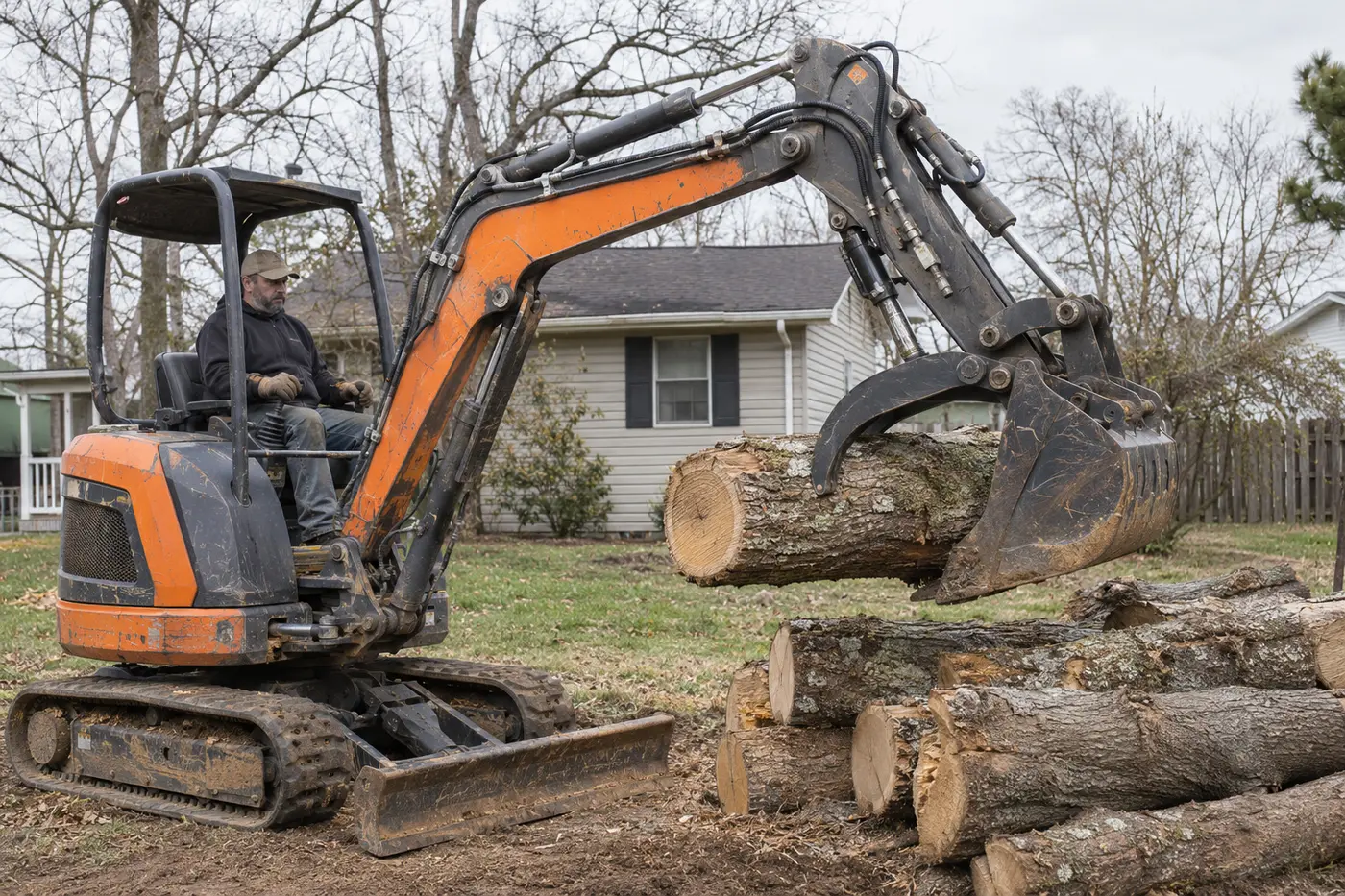
A mini excavator thumb is a hinged claw mounted on the stick that closes against the bucket to grip logs, rock and debris. Manual thumbs are pinned in set positions. Hydraulic thumbs use a cylinder controlled from the cab. Choose by how often you grab, and match the mount to your stick and bucket.
Shopping for this now? Get a fit-checked, delivered quote.
Key takeaways
- A thumb grips material against the bucket so the machine can pick and place.
- Manual thumbs cost less and have no hoses; hydraulic thumbs adjust from the cab.
- Hydraulic thumbs need an auxiliary circuit and routing for hoses.
- The thumb must clear the bucket teeth and suit the stick's mount.
- A thumb adds weight at the end of the arm, which affects lift capacity.
A thumb makes a digging machine a handling machine. It lets a mini excavator pick up a log, set a boulder, load brush or place pipe without a second tool. This guide explains the two main thumb types, how to choose and what to check before you buy.
What is a mini excavator thumb?
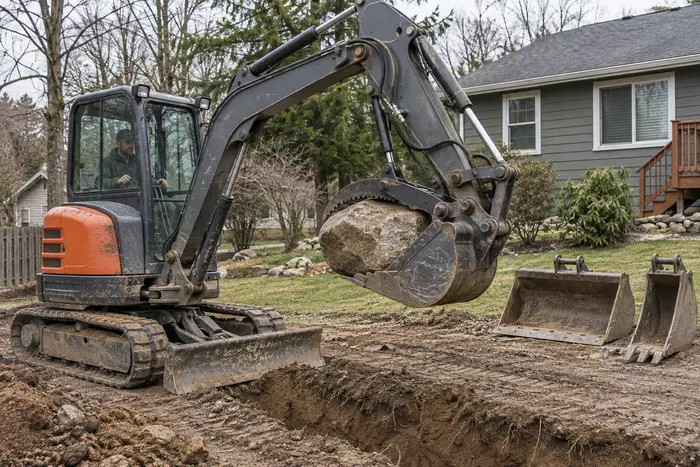
A thumb is a curved claw that mounts on the stick, near the bucket. When it closes, it grips material against the bucket, in the same way a thumb closes against fingers. Loader grapples work on a similar idea, with a rake, fork or bucket and a moving jaw. On an excavator, the bucket supplies the fingers. A thumb works with the bucket's teeth, so spacing and size matter.
A thumb is not a grapple, though it does similar work. A grapple is a separate attachment with its own jaws and replaces the bucket. A thumb works with the bucket. See excavator thumbs and excavator grapples to see the difference.
What is the difference between manual and hydraulic thumbs?
| Feature | Manual (mechanical) thumb | Hydraulic thumb |
|---|---|---|
| How it moves | Pinned in one of several positions | Cylinder opens and closes it |
| Control | Operator gets out and changes the pin | Controlled from the cab |
| Hydraulics | None | Needs an auxiliary circuit and hoses |
| Cost and weight | Lower, lighter | Higher, with cylinder and hoses |
| Best for | Occasional grabbing, one task at a time | Frequent picking and placing |
| Maintenance | Pins and bushings | Pins, bushings, cylinder, hoses |
Which one should you choose?
If you grab material now and then and spend most of your day digging, a manual thumb keeps cost and complexity down. Set the pin, work, and move it when the job changes. If you handle logs, rock or pipe all day, a hydraulic thumb saves climbing in and out and lets you adjust the grip on the fly. It also lets you release a load in a controlled way.
Think about the machine, too. A hydraulic thumb needs an auxiliary circuit and a place to route hoses, and some small machines don't have one. In that case, a manual thumb is the practical choice. See the mini excavator attachments buyer's guide for the full set of fit checks.
What does a thumb kit include?
- The thumb tine or tines, usually steel plate or bar.
- A mounting bracket that welds or bolts to the stick.
- Pins and bushings for the pivot.
- For a hydraulic thumb: a cylinder, hoses and fittings.
- Sometimes a control valve or switch kit.
Welded brackets are strong, but they are permanent and affect the stick. Bolt-on or clamp-on brackets avoid welding but may be bulkier. Weld-on thumbs should be installed by a qualified welder following the maker's instructions, because welding on a stick can weaken it if done wrong.
How do you pick the right size?
- Match the thumb to the machine class and the stick, as the maker specifies.
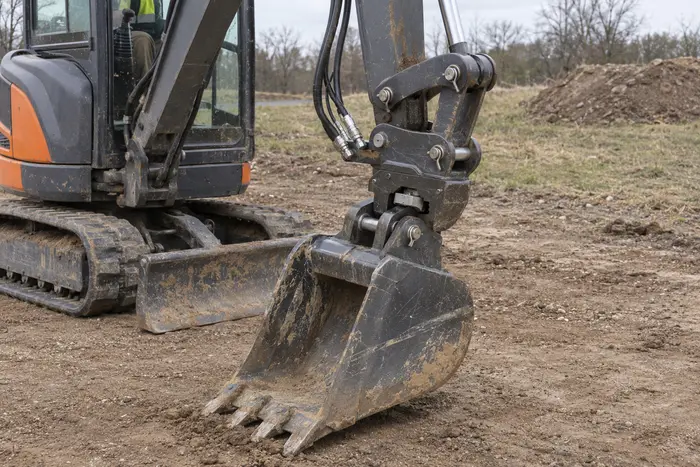
- Check the thumb's tine spacing against your bucket's teeth, so the tines mesh and don't hit them.
- Check that the thumb's arc clears the bucket at full curl.
- Look at the weight. A heavy thumb reduces lift at reach.
- Confirm the thumb works with your quick coupler if you use one.
A quick coupler changes the geometry because it adds length between the stick and the bucket. Read the mini excavator quick coupler guide and check that the thumb is designed for coupler use. A thumb built for a direct-pin bucket may not close correctly with a coupler.
What hydraulics does a hydraulic thumb need?
You need an auxiliary circuit with a control for the cylinder, and a hose route that doesn't get pinched when the bucket curls. Many machines offer a factory auxiliary line. Others need a kit. A thumb's cylinder needs far less flow than a motor-driven tool, but it does need a valve and a way to control it from the cab. Ask the supplier for a hose layout, and replace hoses that rub on the stick with protected ones.
What should you look at on an existing thumb?
- Pin and bushing wear, which causes looseness and misalignment.
- Cracks in welds on the bracket and the tine.
- Bent tines from prying against rock.
- Cylinder rod condition and hose rubbing.
- Alignment with the bucket teeth.
How do you use a thumb safely?
Don't pry with the thumb or use it to lift heavy loads beyond the machine's capacity. Keep loads low and close, and don't swing over people. Check the load chart, since the thumb adds weight at the end of the arm. Never use the thumb to lift a person. Keep the machine on stable ground and set the blade for support when you pick heavy loads. Read your operator manual before adding any attachment that changes the geometry of the arm.
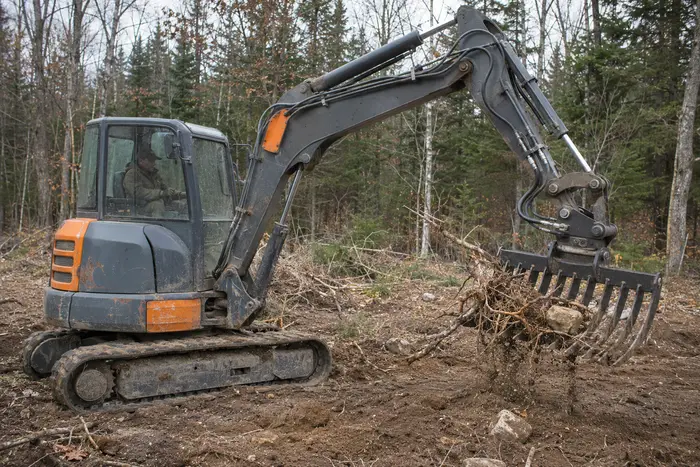
For rakes and brush work, a thumb pairs well with a root rake. Read the mini excavator root rake guide for the combination.
How do you set up a manual thumb?
A manual thumb usually has several pin holes that set the thumb's angle. A lower setting grips small material and a higher setting opens wider for bulky loads. Park the machine on level ground, lower the stick and bucket, and set the machine safely before you reach in. Shut the machine off and remove the key before changing pins, and never put your hands between the thumb and the bucket. Make sure the pin is fully seated and its keeper clip is in place before you work.
If you change tasks a lot, a manual thumb can get tedious. That is when upgrading to a hydraulic one can pay off in time saved. Some owners start manual and add a cylinder later if the kit supports it.
What jobs show a thumb's value?
Clearing jobs are the obvious fit: grabbing stumps, limbs and logs and stacking them. Pipe and utility work also benefits, since you can pick and place pipe lengths without chains. In demolition, a thumb holds boards, rebar and broken concrete for sorting. In landscaping, it moves boulders for walls and edging, and in farm work it clears fence lines and brush. In each case, the thumb saves a second machine or a tool change and keeps the work flowing with fewer steps.
Get the right fit the first time
Thumb fit depends on your stick, your bucket and any coupler. Send us the make, model and year and a person will check fit against the maker's specs. You see the delivered price on your quote before you pay. The supplier ships direct, and warranty terms, if any, are written on your quote. Get a fit-checked quote or call 1-888-245-1555.
Questions buyers ask
What does a mini excavator thumb do?
A thumb is a hinged claw on the stick that closes against the bucket to grip logs, rocks, pipe and debris. It lets the machine pick and place material the bucket alone can't hold, without changing attachments.
Is a hydraulic thumb better than a manual thumb?
A hydraulic thumb is faster and adjustable from the cab, which helps if you grab all day. A manual thumb is cheaper, lighter and needs no hoses, which suits occasional use. Pick based on how often you handle material and whether your machine has auxiliary hydraulics.
Will a thumb fit my mini excavator?
It must match the machine class, the stick's mount, the bucket tooth spacing and the quick coupler if you use one. Weight and arc clearance also matter. Send the make, model and year and a person will confirm fit against the maker's specs.
Do I need to weld a thumb onto my excavator?
Many thumbs use a weld-on bracket, and some use bolt-on or clamp-on mounts. Welding on a stick should be done by a qualified welder following the maker's instructions, because poor welds can weaken the arm.
Can I use a thumb with a quick coupler?
Often yes, but only if the thumb is designed for it. A coupler adds length and changes the bucket's arc, so a thumb built for direct-pin buckets may not close correctly. Check with the thumb maker and your coupler maker.