Excavator guide
Mini Excavator Attachments: A Buyer's Guide
Quick answer
Mini excavator attachments include buckets, thumbs, augers, breakers, grapples and compactors. To choose the right ones, match your machine's weight class, check whether it has auxiliary hydraulics and confirm the pin or quick coupler style. A bucket set and thumb cover most early work.
Shopping for this now? Get a fit-checked, delivered quote.
Key takeaways
- Weight class, hydraulics and coupler style decide fit.
- Start with a bucket set, thumb and quick coupler.
- Powered tools need the right flow and pressure.
- Heavy tools cut lift capacity at full reach.
- Confirm fit before buying used or new.
Mini excavator attachments change a digging machine into a clearing, breaking, drilling, grading and lifting machine. The right set depends on your machine's weight class, its auxiliary hydraulics and how it connects to tools. Get those three right and everything else is a job-by-job choice.
What counts as a mini excavator?
A compact or mini excavator is a tracked or wheeled machine with an operating weight of up to about 8.5 tonnes, a standard backfill blade and independent boom swing. At the light end, machines under about one tonne are called micro excavators. Every motion on these machines runs on hydraulic fluid, which is why attachments depend so heavily on flow and pressure from the machine.
The three things to check on any mini excavator attachment
- Weight class. Attachments are built for a range of machine sizes. A tool sized for a much heavier excavator is too heavy for yours. A tool sized for a lighter one may bend or wear fast. Always match to the machine's weight class and follow the lift capacity chart in your operator manual.
- Hydraulic circuits. Many attachments need an auxiliary hydraulic line. Some tools need a one-way flow, called single acting. Others need flow in both directions, called double acting. Confirm which your machine has, or whether lines can be added.
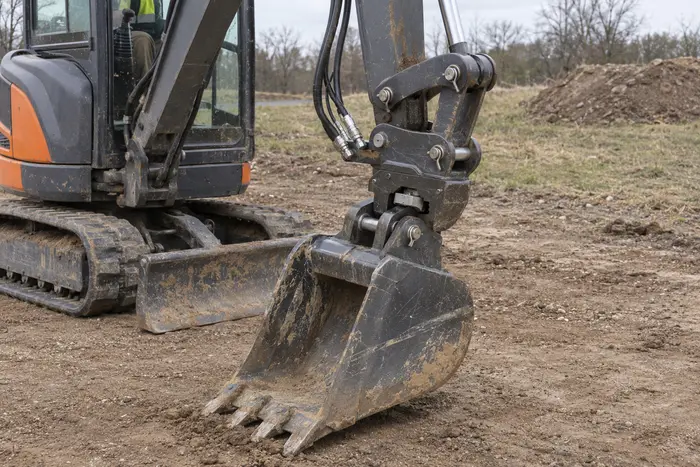
- The connection. Tools connect by pin or through a quick coupler. Pin size, spacing and coupler type must match. Read our guide to mini excavator quick couplers to see the common styles.
The main mini excavator attachments and what they do
| Attachment | Best job | Needs aux hydraulics? |
|---|---|---|
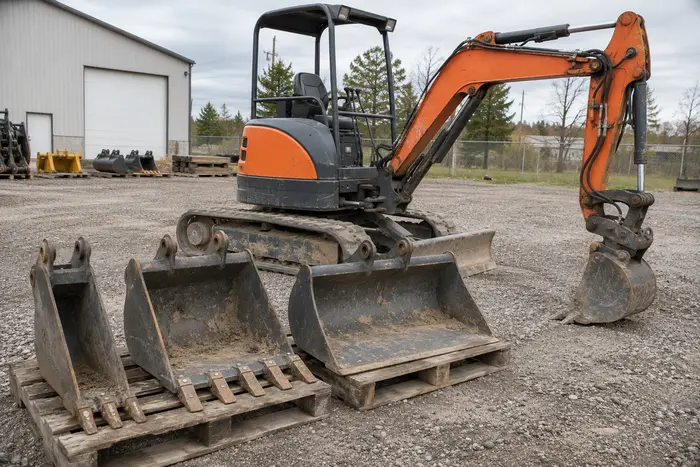
| Buckets | Digging, trenching, cleanup, grading | No |
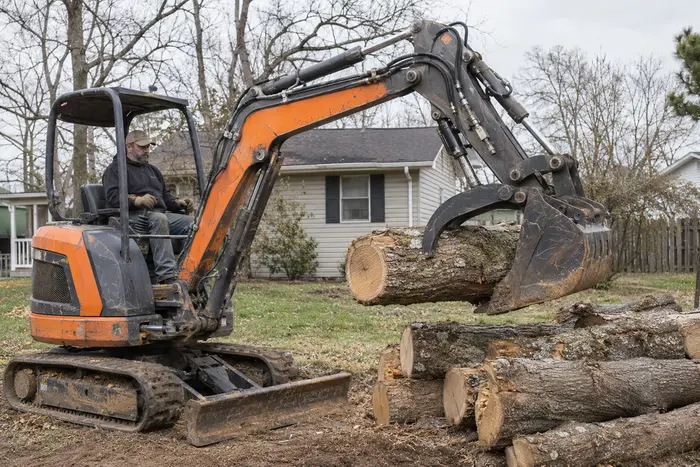
| Thumbs | Grabbing logs, rock, debris with the bucket | Hydraulic thumb yes, mechanical thumb no |
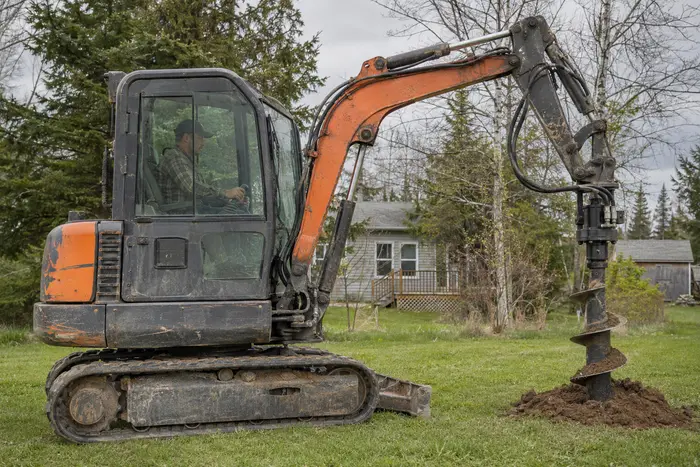
| Augers | Post holes, footings, tree planting | Yes |
| Breaker hammers | Concrete, asphalt, rock | Yes |
| Grapples | Brush, demolition debris, pipe | Yes |
| Plate compactors | Compacting trench backfill and base | Yes |
| Grading beams | Finish grading and leveling | Sometimes |
| Tiltrotators | Angle and rotate tools in tight spaces | Yes |
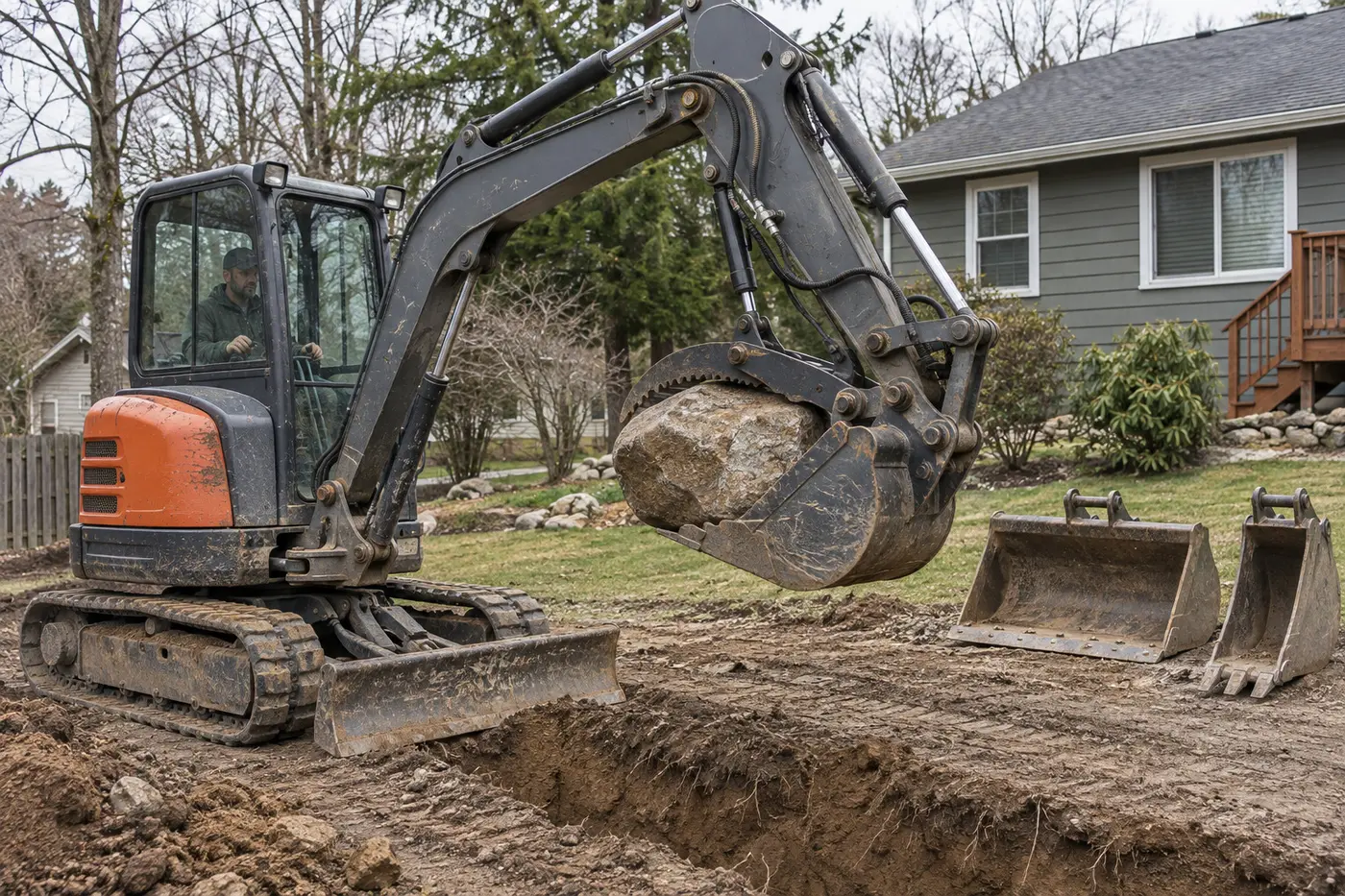
Many owners start with a bucket set and a thumb. Add powered tools after you know what work keeps coming back. Our guide to mini excavator bucket types covers digging, trenching, grading and ditch cleanout buckets.
Should you buy a quick coupler first?
Often, yes. A quick coupler lets you swap tools without pulling pins by hand. It saves time and reduces the risk of knocking a pin out the wrong way. A hydraulic coupler goes one step further by letting you release and latch the tool from the cab. The trade-off is added weight and a little loss of reach. Check the coupler's weight and the extra distance it adds to the tool pivot. See excavator quick couplers for options.
Read the safety instructions that come with the coupler. A poorly secured tool can fall off. Check that the locking system is engaged before you lift or dig. This is the kind of detail that appears in the operator manual and the coupler maker's instructions. Follow both.
Hydraulic flow and pressure explained
Flow is how much oil per minute reaches the attachment. Pressure is how hard the oil pushes. A breaker needs a certain flow and pressure window to hit as designed. An auger needs enough flow to turn at the right speed, and enough pressure to bite. If the machine cannot supply what the tool wants, the tool runs slowly, heats the oil or does not work. If the machine supplies far more than the tool can handle without a relief setup, the tool can be damaged. Always compare the machine's auxiliary rating with the attachment's required range.
How to match attachments to your machine's size
Machines at the small end work well with light buckets, small augers and compact grapples. Mid-size machines handle larger breakers, mulchers and tiltrotators. Our guide to attachments for 3 to 4 tonne mini excavators shows what suits a popular mid-range size, and the mini excavator thumb guide explains how to size a thumb to your bucket.
Weight adds up fast. A heavy attachment reduces lift capacity at the end of the dipper arm, especially when extended. Read the lift chart in your manual for the position you use most, not just the best case.
Which attachments suit which jobs?
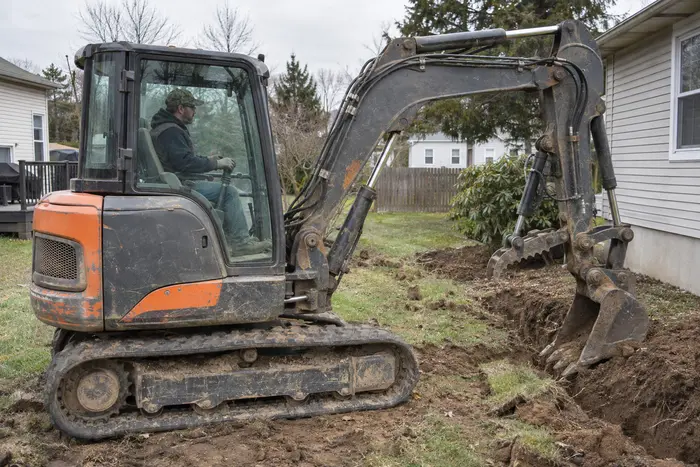
- Utility trenching: a narrow trench bucket, a plate compactor for backfill and a grading beam for the finish.
- Fence and deck footings: an auger sized to the hole you need, plus a bucket to clean out spoil.
- Demolition and tear-out: a breaker hammer, a thumb or grapple to sort debris, and a heavy-duty bucket.
- Land and lot clearing: a brush cutter or forestry mulcher, a grapple and a root rake. See our guide on the mini excavator brush cutter.
- Landscape and pond work: a ditching or grading bucket, a thumb for rock placement and a tiltrotator if you work on slopes.
Pick the first two or three based on work you already have lined up. The rest can wait.
Moving, storing and caring for attachments
Attachments are heavy and awkward. Plan how you will move them: on a trailer, on the machine or on a rack. Use proper lifting equipment and keep your hands clear of pinch points when swapping tools. Grease pins and bushings on a regular schedule, check hose ends for cuts and clean the couplers before you connect them. Dirt in hydraulic couplers causes leaks and damages motors. Store tools off soft ground with the cutting edges protected. After heavy use, look at the bucket edge, teeth, thumb tines and welds for wear or cracks.
Keep the manuals for both the machine and the attachment. When you buy a new tool, read how it should be mounted, what the maximum working pressure is and how to release stored hydraulic pressure before disconnecting hoses.
Buying used vs new
Used buckets and thumbs can be a fair value if the pins, bushings, cutting edge and welds are in good shape. Powered attachments are riskier used. Hoses, motors, seals and wear parts can hide problems. Ask for photos, check serial numbers and confirm that the hydraulic specs match your machine. A fit check against the maker's published specs protects you from a tool that looks right but does not couple or flow properly.
Common buying mistakes
- Choosing by price alone and ignoring weight class.
- Forgetting to confirm auxiliary hydraulic lines or flow.
- Ordering tools with the wrong pin spacing or coupler style.
- Overloading the machine with a heavy attachment at full reach.
- Skipping the manual's safety and lift instructions.
A simple starter package
For many owners, a trench bucket, a wider digging bucket, a thumb and a quick coupler cover the daily work. Add an auger for fence and footing work, then a breaker or grapple if your jobs call for them. For each addition, confirm fit first.
Get the right fit the first time
Send us the make, model and year of your machine and what you plan to do with it. A person checks fit against the maker's specs and sends a delivered price for you to approve before you pay, and the supplier ships direct. Ready when you are: get a fit-checked quote.
Questions buyers ask
What attachments can a mini excavator use?
Common choices are buckets, thumbs, augers, breaker hammers, grapples, plate compactors, grading beams, brush cutters and tiltrotators. Each depends on your machine's weight class, whether it has auxiliary hydraulics, and the coupler or pin style. Confirm fit before buying, especially for powered tools.
Do mini excavator attachments fit any machine?
No. Pin size, spacing, coupler style, weight class and hydraulic requirements differ by machine and tool. Some attachments need a single-acting or double-acting auxiliary line. Match the attachment to your machine's specs, or have a person confirm fit against the maker's data before you order.
What is the first attachment to buy for a mini excavator?
Many owners start with a set of buckets, usually a narrow trench bucket and a wider digging bucket, plus a thumb and a quick coupler. These need little or no auxiliary hydraulics and handle a lot of daily work. Add powered tools such as an auger or breaker once you know your recurring jobs.
Do I need a quick coupler on a mini excavator?
It is not required, but it speeds up tool changes and avoids pulling pins by hand. A hydraulic coupler lets you swap from the cab. You give up a little reach and add weight. Always confirm the locking system is engaged before lifting, and follow the coupler maker's instructions.
How do I know what size attachment fits my mini excavator?
Use the machine's operating weight class, lift capacity chart and hydraulic specs. An attachment made for a much heavier machine can overload yours. One made for a lighter machine may wear or bend quickly. Check the attachment maker's recommended machine range against your model.