Mini skid steer guide
Mini Skid Steer Brush Cutters: What to Know
Quick answer
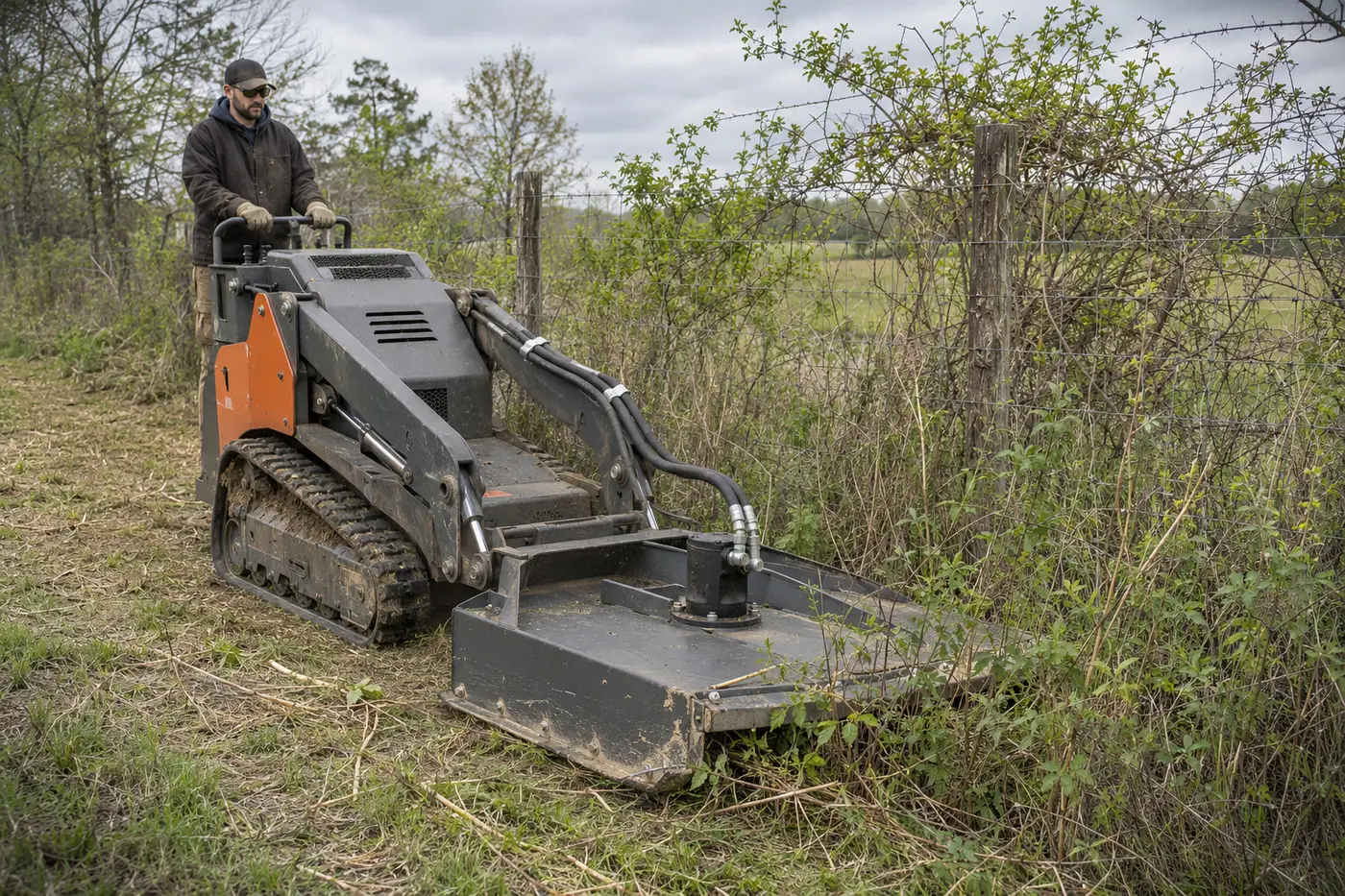
A mini skid steer brush cutter is a hydraulic mowing attachment that clears thick grass, weeds, brush and small saplings. It fits narrow spaces where full-size loaders cannot go. Check your mini loader's hydraulic flow and weight limits first, since they set the cutter's size and what it can cut.
Shopping for this now? Get a fit-checked, delivered quote.
Key takeaways
- Mini cutters handle brush and light saplings, not large trees.
- Hydraulic flow and machine weight decide which cutter fits.
- Blade style matters: swing blades suit rough brush, fixed blades suit grass.
- Keep people and vehicles well clear of the throw zone.
A mini skid steer brush cutter lets a small machine do a big job: knock back brush on fence lines, trails, ditches and hillsides. The tradeoff is limited power. Mini loaders have lower hydraulic output and less weight than full-size ones, so the cutter has to be matched carefully. Here is how to choose.
What does a mini skid steer brush cutter do?
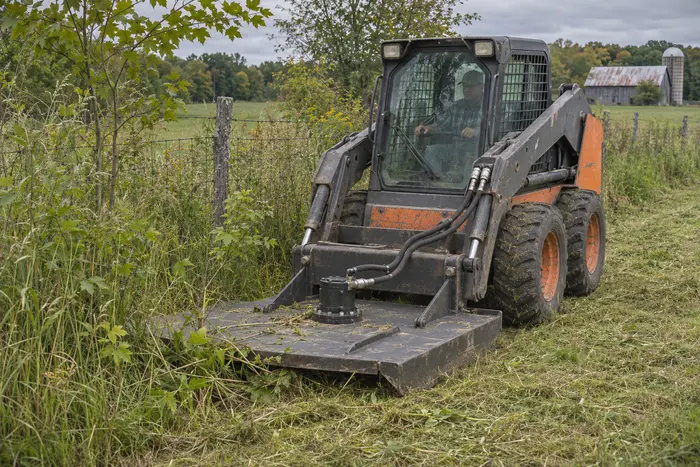
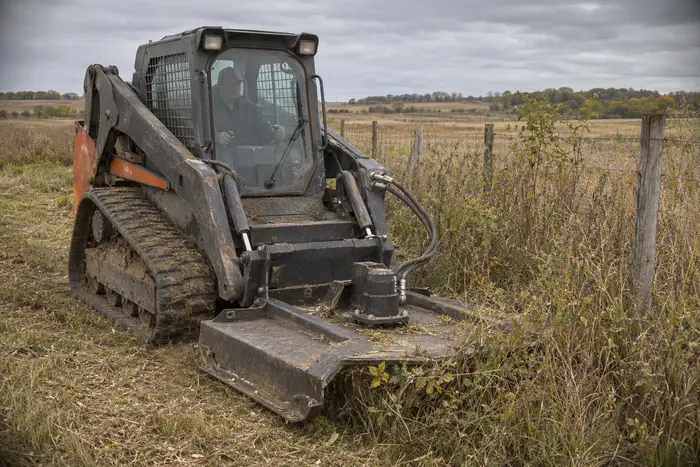
It is a rotary mowing head that bolts onto the mini loader's attachment plate and runs off the auxiliary hydraulics. A hydraulic motor spins blades, or a cutting disc, inside a steel deck. The cutter shreds grass, weeds, briars and woody brush as you drive forward. Light saplings can be cut too, depending on the model.
Browse the mini skid steer brush cutters to see what fits compact machines, and compare with the larger skid steer brush cutters if you run a full-size loader.
What can a mini cutter handle?
| Material | Mini cutter | Notes |
|---|---|---|
| Tall grass and weeds | Yes | Fastest work |
| Briars and thick brush | Yes, with the right blades | Go slow and cut in layers |
| Small saplings | Depends on model | Check the maker's stated cutting capacity |
| Large trees and trunks | No | Use a forestry mulcher or saw |
| Rocks, stumps and metal | No | Damages blades and deck |
If you need to clear larger stems, read our tree cutting attachments guide for tools built for it.
Why hydraulic flow matters most
Hydraulic flow is how much oil per minute the loader's auxiliary circuit can deliver. High flow means more oil, which spins the cutter faster and harder. Mini skid steers usually have modest auxiliary flow, and a few models offer a higher-flow option. A cutter that needs more flow than your machine can give will bog down, cut slowly and overheat. Always compare the cutter's required flow and pressure with your machine's published output. Our low-flow brush cutter guide and hydraulic flow explainer cover this in depth.
Blade styles
Swing or pivoting blades
Blades hang on pins and swing out under spin. If they hit something solid, they can fold back, which protects the deck and motor. These are common on brush cutters for rough, woody material.
Fixed blades
Fixed blades are more rigid and give a cleaner cut on grass and soft stems. They are less forgiving if they hit something hard.
Disc and knife styles
Some cutters use a disc with knives or teeth. They suit denser material, but they also cost more and need correct hydraulic flow.
Motor type
Brush cutters use gear motors or piston motors. Gear motors are simpler and common on lower-flow machines. Piston motors handle higher loads and efficiency better but cost more. See piston vs gear motor brush cutter to understand the difference.
Checklist before you buy
- Machine weight and rated capacity. The cutter hangs in front, so check the loader's limits in the manual.
- Hydraulic flow and pressure. Match them to the cutter's requirement.
- Cutting width. A wider deck covers more ground but needs more power and may not fit in tight spots.
- Cutting capacity. Check the maker's stated maximum stem diameter.
- Mounting. Confirm the mini loader's attachment plate and hose couplers match.
- Replacement blades. Make sure you can get new ones.
- Safety shielding. Check for chains or guards to limit thrown debris.
How to run it safely and efficiently
- Walk the area first and remove wire, rebar, large rocks and trash.
- Keep people, pets and vehicles well away from the cutter. Cutters can throw debris.
- Cut tall brush in layers, starting at the top, rather than forcing the deck into a dense stand.
- Slow down in thick material so the motor does not stall.
- Stay on stable ground, and watch the machine's tilt on slopes.
- Follow the operator manuals for both the loader and the cutter.
Maintenance
Check blades before every use. Dull or bent blades cut poorly and strain the motor. Tighten blade bolts to the maker's torque spec, grease the bearings, and inspect the hoses and couplers. Clear wrapped vines from the shaft. Our attachment maintenance guide gives a simple routine.
Should you rent or buy?
If you clear brush once a year, renting can be the cheaper route. If you clear fence lines, trails or lots on a regular basis, owning can save time and money. Rental fleets often rent the more common full-size cutters, so a mini cutter can be harder to find. Check availability with local yards before you plan around one.
One more point: do not size the cutter by the brush alone. Size it by the machine. A cutter that overloads the loader or starves it of flow gives poor results, no matter how big the deck is.
Where mini brush cutters work best
These cutters earn their keep where a bigger machine is a poor fit: narrow trails, fence lines, ditch banks, orchard rows, backyard overgrowth and steep or soft ground that needs a light machine. They also suit property owners who want to keep an overgrown acre or two in shape without owning a tractor and a rotary cutter.
On big open acreage with thick brush, a larger machine or a tractor-mounted cutter will cover ground faster. Think of the mini cutter as a precision tool: slower, but able to get where the bigger tools cannot.
Common mistakes
- Buying a cutter by deck width alone, without checking flow.
- Forcing the cutter into brush it was not rated for.
- Running dull blades, which tears rather than cuts and strains the motor.
- Cutting without clearing hidden wire, stakes and rocks first.
- Skipping a daily grease and bolt check.
If you stay within the machine's limits and keep the blades sharp, a mini brush cutter is a dependable, low-fuss way to take back overgrown ground.
Matching the cutter to the season
Brush is easiest to cut when it is young and soft, so spring and early summer clearing goes faster than cutting woody stems late in the year. In fall, leaves are down and you can see hidden obstacles, which helps with rocks and wire. Frozen ground can carry a machine over soft spots, but frozen slopes get slick, so check traction, stay off slopes you are unsure of and keep the cutter from picking up frozen debris.
If you are comparing cutters, ask the seller for the cutter's weight, required flow range, maximum stem diameter and blade type in writing. Those four numbers tell you more than the marketing name does, and they let a person check fit against your exact mini loader before you pay.
Get the right fit the first time
Send us the make, model and year of your mini skid steer and what you need to cut. A person checks fit against the maker's specs, and you see the delivered price on your quote before you pay. Ready when you are: get a fit-checked quote.
Questions buyers ask
What is a mini skid steer brush cutter?
It is a hydraulic rotary cutter that mounts on a mini skid steer and clears grass, weeds, brush and light saplings. It runs off the loader's auxiliary hydraulics and fits tight spaces where a full-size machine cannot go. Larger trees need a different tool.
What blades does a mini skid steer brush cutter use?
Common styles are swing blades, which pivot and absorb impacts in rough brush, fixed blades for cleaner cuts in grass and soft stems, and disc styles with knives. Choose by material and flow, and check that replacement blades are available.
How much hydraulic flow does a mini skid steer brush cutter need?
It varies by model, so compare the cutter's required flow and pressure with your mini loader's published output. Too little flow makes the cutter slow and prone to stalling. Some minis offer a higher-flow option for demanding cutters.
Can a mini skid steer brush cutter cut trees?
It cuts light saplings within the maker's stated capacity, not large trees. For bigger stems, use a forestry mulcher, saw or a larger machine built for it. Never force a cutter through material beyond its rating.