Excavator guide
The Largest Excavators Ever Built, by Type
Quick answer
The largest excavators in the world are bucket-wheel excavators used in lignite mines. The record holder weighs about 14,200 tonnes and stands roughly 96 m tall. Draglines are the other giants, with buckets up to about 220 cubic yards. The largest hydraulic mining excavator is far smaller, at about 980 tonnes.
Shopping for this now? Get a fit-checked, delivered quote.
Key takeaways
- The heaviest land vehicle is a bucket-wheel excavator at about 14,200 tonnes.
- Draglines hold the record for bucket size, up to about 220 cubic yards.
- The largest hydraulic mining excavator weighs roughly 980 tonnes.
- Compact excavators top out at about 8.5 tonnes operating weight.
- Size class decides which attachments, if any, a machine can carry.
Most people picture a yellow machine digging a trench. At the top of the size scale, excavators are something else: moving factories that strip whole coal seams. Here is how the biggest machines compare, and how far they sit from the compact excavators most of us actually use.
What is the biggest excavator in the world?
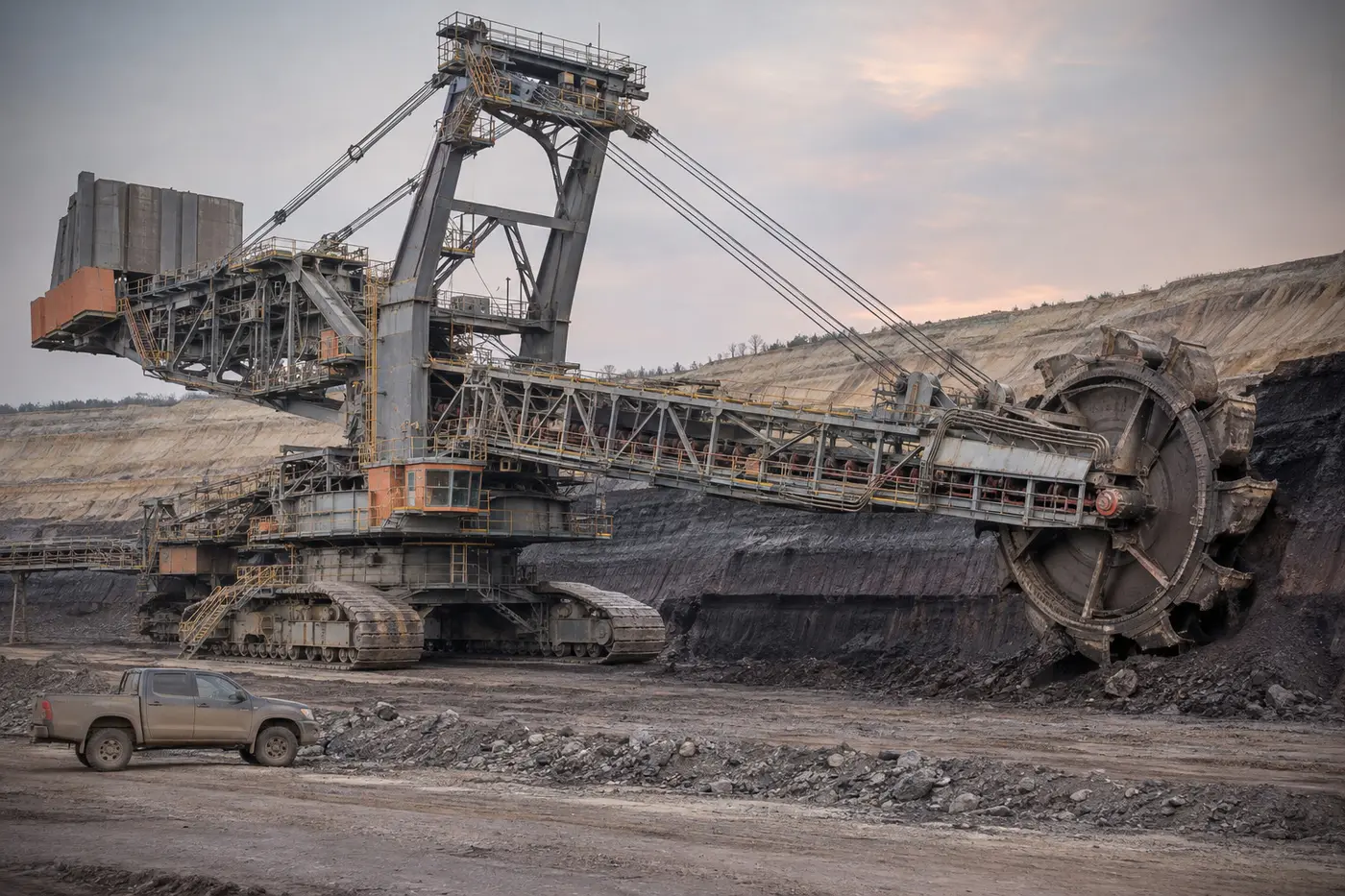
The largest excavators are bucket-wheel excavators. A bucket-wheel excavator carries a huge rotating wheel with buckets around its edge, mounted on a boom, and it digs continuously as the wheel turns. The largest example is a lignite mine machine in Germany. Reference figures put it at about 14,200 tonnes (31,300,000 pounds), 225 m long, 46 m wide and between about 93 and 96 m tall. Its wheel is about 21 m in diameter with 18 buckets, each holding roughly 15 cubic meters. It is listed as the heaviest land vehicle, runs on externally supplied electricity of about 16.56 megawatts, and is operated by a crew of about five. Figures for its build year and exact height differ between sources, which is common with machines this large.
Output is just as striking. Reference sources say these machines can move around 240,000 cubic meters of overburden per day, with excavations up to 380,000 cubic meters a day recorded.
What are the largest dragline excavators?
A dragline hangs a bucket from a long boom on cables and drags it toward the machine, scooping material. Draglines are the largest form of excavator by bucket size. The largest on record had a bucket of about 220 cubic yards, a boom of roughly 94 m (sources conflict on that figure) and a weight of about 13,500 short tons, and it moved 325 short tons in a single pass. Among newer walking draglines, reference listings show buckets of about 110 to 160 cubic yards, booms of around 325 to 425 feet, and working weights of roughly 7,500 to 8,000 tons.
| Machine type | Scale (reference figures) | What it does |
|---|---|---|
| Bucket-wheel excavator (largest) | About 14,200 tonnes; 225 m long | Continuous digging of soft overburden and lignite |
| Dragline (record size) | Bucket about 220 yd³; about 13,500 short tons | Strips overburden in surface mines |
| Dragline (modern walking) | Bucket about 110 to 160 yd³ | Coal mine stripping |
| Hydraulic mining excavator (largest) | About 980 tonnes; bucket up to about 52 m³ | Loading haul trucks in mines |
| Compact excavator | Up to about 8.5 tonnes operating weight | Utility, landscaping, small construction |
| Micro excavator | Under 1 tonne | Tight access, interior work |
What are the largest mining excavators?
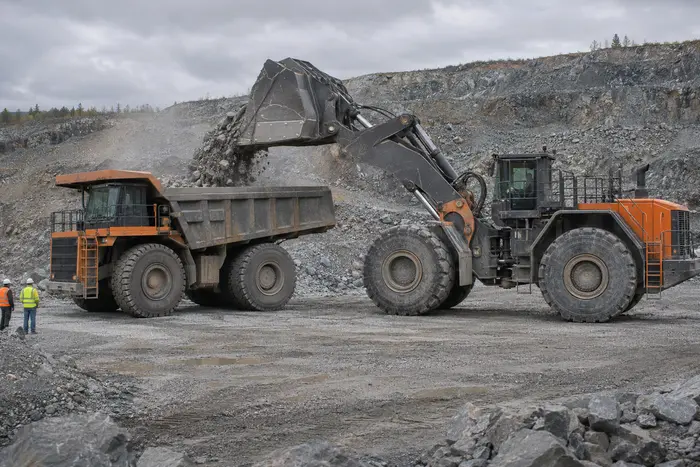
For open-pit mines, the standard is a hydraulic mining excavator, a shovel-style machine that loads haul trucks. A general reference describes the largest available hydraulic excavator as weighing over 2,160,000 pounds (about 980 tonnes), with around 4,500 horsepower and a bucket up to about 52 cubic meters. Those machines are huge compared with anything on a construction site, yet they are tiny next to a bucket-wheel excavator.
How do bucket-wheel excavators differ in size?
Not all are giants. Reference material notes early machines built in the 1950s weighed about 5,000 tonnes with wheels over 16 m in diameter. At the other end, compact models have a boom as short as about 6 m, weigh around 50 tons and move around 100 cubic meters per hour, while the largest designs have booms up to about 80 m, weigh around 13,000 tons and move around 12,500 cubic meters per hour. Some are built to operate in temperatures as low as -45°C.
Where do ordinary excavators fit?
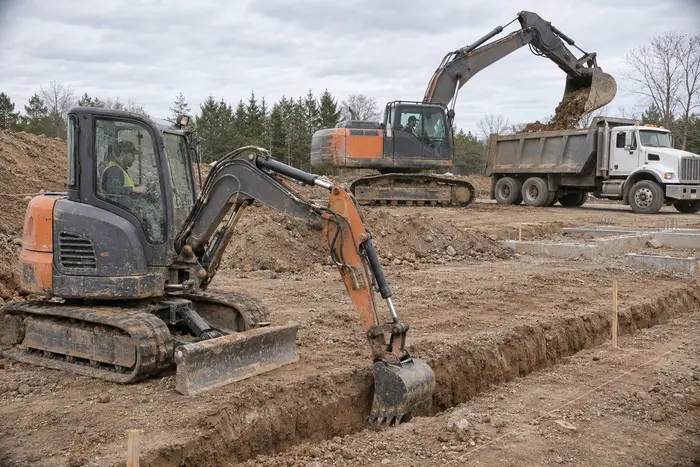
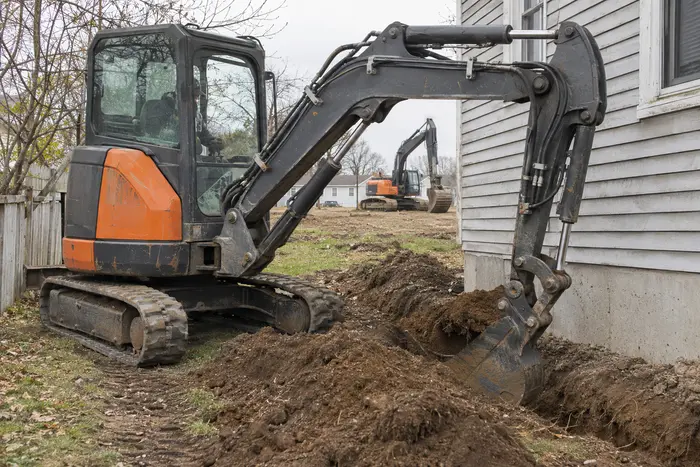
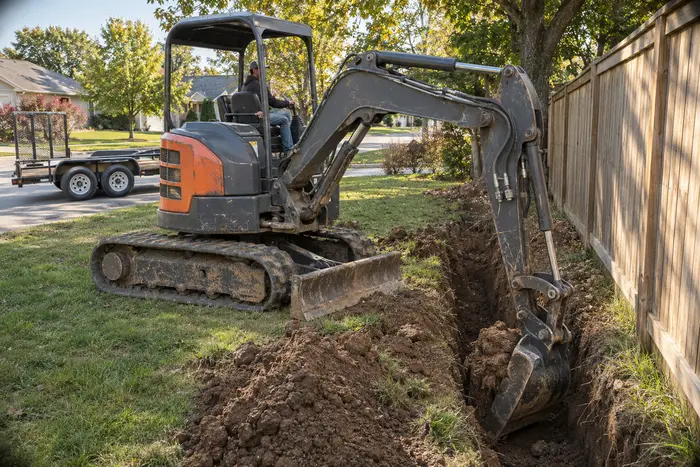
The excavators most contractors run are far smaller. A compact or mini excavator, by one reference, has an operating weight of up to about 8.5 tonnes. Micro excavators weigh under 1 tonne. One maker's smallest mini excavator is listed at about 2,060 pounds (930 kg). That range is where attachments such as augers, breakers, thumbs and grapples make sense, since the machine is built as a tool carrier. See excavator sizes and mini excavator sizes and weight for the working classes.
Can giant excavators use attachments?
Not in the way a compact excavator does. Mining machines are built for one function, and their buckets and cutting wheels are engineered into the machine. Compact excavators, by contrast, use quick couplers so you can swap tools in minutes. Reference sources note many excavators feature quick coupler mounting systems and list the auger, bucket, breaker, tiltrotator and grapple among the common attachments. Browse excavator quick couplers and excavator buckets if you work in that class.
Types of excavators in one list
- Crawler excavator: tracked, the common construction machine.
- Compact or mini excavator: smaller, often with zero tail swing for tight spots.
- Dragline: cable-hung bucket for surface mining.
- Bucket-wheel excavator: continuous digging, mining.
- Hydraulic mining excavator: truck loading in mines.
Our guide to types of excavators covers each of these in more detail.
Why size matters when you choose a machine
Bigger is not better for most work. A machine that is too large cannot get through gates or work near buildings, and it needs a heavy trailer. For ordinary work, match the excavator to the job. A 3 to 4 tonne class mini excavator handles a lot of utility, landscape and small foundation work, and our guide on attachments for 3 to 4 ton mini excavators shows how to tool it.
A note on records
Record claims change as machines are built, retired and scrapped, and sources disagree on exact dimensions. The numbers above come from published reference figures and can differ from other listings. If you need an exact figure for a study or article, check the operator or manufacturer directly.
Why are these machines so big?
Scale follows economics. In a surface mine, the thing that matters is how many cubic meters of rock or soil you move per hour at the lowest cost per cubic meter. A bigger bucket or wheel moves more in each pass, so mine operators build machines as large as the ground, the power supply and the transport logistics allow. Bucket-wheel excavators and the big draglines run on electricity fed by a trailing cable, and the largest hydraulic mining excavators come in diesel and electric versions. The biggest machines are assembled on site, and bucket-wheel excavators crawl along at a few meters per minute.
What is the difference between an excavator and a loader at these sizes?
An excavator digs, then swings or slews to dump. A loader scoops and carries. At mining scale, wheel loaders and excavators work together, with the excavator loading haul trucks. At small scale the same split exists: compact excavators dig and trench, while skid steers and wheel loaders move material. If you are deciding between categories, our guide on a mini excavator vs a skid steer shows when each is the right call. For the biggest loaders, see the largest wheel loaders.
How big is big for your own job?
Most buyers do not need record-breaking anything. The practical question is how much your trailer, truck and site can handle. Compact excavators in the lower weight classes can be trailered behind a pickup. Larger classes need heavier trailers and often a commercial license in some regions. Check weights, axle ratings and local transport rules, and follow the operator manual for tie-down and loading procedures.
Fun scale comparison
- The largest bucket-wheel excavator weighs roughly 14,200 tonnes. A mini excavator weighs a few tonnes. You could line up thousands of minis to match the mass.
- A single bucket on that machine holds around 15 cubic meters, more than many compact machines move in several scoops.
- The largest dragline bucket was about 220 cubic yards, many times the size of the biggest buckets on ordinary loaders.
Get the right fit the first time
Moving from big machines to the one on your site? Send us your machine's make, model and year, and a person will check fit against the maker's specs. You approve a delivered price before you pay, and the supplier ships direct. Request a fit-checked quote.
Questions buyers ask
What is the largest excavator in the world?
The largest excavator is a bucket-wheel excavator used in a German lignite mine. Reference figures put it at about 14,200 tonnes, 225 m long and roughly 96 m tall. It is listed as the heaviest land vehicle, with buckets of about 15 cubic meters each.
What are the largest dragline excavators?
The record dragline had a bucket of about 220 cubic yards and weighed roughly 13,500 short tons. Modern walking draglines have buckets of about 110 to 160 cubic yards and booms of around 325 to 425 feet. Figures vary between sources.
What is the largest mining excavator?
The largest hydraulic mining excavator weighs over 2,160,000 pounds, about 980 tonnes, with around 4,500 horsepower and a bucket up to about 52 cubic meters. It loads haul trucks in open-pit mines. Bucket-wheel excavators and draglines are larger overall.
How big is a typical mini excavator?
A compact or mini excavator has an operating weight of up to about 8.5 tonnes by one reference. Micro excavators weigh under 1 tonne. These are the classes that use quick couplers and attachments like augers, breakers and grapples.
Can the biggest excavators use attachments?
Generally no. Mining machines have buckets or cutting wheels engineered into the machine. Compact excavators are built as tool carriers and use quick couplers to swap tools such as augers, thumbs and breakers in minutes.